Best Circular Knitting Needles for Blankets: Every Type Explained Side by Side for 2026
Disclosure: We may earn a commission when you buy through links on this page, at no extra cost to you. As an Amazon Associate I earn from qualifying purchases. Learn more

The best circular knitting needles for blankets compared: fixed or interchangeable, metal or wood tips, cable length by blanket width and smooth joins.
Choosing needles for a blanket feels confusing because a blanket is wide, heavy, and worked over many hours, so small differences in cable and tip matter far more than they do on a scarf. This guide compares the best circular knitting needles for blankets by type first, then by the details that affect comfort and stitch flow. Use the comparison table below to see how the main options differ at a glance.
A circular needle holds hundreds of stitches on a flexible cable, spreading the weight across your lap instead of loading it onto two long straight needles and your wrists. Once you understand fixed and interchangeable designs and the main tip materials, the rest comes down to blanket width and yarn weight.



Types of Circular Knitting Needles Compared
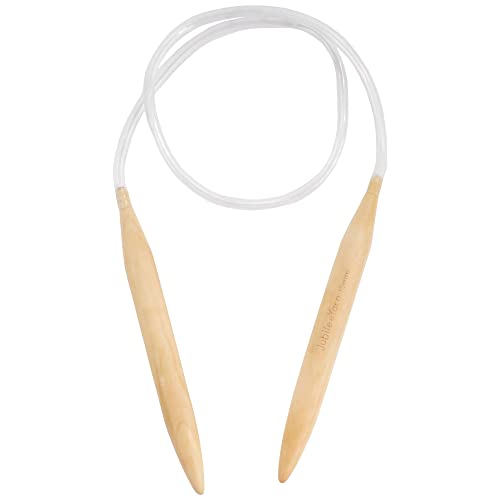
All circular needles share the same basic shape, with two short tips joined by a flexible cable. When you compare the best circular knitting needles for blankets, three differences matter most: how the cable attaches, what the tips are made from, and how the join feels when a heavy row slides across it. The four options below cover nearly every blanket project.
Fixed Circular Needles
A fixed circular has its tips and cable made as one permanent piece in a single size and a single cable length. There is nothing to assemble and nothing to loosen, so the join is usually very smooth and the needle feels secure even under the weight of a large throw. Many knitters keep a few proven sizes in fixed form for the gauges they use again and again.
The tradeoff is flexibility. If your next blanket needs a longer cable or a different size, you need another needle rather than a swap of parts. Fixed circulars often cost around $15 each, so a small collection built around your usual yarn weights can still be sensible.
Interchangeable Circular Needles
An interchangeable needle separates the tips from the cables, so one set of tips can pair with several cable lengths through a small screw or click connection. For blankets, that range is valuable because a crib blanket, a lap throw, and a bed sized blanket each sit best on a different cable. You can also lengthen a cable mid project if stitches feel crowded.
The connection is the point to check with care. A well made join sits flush and stays tight, while a poor join can snag yarn or work loose as a heavy blanket turns in your lap. Tighten tips with the small key supplied, and recheck the join when you start a new session. If sets appeal to you, see our guide to the best circular knitting needle sets for how set contents compare.
Metal Tips for Smooth Speed
Metal tips, usually stainless steel, nickel plated brass, or aluminum, give stitches a slick surface that lets yarn glide with little friction. That glide helps with large stitch counts, because each row of a wide blanket may hold 150 to 250 stitches. Metal also holds a precise point well, which helps when you lift stitches for cables or textured patterns.
The same slickness can be a drawback with slippery yarns such as silk blends or smooth cotton, where stitches may slide off when you set the work down. Metal feels cool and firm in the hand. Choose metal when speed, durability, and a sharp point matter most.
Wood and Bamboo Tips for Grip
Wood and bamboo tips hold yarn a little more, so stitches stay where you place them and split less easily. That gentle grip suits relaxed blanket knitting, slippery fibers, and newer knitters who want more control. Warm to the touch and light in the hand, these tips also feel quieter during long sessions with a heavy project on your legs.
Grip comes with slower movement, and tight knitters may find stitches drag, especially with matte wool or acrylic yarn. Points tend to be a little rounder than metal, and fine tips can wear or break if sat on or stored loose. Choose wood or bamboo when control and comfort matter more than pure speed.
Fixed or Interchangeable: Which Should You Choose?
Start with how varied your blanket plans are. If you mostly knit one throw size in one yarn weight, a fixed needle removes all fuss and gives you the smoothest join for the money. If you knit for babies, sofas, and beds in turn, interchangeable tips and cables adapt to each width.
Next, think about joins and budget. Fixed needles have no connection to fail, while interchangeable sets ask you to value connection quality above almost everything else. A set costs more at first, often about $100, but can cost less over time than many fixed needles. The product table above can help you weigh that cost against the sizes and cables included.
How to Choose the Right Circular Needle for a Blanket
With the type settled, match the needle to the blanket itself. Width, yarn weight, and stitch pattern all narrow the choice in useful ways. Work through the points below in order, and you will usually land on one or two clear options.
Cable Length and Finished Blanket Size
The cable needs to hold every stitch without bunching them so tightly that you cannot see the pattern, yet it should not be so long that you stretch stitches to reach the tip. Choose a total needle length a little shorter than the blanket width, so the stitches rest in a relaxed curve. A 32 inch or 40 inch circular suits many throws, while wide bed blankets often need 47 inches or more.
Length is measured from tip to tip, so compare that full figure with your planned width rather than the cable alone. If you knit blankets in several widths, that is the strongest argument for interchangeable cables. For a broader look at needle shapes beyond circulars, see our guide to the best needles for knitting blankets.
Needle Size and Yarn Weight
Needle size follows yarn weight and the drape you want. Worsted weight yarn, a common blanket choice, often pairs with US 7 to US 9 needles, while bulky yarn may call for US 10 to US 13. Your pattern gauge is the authority, so knit a swatch, wash it as the finished blanket will be washed, and measure again before you commit.
Drape matters as much as gauge. A slightly larger needle gives a softer fabric that folds well over a chair arm, while a smaller needle makes a firmer fabric that holds textured stitches sharply. The yarn shapes this choice too, and if you are still picking fiber and weight, see our guide to the best yarn for knitting blankets.
Join Quality and Cable Flexibility
The join is where the tip meets the cable, and on a blanket it is crossed thousands of times as full rows slide over it. Run a finger across the join before you buy when you can, and look for a smooth step with no sharp lip. Yarn should pass over it without catching, especially yarn with a halo, which snags on the smallest ridge.
Cable behavior matters just as much. A cable with strong memory coils back on itself and fights you, twisting a wide blanket in your lap. A flexible cable with little memory hangs in a soft loop and stays out of the way, and a cable that starts out supple is the safer buy.
Tip Shape for Your Stitch Patterns
Tip length changes how the needle sits in your hand. Shorter tips, around 4 inches, can feel nimble, while standard 5 inch tips give more to hold and suit larger hands and heavier fabric. A heavy blanket rewards a tip you can grip without squeezing, because hand strain builds over hundreds of rows.
Point shape should match your pattern. Sharp points help with lace, cables, and decreases where you must lift stitches precisely, but they can split soft, loosely plied yarn. Rounder points are kinder to split prone yarn and to fingers. If your blanket is mostly garter stitch or stockinette, choose comfort first, since plain stitches forgive almost any point.
Buying Singles or Sets
Buying single fixed needles lets you spend only on the sizes you use, and it lets you mix materials, perhaps metal for smooth yarns and wood for slippery ones. The risk is discovering mid project that your only long cable is already in use on another blanket.
A set gathers many sizes and cables in one case, which suits knitters who start blankets often or change gauge frequently. Check that the set truly covers blanket work, including the longer cables, since some sets top out at lengths meant for garments. To compare set layouts, see our guide to the best knitting needle sets circular interchangeable and our broader guide to the best knitting needle sets.
Common Mistakes to Avoid
- Choosing a cable that is too short for the blanket width, so stitches bunch tightly, hide the pattern, and strain your hands.
- Skipping the swatch and trusting the yarn label alone, so the finished blanket ends up far wider or firmer than planned.
- Ignoring a rough join, so yarn catches on every row and the fabric near the join wears and pills early.
- Using very sharp metal tips with split prone yarn, so stitches divide constantly and progress slows to a crawl.
- Forcing tight stitches along a grippy wood tip, so rows feel like hard work and your gauge tightens without you noticing.
- Storing a blanket project bunched on a short cable for months, so the cable takes a set coil and the resting gauge changes.
How to Make Your Circular Knitting Needles Last Longer
Store circular needles flat or in loose coils in a case, never folded sharply, because a hard kink in a cable rarely comes out. Keep tips protected so points stay smooth, and store interchangeable tips in their case slots rather than loose in a bag where threads can get damaged.
Clean tips with a soft cloth after long projects, since skin oils and yarn dressing build up and change how stitches slide. Keep wood tips away from prolonged moisture and heat, and check metal tips for burrs if they have been dropped. When a project rests, slide the stitches onto the middle of the cable so the joins carry no load, and lift a heavy blanket with both hands rather than pulling its whole weight by one tip.
Frequently Asked Questions
What cable length do circular knitting needles for blankets need?
Most throws work well on a 32 inch to 40 inch circular needle, measured from tip to tip. Choose a length a little shorter than your finished width so stitches sit relaxed rather than stretched. Very wide bed blankets may need 47 inches or longer. Knitting two panels separately on a shorter cable also works and makes the project easier to carry.
What needle size do circular knitting needles for blankets use most often?
Worsted weight blankets most often use US 7 to US 9 needles, while bulky yarns commonly use US 10 to US 13. Your pattern gauge always decides, so swatch before you start. One point many knitters miss is that the same yarn can need a size up in metal over wood, because grippy tips tend to produce slightly tighter stitches.
How do you clean circular knitting needles for blankets safely?
Wipe metal and wood tips with a soft, slightly damp cloth, then dry them at once and never soak wood or bamboo tips. Cables can be wiped with mild soap and water and laid flat to dry. Avoid harsh cleaners, which dull metal coatings and roughen wood, and keep interchangeable threads clean and dry so the connection stays secure.
How often should you replace circular knitting needles for blankets?
Replace a circular needle when the join catches yarn, the cable cracks or keeps a permanent kink, or a tip bends or loses its smooth finish. There is no fixed lifespan, since a well kept needle can last through many blankets. Before each new blanket, slide a row of scrap yarn over the join, so problems show up before good yarn is at risk.
Are interchangeable circular knitting needles for blankets worth buying?
Interchangeable needles are worth buying if you knit blankets in varied widths and gauges, because one case covers many cable and size pairings. They are less worthwhile if you repeat one throw size, where a single fixed needle costs less. Either way, judge a set by its longest cable and its join quality, not by the count of pieces.
Final Thoughts
For most blanket knitters, the decision comes down to three things: a cable long enough for the width, a join smooth enough for thousands of passing stitches, and a tip material that suits your yarn and hands. Fixed needles offer simplicity, interchangeable needles offer range, metal offers speed, and wood offers control. Check the product table above once more against those priorities.
Whichever type you choose, knit and wash a real swatch on the exact needle and cable you plan to use, because that swatch predicts drape and size better than any label. With that done, the best circular knitting needles for blankets for you are the ones that let you settle in and enjoy row after row.