
Best Cheese Grater With Handle: How to Choose for 2026
Disclosure: We may earn a commission when you buy through links on this page, at no extra cost to you. As an Amazon Associate I earn from qualifying purchases. Learn more

Choose the best cheese grater with handle by judging grip comfort and comparing box, flat, rotary and rasp types for your kitchen.
Picture a weeknight dinner in a small kitchen, with a block of cheddar on the counter, a pot already bubbling, and little room to work. A loose grater that slides around makes the job slower and harder on your knuckles. Choosing the best cheese grater with handle gives you a firm place to hold, better control over each stroke, and a tool that suits your space, household size, and budget. The comparison table below sums up the main types so you can narrow your choice fast.
This guide focuses on daily life at home. It covers how each type fits your space and household, what the handle should feel like, and what ownership costs in cleaning and storage.



Quick Answer: Types at a Glance
If you grate for a family several times a week, a box style with a top handle offers the most surfaces in one tool. If your drawers are shallow, a flat handheld style stores in almost no space. If pressing down hurts your wrist, a rotary style lets the crank do more work. If you mostly add a little parmesan or zest, a slim rasp style is enough.
Before You Buy: A Quick Checklist for Choosing a Cheese Grater
Which Type Fits Your Routine
Start with how much you grate at one time. A box grater handles a full block for casseroles and gives you coarse, medium, fine, and slicing surfaces in one body. A flat handheld grater suits a quick handful over soup or salad. A rotary grater holds a small chunk inside a drum and keeps your fingers farther from the teeth. For very large weekly batches, our guide to the best electric cheese grater shows when a motor makes sense instead.
Handle Shape and Grip Comfort
The handle is the whole point of this keyword, so judge it with care. A loop handle on top of a box grater lets you press down and hold the tool steady with one hand while the other moves the cheese. A straight handle on a flat grater should fill your palm and feel secure when your hands are damp. A crank handle should turn smoothly without a sharp edge against your palm. People with smaller hands or a weaker grip often do better with a thicker, softly padded handle.
Features Worth Paying For and Ones to Skip
A container that catches shreds under a box grater saves a cutting board and cuts down on mess, and measurement marks on it help when a recipe calls for a set amount. A guard that grips the last piece of cheese protects your fingers and wastes less food. Extra blade sets sound appealing, but many homes only use coarse and fine surfaces week after week. Skip bundles with many loose parts if your storage is tight, because each piece needs washing, drying, and drawer space.
Materials and Food Safety
Most quality graters use stainless steel for the grating surface, since it resists rust and holds a sharp edge through years of use. The body and handle may be steel, sturdy plastic, or grip material over a firm core. Look for smooth seams where the handle meets the body, because rough joints trap food and moisture. Avoid any grater with flaking coating near the teeth or a handle that flexes under light pressure.
Dishwasher Safe or Hand Wash
Many graters are sold as dishwasher safe, yet hand washing often keeps the teeth sharper for longer. Hot water and harsh detergent can dull fine edges and fade grip material over time. If you plan to use the dishwasher daily, choose an all steel build with a simple shape water can reach from every side. If you cook for one or two people and wash by hand anyway, a model that needs hand washing is no real burden.
Realistic Budget Ranges
At under $10 you can expect a simple flat grater or a basic box grater with a plain handle and two or three surfaces, which suits light use on a tight budget. In the range of about $10 to $25, handles get thicker and more comfortable, bases grip the counter better, and catch containers become common. Spending about $25 to $50 usually buys a sturdier rotary model or a heavier box grater. Above that level you pay mostly for build polish, so weigh it against how often you grate.
Types Compared: Choosing by Home and Routine
Box Graters With a Top Handle
A box grater is the default choice for most family kitchens. It stands upright, the top handle keeps it from rocking while you press down, and four sides cover shredding, grating, and slicing in one tool. It earns its space if you cook for three or more people or prep cheese in batches. The tradeoff is bulk. In a studio kitchen, a box grater can crowd out mixing bowls, so measure your shelf height before you buy.
Flat Handheld Graters With a Handle
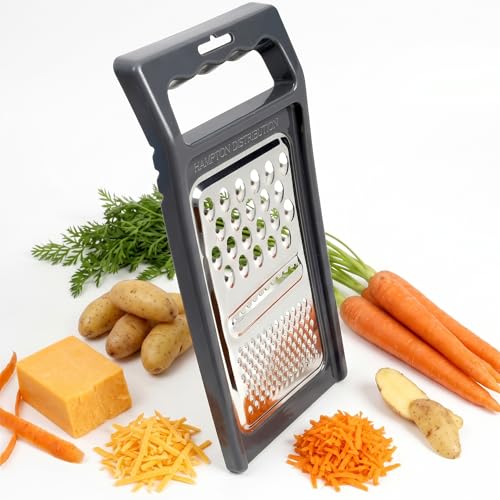
A flat grater with a handle at one end is the space saver of the group. It lies flat in a drawer, hangs from a hook, and comes out for quick jobs like topping pasta or grating garlic for a sauce. You hold it over a bowl or rest the tip on a board for support. It offers only one or two surfaces, so households that need several textures end up buying a second tool. For renters who move often, that small size is a real plus.
Rotary Graters With a Crank Handle
A rotary grater rests on the counter while you turn a crank, and the cheese stays inside a drum away from your fingers. This layout suits people who dislike pressing a block against sharp teeth or who grate hard cheese for a crowd. If this style sounds right, see our guide to the best rotary cheese grater for drum sizes and clamp styles. Rotary models have more parts to wash and store, and soft cheese can smear inside the drum, so they reward cooks who grate firm cheese most often.
Rasp and Zester Styles With a Handle
A rasp style grater is long and narrow, with fine teeth made for hard cheese, nutmeg, garlic, and citrus zest. The handle keeps your hand back while you move the food along the teeth. For finishing work, our guide to the best cheese grater for parmesan explains which tooth sizes suit aged cheese best. A rasp will not shred a block of cheddar for tacos, so treat it as a partner to a larger grater rather than a full replacement.
Our Selection Process for Cheese Graters With a Handle
We judged types against five plain criteria: ease of use, durability, cleaning effort, design fit for real kitchens, and value. We drew on maker specifications, patterns in verified buyer reviews about grip comfort and rust, and general kitchen know how. The goal is to match a type to your household.
Do You Really Need a Cheese Grater With a Handle?
A handle earns its place when you grate anything firmer than soft mozzarella. It gives you leverage, keeps the tool from twisting mid stroke, and puts distance between your knuckles and the teeth when the piece gets small. A plain flat sheet can work for rare, tiny jobs, but it offers little control once your hands are wet. Steady pressure also matters, and our guide on how to use a cheese grater walks through safe technique.
You may not need one if you buy shredded cheese most weeks or use a food processor for every large batch. You also may not need a second handled grater if your current one still has sharp teeth and a sound handle. Buy when your old tool wobbles, when your household has grown, or when a new living space changes what you can store. One sturdy box grater often serves a shared house better than two flimsy tools.
Common Mistakes to Avoid
- Buying by size alone: a tall box grater that cannot stand in your cabinet will end up stored on its side.
- Ignoring the handle joint: a glued handle with a visible gap can loosen and trap moisture where you cannot clean it.
- Choosing fine teeth for everything: fine teeth clog fast on soft cheese and turn a quick job into a long cleanup.
- Forgetting replacement cost: rotary drums can crack, and a model with no spare parts may need full replacement.
- Pressing harder to go faster: heavy pressure bends teeth and raises the chance of a slip.
- Storing the grater loose with knives: exposed teeth dull against other tools and can cut a hand in the drawer.
Cost of Ownership and Care
A cheese grater has no running cost beyond washing, which makes it one of the cheapest tools you own. The real costs show up in replacement. A cheap handle that cracks in a year costs more over five years than a sturdier grater bought once. Keep teeth sharp by washing soon after use and drying fully before storage. For a full routine, read how to clean a cheese grater before your first wash.
Storage habits shape lifespan too. A box grater stored damp in a closed cabinet can spot with rust even when the steel is good quality. A flat grater hung by its handle stays dry and keeps its edge away from other tools. Check the handle joint every few months, and retire the tool if the handle moves under pressure, since it can shift when you push hardest.
Your Questions, Answered
What is the most reliable cheese grater brand?
Reliability tracks build quality more than the name on the handle. Look for a grating surface with no wobble, a handle joined with rivets or molded as one piece, and a clear warranty. Buyer reviews that mention years of use without rust tell you more than a famous label does. If a maker sells replacement drums and containers, that support signals a tool built to stay in service.
How long does a cheese grater with a handle last?
A steel grater used weekly and dried after washing can serve for many years, while a low cost model with a thin handle may loosen within a couple of years. One warning sign people miss is a faint flex at the handle joint when you start a stroke. Catching it early lets you replace the tool on your own schedule. Teeth that tear instead of bite are the other clear sign of age.
What is the best cheese grater with handle for a small apartment?
For a small apartment, a flat handheld grater usually fits best, since it slides into a drawer and needs no shelf height. Choose one with a handle long enough for your whole hand, not just your fingers, so you can hold it steady over a bowl. If you cook for guests often, a compact box grater is the next step up. Either choice beats a bulky rotary model in a tight space.
Can a cheese grater with a handle grate vegetables and chocolate?
Yes, and this extra range helps a handled grater earn drawer space in a small home. Coarse surfaces handle carrots, zucchini, and firm potatoes for fritters, while a fine rasp turns dark chocolate into an even dusting over desserts. Rinse and dry the teeth right after grating chocolate, since cocoa butter coats the edges. Grate cold chocolate in short bursts so your hand warmth does not soften it.
Is a cheese grater with a handle worth it for one person?
For one person it can still be worth it, because small jobs are where control matters most and a handle gives you that control with one hand free to hold the bowl. A single cook also washes less, so a simple flat style adds almost no upkeep. If you grate only a few times a year, keep one slim tool rather than a full box style.
Final Thoughts
Match the type to your routine first, then judge the handle in your hand, then check the price range. A box style suits families, a flat style suits tight drawers, a rotary style suits hands that dislike pressing, and a rasp suits finishing touches. The product table above and our guide to the best cheese grater will help you sort the wider field. The right best cheese grater with handle is the one you reach for without thinking and store without a struggle.


