Best Cervical Pillows for Side Sleepers in 2026: Every Type Explained Side by Side
Disclosure: We may earn a commission when you buy through links on this page, at no extra cost to you. As an Amazon Associate I earn from qualifying purchases. Learn more

Compare cervical pillow types for side sleepers by loft, contour depth, fill and firmness, plus case fit and sleep trial tips for a low risk choice.
Cervical pillows come in more shapes than almost any other bedding, and the labels rarely explain what the shapes actually do. The word cervical simply names a contoured shape class, with a raised edge and a lower middle. This guide compares the main types of best cervical pillows for side sleepers by loft, contour depth, fill and firmness, so you can judge fit the way you would judge any bedding purchase.
Everything here is about comfort geometry: how much height fills the space between your shoulder and your head, and how the surface feels through the night. The comparison table below sets the four main types side by side before the detailed sections.




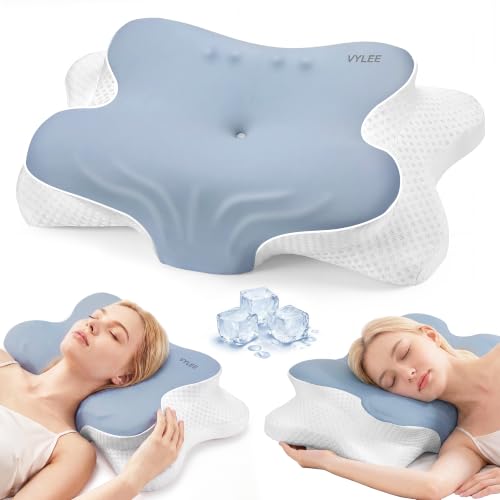
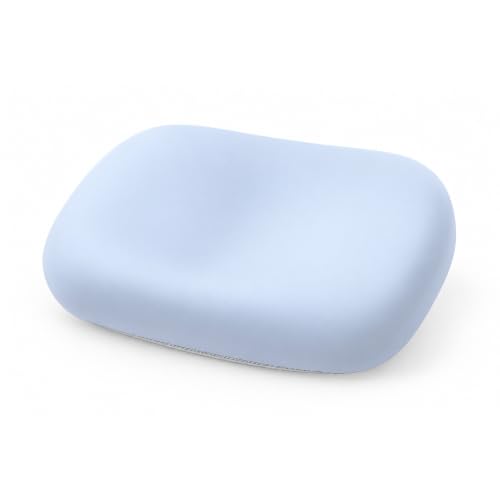

Four Cervical Pillow Types, Side by Side
There is no universal winner among the best cervical pillows for side sleepers, because shoulder width, mattress firmness and personal firmness taste change what fits. A softer mattress lets your shoulder sink deeper, so you need less loft than the same body on a firm mattress. Read the table for the shape of each type, then use the sections after it for the trade offs that matter on your own bed.
| Type | Shape and Fill | Loft Pattern | Typical Price |
|---|---|---|---|
| Contour memory foam | One molded piece with a wave profile | Fixed high edge and low middle, two height options | about $30 to $70 |
| Adjustable shredded fill | Loose foam pieces inside a zippered case | You add or remove fill to set the height | about $35 to $80 |
| Latex contour | Molded or layered latex with a wave profile | Fixed heights, springier feel than foam | about $60 to $120 |
| Water filled | Fiber layer over a water pouch | You add or remove water to set the height | about $40 to $90 |
Contour Memory Foam in Two Loft Heights
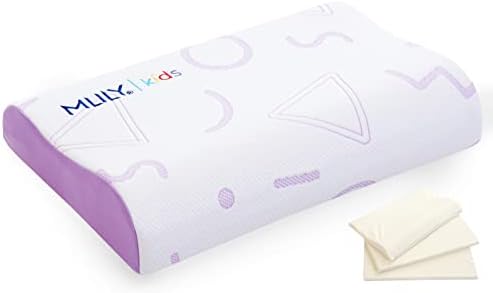
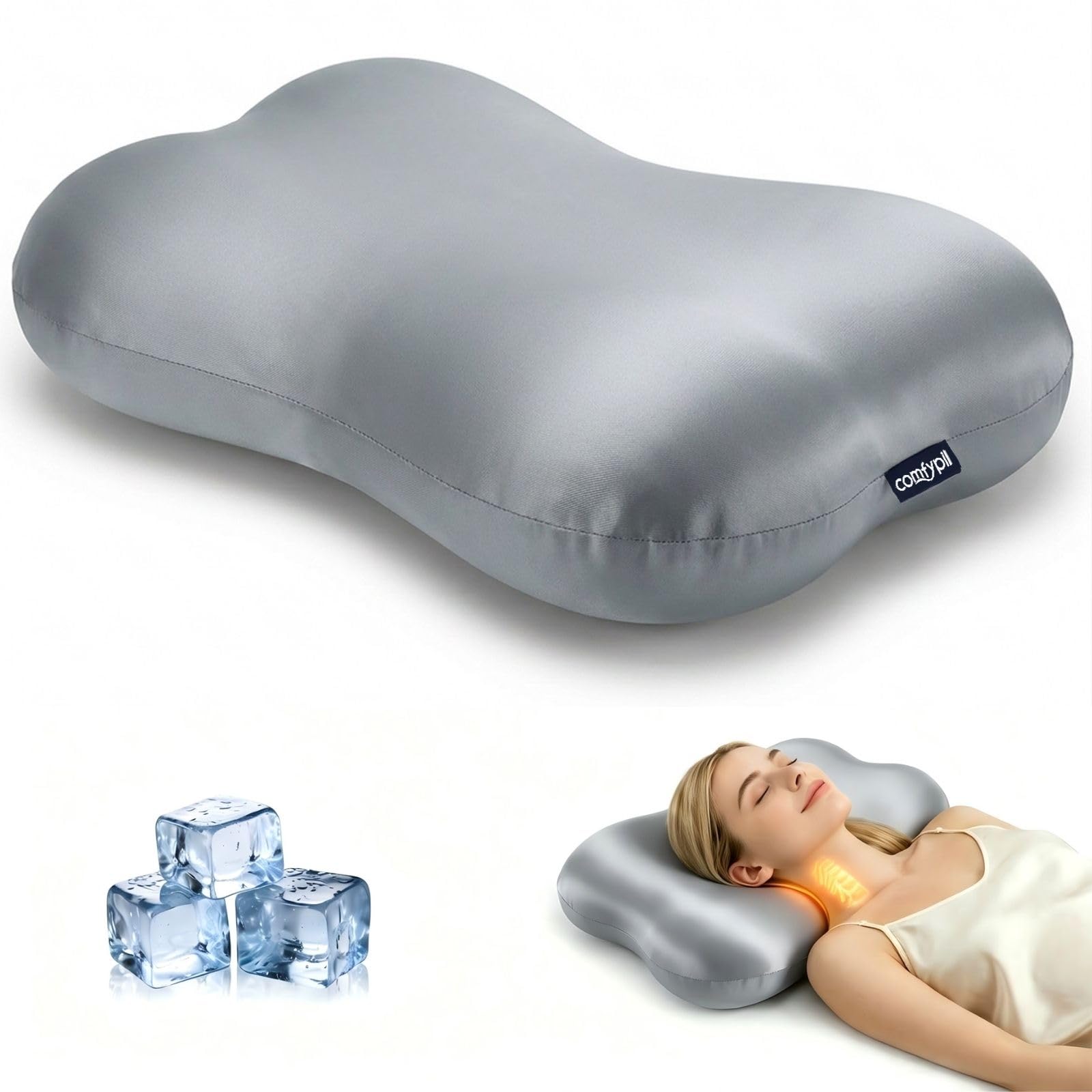
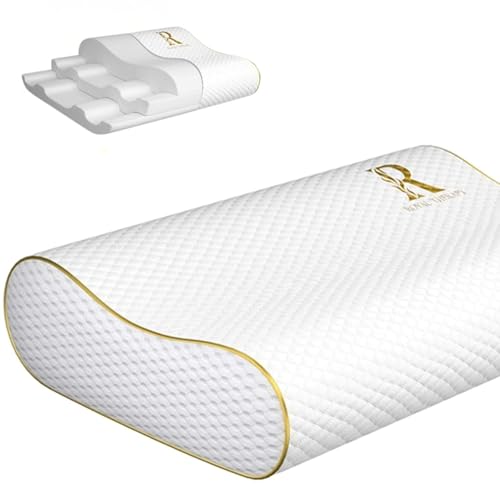
Molded memory foam is the most common cervical shape, sold in a lower and a higher version of the same wave profile. The high edge sits under your neck when you lie on your side, and the low middle takes your head when you roll onto your back. Having two catalog heights matters, because the gap between a narrow shoulder and a broad shoulder can be several inches of loft.
Memory foam softens with body heat and firms up in a cold room, so the same pillow can feel different across seasons. It also holds one fixed shape, which suits sleepers who stay in one position and frustrates sleepers who shift all night. If you like a slow, settled feel and your shoulder width is average, this is the straightforward starting type.
Adjustable Shredded Fill
Shredded fill pillows put loose pieces of foam inside a case you can open, so the loft is a setting rather than a fixed fact. Side sleepers with broad shoulders can pack the fill high, and narrower sleepers can pull handfuls out until the edge height feels right. That adjustability makes this type the most forgiving first purchase, since a wrong guess is corrected at home instead of returned.
The trade off is upkeep. Loose fill migrates toward the edges with use, so the pillow needs a vigorous shake and redistribution every few days to keep the contour even. Some sleepers also find the surface less smooth than a molded piece. If you are unsure which loft you need, or you share a bed with someone whose build differs from yours, two adjustable pillows solve the mismatch better than one fixed shape.
Latex Contour
Latex contour pillows use the same wave profile as molded foam but respond very differently under your head. Latex pushes back instead of sinking, so your head rests on the surface rather than in it, and the pillow springs back to its full loft the moment you move. Many hot sleepers prefer it because the material usually sleeps cooler than dense memory foam and is often perforated for airflow.
Latex is also the heaviest and priciest of the four types, and the bouncy feel divides people sharply. It suits side sleepers who dislike the slow sink of foam and who want a pillow that keeps its shape for years without flattening. If you have a latex sensitivity, skip this type entirely and choose foam or shredded fill instead.
Water Filled
Water filled cervical pillows pair a soft fiber top layer with a sealed water pouch underneath, and you set the support height by adding or removing water. The pouch shifts as you move, so the surface adapts when you roll from your side to your back without a fixed ridge in the way. Support feels even and cool, which some side sleepers find easier on the ear and jaw than foam.
The downsides are practical. These pillows are heavy, awkward to carry to the washroom, and need the air bled out during filling to stay quiet at night. A leak is rare but ends the pillow. Choose this type if fixed contours have felt too rigid and you like the idea of tuning height with a measuring jug rather than a catalog size.
Contour Memory Foam vs Latex: Which Should You Choose?
These two molded types cause the most hesitation, so here is the direct comparison. On feel, memory foam sinks and holds a cradle, while latex lifts and responds at once. On temperature, latex usually sleeps cooler, while foam warms and softens against your skin. On weight, latex is noticeably heavier, which matters if you move the pillow between rooms.
On lifespan, latex generally keeps its loft longer, while foam slowly takes a set where your head rests most. On price, foam starts lower. Choose memory foam if you like a quiet, settled surface and want to try the contour idea at a modest cost. Choose latex if you sleep hot, move often, and prefer support that pushes back. Broader guides to best sleeping pillows for side sleepers cover non contoured shapes if you decide the wave profile is not for you.
How to Match a Cervical Pillow to Your Shoulders and Sleep Style
Type is only half the decision. The other half is measurement and honest self knowledge about how you sleep. The factors below are the ones that decide whether a contoured pillow feels like a good fit or an expensive mistake, and none of them involve promises about your health. A pillow is bedding, and it should be bought and judged like bedding.
Loft and the Shoulder Gap
Loft is the single most important number for a side sleeper. Lie on your side on your own mattress and have someone look from behind: your head should sit level, neither dropping toward the bed nor propped upward. Broad shoulders need a higher edge, often around 5 to 6 inches of loft, while narrow shoulders may suit around 4 inches. Your mattress changes the answer, since a soft bed swallows part of your shoulder and reduces the gap the pillow must fill.
Contour Depth and Pillow Width
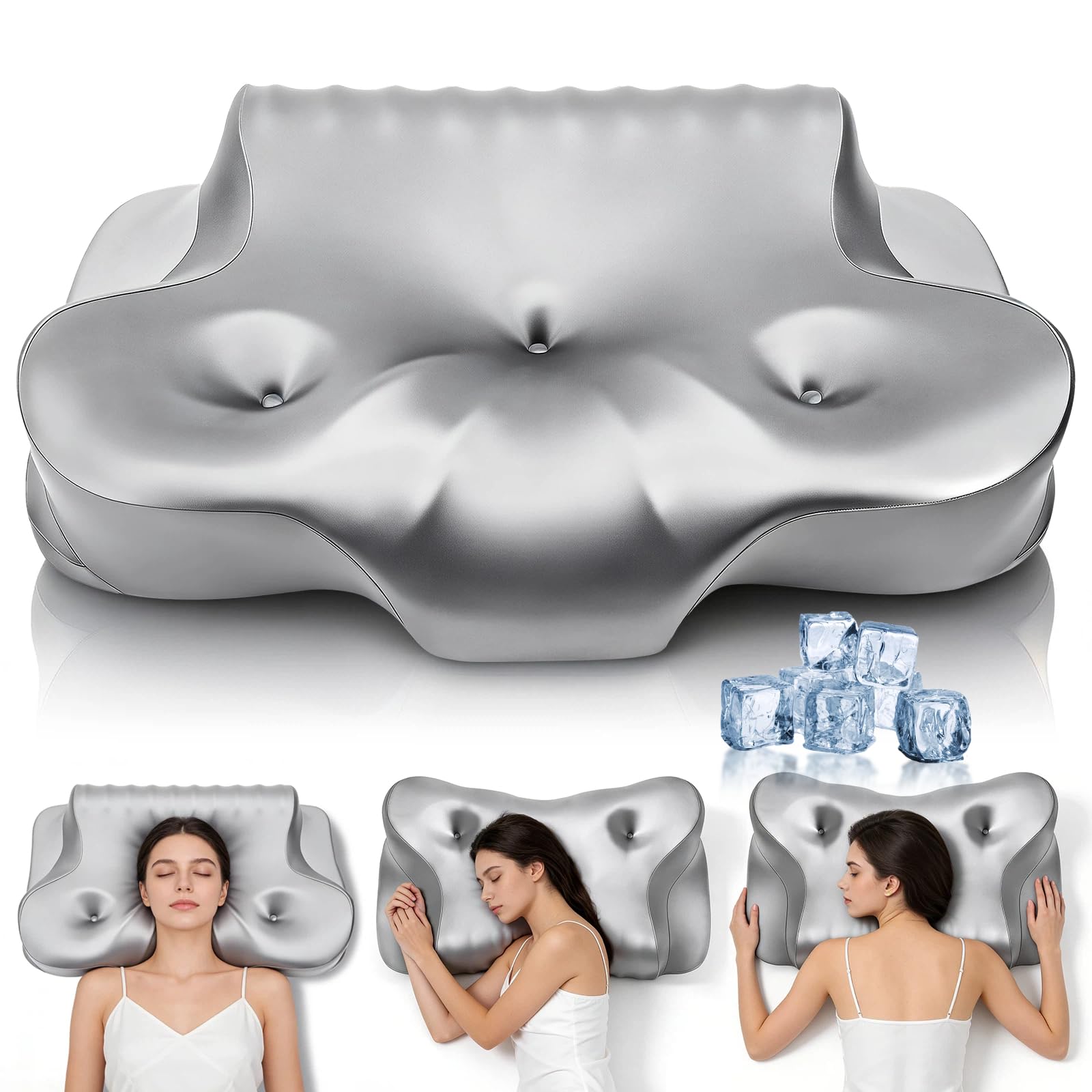
Contour depth is the difference between the high edge and the low middle, and it decides how the pillow treats position changes. A deep wave suits committed side sleepers who rarely roll over. A shallow wave suits combination sleepers, because the middle is high enough to stay comfortable on your back. Readers comparing shapes for mixed positions may also like our guide to best pillows for back sleepers and side sleepers. Width matters too: restless sleepers need a wide pillow so the head stays on the contoured surface after turning.
Firmness Is a Preference, Not a Prescription
Firmness labels are not standardized, so one maker medium can feel like another maker firm. Treat firmness as a taste question, the same way you would judge a mattress topper. A firmer edge keeps its height under a heavier head, while a softer edge gives more under the ear and jaw. Neither is healthier. If you are between two options, pick the one with the easier return terms and let a few nights of sleep settle the question.
Cases, Protectors, and the Shaped Pillow Problem
Here is the practical annoyance nobody warns you about: standard pillowcases fit contoured pillows badly. A rectangular case bunches over the wave, twists during the night, and can flatten the high edge you paid for. Many cervical pillows include one fitted case, and replacements are sold by size and shape, so check the case situation before you buy. Protectors add a thin layer that slightly softens the contour, which most sleepers accept in exchange for keeping sweat and skin oils out of the foam.
Diagnosed Conditions Come Before Pillow Shopping
A contoured pillow is a comfort product, and it is not a treatment for any neck or spine condition. If you have a diagnosed cervical condition, a recent neck or back injury, or recent surgery, follow your clinician guidance about pillow shape and height before you buy anything in this category. Your clinician may specify a loft or rule out firm contours entirely, and that advice outranks every general tip in this guide.
The same caution applies if you wake with numbness or tingling in your arms, weakness in your hands, or pain that is getting worse week by week. Those are reasons to see a doctor promptly, not reasons to buy a different pillow. General comfort browsing is fine, and our guide to best pillows for cervical pain stays within that comfort framing, but a pillow purchase should never delay a medical conversation.
Sleep Trials and Return Terms
Because loft is personal and labels are vague, the return policy is a product feature. Many sellers offer trial periods of about 30 to 100 nights, and that window is the real risk control in this category. Buy where returns are simple, keep the packaging until you are sure, and judge the pillow over at least a week. Lists that gather best reviewed pillows for side sleepers can help you compare trial terms across sellers before you commit.
Care and Replacement Basics
Foam and latex cores should never go in the washing machine; spot clean them and air them out of direct sunlight. Cases and protectors wash normally, and washing them about once a week keeps oils from breaking the fill down early. Shredded fill pillows can often be refreshed by redistributing the fill or adding a small amount from the spare bag many sellers include. Water filled pillows need the pouch checked when you change the case.
Replace a cervical pillow when it stops holding its loft, when the high edge feels lower than the middle, or when you start folding it to get comfortable. That point arrives at about 18 to 36 months for most foam pillows, and later for latex. A pillow that has lost its shape cannot give you the fit you bought it for, whatever the label promised.
Cervical Pillows for Side Sleepers: Questions Answered
How do I measure the loft I need as a side sleeper?
Measure the distance from the side of your neck to the outer edge of your shoulder while standing, then subtract a little for how far your shoulder sinks into your mattress. Broad shoulders usually land near 5 to 6 inches of loft, and narrow shoulders near 4 inches. Soft mattresses need less pillow than firm ones. When your estimate falls between two catalog sizes, choose the adjustable shredded type so you can fine tune at home.
How long does it take to get used to a contoured pillow?
Most people need about one to two weeks before a contoured shape feels normal. The wave profile holds your head in one place, which feels strange after years on a soft rectangular pillow. Alternate with your old pillow for the first few nights if the change feels stark, and judge the new pillow by the end of the trial window rather than the first night. If it still feels wrong after two weeks, the loft is probably a mismatch.
Will a cervical pillow fix my neck pain?
No, a pillow is bedding, not a treatment, and no pillow should be sold as a cure for neck pain. A well fitted pillow can feel more comfortable than a flat or lumpy one, and that comfort is the honest reason to buy it. If you have ongoing neck pain, a diagnosed condition, or numbness and weakness in your arms or hands, talk with your clinician about causes and about what pillow shape, if any, they recommend for you.
Do standard pillowcases fit cervical pillows?
Standard cases fit poorly, because the wave profile is longer and shaped differently from a rectangular pillow. A loose case bunches and can pull the high edge down, changing the loft you chose. Most cervical pillows include one shaped case in the box. Before buying, check the price and availability of spare cases in your size, since you will want at least two for laundry rotation. Some sleepers use a larger envelope style case and accept a looser fit.
Are cooling cervical pillows worth it for hot sleepers?
They can be, but the material matters more than the marketing word. Latex and shredded fill let more air move than a solid block of memory foam, and gel layers on foam mostly feel cool only for the first minutes of the night. If you sleep hot, choose the type with the most airflow first, then look for a breathable case. Our notes on best sleeping pillows sleeping on side cover related comfort picks for warm sleepers.
Final Thoughts
Start with your shoulder width and your mattress, because loft is the decision everything else hangs on. Pick a type by feel: molded foam for a settled cradle, shredded fill for adjustability, latex for spring and airflow, or water for a surface that adapts as you move. Whatever you choose, protect the purchase with a real sleep trial, and remember that the product table above is a comparison aid, not a verdict.
The right choice among best cervical pillows for side sleepers is simply the one whose shape fits your body and your bed, and shopping gets easier once you treat it as a bedding fit question. If a diagnosed condition is part of your picture, let your clinician guidance lead and let this guide handle only the comfort details.