
Best Ceramic Space Heaters (2026): Buying Guide
Disclosure: We may earn a commission when you buy through links on this page, at no extra cost to you. As an Amazon Associate I earn from qualifying purchases. Learn more

Choose the best ceramic space heater for your room: compare compact, midsize and tower styles by coverage, noise, running cost and safety features.
A ceramic heater warms up fast, but the wrong size or shape can leave your feet warm and the rest of the room cold. The best ceramic space heater for you depends on your room size, how many hours you run it, and where it will sit. The product table lists current models, and this guide walks you through coverage, noise, running cost, and safety features in plain terms.
Ceramic models use a ceramic heating element with a fan that pushes warm air into the room. That design suits spot heating in bedrooms, offices, and living areas. If you are still weighing heater types in general, start with our overview of the best space heater options, then come back here for the ceramic details.


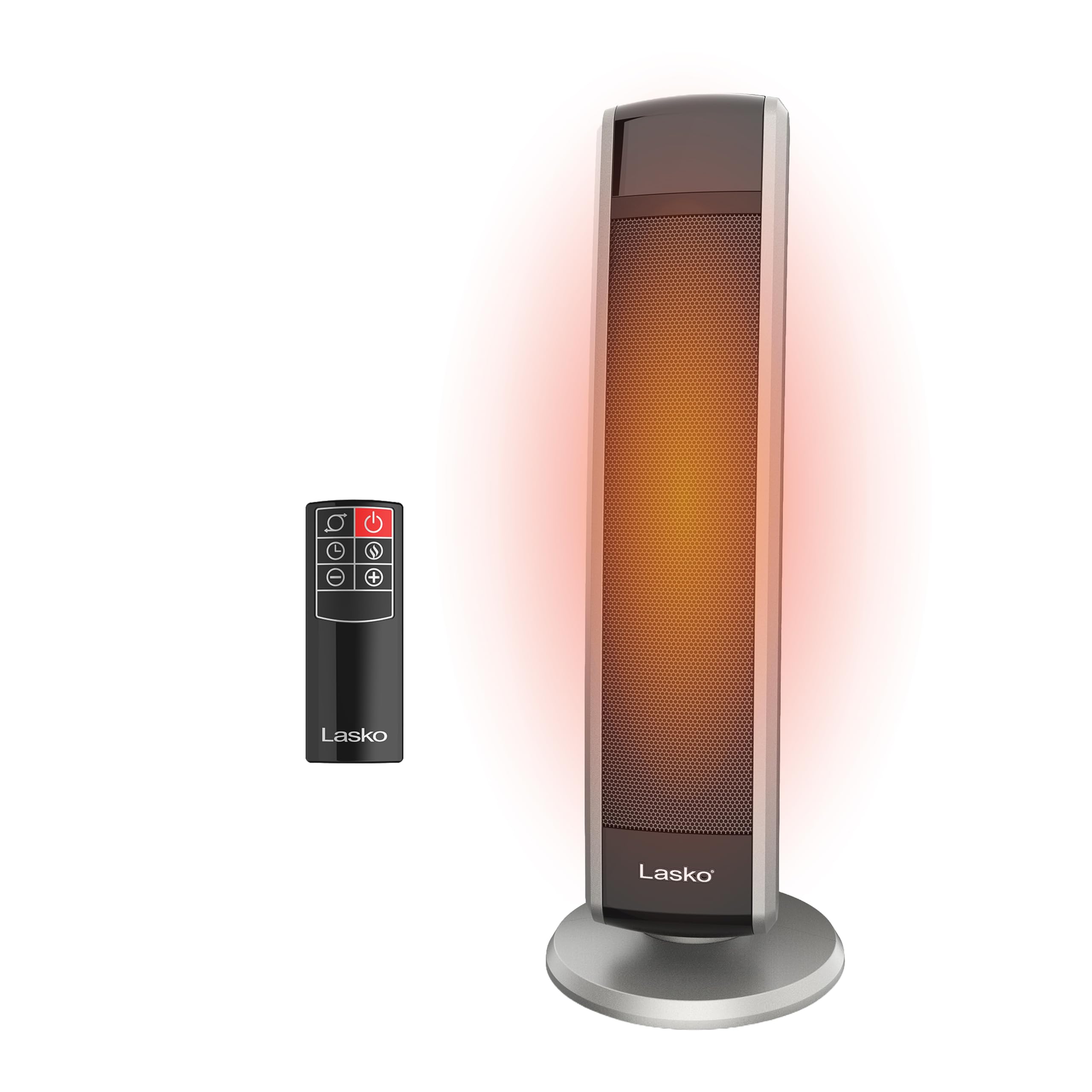
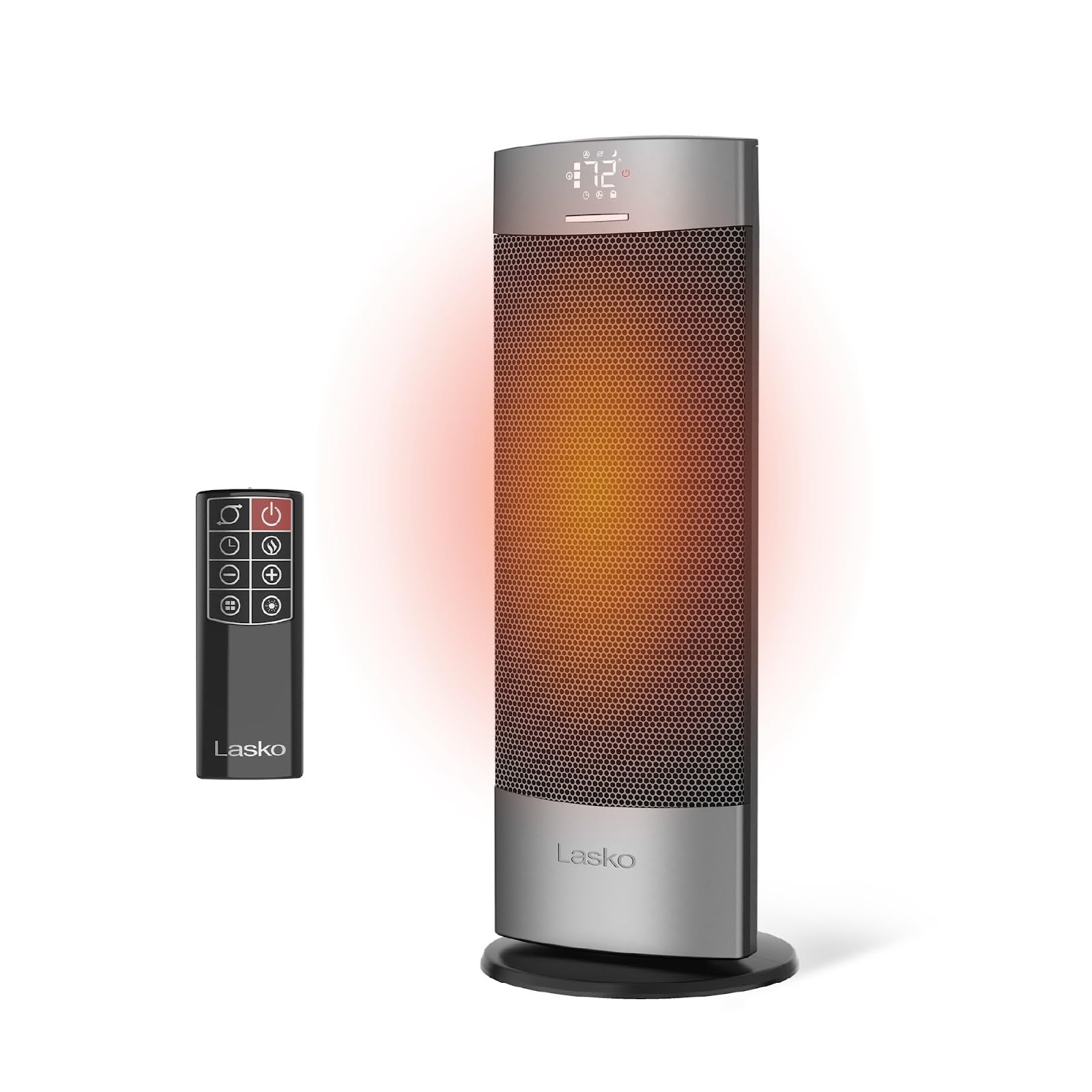

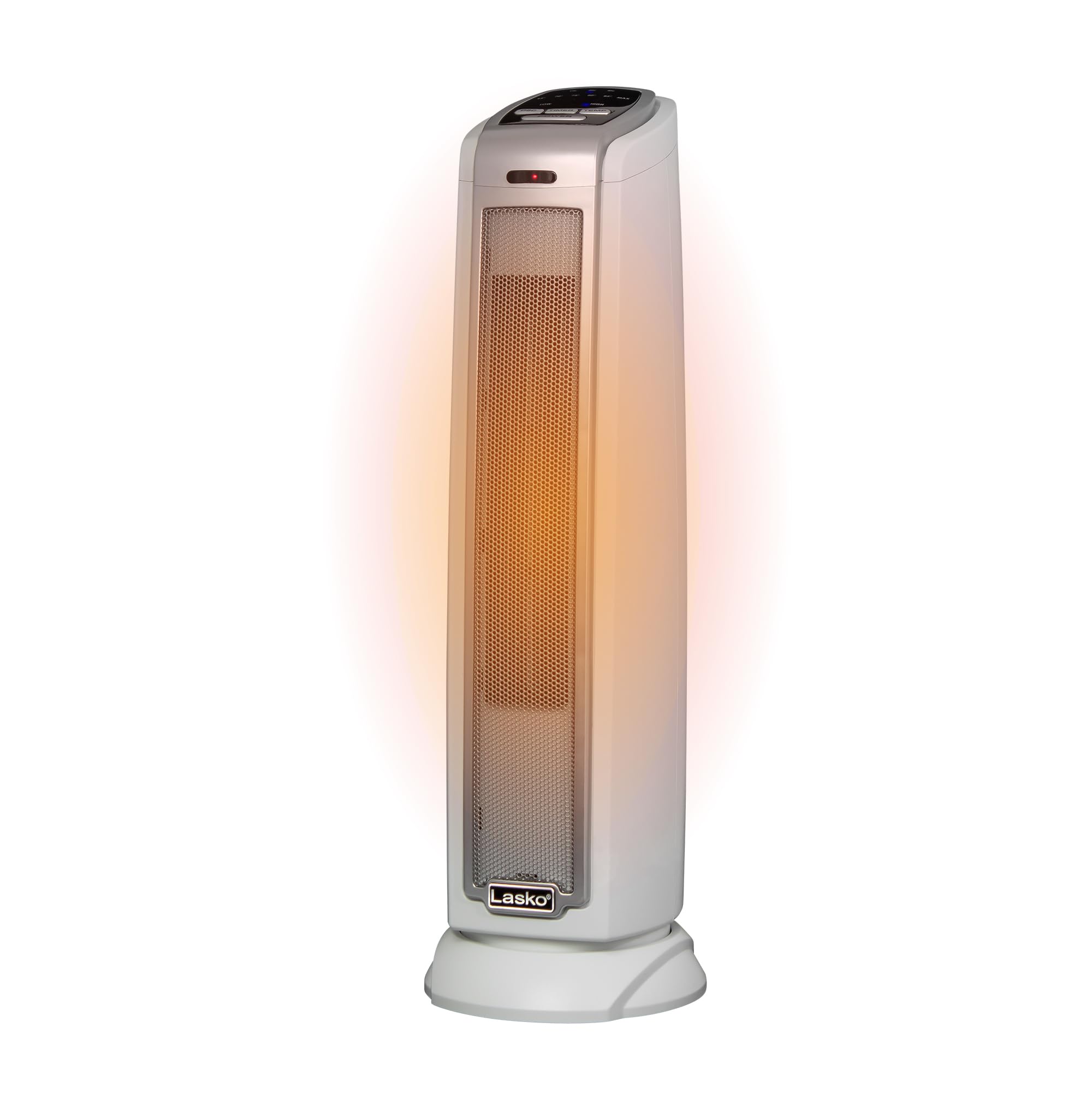


Ceramic Heater Styles Compared at a Glance
Compact personal heaters are small boxes that sit on a desk or on the floor near your feet. They use less power on low settings and suit one person in one spot. Tower heaters are tall and slim, often with oscillation, and they spread air across a wider area. Larger console style models have bigger fans and stronger airflow for open living spaces.
None of these styles is automatically better. A compact unit in a drafty living room will run at full power and still fall short. Match the style to the room first, then compare features within that style.
Three Ceramic Heater Styles Worth Considering
Versatile Midsize Models for Most Rooms
A midsize floor model with two heat settings, a thermostat, and oscillation covers the widest range of homes. It can hold a steady temperature in a bedroom at night and move to a living room during the day. Look for a carry handle, a stable base, and controls you can read from standing height. This is the safest default style if you heat one main room and want simple, flexible use.
Compact Personal Models for Tight Budgets
Small personal heaters are the lowest cost way to warm a desk, a reading chair, or the space under a table. Many run at lower wattage on their low setting, which helps in older rooms with limited circuits. The trade off is reach. Warm air fades a few feet from the unit, so these models warm people more than rooms. Choose one only when your goal is a single warm spot.
Tower Models as an Upgrade Choice
Tower heaters earn their higher price through reach and convenience rather than raw heat, since most home models share a similar top wattage. Oscillation moves warm air across a seating area, and a remote, a timer, and a clear display make daily use easier. A slim tower also fits into a corner with less floor clutter. Pick this style for larger seating areas or rooms where several people sit apart.
How to Evaluate Ceramic Heaters
Start with coverage and wattage, because those limits decide whether a heater can do the job at all. Next check noise on the low and high fan settings, since a loud unit will annoy you in a bedroom or on calls. Then compare the thermostat, safety switches, and timer. Smart controls are a bonus, never a substitute for the basics.
How to Choose the Right Space Heater
The steps below follow the order that matters most. Size and placement come first, controls and cost come after, because no feature can fix a heater that is too small for the room or placed where its air cannot flow.
Size and Form Factor
Measure the floor spot before you shop, and leave room around the unit for air to enter and leave freely. A compact model fits on a desk but should never sit near loose paper or fabric. Tower models need a flat, stable floor area and enough swing room for oscillation. Wider console models move more air but can block walkways in small rooms. Pick the shape that fits your safest open spot, not just the shape that looks best in photos.
Type
All ceramic heaters use fan driven warm air, but they differ from other types in feel and pace. Ceramic units heat air quickly and cool down soon after you switch them off. That makes them good for short sessions and rooms you enter and leave often. They do not store heat, so the room cools faster than it would with a reservoir style heater. Later in this guide you will find a direct comparison with the other main types.
Features Worth Paying For
An adjustable thermostat is worth the most, because it stops the heater from blasting full heat once the room reaches your set point. A tip over switch and overheat protection are essential safety basics, not extras. A timer helps when you want the room warm at wake up time and off after you leave. A remote matters if the heater sits across the room. Eco mode can trim use by lowering output once the target is near, but it cannot beat correct sizing.
Room Size and Coverage Ratings
A common rule of thumb is about 10 watts of heat for each square foot when the heater is the main heat source in a room with average insulation. On that basis, a 1500 watt model suits a room of about 150 square feet, while a small 750 watt setting suits a personal zone or a tiny room. Drafts, high ceilings, and open doorways raise the power you need. In a bigger space, read our guide to the best large room space heater choices before assuming one unit will cover it all.
Running Cost and Energy Use
A heater on its 1500 watt setting uses 1.5 kilowatts, so one hour at full power uses 1.5 kilowatt hours of electricity. Multiply that figure by the rate on your power bill to get the cost per hour, then multiply by your daily hours for a daily total. Lower settings and thermostat cycling cut that number, since the element is not drawing full power the whole time. Keep a simple note of your daily hours for one week to get a realistic monthly figure rather than guessing.
Noise Levels for Bedrooms
Every ceramic heater has a fan, so none is silent, and the high setting is always the loudest. For sleep, what matters is a low setting that stays smooth and even, without clicking as the thermostat cycles or rattling from a loose grille. Place the unit on a hard, level floor rather than carpet that can tilt it or block intake vents below. If light sleep is your main concern, compare the dedicated options in our guide to the best space heater for bedroom use as well.
Filters, Tanks, and Maintenance
Ceramic heaters have no water tank and no fuel to refill, which keeps upkeep short. Most have a rear air intake with a simple dust filter or mesh screen. Vacuum that screen every few weeks during heavy use, since a clogged intake forces the fan to work harder and can trip overheat protection. Wipe the outer case with a dry cloth while the unit is unplugged and cool. Store it indoors in a dry spot once the cold season ends.
How Much Should You Spend?
Basic compact models often cost under $50 and cover personal spot heating with simple dial controls. Midsize models at about $50 to $100 usually add a proper thermostat, oscillation, and a timer, which is the tier most buyers need. Tower and feature rich models at about $100 to $200 add remotes, displays, and wider swing. Paying more does not buy much more heat, since top wattage is similar across tiers, so spend on controls and fit rather than on power claims.
Ceramic and Other Space Heaters: Pros and Cons
The strength of a ceramic heater is speed. Warm air reaches you within a minute or two, and the case stays cooler than exposed element designs. The weakness is that the warmth depends on moving air, so it fades quickly once the unit stops, and the fan adds some noise. Ceramic heat also dries the feel of the air in a small closed room over long sessions.
Other types solve different problems. Our infrared vs ceramic heater comparison explains how infrared models warm people and objects directly, which can feel better in drafty spaces where moving air loses heat. Our oil filled vs ceramic heater guide covers the slow, silent, stored heat that suits all night bedroom use. If your room is small and you only need your own seat warm, a compact personal model may be all you need.
Choose ceramic when you want quick warmth, portability, and simple controls at a fair price. Choose another type when silence matters more than speed, or when you want heat that lingers after switch off.
FAQ
What is the best ceramic space heater?
The best choice is the model that matches your room size, has a thermostat and full safety switches, and runs quietly enough for that room. There is no single winner for every home. A useful habit is to try your pick during the return window, on both a mild evening and a cold one. If it cannot hold a steady temperature on the cold night without running at full power nonstop, exchange it for a better fitting style.
Are ceramic space heaters worth it?
Yes, when you heat one occupied room and lower the central thermostat for the rest of the home during that time. That is where the savings come from, since you stop paying to warm empty rooms. If you run a ceramic heater while the whole home system stays at the same setting, you are only adding cost. They also earn their keep in rooms that the main system reaches poorly, such as a converted garage office.
Are space heaters safe?
Modern ceramic models are safe when you follow a few firm rules and use the built in protection features. Keep the heater at least 3 feet from bedding, curtains, furniture, and stored boxes, and never leave it running in an empty home. Before each cold season, check the cord and plug for damage and check that your smoke alarms work. For the full rule set, read our guide answering are space heaters safe in detail, and stop using any heater that smells of burning or trips your breaker often, and have an electrician check the circuit.
How much does it cost to run a space heater?
Cost depends on wattage, your electricity rate, and hours of use, so two homes can pay very different amounts for the same heater. One habit cuts cost in any home: preheat the room for a short burst, then let the thermostat hold the temperature at a lower fan setting. Running at full power for the first minutes and coasting after that uses less energy than sitting next to a weak heater that never quite warms the room and never cycles off.
Can you plug a space heater into an extension cord?
No. Plug a space heater directly into a wall outlet, never into an extension cord, a power strip, or a plug in timer that is not rated for heater loads. Cords and strips can overheat under the steady draw of a heater, even when they feel fine with lamps or chargers. If the outlet is too far from where you sit, move the heater or your chair instead. This is one rule with no safe workaround.
What size space heater do I need?
Start by measuring your room length and width, then note whether the door usually stays open or closed while you heat it. An open door to a hallway effectively adds that space to the load, which is a detail the simple watt per square foot rule misses. Also note which wall is an outside wall, since a room with two outside walls loses heat faster. Give that full picture more weight than the square foot figure printed on the box.
Final Thoughts
Pick the style that fits your room, insist on a thermostat and full safety switches, and keep running cost in view from the start. The product table above pulls those points together so you can compare styles side by side. Chosen with care, the best ceramic space heater gives you fast, focused warmth exactly where you spend your time, without heating rooms nobody is in.


