
Best Ceramic Knife Sharpeners (2026): Buying Guide
Disclosure: We may earn a commission when you buy through links on this page, at no extra cost to you. As an Amazon Associate I earn from qualifying purchases. Learn more

Choose the best ceramic knife sharpener for your steel knives: compare pull through, rod and electric formats by angle, steel, storage and budget.
Dinner is halfway done, the onions are waiting, and your main kitchen knife crushes a tomato instead of slicing it. You do not need a drawer full of sharpening gear. You need one tool that fits your counter, your household, and the knives you actually own. The best ceramic knife sharpener for your home is the one whose angle, grip, and upkeep match your routine, and the product table helps you compare current options quickly.
Start with two facts about your kitchen. Note how many steel knives you use each week and how much storage space you can give up. If most of those blades are everyday cooking blades, our guide to the best knife sharpener for kitchen knives covers the wider category, while this article stays focused on ceramic abrasives.






Quick Answer: Ceramic Sharpening in Brief
A ceramic sharpener uses hard ceramic rods, wheels, or slots to refine a steel edge gently. It removes very little metal, so it works best for keeping a decent edge keen rather than rebuilding a damaged one. That is why the best ceramic knife sharpener options for homes tend to be compact, quiet, and simple to store.
- Pull through models guide the blade for you and suit cooks who want a repeatable result with little practice.
- Ceramic rods give you more control over angle and pressure once you learn a steady stroke.
- Electric models with a ceramic stage add speed for larger sets, with ceramic doing the final refining work.
Before You Buy: A Quick Checklist for Choosing a Knife Sharpener
Work through the five checks below before you look at price. A sharpener that clashes with your blade angle or your steel will disappoint, however sturdy it feels in hand.
Which Type Fits Your Routine
Match the format to how often you cook and how much technique you want to learn. A pull through model lives in a drawer and needs only a slow, steady draw, so it suits busy weeknight cooking. A ceramic rod asks you to hold a consistent angle, but it reaches curved blades and larger knives with ease. A whetstone gives the most control and the steepest learning curve. If you are new to all three, read our notes on how to use a knife sharpener first.
Steel Type and Hardness
Most German style kitchen knives use steel rated at about 54 to 58 HRC, while many Japanese style knives sit at about 60 to 62 HRC and hold a finer edge for longer. Ceramic abrasive is hard enough for both, and its fine surface suits harder steel because it refines without tearing at the edge. Softer steel dulls sooner, so it benefits from brief, frequent sessions. Very hard blades need light pressure only, since pressing down can chip a fine edge.
Blade Geometry: German vs Japanese
German style blades are usually ground at about 20 degrees per side, giving a tough edge that tolerates bones, frozen food, and heavy boards. Japanese style blades are often ground at about 15 degrees per side, which slices with less effort but needs gentler handling. Your sharpener must match or adjust to the angle your knives already carry. Forcing a fine Japanese edge through a slot set for a wider angle reshapes the bevel over time, while a narrow slot can leave a broad German edge barely touched.
Grip, Stability, and the Bolster
A sharpener should stay planted while both hands are busy, so look for a broad base, a handle you can hold without crowding the slot, and feet that grip the counter. Test the stance with dry hands before first use and picture it in your actual workspace, not a showroom. The bolster on some knives also matters here. A thick bolster runs the full depth of the blade and can stop the heel from entering a shallow slot, leaving the rear of the edge dull while the tip sharpens.
Realistic Budget Ranges
Simple ceramic rods and compact pull through models often cost about $10 to $20, enough for routine upkeep of a small set. Options at about $20 to $50 usually add guided angles, sturdier bases, or a second coarser stage for duller blades. Electric models with a ceramic finishing stage tend to run about $50 to $150, a sensible step only if you maintain many knives. Spending more mainly buys guidance and stability, not a sharper result on its own.
Types Compared: Three Ceramic Formats for Real Homes
Instead of ranking individual models, compare the three formats below against your space, your household size, and how your knives are used each week.
Compact Pull Through Types for Small Counters and Daily Upkeep
These are the drawer friendly choice for apartments, shared kitchens, and anyone who cooks with two or three main knives. The guided slot sets the angle for you, so results stay consistent even when you are tired or rushed. Storage is easy and there is no cord to manage. The limits are fixed angles and modest power. A badly dulled blade may need many passes, and knives with thick bolsters or unusual grinds may not sit correctly in the slot.
Ceramic Rod Types for Cooks Who Want Control
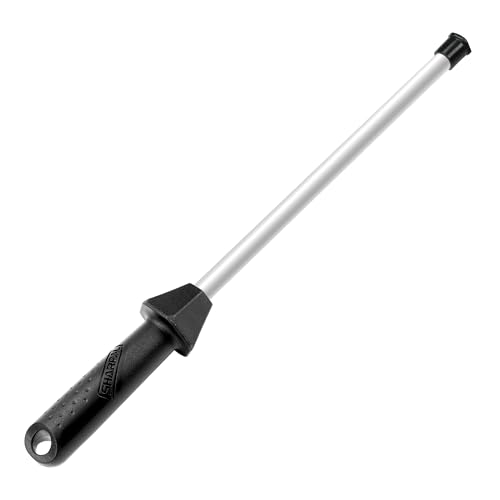
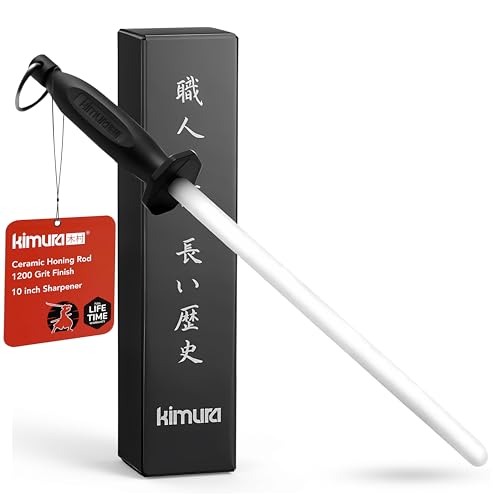
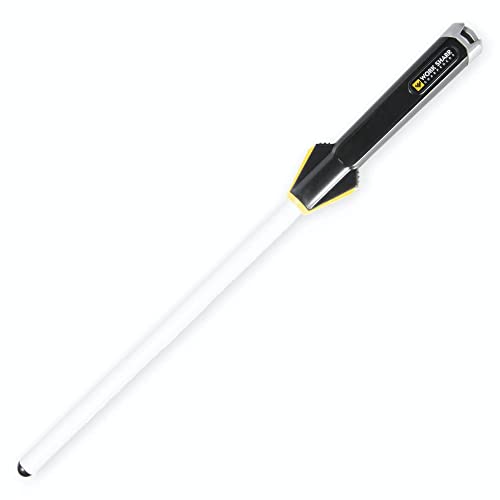
A ceramic rod works much like a traditional honing steel, except its surface also removes a trace of metal as it realigns and refines the edge. It suits cooks who own mixed sets, including curved boning knives and longer slicing knives that slots handle poorly. Length matters, so pick a rod at least as long as your longest blade. The trade off is technique, since a wobbling hand can round the edge rather than sharpen it.
Electric Types With a Ceramic Finishing Stage for Larger Households
When a family cooks daily and owns a full block of knives, an electric model shortens the job and keeps angles uniform across the whole set. Ceramic usually appears as the final stage, polishing the edge after a coarser stage restores it. If that speed appeals to you, compare the format against the wider field in our guide to the best electric knife sharpener. These units need counter space, a power outlet, and more cleaning, and they cost the most to replace if the motor fails.
How to Compare Ceramic Sharpeners Fairly
Judge any model on five plain criteria drawn from maker specifications and verified buyer feedback, not on bold claims. Check the stated grit or stage purpose, the angles the slots or guides support, and whether the base stays steady under a slow pull. Look at how the ceramic parts are cleaned and whether they can be replaced. Finally, weigh total value for your household size.
Strengths and Limits: Ceramic Compared With Other Abrasives
Ceramic sits in the gentle middle of the abrasive range, and that position explains both its appeal and its limits. It refines more truly than a plain steel rod, which mainly straightens an edge, yet it cuts far less aggressively than diamond or carbide. Understanding that middle ground also clarifies honing vs sharpening, since ceramic does a little of both in a single pass.
- Strength: a fine, smooth finish on steel edges, very little metal removed, no oil or water needed for most formats, and quiet use at any hour.
- Strength: compact sizes suit small homes, and running costs stay low because there are no belts, pads, or filters to replace on a schedule.
- Limit: ceramic works slowly on a truly dull blade, and it will not grind out chips or a broken tip.
- Limit: ceramic rods and wheels are brittle, so a drop onto tile can crack the very part that does the work.
Common Mistakes to Avoid
- Forcing the angle: using a slot that does not match your blade angle, which slowly reshapes the bevel and dulls the edge you meant to save.
- Pressing too hard: pushing down through a pull through slot, which can gouge the edge and wear the ceramic unevenly.
- Sharpening a damaged blade: expecting a fine ceramic stage to repair chips, which leads to endless passes and a tired, rounded edge.
- Ignoring the bolster: missing the heel section on bolstered knives, so part of the blade stays dull and tears food.
- Confusing the product: buying a ceramic abrasive sharpener to restore a ceramic blade, when ceramic blades need a diamond abrasive instead.
- Skipping the wash: putting a freshly sharpened knife straight back to food without washing it, leaving fine metal dust on the edge.
Cost of Ownership and Care
Ongoing costs are refreshingly low. Manual ceramic sharpeners use no power and have no consumable parts, so your only expense is a replacement if the ceramic cracks. Keep the tool in a drawer or sheath rather than loose with heavy pans, and never use it as a lever or rest a board on it. Wipe rods and slots with a damp cloth or a soft brush after use to clear metal particles, and dry the tool fully before storing it.
Electric models add modest power use and periodic cleaning of their guides and housings. For step by step detail that applies across formats, see our walkthrough on how to clean a knife sharpener and follow it after every few sessions. Clean ceramic cuts more evenly, so this small habit extends both the life of the sharpener and the time your knives stay keen between sessions.
Your Questions, Answered
Are ceramic knife sharpeners worth it for home use?
Yes, if your knives are in fair shape and you want simple upkeep between deeper sharpening sessions. Ceramic keeps a working edge keen with very little effort, cost, or storage space, which suits most home cooking well. It is less worthwhile as your only tool if your knives are already badly dulled or damaged, because its fine abrasive restores edges slowly and cannot rebuild a bevel that has worn away.
Can a ceramic knife sharpener restore a chipped blade?
No, a ceramic sharpener cannot restore a chipped blade in any practical timeframe. Chips need a coarse abrasive, such as a low grit whetstone or a diamond plate, to grind the edge back to sound metal first. Once that repair is done, ceramic becomes useful again as the finishing step. Trying to skip the repair stage usually leaves the chip in place while the rest of the edge gets overworked.
How often should you use a ceramic knife sharpener on kitchen knives?
For a home cook who prepares dinner most nights, a few light strokes once a week or so usually keeps an edge lively. Softer German style steel benefits from slightly more frequent attention, while harder Japanese style steel can go longer between sessions. Let cutting feel guide you rather than a calendar. When tomatoes start to skid or onions make your eyes water from crushing, the edge is telling you it is time.
Can a ceramic knife sharpener sharpen serrated knives?
A ceramic rod can touch up serrated knives, because its round profile can enter each scallop one at a time and refine the flat side and the gullets gently. A pull through slot cannot do this job, since the teeth do not track evenly through a fixed guide. Work slowly and sharpen only the beveled side of the serrations. Fully restoring a worn serrated edge is slow hand work, and many owners replace budget bread knives instead.
Does a ceramic knife sharpener work on pocket knives?
A ceramic rod can maintain a pocket knife edge well, especially for light food and camp tasks, but compact folding blades often have thicker grinds and tougher steels that respond slowly. Check blade length against rod length and keep fingers behind the edge at all times. Guided systems built for smaller blades usually give a steadier angle on these knives.
Final Thoughts
Choose the format that fits your space first, then confirm it matches your blade angles and steel. A compact pull through suits small homes, a rod rewards cooks who enjoy control, and an electric model earns its space in busy family kitchens. Whichever route you take, the best ceramic knife sharpener is the one you will actually use each week, so favor steady handling and easy cleaning over extra stages. Use the product table above to compare your shortlist, and see our overview of the best knife sharpener options if you want to weigh ceramic against every other abrasive type.


