
Best Ceramic Honing Steels (2026): Buying Guide
Disclosure: We may earn a commission when you buy through links on this page, at no extra cost to you. As an Amazon Associate I earn from qualifying purchases. Learn more

Choose the best ceramic honing steel by rod length, grit, blade hardness and handle, with care tips that keep your knives sharp between sharpenings.
You are halfway through slicing tomatoes for dinner and the knife starts to tear the skin instead of cutting cleanly. The edge is not dull enough for a full sharpening session, but it has folded slightly from daily use. Choosing the best ceramic honing steel for that moment means your knife feels sharp again in a few light strokes, without taking metal away too fast or risking chips on a harder blade.
This guide helps you choose by the space you have, the knives you own, and your budget. It covers size, grit, hardness match, handle comfort, and care, so you can compare current options in the product table with confidence.
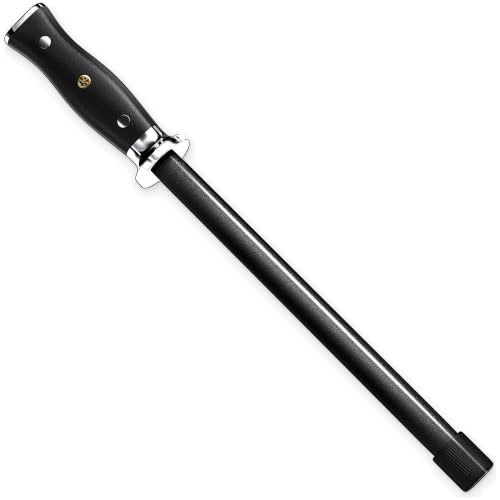


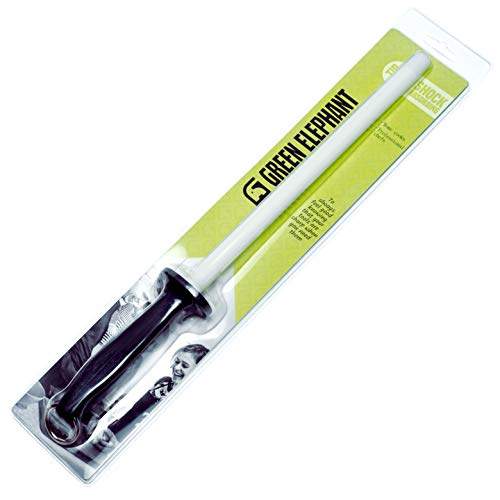
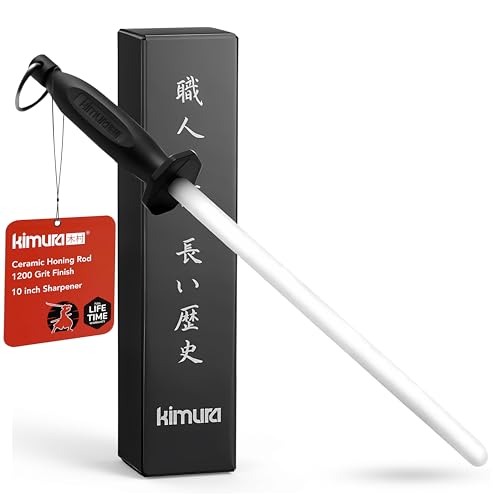
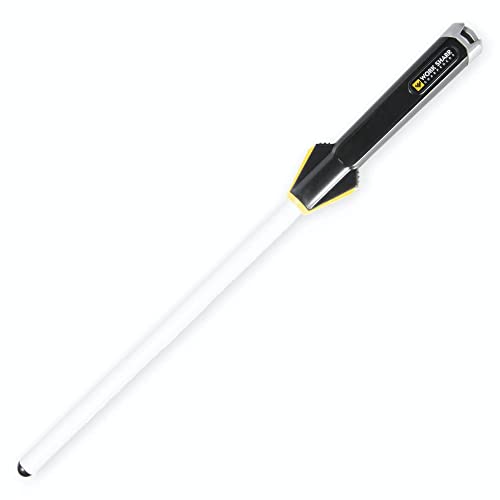


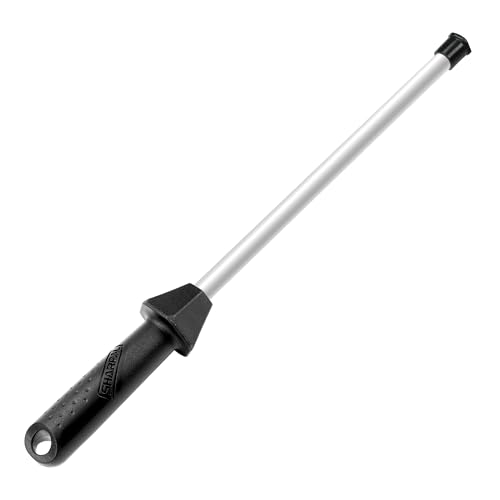


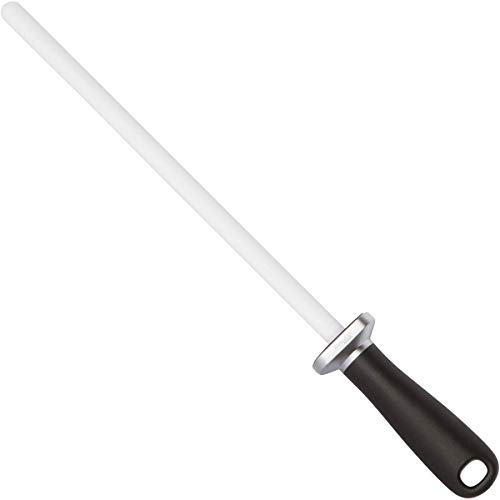
Quick Answer: Main Types to Consider
Ceramic rods fall into a few useful groups for home kitchens. A fine grit rod suits daily upkeep for most Western and Japanese knives and gives a smooth, polished feel. A medium grit rod restores a tired edge a little faster when you cook often and work with dense vegetables or thick cuts of meat.
A longer rod suits larger chef knives and busy family kitchens. A shorter, lighter rod suits a small apartment kitchen, a single cook, or a drawer with limited room. Blade hardness and length should decide the group first, and price should come second.
Before You Buy: A Quick Checklist for Choosing a Honing Steel
Start with your own knives and kitchen, not with a rating or a brand name. The points below keep the choice grounded in fit, safety, and daily ease.
Size: Match It to Your Space
Rod length should be at least as long as your longest blade, and a little extra length gives room for a full stroke without the tip slipping past the end. A 12 inch rod handles an 8 inch or 10 inch chef knife with ease and suits a family kitchen where large knives are common. A 10 inch rod works well for most 8 inch knives and fits more easily in a drawer or a narrow knife block. Measure your storage slot before you order, because a rod that does not fit where you planned to keep it will end up stored unsafely or not used at all.
Which Type Fits Your Routine
Ceramic is hard, smooth, and gentle with light pressure, and it removes very little metal while it straightens the edge. It suits cooks who hone often and want a refined edge. Steel rods are tougher if dropped, but many are coarser and can feel harsh on hard blades. If you want a more aggressive option for older, softer knives, compare the best diamond honing steel as a repair tool rather than a daily one. For a broader view, see our guide to the best honing steel before you decide.
Steel Type and Hardness
Hardness matters because a ceramic rod must be harder than the blade it touches, yet the blade should not be pushed with force. Most home knives sit in a moderate hardness range, while many Japanese knives run harder and thinner. A fine ceramic surface pairs well with hard blades when you use light strokes and a steady angle, because it polishes rather than scrapes. Softer blades respond quickly too, but they fold again sooner, so you may hone them more often. If you do not know the hardness of your knives, choose fine grit and light pressure first.
Blade Geometry: German and Japanese Knives
German style blades tend to be thicker, heavier, and ground at a wider angle, so they tolerate a medium or fine ceramic rod and a little more contact during the stroke. Japanese style blades tend to be thinner and ground at a narrower angle, so they need a fine surface, fewer strokes, and careful angle control. If your set is mostly Japanese, read our guide to the best honing steel for japanese knives for fit notes specific to those thin edges. Mixed sets do best with a fine ceramic rod that can serve both styles.
Handle, Bolster and Balance
You hold the rod in the air or rest the tip on a board while the other hand moves the knife, so grip and balance shape safety and control. Look for a handle that fills your hand without crowding your fingers, a guard that keeps the blade from sliding toward your hand, and a loop if you plan to store it on a hook. A heavy handle can tire a smaller hand, while a very light rod can feel unsteady with a large knife. Choose the weight that lets you keep the rod still through the stroke.
Realistic Budget Ranges
Most home buyers will find a sound ceramic rod for about $20 to $50. Options under $20 often have a fine surface and a simple handle, and they suit a small set of knives and light daily use. Options closer to about $50 tend to add a longer rod, a more secure grip, a stronger guard, or a storage sleeve. Pay for length and grip that fit your knives and your hand, not for extra claims. A rod you store well and use gently will serve you longer than a costly rod knocked around a drawer.
Types Compared: Choosing by Home and Knife Set
Instead of chasing a single winner, match the type to your household. A compact fine grit rod suits one or two cooks with mostly 8 inch knives, limited drawer space, and a habit of honing little and often. It stores easily, costs less to replace if it breaks, and keeps everyday edges tidy with minimal effort.
A full length fine grit rod suits a family kitchen with larger knives and several people sharing the same set. The extra length reduces awkward strokes on big blades and makes the motion more consistent for less experienced users. It needs a longer drawer, a tall block slot, or hook storage, so confirm the space first.
A dual surface rod, with a medium side and a fine side, suits a home where knives vary in age and condition. Start on the medium side when an edge feels tired after heavy prep, then finish on the fine side for polish. That flexibility helps with both thick German blades and thinner blades, but using the coarser side too often or with heavy pressure can wear an edge faster than needed.
How to Judge Quality Before You Order
Read the grit rating, the rod length without the handle, the handle material, and the care instructions, and treat those four facts as your core evidence. Check verified buyer comments for patterns about chipping, surface smoothness, and grip comfort rather than single remarks. A clear grit rating and honest care guidance are good signs, while vague claims about restoring any knife in seconds are not. If the listing does not state grit or usable length, keep looking.
Ceramic Compared With Other Honing Steels
What most home cooks like about ceramic is the smooth feel and the polished edge it leaves, especially on harder blades that feel rough after a coarse steel rod. It also stays effective with simple care and does not rust. Used correctly, it supports the edge between sharpening sessions without turning upkeep into a project.
The main limits are fragility and pressure control. Ceramic can chip or break if it drops on tile or stone, and it can damage a blade if you press hard or strike the edge against it. It also cannot fix a truly dull or damaged edge, because honing straightens and refines rather than rebuilding the edge. If you need guidance on angle and motion, follow a clear walkthrough on how to use a honing steel and practice slowly first.
Common Mistakes to Avoid
- Buying a rod that is shorter than your longest knife, which forces short strokes and makes the tip run off the end.
- Pressing hard to speed things up, which can chip a hard edge or scar the ceramic surface instead of straightening the edge.
- Using a coarse or medium surface every day on a thin blade, which wears the edge faster than fine daily upkeep would.
- Storing a ceramic rod loose in a crowded drawer, where contact with other tools can chip it before you notice.
- Expecting honing to repair a dull or chipped knife, which leads to more force and more damage when sharpening is what the blade needs.
Cost of Ownership and Care
Ownership cost stays low when you protect the rod and keep it clean. There are no parts to replace on a schedule and no extra supplies beyond a soft cloth and mild soap. The real cost risk is breakage from a drop or loose drawer storage, so a sleeve, a block slot, or a hook is a small and worthwhile safeguard.
After use, wash the rod by hand with warm water and a little soap, rinse it, and dry it fully before you store it. Dark marks from blade metal are normal and usually lift with a gentle rub from a soft sponge. For a fuller routine, see the steps for how to clean a honing steel. Never put a ceramic rod in a dishwasher, where jostling can cause chips.
Your Questions, Answered
What is the most reliable honing steel brand?
Reliability in this category comes more from grit accuracy, a sound handle, and careful storage than from a name alone. Look for a maker that states grit and length clearly, offers a guard, and gives plain care instructions. A modest rod from a transparent maker, stored in a sleeve and used with light pressure, will usually outlast a famous name that is tossed loose into a drawer and dropped twice.
How do you clean a honing steel?
Wash a ceramic rod by hand in warm, soapy water, rinse it well, and dry it at once with a soft towel. If grey marks remain, rub them gently with a damp sponge and a small amount of mild cleanser made for kitchen surfaces, then rinse again. Cleaning after heavy prep keeps metal residue from building up and dulling the feel of the surface during your next session.
Is a honing steel worth it?
Yes, if you cook often and your knives are sharp but feel less keen after a week or two of use. A few light strokes before prep can restore that clean bite on tomato skin and herbs, so you postpone a full sharpening session. It is not worth it as a fix for a neglected, truly dull blade, since that blade needs sharpening first and honing second.
How long does a honing steel last?
A ceramic rod can last for years in a home kitchen when it is stored with protection and never dropped on a hard floor. The surface wears very slowly because ceramic is hard, so loss of performance usually traces to chips, cracks, or heavy residue rather than age alone. Inspect the rod under good light now and then, and replace it if you find a chip that catches the blade during a stroke.
Are ceramic honing steels worth it?
They are worth it for cooks with harder or thinner blades who want a fine, smooth finish and who can handle a rod with care. The value shows in daily comfort, cleaner cuts, and less metal removed than a coarse rod would take. They are less worth it in a rough, shared space where tools are often dropped, because a tougher steel rod may survive that setting better even if its finish feels less refined.
What is the best ceramic honing steel for a small kitchen?
For a small kitchen, the best fit is a 10 inch fine grit rod with a secure guard and a sleeve for hook storage. That size covers most 8 inch knives, fits a standard drawer with room to spare, and keeps the motion simple for one cook working in a tight space. Measure the drawer before you buy, and choose storage that keeps the rod apart from heavy pans and tools.
Final Thoughts
The right rod matches your longest blade, your blade hardness, and the storage you have at home. A fine grit ceramic rod in the right length will cover most households, while a dual surface option helps a mixed and heavily used set. Before you order, look back at the product table above, confirm grit, length, and guard, and choose the best ceramic honing steel that you will store safely and use with a light, steady hand.


