
Best Cast Iron Woks (2026): How to Choose the Right One
Disclosure: We may earn a commission when you buy through links on this page, at no extra cost to you. As an Amazon Associate I earn from qualifying purchases. Learn more

Choosing the best cast iron wok comes down to size, base shape, and weight. Match them to your stove and household with this practical buying guide.
Your stir fry is ready to cook, but the pan is crowded, the vegetables steam instead of sear, and your heaviest pan is awkward to lift when full. Choosing the best cast iron wok for a real home comes down to fit more than flash. This guide matches size to your household, base shape to your stove, and weight to your storage and strength, using the comparison table below as a starting point.


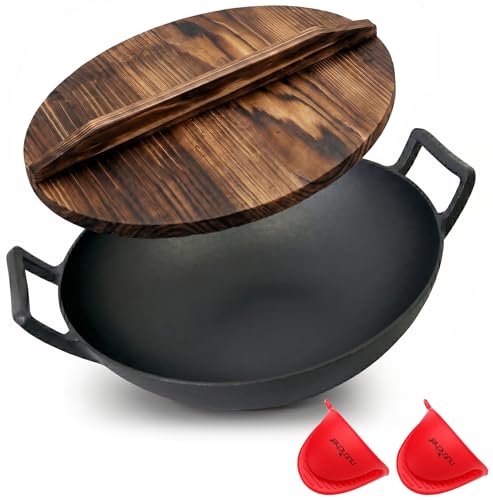


Quick Answer: What Matters Most in 30 Seconds
For most homes, a flat bottom cast iron wok in the 12 to 14 inch range is the sensible center. It sits stable on gas, glass top, and induction surfaces, serves two to four people without crowding, and stores in a normal cabinet. Weight is the fact shoppers underestimate most, because a wok that feels manageable empty grows tiring once oil and food are added. If you toss food often, favor the lighter end of the range.
Before You Buy: A Quick Checklist for Choosing a Wok
Size: Match It to Your Space and Household
A 12 inch wok suits one or two people and fits small burners, narrow stoves, and shallow cabinets. A 14 inch wok gives a family of three to five room to spread food in a single layer, which lets edges brown instead of steaming. A 16 inch wok serves a crowd but needs a wide burner and deep storage, and many home stoves heat its rim unevenly. Measure your burner and cabinet first, and if you are still weighing wok styles in general, see our guide to the best wok.
Which Type Fits Your Routine
Cast iron heats slowly and cools slowly, and that steadiness suits searing and braising in one pan. Carbon steel responds faster and weighs far less, which suits cooks who toss food constantly, and our guide to the best carbon steel wok covers that lighter route. Nonstick dislikes very high heat and metal tools, while stainless steel needs no seasoning but sticks more readily. For a direct comparison of heat, weight, and care, read carbon steel vs cast iron wok before you commit.
Features Worth Paying For and Ones to Skip
A helper handle opposite the main handle is worth paying for, because a full cast iron wok almost always needs two hands. A fitted lid earns its place if you steam dumplings, finish braises, or simmer sauces in the same pan, and a flat spatula shaped for the bowl helps you turn food without harming the seasoning. Skip large utensil bundles, novelty racks, and a wok ring sold with a flat bottom pan that does not need one. Also skip very thin cast iron that claims the benefits of the material without the mass that creates them.
Is Cast Iron Non Toxic?
Bare cast iron contains no PFAS and no PTFE coating, the main concern shoppers raise about many nonstick pans. Its surface is iron covered with seasoning, a hard layer formed when thin coats of oil are heated until they bond to the metal, and that layer repairs with further seasoning when it wears thin. If a wok carries a ceramic style coating instead, treat it as a coated pan, follow the maker heat limits, and expect the surface to age faster than bare iron.
Induction, Gas and Glass Top Compatibility
A flat bottom wok rests directly on gas grates, glass top surfaces, and induction cooktops, and cast iron is magnetic, so it works with induction when the base is truly flat. A round bottom wok needs a ring on most home stoves, can wobble, and may not register on induction at all, as our explainer on flat bottom vs round bottom wok details. On glass top, lift the wok instead of sliding it to avoid marks. On gas, check that the flame spreads under the base rather than licking far up the sides and overheating the handles.
Oven Safe Temperature and Handles
Two loop handles keep the profile compact for oven use and storage, but they give less leverage when you pour. One long handle plus a helper handle gives better control on the stove, yet needs more cabinet length. Wooden or plastic handles and knobs set the oven limit, so check the maker stated maximum for the exact configuration you buy rather than assuming the iron alone decides it.
Realistic Budget Ranges
At about $30 to $50, expect a basic bare wok, often smaller, with simple loop handles and seasoning you build yourself. At about $50 to $100, you gain a smoother casting finish, preseasoned surfaces that start easier, and a fitted lid on some styles. At about $100 to $200, you pay for refined design and enameled exteriors rather than a different cooking result. Above that range, gains narrow, and weight and fit guide you better than price.
Types Compared: Choosing by Home and Cooking Habit
The Mid Size Flat Bottom Type for Most Homes
This default shape runs 12 to 14 inches across, with a flat bottom and a helper handle, and it holds a sear when cold vegetables hit the pan. It covers stir fries, fried rice, steaming with a lid, and shallow braises, and it works across stove types if your household moves. Choose it if you want one wok for weekday meals without special accessories. Its main cost is weight, so confirm you can lift it full with two hands and oven mitts on before you buy.
The Smaller Bare Iron Type for Tight Budgets
A compact bare wok keeps the entry price low and the footprint small, which suits apartments, small households, and cooks deciding whether they like the material. You season it yourself and store it easily, and you give up some cooking area and a lid in the box. It suits small batches of noodles, greens, or fried eggs, and later serves well as a second pan for sides.
The Larger Heavy Type for Long Term Value
A larger heavy wok with a lid and strong helper handles is a buy once choice for cooks who entertain, batch cook, or braise often in the same vessel. The extra surface browns meat without a second pan, and the lid turns it into a steamer and a braiser. Choose it only when your burner, storage, and typical head count all support the size, because an oversized wok that stays in its box delivers no value.
How Cast Iron Woks Are Compared
Cast iron woks are best compared on heat retention, durability of the casting, material safety, stovetop and oven compatibility, and the effort needed to clean and season them. Stated weight and dimensions matter more for daily comfort than marketing claims. Buyer review patterns help flag recurring issues such as rough casting or unstable bases.
What We Like and What We Do Not Like About Cast Iron Compared With Other Woks
Once hot, cast iron keeps its temperature when you add a full load of food, so ingredients sear instead of stewing in their own juices. It tolerates metal utensils, very high stove heat, and oven use, and a damaged seasoning layer can be rebuilt at home. That repairable surface beats coatings that, once worn, mean replacing the whole pan. Carbon steel still wins for fast tossing, and nonstick stays easier for delicate foods at low heat.
- Like: strong heat retention for searing large batches without a sharp temperature drop.
- Like: no synthetic coating on bare iron, and seasoning can be renewed at home.
- Do not like: heavy to lift, slow to preheat, and slow to respond when you cut the heat.
- Do not like: needs prompt drying and light oiling, so it punishes a long soak in the sink.
Common Buying Mistakes to Avoid
- Buying a 16 inch wok for a small burner, so the rim stays cool and food steams instead of sears.
- Choosing round bottom for a glass top or induction stove, so the pan wobbles or fails to heat at all.
- Ignoring the weight when full, so the wok becomes a pan you avoid lifting on busy nights.
- Paying for large accessory bundles, so storage fills with tools you never reach for.
- Skipping a helper handle on a large size, so pouring and draining become unsafe with mitts on.
- Expecting a preseasoned surface to be fully nonstick on day one, so the first sticky meal feels like a defect.
Cost of Ownership and Care
Running costs stay low, with oil for seasoning, a stiff brush, and a dry storage spot costing about $10 to $25 to set up if you own none of them, and no replacement filters or coatings to schedule. The real cost is a few minutes after each wash: dry the wok fully, warm it briefly, and wipe on a thin film of oil. When the surface looks dull or patchy, our guide on how to season a wok covers the full restore process.
Daily cleaning is simpler than new owners fear: wash with hot water and a brush, use a little soap when needed, and dry the pan right away. Rust spots respond to scrubbing and fresh seasoning, so they rarely end the life of the pan. For the full routine, including care after acidic sauces, see how to clean a wok. Store the wok dry, with a cloth between it and any pan stacked on top.
FAQ
Are cast iron woks worth it for home cooks?
Yes, if you cook hot and often and accept the weight and the drying routine. A cast iron wok pays off most in homes that sear meat and vegetables several nights a week and want a pan that moves to the oven. It pays off least for cooks who need a pan that a child or an older adult must lift alone, where a lighter pan will see more use.
How long does a cast iron wok last?
A sound casting can last for decades, because there is no coating with a fixed lifespan and the seasoning can be rebuilt whenever it thins. The failures that end a wok early are cracks from a hard drop onto tile, or deep rust left untreated in a damp cabinet. Treat it as a permanent pan, and spend your money on a good lid and spatula.
Can a cast iron wok go in the dishwasher?
No, a dishwasher cycle strips seasoning and invites rust, because the pan sits in water and strong detergent far longer than a hand wash takes. The faster route is a short wash while the pan is still warm, then a minute on a warm burner to dry it fully. That burner drying step is the habit most owners miss, and it prevents the faint rust ring that forms when a heavy pan air dries slowly in a humid kitchen.
What size cast iron wok suits a family of four?
A 14 inch wok is the usual sweet spot for four, giving enough floor space to cook protein and vegetables without deep stacking. Drop to 12 inches if your burner is small or your family cooks sides separately. One extra check helps: confirm the wok plus its handles fits inside your oven if you plan to finish dishes there, because handle span, not bowl diameter, is what usually blocks the oven door from closing.
Does a cast iron wok need a wok ring?
A flat bottom cast iron wok does not need a ring, and adding one can reduce heat contact and make the pan less stable. A ring belongs with round bottom woks on gas burners, where it cradles the curved base above the grate. On induction or glass top, a ring is not a workaround, because it lifts the iron away from the surface that must sense and heat it. Choosing the flat base from the start solves that problem directly.
Final Thoughts
Start with fit: the right size for your household, a flat base for your stove, and a weight you can lift with confidence when the pan is full. Use the product table above to compare those basics across the types covered here, then choose the simplest configuration that meets them. When those pieces line up, the best cast iron wok is simply the one that stays in your weekly rotation, holds its heat, and asks for care you are glad to give.


