
Best Carbon Steel Wok: How to Choose for Your Kitchen (2026)
Disclosure: We may earn a commission when you buy through links on this page, at no extra cost to you. As an Amazon Associate I earn from qualifying purchases. Learn more

Choose the best carbon steel wok by stove type, size and bottom shape, with clear advice on steel thickness, handles, seasoning and daily care.
Your weeknight stir fry sticks, the vegetables steam instead of searing, and the pan feels either far too big for the burner or far too small for dinner. Choosing the best carbon steel wok solves most of that, because the right size, bottom shape and steel thickness make the pan heat fast, stay manageable and fit the way your household actually cooks. The product table lists current woks so you can match one to your stove and storage space.
This guide focuses on real homes rather than restaurant kitchens. You will see how household size, burner type and cabinet space change the choice, what each price range gets you, and which extras are worth paying for.
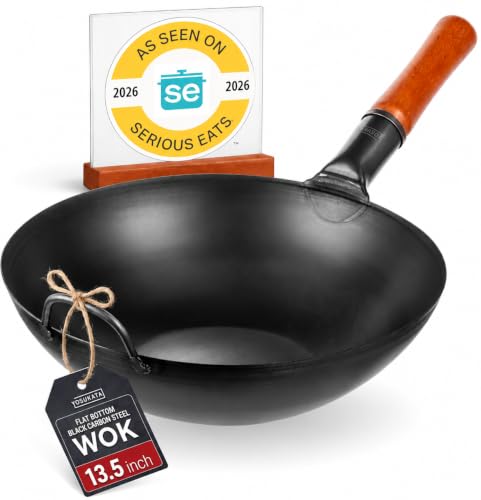

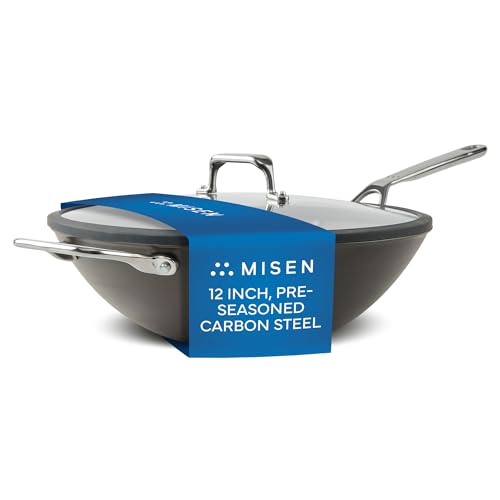
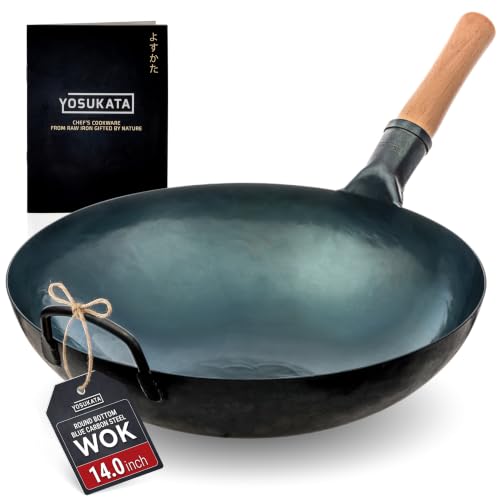
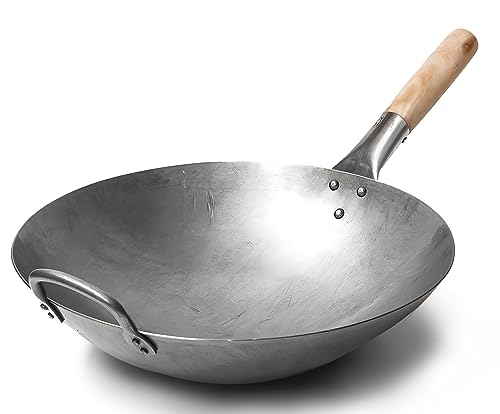


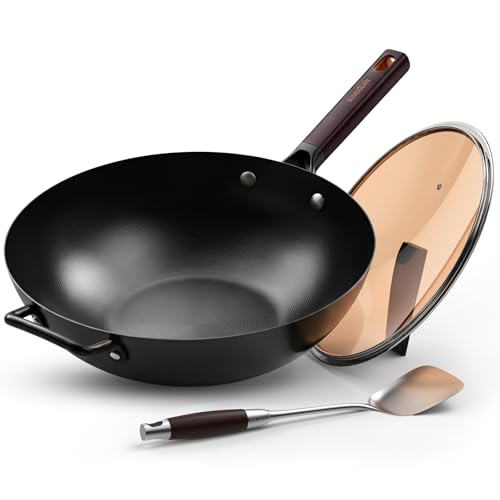
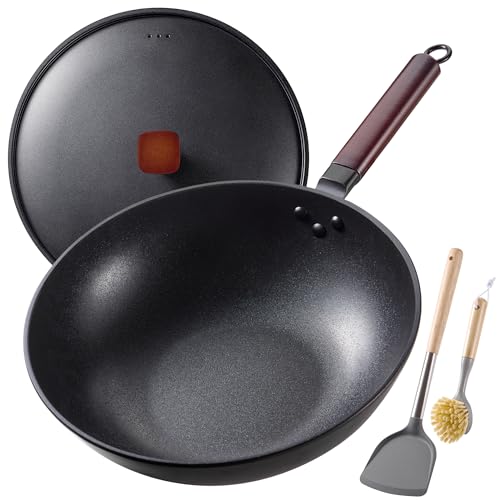

Quick Answer: How to Choose in 30 Seconds
Start with your stove, because it decides the bottom shape before anything else. Gas burners can support either shape, while electric coils, glass tops and induction almost always need a flat bottom that sits in full contact with the surface. Then pick a size based on how many people you cook for most nights, not the largest group you host once a year.
For most households, a 14 inch flat bottom wok in medium weight steel is the safest starting point. Smaller homes and couples usually do better with 12 inches, while large families often prefer 16 inches. If you want the wider context first, see our guide to the best wok for every material and shape.
Before You Buy: A Quick Checklist for Choosing a Wok
Size: Match It to Your Space and Your Household
Diameter drives everything else, because a wok that is too small crowds food and a wok that is too large heats unevenly on a home burner. A 12 inch wok suits one or two people and small burners, and it stores easily in a standard cabinet. A 14 inch wok is the versatile middle ground for three or four people, giving enough room to toss vegetables without spilling. A 16 inch wok only makes sense for five or more people, a wide burner and a cabinet or hanging space that can take the extra width.
Which Type Fits Your Routine
Carbon steel is light for its size, heats quickly and builds a natural cooking surface through seasoning, which is why it suits fast, high heat cooking at home. Cast iron holds heat longer but weighs much more, so tossing food becomes a two handed effort for many people. Nonstick woks are easy to clean but the coating limits very high heat and wears out over time. Stainless steel is durable and low maintenance, yet food tends to stick more during stir frying. If you are weighing the two heavyweight traditional options directly, our breakdown of carbon steel vs cast iron wok walks through weight, heat response and upkeep side by side.
Bottom shape matters just as much as material. A round bottom concentrates heat at a single point and pairs with a ring on gas burners, while a flat bottom sits stable on modern cooktops and needs no extra ring. Hand hammered versions have small dents that help food stay on the sloped sides, though machine made smooth versions season just as well with regular use.
Features Worth Paying For and Ones to Skip
A fitted lid earns its place if you steam dumplings, finish leafy greens or simmer sauces in the wok, and many households use one several times a week. A long spatula shaped for curved walls helps you scoop and toss without scratching the seasoned surface, so a bundled one can be good value. A support ring is only useful with a round bottom on gas, so skip it entirely if you buy a flat bottom. Decorative wooden presentation stands and oversized accessory sets usually add cost and clutter without improving a single meal.
Is Carbon Steel Nontoxic?
Plain carbon steel contains no PFAS or PTFE coating, which is the main concern many shoppers have with nonstick pans. The cooking surface is simply seasoned oil bonded to the metal through heat, and it renews itself as you cook. Ceramic coated pans avoid PFAS too, but the coating can lose its slickness within a few years. Stainless steel and cast iron are also coating free options, so the real difference is weight, heat response and how much seasoning care you are willing to do.
Induction, Gas and Glass Top Compatibility
Your cooktop narrows the field quickly, so confirm compatibility before falling for a particular size or handle style. Induction needs a flat magnetic base, and carbon steel is naturally magnetic, so a flat bottom model works as long as the base diameter matches your induction zone. Glass tops also need a flat, stable base, because a round bottom can wobble and scratch the surface. Gas is the most flexible option, and shoppers comparing burner setups can read our guide to the best wok for gas stove for grate and flame size details.
Oven Safe Temperature and Handles
Most carbon steel woks handle oven heat well because there is no coating to damage, but the handle material sets the real limit. All metal handles can go under a broiler or into a hot oven for finishing a frittata style dish or keeping food warm. Wooden handles stay cooler on the stovetop and feel secure when tossing, yet they usually cannot go in the oven and should not soak in water. A short helper handle opposite the main handle makes a full 14 inch wok far easier to lift, so look for one if you cook large portions.
Realistic Budget Ranges
Under $30 usually buys a thinner wok that works fine for occasional stir fries but may warp sooner on very high heat. About $30 to $50 is where most households should shop, since this range typically brings thicker steel, better handles and a lid option. About $50 to $100 adds heavier gauge steel, hand hammered finishes and stronger helper handles that suit daily cooking. Above that, you are mostly paying for craftsmanship and finish rather than better weeknight results.
Three Buying Profiles and What to Prioritize
Profile One: The Everyday Family Cook
You cook stir fries, fried rice and noodle dishes three or four nights a week for three or four people, and the wok lives on the stove or in the easiest cabinet to reach. Prioritize a 14 inch flat bottom shape unless you have a powerful gas burner, steel thick enough to resist warping, and a helper handle for safe lifting when the pan is full. A lid is worth the small extra cost for steaming vegetables and reheating rice dishes.
Profile Two: The Small Kitchen or Couple
You cook for one or two, your burner is modest and storage is tight, so a heavy oversized pan would end up unused. Prioritize a 12 inch size that heats evenly on a smaller burner and fits inside a standard cabinet or deep drawer. Thinner steel is acceptable here because portions are small, and the lighter weight makes tossing easier on the wrist. Skip the ring and bulky accessory bundles, and put the savings toward a good spatula instead.
Profile Three: The Long Term Investment Buyer
You want one wok that lasts decades and you are happy to season and maintain it properly. Prioritize the thickest steel you can comfortably lift, solid riveted or welded handle joints, and a shape matched exactly to your main cooktop rather than a compromise for a stove you might buy later. This profile suits keen cooks who batch cook on weekends and reheat portions through the week. Paying more for steel quality makes sense here, because the pan can be restored and re seasoned almost indefinitely.
How to Evaluate a Carbon Steel Wok Before You Order
Work through a short set of checks rather than trusting star ratings alone. Confirm the stated diameter, then check the steel thickness or gauge if the maker lists it. Read verified buyer comments for patterns about warping, handle looseness and rust on arrival, since repeat issues matter more than one off complaints. Finally, confirm the base diameter fits your largest burner and check the return policy.
Carbon Steel Compared With Other Wok Materials
The honest strengths of carbon steel are speed and weight. It heats and cools quickly, so you can drop the temperature the moment garlic starts to brown, and it stays light enough to toss food with one hand. The trade off is upkeep: it needs seasoning, it can rust if left wet, and it dislikes long soaks and dishwashers. Our explainer on flat bottom vs round bottom wok shapes covers how base design changes that heat response on different stoves.
Cast iron keeps heat through a big batch of cold ingredients, but the weight makes quick tossing hard work. Nonstick removes the seasoning chore, yet high heat stir frying shortens the life of the coating and replacement becomes a recurring cost. Stainless steel shrugs off soaking and scrubbing, though its surface grips proteins more than a seasoned wok does.
Common Buying Mistakes to Avoid
- Buying a round bottom wok for a glass top or induction stove, where it cannot sit flat or make full contact.
- Choosing 16 inches for a small burner, so the outer walls stay cool and vegetables steam instead of searing.
- Ignoring storage, then leaving the wok on the stove permanently because no cabinet or drawer fits it.
- Paying for large accessory bundles you will never use while buying steel too thin for your heat level.
- Expecting a factory coating to be a finished cooking surface, when most new woks still need proper seasoning first.
Cost of Ownership and Care
Day to day costs are low, because the main consumables are a little cooking oil for seasoning and a bamboo brush or soft sponge for washing. There is no coating to replace and no special detergent required, so a well kept wok has almost no ongoing spend beyond normal kitchen supplies. Dry the wok on the burner after washing, rub in a very thin layer of oil while it is warm, and store it fully dry to stop rust. If rust spots appear, scrub them off, dry the pan and season it again rather than replacing it. Our step by step guide to how to season a wok covers the full process for new and restored pans.
Your Questions, Answered
What is the most reliable wok brand?
Reliability in a wok comes from consistent steel thickness and solid handle joints more than from a famous name. Look for makers that publish the gauge or thickness, use riveted or welded handles with no play, and offer a clear warranty against defects. Check that recent buyer reports mention even seasoning and flat bases, since consistency across batches is the real sign of a dependable maker.
How do you clean a carbon steel wok after cooking?
Rinse the wok with hot water while it is still warm and loosen residue with a bamboo brush or soft sponge, using little or no soap. The warm metal releases stuck bits far more easily than a cold pan does, so cleaning right after serving saves scrubbing later. Dry it on the burner for a minute, then wipe in a thin film of oil before storing.
Is a wok worth buying if you already own a large skillet?
Yes, a wok is worth it if you stir fry, steam or deep fry small batches at least a few times a month. The sloped walls let you push cooked food up the sides while new ingredients sear at the base, something a flat skillet cannot do well. It also uses less oil for small deep frying jobs, since the narrow base pools oil in a smaller area.
How long does a carbon steel wok last?
A carbon steel wok can last for decades, because there is no coating to wear out and surface damage can usually be repaired. Even a rusted or badly stained pan can be scrubbed back to bare metal and seasoned again, returning it to full use. The parts that fail first are usually wooden handles, which can loosen or split after years of heat and washing.
Are carbon steel woks worth the extra effort?
Yes, carbon steel woks are worth it for cooks who use high heat often, because the seasoned surface becomes more slick and more forgiving the longer you own the pan. The first few weeks involve a learning curve while the seasoning builds and foods may stick a little. After that break in period, daily care takes about a minute of drying and oiling after each wash.
What is the best carbon steel wok for a home kitchen?
The right answer depends on your stove and household size, so match a flat bottom to electric, glass or induction, and a 14 inch size to most families. Before ordering, measure your largest burner and compare it with the wok base diameter listed by the maker, since a base much wider than the burner heats unevenly. That single measurement prevents the most common disappointment with an otherwise good pan.
Final Thoughts
Match the bottom shape to your stove, the diameter to your household and the steel thickness to how often you cook, and the choice becomes straightforward. The product table pulls those specifications together so you can compare sizes and shapes at a glance before ordering. For most homes, the best carbon steel wok is simply the one that fits your burner, your cabinets and your routine well enough to get used several times a week.


