Best Carbon Steel Chef Knives (2026): How to Choose for Your Kitchen
Disclosure: We may earn a commission when you buy through links on this page, at no extra cost to you. As an Amazon Associate I earn from qualifying purchases. Learn more

Choose the best carbon steel chef knife by blade length, hardness and balance, with plain advice on sharpening, patina and rust prevention at home.
A carbon steel blade feels different the first time you slice an onion with it. The edge glides instead of wedging, and a few strokes on a honing rod bring it back fast. Finding the best carbon steel chef knife for your home comes down to your counter space, how many people you cook for, and how much daily care you will honestly give the blade. The product table lists current knives so you can compare them as you read.
Carbon steel asks for a little more attention than stainless steel, and in return it sharpens easier and holds a finer edge.


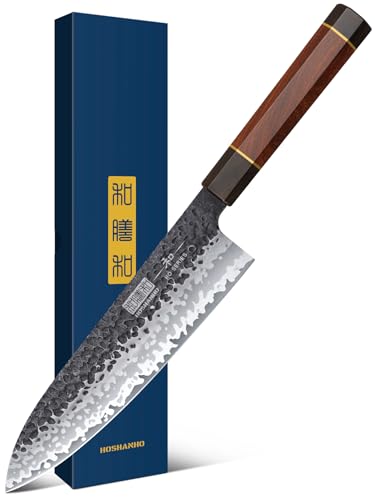

Quick Answer: Which Style Fits Your Home
Most households do best with an 8 inch blade in a French or German profile, since that length handles family sized meals without crowding a standard board. If your kitchen is small and your meals are mostly vegetables, fish, and boneless cuts, a thinner Japanese style gyuto feels lighter and more precise. If you cook for a crowd and break down whole chickens or large squash, a heavier German profile gives you the weight to work through dense food.
Before You Buy: A Quick Checklist for Choosing a Chef Knife
Size: Match It to Your Space
Blade length shapes daily use. A 6 or 7 inch knife suits small boards, tight counters, and smaller hands, and it handles herbs, fruit, and single portions with ease. The 8 inch size, about 210 mm, is the most versatile choice for most homes because it rocks through herbs yet still slices a cabbage or a roast. Blades of 9 or 10 inches, about 240 mm at the long end, earn their keep in big kitchens where you portion large cuts and halve melons, but they feel clumsy in a small sink and need a longer board.
Which Type Fits Your Routine
Start with the steel family. Carbon steel takes a very fine edge and sharpens quickly on basic stones, but it reacts with acidic food and can rust if it sits wet. Stainless steel shrugs off water and lemon juice, though it usually gives up some ease of sharpening. High carbon stainless blends sit between the two. Forged blades come from a single piece of steel shaped under pressure and tend to feel dense and sturdy, while stamped blades are cut from sheet steel and feel lighter and cost less. Damascus refers to layered steel with a visible pattern; it looks striking, but the core steel decides how the knife actually cuts.
Features Worth It (and Ones to Skip)
A fitted sheath is worth having if the knife will live in a drawer, since bare edges dull fast against other tools and a cover protects your fingers too. A wood handle suits carbon steel well because it stays grippy when damp. Dimples along the blade, often called a granton edge, can help slices of potato or cucumber release instead of sticking. Skip paying extra for elaborate patterns or long feature lists that do not change the steel, the geometry, or the handle fit, because those three decide how the knife performs daily.
Steel Type and Hardness (HRC)
Hardness is measured on the Rockwell scale, written as HRC, and it tells you how the edge will behave. Many carbon steels used in kitchen knives sit around 58 to 64 HRC. Blades at the softer end resist chipping and sharpen fast, which forgives rough boards and hurried technique. Harder blades hold a fine edge longer and slice with less drag, but they can chip on bone, frozen food, or a twisting cut. Japanese carbon steels such as white steel and blue steel are known for very hard, fine edges, while classic European carbon steels run softer and tougher.
Blade Geometry: German vs Japanese
German profile blades curve deeply along the edge, which suits a rocking motion where the tip stays on the board while you mince herbs or garlic. They usually have thicker spines and a full bolster, so they feel planted and power through root vegetables. Japanese profile blades, including the gyuto shape, run flatter and thinner with a finer tip, which favors push cutting and clean, straight slices. If you are weighing a gyuto against a best chef knife in the Western tradition, think about your cutting motion first, because the shape you enjoy is the shape you will reach for daily.
Handle, Bolster and Balance
Think about where the weight sits. A balance point near the pinch grip feels nimble for long prep sessions. A full bolster adds weight and gives your fingers a guard, while a half bolster lets you sharpen the full length of the edge, heel included. Handle shapes vary from rounded Western grips to the faceted wa handles on many Japanese knives. If several people in your home will share the knife, a neutral Western grip usually pleases more hands. Readers comparing shapes often read about chef knife vs santoku before deciding, since the santoku offers a flatter edge in a shorter blade.
Realistic Budget Ranges
Under about $30, expect simple carbon steel blades with basic handles that cut well once sharpened but need frequent touch ups and careful drying. Around $50 to $100, fit and finish improve, handles feel more secure, and the steel holds an edge longer. From about $100 to $200, you get harder Japanese carbon steels, thinner geometry, and more consistent grinds suited to daily cooking for a family. Above about $200 to $300, you pay for craftsmanship, rare steels, and refined handles rather than a dramatic jump in cutting ability.
Three Carbon Steel Styles Compared
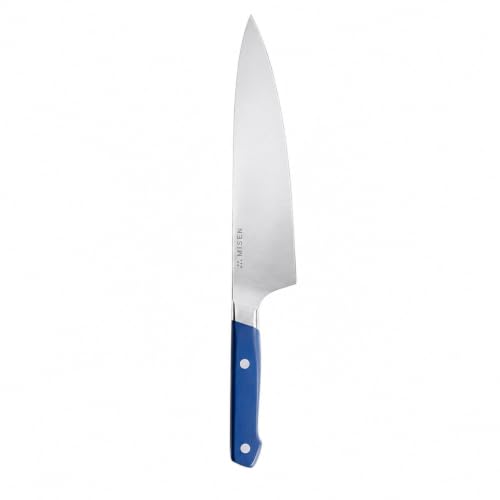
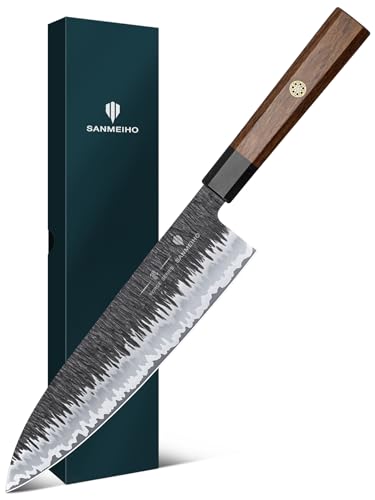
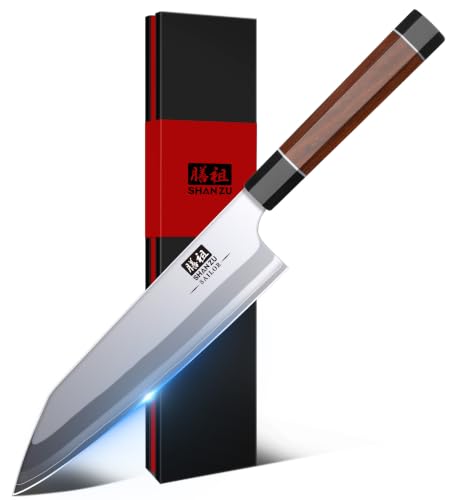
Instead of chasing a single winner, compare the three styles that cover nearly every home. The Japanese gyuto in carbon steel brings the thinnest blade and the hardest edge, so it excels at vegetables, herbs, and fish, and it rewards cooks who dry the blade right after washing. The classic French profile sits in the middle, with a gentle curve, moderate weight, and softer steel that sharpens in moments. The German profile is the workhorse, with the thickest spine, a full bolster, and the toughness to handle dense squash and hard cheese rinds without complaint. Households that cook a wide mix of meals often land on the French or German style, while keen cooks who enjoy sharpening favor the gyuto, much like the readers of our guide to the best japanese chef knife options.
What to Weigh When Comparing Knives
Compare maker specifications for steel type, hardness, blade length, and weight, together with the care demands that carbon steel places on a household. Edge retention, balance, comfort, and ease of sharpening matter most, since those factors decide whether a knife gets used daily or sits in a drawer. Maintenance effort and value count too, because a demanding knife can be the wrong fit for a busy home even when it cuts beautifully.
Pros and Cons of Carbon Steel Compared With Other Chef Knives
Carbon steel wins on sharpening. A few passes on a fine stone restore an edge that would take far longer on most stainless blades, and the edge feels finer through tomatoes and onions. It also tends to cost less than premium stainless at the same level of craftsmanship. The trade offs are real, though. The blade darkens into a patina over time, it can leave a metallic taste on acidic food before that patina forms, and it will rust if you leave it wet in the sink. If your household includes cooks who toss knives in the dishwasher, stainless steel is the safer match. If one or two careful people do most of the cooking, carbon steel rewards the small extra effort.
Common Buying Mistakes to Avoid
- Buying a 10 inch blade for a small kitchen, so the knife feels awkward on your board and gets left in the drawer.
- Choosing the hardest steel available and then chipping the edge on bones, frozen squash, or a glass cutting board.
- Ignoring the cost of ownership, since the knife still needs a honing rod, a storage cover, and an occasional sharpening stone.
- Expecting every cook in the house to change habits, when a knife that needs instant drying suits only careful users.
Cost of Ownership and Care
The purchase price is only part of what a carbon steel knife costs you. Budget for a honing rod, a simple whetstone, and a sheath or a magnetic strip for storage, which together run about $30 to $80 depending on quality. Wash the blade by hand right after use, dry it fully, and store it dry; a thin coat of food safe mineral oil helps if your kitchen is humid. Let the gray patina build rather than scrubbing it off, because that layer slows further reaction with food. When the edge stops responding to honing, a full sharpening on a stone brings it back, and our walkthrough of how to sharpen a chef knife covers the angles and grits step by step. With this routine, a carbon steel blade can serve a household for decades.
Your Questions, Answered
Are carbon steel chef knives worth it for home cooks?
Yes, if you enjoy a very sharp edge and you are willing to wash and dry the blade right away. Carbon steel sharpens faster and finer than most stainless steel, which makes daily prep feel easier. It is not worth it if the knife will sit wet, go in the dishwasher, or be shared with kids still learning kitchen habits. In that case a stainless knife will make you happier, and guides aimed at the best chef knife for home cooks cover forgiving choices.
How do you clean a carbon steel chef knife?
Wash it by hand in warm water with a small amount of dish soap, using the soft side of a sponge, then rinse and dry it completely before you put it away. Never soak it and never use the dishwasher, since heat, moisture, and detergent strip the patina and invite rust. If a rust spot appears, scrub it gently with a paste of baking soda and water, rinse, and dry at once. Clean it right after cutting citrus, tomatoes, or onions, because acid speeds up discoloration.
How long does a carbon steel chef knife last?
With hand washing, prompt drying, and regular honing, a carbon steel chef knife can last for decades of home cooking. The blade slowly loses a small amount of steel each time you sharpen it, so heavy daily use shortens that span somewhat. What ends a knife early is usually rust damage, a broken tip from prying, or a chip from twisting in dense food, not normal slicing. Store it on a strip or in a sheath and it will likely outlast your cutting board.
What size carbon steel chef knife is best for small hands?
A 6 or 7 inch blade usually fits small hands best, since the shorter length keeps the tip under control and the lighter weight reduces fatigue during long prep. Pair it with a slimmer handle rather than a thick bolstered grip, and use a pinch grip so your fingers guide the blade instead of wrapping the handle. If you mostly cook for one or two people, the smaller size loses nothing in practice. You only miss the extra length when you halve large melons or portion big roasts.
Can beginners learn good technique on a carbon steel chef knife?
Yes, and the quick feedback helps. A carbon steel edge dulls and sharpens in ways you can feel, so you learn how board choice and cutting angle affect the blade. Start with a mid priced 8 inch knife, keep your fingers curled in a claw grip, and practice a slow rocking or push cut on soft vegetables first. A step by step primer on how to use a chef knife covers grip, stance, and board setup in one place.
Final Thoughts
Choose your size by your counter space, your style by your cutting motion, and your steel hardness by how careful your household really is. For most homes, an 8 inch French or German profile in carbon steel gives the easiest path to a sharp, dependable daily knife, while keen cooks will love the precision of a Japanese gyuto. Whichever direction you take, the best carbon steel chef knife is the one whose care routine fits your life, so weigh the styles in the product table and pick the blade you will happily maintain.