Best Candy Thermometer for Your Home (2026): A Buying Checklist
Disclosure: We may earn a commission when you buy through links on this page, at no extra cost to you. As an Amazon Associate I earn from qualifying purchases. Learn more

Which best candy thermometer fits your pot and routine? Compare types, temperature range, probe length, cleaning and budgets.
A batch of caramels can move from perfect to scorched in under a minute, and guessing by color alone rarely ends well. Choosing the best candy thermometer for your kitchen gives you a clear number to trust instead of a hopeful estimate. This guide helps you match a thermometer to your pot, your stove, and the size of your household, and the product table below lets you compare models side by side.
Candy work is only part of the picture. The same tool often handles deep frying, jam, and syrup, so the right choice depends on how often you cook, how much storage you have, and how you like to clean up afterward. The sections below walk through types, materials, budgets, and care in that order.




Quick Answer: Start With Your Cooking Routine
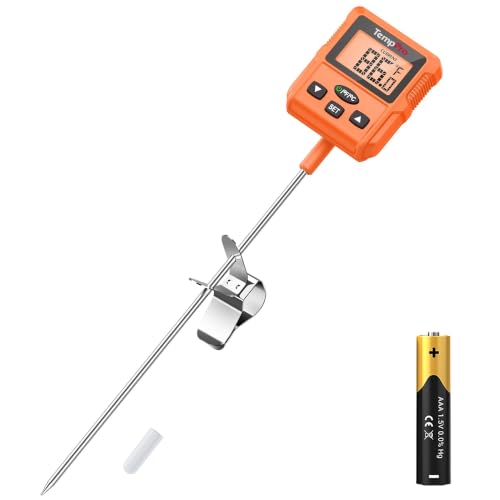
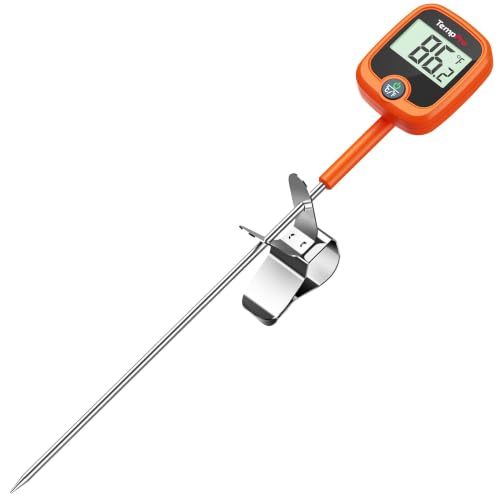
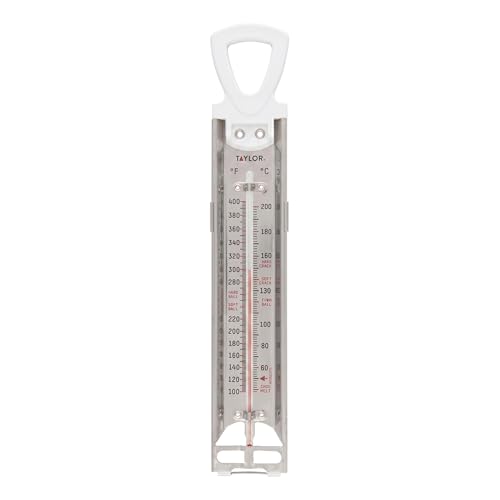
If you make candy a few times a year, a simple dial or glass model with a pot clip covers the basics at a low cost. If you fry often or make large batches for a family, a digital leave in model with a long probe and a clear display earns its drawer space. If speed matters most, an instant read design lets you check several spots in the pot within seconds.
Whichever route you take, three things matter more than extra features. The thermometer must cover the full range from about 100 to 400 degrees Fahrenheit, the probe must reach the syrup without touching the pot bottom, and the scale must be easy to read while steam is rising. Everything else in this guide builds on those three points.
Before You Buy: A Quick Checklist for Choosing a Candy Thermometer
Work through this checklist before you compare prices. It takes only a few minutes, and it prevents the most common mismatch, a good thermometer that simply does not fit your pot or your routine.
Which Type Fits Your Routine
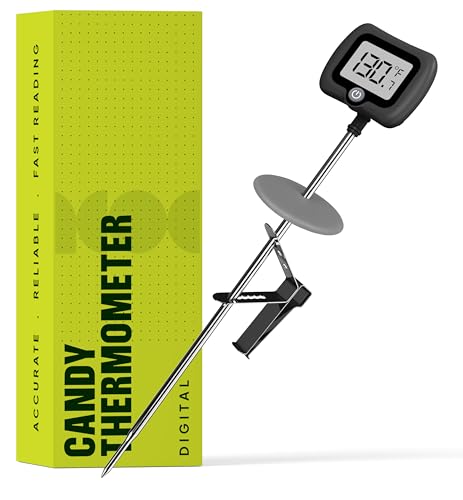
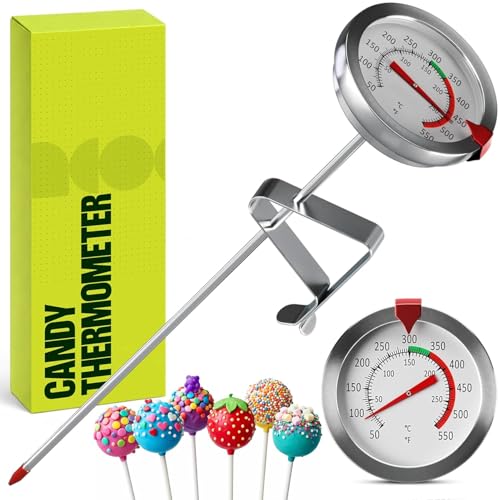
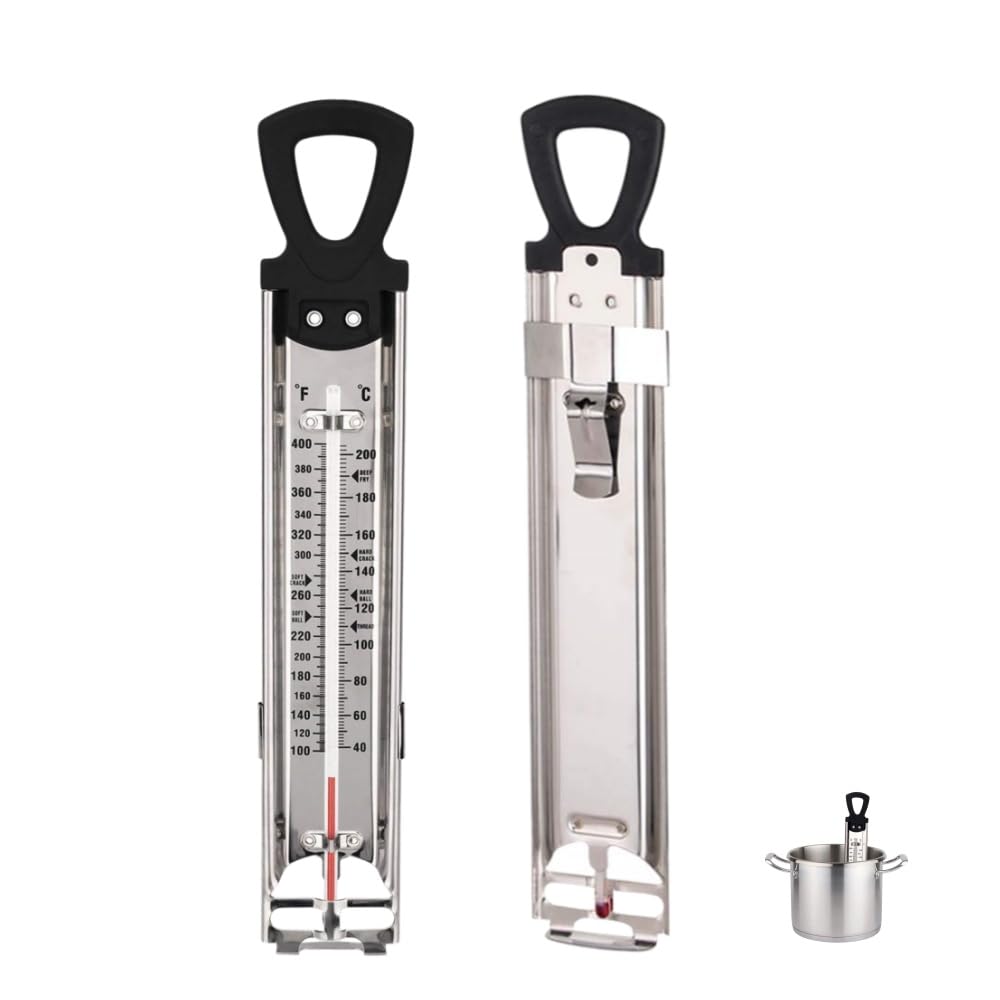
Digital models show the temperature as a number, update quickly, and often include an alarm you can set for a target stage. Analog dial models cost less, need no battery, and stay in the pot for the whole cook, though the needle moves more slowly. Glass tube models are inexpensive and simple, but they can be hard to read and need gentle handling. Clip on designs of any type attach to the pot rim, which keeps the probe steady and your hands away from hot syrup. If you want a closer look at digital options, see our guide to the best digital candy thermometer range of features.
Materials and Food Safety
Most probes are stainless steel, which resists rust, handles high heat, and does not react with sugar syrup or frying oil. Look for a probe and clip that feel solid rather than thin, since a clip that bends will let the tip drift toward the pot bottom and give a false reading. The display housing on digital models should sit well away from the heat source, and any plastic parts should be rated for kitchen heat. Choose models with clear markings and no loose coatings, and check that the materials are described as food safe by the maker.
Dishwasher Safe or Hand Wash
Some analog and glass models can go in the dishwasher, while most digital probes should be wiped or washed by hand so water stays out of the electronics. Sugar syrup hardens as it cools, so plan to soak the probe in hot water soon after cooking no matter which style you own. If you dislike hand washing, weigh that daily reality heavily, because a thermometer that is annoying to clean tends to stay in the drawer. Our notes on how to clean a candy thermometer cover soaking times and safe scrubbing in more detail.
Realiztic Budget Ranges
Basic glass and dial models usually cost under $15, and they are fine for occasional candy making if you read them carefully. Digital clip on and instant read models generally fall in the about $15 to $30 range, adding faster readings, alarms, and larger displays. Models above that range tend to offer longer probes, sturdier clips, and better water resistance rather than better accuracy. Spend first on range, probe length, and readability, and only then on extras such as preset stage charts printed on the housing.
Three Buying Profiles and What to Prioritize
Instead of chasing a single winner, match the thermometer to the way you actually cook. These three profiles cover most home kitchens, and each one points to a different set of priorities.
The Occasional Candy Maker
You make fudge at the holidays, caramel sauce now and then, and perhaps jam in the summer. A straightforward dial or clip on model with clear stage markings serves you well, and a design like the best clip on candy thermometer style keeps the probe steady while you stir. Prioritize a readable scale and a clip that fits your usual saucepan. Skip alarms and extra presets you will rarely use, and store the thermometer in a drawer where the glass or dial will not get knocked.
The Frequent Fryer and Family Cook
You fry chicken or doughnuts for a crowd and need the oil held near 350 to 375 degrees Fahrenheit for batch after batch. Prioritize a long probe, a strong clip, and a display you can read from a step back, since standing close to hot oil is no fun. A digital model with a target alarm helps you return the oil to temperature between batches without constant watching. Make sure the stated range reaches at least 400 degrees Fahrenheit so the tool covers both frying and hard crack candy.
The Precision Baker and Jam Maker
You care about single degrees, because soft ball stage sits at 235 to 245 degrees Fahrenheit and a few degrees change the texture. Prioritize fast updates and fine resolution, which usually means a digital instant read design. A guide to the best instant read candy thermometer style explains how response time affects stage work. You will dip the probe in and out rather than leave it clipped, so a comfortable grip and a probe long enough to keep your hand clear of steam matter a great deal.
How to Evaluate a Candy Thermometer
Judge any model against five criteria. Ease of use comes first, meaning a display or scale you can read at a glance while stirring. Durability follows, so check probe thickness, clip strength, and whether the housing feels sealed against steam. Cleaning should be simple enough that you will actually do it after every use. Design matters in small kitchens, where a flat or folding tool stores more easily than a long rigid one. Value comes last and means paying for the features your routine uses, not the longest feature list.
You can check accuracy at home with boiling water, which reads 212 degrees Fahrenheit at sea level. A model that reads within a couple of degrees is fine for candy work. If yours reads far off and cannot be adjusted, replace it rather than trying to correct every stage in your head.
Quick Guidance by Household and Space
A small apartment kitchen with one medium saucepan needs a compact thermometer with a probe of about 5 to 6 inches and a clip that grips a shallow rim. A family kitchen with deep stockpots needs a longer probe, around 8 inches, so the tip sits in the syrup rather than near the surface. If two people cook together, a large display that both can read reduces the shouting of numbers across the stove.
Storage shapes the choice too. Thermometers with a protective sheath survive crowded drawers better, and a model that hangs from a hook stays visible and ready. Think about who else will use the tool, because large markings help younger helpers and anyone who cooks without reading glasses nearby. Once you own one, our overview of how to use a candy thermometer walks through placement and stage targets step by step.
Common Mistakes to Avoid
- Letting the probe touch the pot bottom, which reads the metal temperature instead of the syrup and can push you past the stage you want.
- Buying a thermometer with a range that stops below 300 degrees Fahrenheit, which leaves hard crack and caramel stages out of reach.
- Choosing a probe that is too short for your deepest pot, so the tip floats near the surface and underreads the batch.
- Ignoring the clip and balancing the thermometer on the rim, where a small knock can drop it into hot syrup.
- Putting a digital unit in the dishwasher when the maker says hand wash only, which can ruin the display in a single cycle.
Cost of Ownership and Care
Ownership costs stay low with this tool. Digital models need a replacement battery now and then, usually about once a year with regular use, and a spare probe or sheath may cost a few dollars if yours is lost. There are no filters, pads, or ongoing supplies to budget for. The real cost is replacement after damage, so gentle handling protects your money better than any extended plan.
For care, soak the probe in hot water to dissolve hardened syrup, wash with a soft sponge, and dry it fully before storing. Keep glass models in a sheath or a separate slot so they do not roll and crack. Recheck the boiling water reading a few times a year, especially after a drop, and retire any thermometer with a cracked tube or a fogged display.
Your Questions, Answered
What makes a candy thermometer the most reliable option for home use?
Reliability comes from construction and consistency rather than a name on the box. A thick stainless steel probe, a clip that holds its grip, and readings that stay steady in boiling water all signal a dependable tool. One practical test is to take three readings of the same boiling pot a minute apart. A reliable thermometer repeats nearly the same number each time instead of wandering.
How do you clean a candy thermometer after making caramel?
Fill the used pot with water, place the thermometer in it, and warm the water gently so the caramel melts off the probe. This avoids scrubbing hardened sugar, which can scratch glass tubes and bend thin probes. Afterward, wash with warm soapy water, rinse, and dry the tip and clip fully. Cleaning it while the pot soaks means the whole job takes minutes and needs no special cleaners.
Is a candy thermometer worth it for occasional cooking?
Yes, a candy thermometer is worth it even if you cook sugar only a few times a year. Stages such as soft ball and hard crack span narrow ranges, and visual tests like dropping syrup in cold water take practice to judge. A basic model costs under $15 and also covers frying oil and jam, so the tool earns its place across several jobs rather than one holiday recipe.
How long does a candy thermometer last?
A well cared for analog or glass candy thermometer can last many years, while digital models often serve for several years before the display or battery contacts wear out. Drops onto tile floors and water inside the housing shorten that life more than cooking does. Storing the thermometer in a sheath and keeping the digital housing dry are the two habits that extend its life the most.
What is the best candy thermometer?
The right answer depends on the job you do most, since no single style leads on every measure. Leave in clip on models suit long cooks, instant read models suit quick checks, and simple dial models suit tight budgets. Match the range, probe length, and cleaning style to your pot and routine first. The type that fits your kitchen will give better results than a feature heavy model that annoys you every time you use it.
Final Thoughts
A good thermometer turns candy making from guesswork into a repeatable routine. Match the type to your cooking habits, confirm the range covers 100 to 400 degrees Fahrenheit, and pick a probe length that suits your deepest pot. The product table above can help you compare those basics at a glance. For most home kitchens, the best candy thermometer is simply the one that fits the pot, reads clearly, and cleans up without a fuss, and now you know exactly how to find it.