
Best Carbon Dioxide Monitors: Types Compared and How to Choose for 2026
Disclosure: We may earn a commission when you buy through links on this page, at no extra cost to you. As an Amazon Associate I earn from qualifying purchases. Learn more
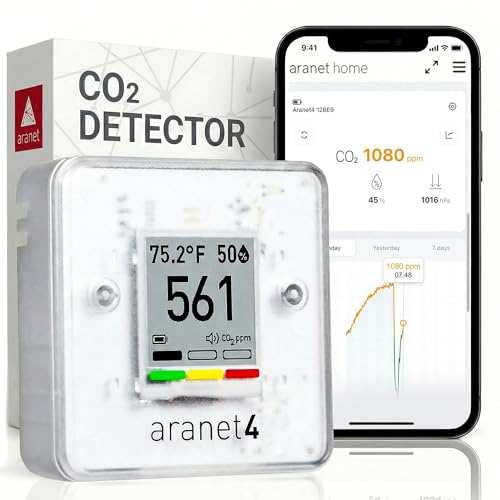
Compare the best carbon dioxide monitors by type, sensor accuracy, alerts, and price, with clear guidance to help you choose the right one for your home.
Choosing among the best carbon dioxide monitors can feel confusing, because one product name covers small desktop units, handheld meters, and fixed sensors built for large buildings. Every type measures the same gas, yet they differ in sensor accuracy, alerts, power, and price. This guide compares the main types side by side, explains the specs that actually matter, and helps you match a monitor to your rooms and habits. Start with the comparison table below, then read on for the detail behind each type.
Carbon dioxide builds up quietly in closed rooms full of people, and high levels can leave you drowsy and unfocused without any smell or visible sign. A monitor turns that invisible problem into a simple number you can act on, usually by opening a window or running ventilation. You need the right type, a sensor you can trust, and a spot where readings reflect the air you actually breathe.
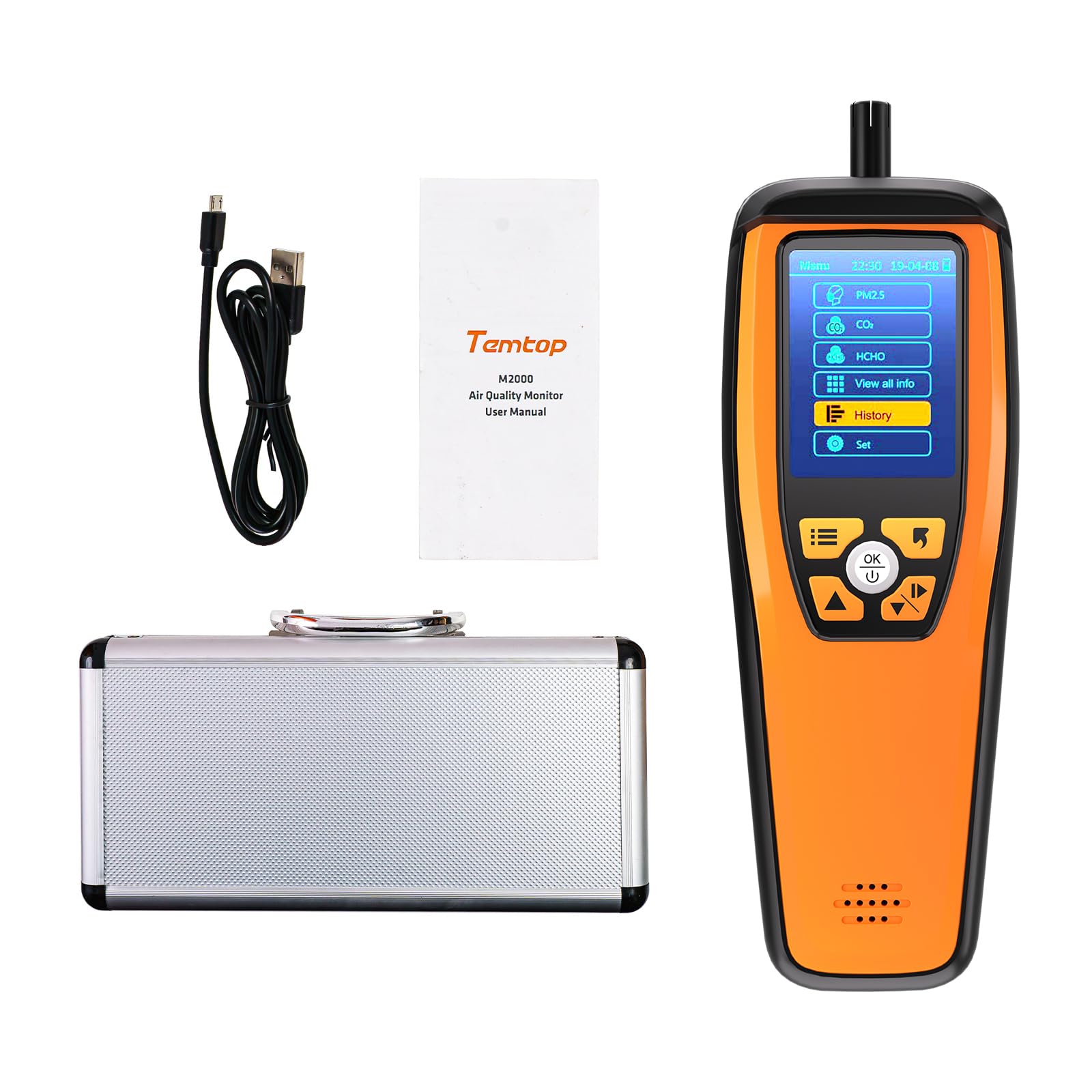

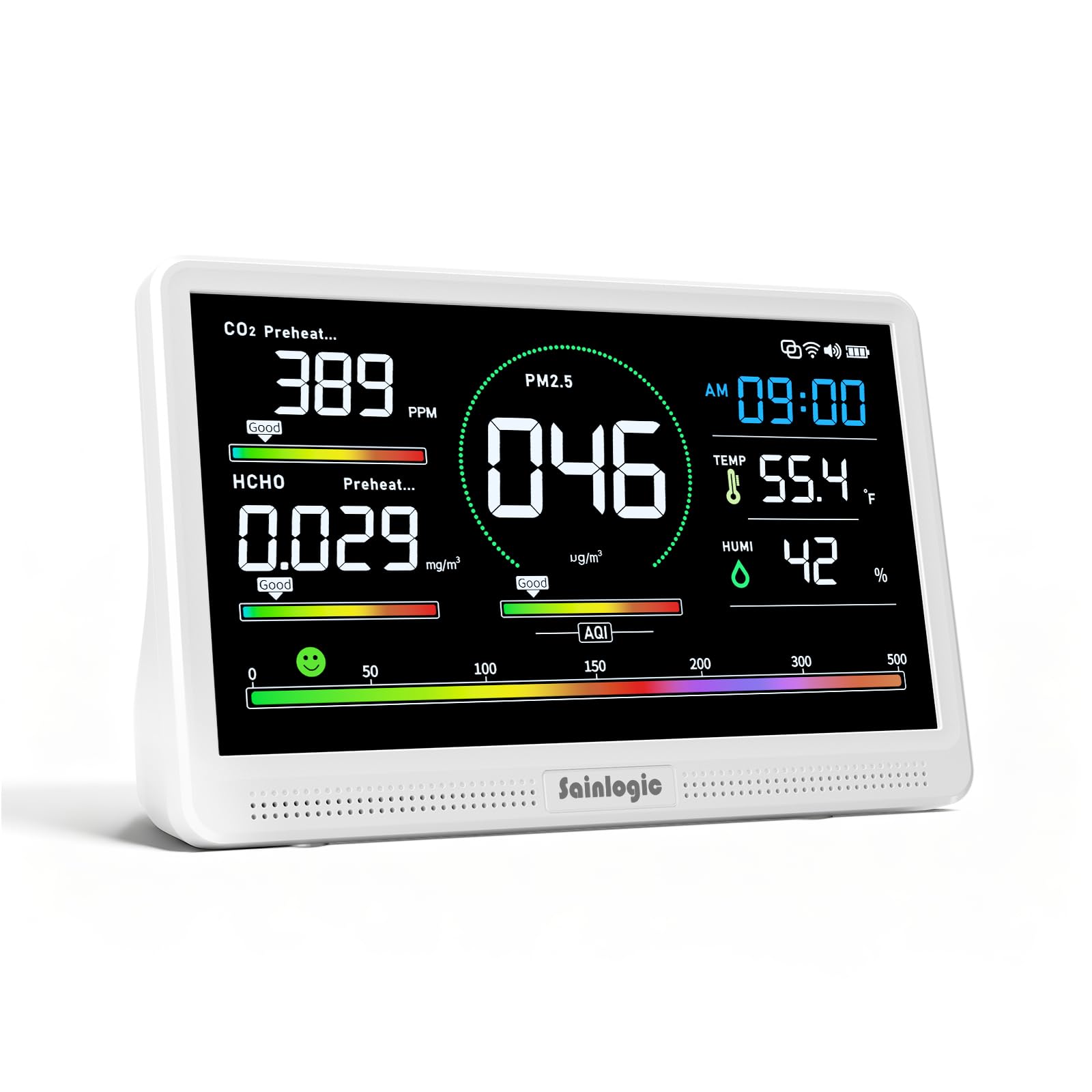
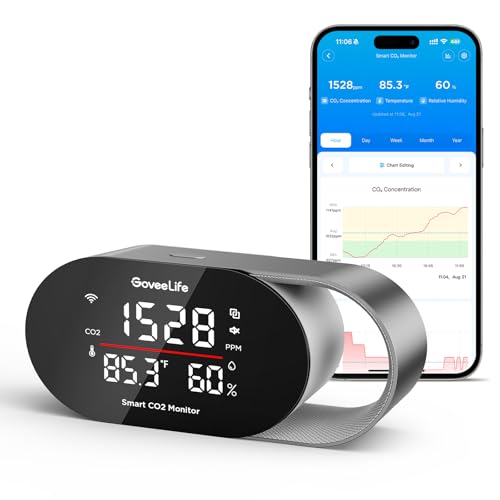



Types of Carbon Dioxide Monitors Compared
All four types below report carbon dioxide in parts per million, written as ppm. Outdoor air sits around 420 ppm, and indoor readings climb as people exhale into a closed space. The best carbon dioxide monitors differ mainly in where they live, how they get power, and how much data they keep. Match the type to your routine first, and the model choice becomes much easier.
Desktop and Wall Mounted Monitors for Everyday Rooms
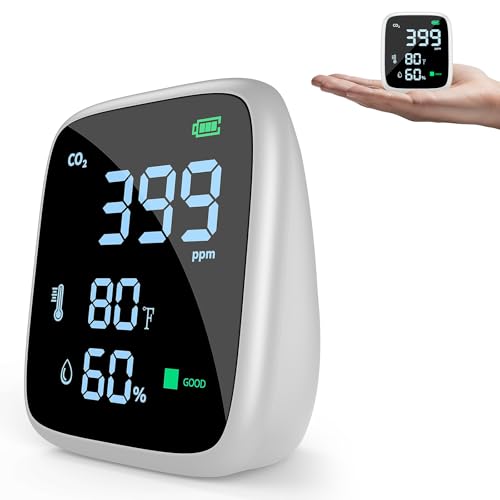
This is the most common type for homes. It sits on a desk, shelf, or nightstand, or mounts on a wall, and it shows the current reading on a built in display all day. Most plug into an outlet or a USB port, so you never think about charging. Many add temperature and humidity readings as a bonus. Choose this type when one room matters most, such as a bedroom, home office, or classroom. Its weakness is reach, since a closed door can leave the next room unchecked.
Portable Handheld Carbon Dioxide Meters
A handheld meter runs on a rechargeable battery and travels with you from room to room. Teachers use one to spot check several classrooms, and travelers measure air in hotel rooms and meeting spaces. Readings appear within a minute or so of switching the unit on. The trade offs are a smaller display, a battery to charge, and no permanent record in any single room. Most cost around $80, and fuller featured units reach about $180. Pick this type when you need answers in many places rather than constant watch in one.
Smart Monitors With App Alerts and History
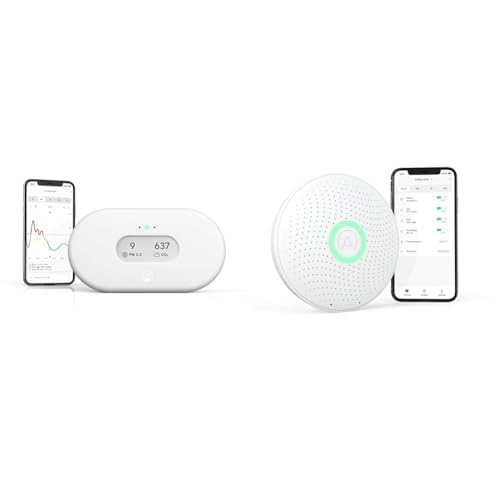
Smart monitors connect to your home WiFi and send readings to a phone app. Instead of one number on a screen, you get graphs that show how air quality rose during a family gathering or fell after you opened the windows. The app can alert you when levels pass a limit you set. This type suits data minded owners who want a record over weeks. Downsides include setup time and an account with the maker. Expect to pay about $100, with advanced models reaching around $250.
Fixed Monitors for Offices, Schools, and Larger Spaces
Fixed commercial monitors mount permanently on a wall and often link to a building ventilation system, so rising carbon dioxide can trigger fresh air automatically. They cover open offices, gyms, restaurants, and school halls where a desktop unit would be ignored. Sensors tend to be durable and accurate. Installation may need an electrician, and prices often start around $250. For a single family home this type is usually more hardware than you need, but it suits shared public spaces well.
Desktop vs Portable: Which Type Should You Choose?
Most home buyers narrow the choice to these two types. A desktop unit wins on convenience, because it is always on, always visible, and never lost in a drawer. A handheld meter wins on flexibility, because one device can check the bedroom tonight and a classroom next week. Desktop models usually cost less for the same sensor quality, since none of the budget goes to a battery. If poor sleep or a stuffy office is your main worry, go desktop. If you are diagnosing several rooms, go portable.
Carbon Dioxide and Carbon Monoxide Are Different Gases
Shoppers often mix up these two gases, and the difference matters. Carbon dioxide is the gas you exhale, and a carbon dioxide monitor tracks comfort and ventilation in occupied rooms. Carbon monoxide is a poisonous gas from faulty fuel burning appliances, and it needs its own dedicated alarm. A carbon dioxide monitor cannot detect carbon monoxide, and a carbon monoxide alarm cannot report ventilation levels. Many homes own both devices for different jobs. If you are shopping for that safety side as well, see our guide to the best carbon monoxide monitors. If a carbon monoxide alarm ever sounds, leave the home and call emergency services from outside.
How to Choose the Right Carbon Dioxide Monitor
Sensor Type and Accuracy
Look for a true NDIR sensor, short for nondispersive infrared. It shines infrared light through an air sample and measures how much the carbon dioxide absorbs, giving a direct reading of the gas itself. Cheaper models sometimes estimate carbon dioxide from other gases with a metal oxide sensor, and those estimates drift when cooking fumes or cleaning sprays are present. Accuracy is often stated as plus or minus 50 ppm plus a small percent of the reading. For home use that is plenty, because you act on broad ranges, not exact numbers.
Range, Resolution, and Response Time
A range of 0 to 5,000 ppm covers every normal indoor situation, from fresh air to a packed and stuffy meeting room. Resolution of 1 ppm is standard and more than fine enough. Response time tells you how quickly the display reacts after the air changes, and most home units settle within a few minutes. That pace suits ventilation decisions, which play out over tens of minutes anyway. A faster response mainly matters for handheld spot checks in rooms you only visit briefly.
Calibration Options
All carbon dioxide sensors drift slowly over time, so calibration keeps readings honest. Many home models use automatic baseline calibration, which assumes the lowest reading each week equals fresh outdoor air and adjusts toward it. That works well in homes and offices that empty out or air out regularly. It works poorly in spaces occupied around the clock, such as greenhouses, where the air may never reach outdoor levels. For those spaces, choose a model with manual calibration you can run outdoors, or a dual channel sensor that resists drift on its own.
Display, Alerts, and Data Logging
Big digits you can read across the room matter more than a crowded screen of tiny graphs. A color indicator, often green, yellow, and red zones, lets anyone judge the air at a glance. Audible alarms sound helpful but can annoy at night, so check that you can mute the sound or raise the alarm limit. Data logging stores readings for days or weeks, which helps you connect stuffy air to events like parties or closed window nights. App models log the most, while basic desktop units may keep only the current high and low.
Power Source and Placement Flexibility
Outlet and USB powered models suit a fixed spot and never run flat, but the cable limits where they can sit. Battery desktop models free you from the cable, yet smaller units may need charging every week or two, while efficient designs run for months. Handheld meters trade runtime for size and often last days per charge. Think about the outlets in your room before choosing, because a monitor stuck behind furniture due to a short cable gives readings that do not match the air at head height.
Where to Place a Carbon Dioxide Monitor
Place the monitor at about breathing height, roughly three to six feet from the floor, where people actually sit or sleep. Keep it a few feet from your own face, because your breath can spike the reading every time you lean in to look. Keep it away from open windows, supply vents, and doors that swing often, since bursts of fresh air hide the buildup in the rest of the room. One monitor per key room is the realistic goal, starting with the room that feels stuffiest. In a nursery, place it out of reach on a dresser. If you also want to track a baby room more closely, see our guide to the best infant monitors for the camera and audio side of that job.
A Quick Note on Other Products Called Monitors
The word monitor also describes computer screens, which is why search results mix two different products. If you landed here while shopping for a display instead, our guide to the best gaming monitors covers screens built for play, and our advice on the best monitors for PS5 suits console setups. Readers comparing screen quality can also see our guide to the best quality monitors. Everything else here is about air monitors that measure carbon dioxide gas.
Common Mistakes to Avoid
- Buying an estimated carbon dioxide model and trusting its numbers, so you ventilate based on readings thrown off by cooking fumes and cleaning sprays.
- Setting the monitor right beside a bed or desk chair, so your own breath makes normal air look like a problem.
- Mounting the monitor next to a window or vent, so fresh air at that one spot hides stuffiness everywhere else.
- Turning alerts off completely after one noisy night, so nobody gets warned when a crowded room turns stale.
- Expecting one monitor to cover a whole house, so closed bedrooms and offices go unchecked for months.
- Treating a carbon dioxide monitor as a safety alarm, so a real gas hazard at home goes unnoticed by the wrong device.
Care and Maintenance Tips
Carbon dioxide monitors ask for very little upkeep. Dust the sensor vents gently with a soft dry brush or cloth, because blocked openings slow the air reaching the sensor. Never spray cleaner or water into the openings, and keep the unit out of steamy bathrooms and direct sun, which can age the sensor. Follow the calibration routine in the manual, and once in a while set the monitor outdoors to confirm it settles near 420 ppm. If readings stay far off after calibration, the sensor is likely worn out. Store handheld units with a partial charge rather than fully flat.
Carbon Dioxide Monitors: Your Questions Answered
How long do carbon dioxide monitors last?
Most carbon dioxide monitors last about five to ten years before sensor drift makes readings unreliable. The NDIR sensor ages slowly, while displays and batteries usually wear out first on portable models. You can extend the useful life by calibrating on schedule and keeping the unit out of heat and steam. When a monitor can no longer settle near fresh air levels outdoors after calibration, it is time to replace it.
What carbon dioxide level is too high for a room?
Aim to keep indoor readings under about 1,000 ppm where you can, and treat levels above 1,500 ppm as a clear sign to add fresh air. Between those marks the air is noticeably stale for many people, and focus and comfort slip even though nothing is dangerous. Outdoor air near 420 ppm is your reference point. The practical move is simple: open windows, run ventilation, or reduce the number of people in the room until the number falls.
Do carbon dioxide monitors need calibration?
Yes, every carbon dioxide monitor needs calibration over time because its sensor drifts slowly with age. Many home models handle this automatically each week, as long as the room reaches fresh air levels at some point. Models with manual calibration need a few minutes outdoors in clean air when you run the routine. Skipping calibration for years is the most common reason an older monitor quietly reports numbers that are a few hundred ppm off.
Can one carbon dioxide monitor cover a whole house?
No, one carbon dioxide monitor only measures the air in the room where it sits. Closed doors, separate floors, and different window habits mean a living room reading says little about a shut bedroom at night. Start with the room where people spend the most closed door time, often the main bedroom or home office. Add more units later, or use a handheld meter to survey the rest of the house occasionally.
Do carbon dioxide monitors work in greenhouses and grow rooms?
Yes, carbon dioxide monitors work well in greenhouses and grow rooms, where growers track the gas because plants use it as they grow. Choose a model with manual calibration or a dual channel sensor, because automatic baseline calibration assumes the air sometimes returns to outdoor levels, which may never happen in an enriched grow space. Also check the humidity rating before buying, since damp greenhouse air is harder on electronics than a living room. Wall mounting keeps the sensor at plant height and away from watering.
Final Thoughts
The right choice comes down to three things: the type that fits your rooms, a true NDIR sensor, and a calibration plan you will actually follow. Desktop units suit most homes, handheld meters suit surveys and spot checks, and smart models suit anyone who loves a graph. Use the product table above to compare current options against those three points. When you narrow the best carbon dioxide monitors down by type first, the final pick is usually obvious.

