Best Car Subwoofer for Rock Music: A Buying Guide
Disclosure: We may earn a commission when you buy through links on this page, at no extra cost to you. As an Amazon Associate we earn from qualifying purchases. Learn more
Rock music puts a very different demand on a subwoofer than hip-hop or EDM does. Instead of chasing the deepest, lowest rumble a subwoofer can produce, rock relies on fast, punchy mid-bass that lets you feel the kick drum hit and hear the bass guitar line stay defined instead of blurring into a wall of low end. Finding the best car subwoofer for rock music means prioritizing frequency range, enclosure design, and power delivery a little differently than you would for a playlist built around sub-30Hz drops. This guide breaks down what actually changes when rock is the genre you're tuning for, from the frequency range that matters most to how enclosure type and crossover settings shape punch and clarity.

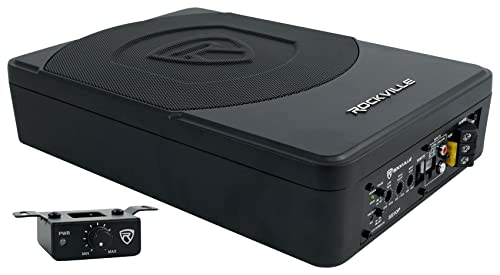
Why Rock Music Needs a Different Kind of Bass
Genres built around sub-bass, like hip-hop and EDM, are engineered to be felt more than heard, with energy concentrated well under 60Hz. Rock is built differently. Its low end comes from real instruments, a kick drum and a bass guitar played through an amp, and most of that content sits higher up the spectrum. A subwoofer chosen for the deepest possible extension can actually underperform on rock tracks if it rolls off through the range where the music's punch actually lives. That's why picking the best car subwoofer for rock music starts with frequency range, not with size or how low a spec sheet claims it can dig.
The Frequency Range Where Rock's Energy Actually Lives
Most of what makes rock bass feel powerful sits between roughly 40Hz and 120Hz, with the heart of that punch concentrated around 60 to 100Hz. That's a noticeably higher band than the sub-30Hz territory that bass-forward electronic genres chase. A subwoofer with a frequency response that stays strong and even through that 60 to 120Hz window will deliver more usable punch for rock than one optimized purely for how low it can dig.
How Kick Drums and Bass Guitar Define That Range
A typical kick drum's fundamental tone sits around 60 to 100Hz, not down near the ultra-low frequencies many subwoofers are marketed around. A bass guitar in standard tuning bottoms out near 41Hz on its lowest string, but the bulk of its audible body and attack sits well above that. Together, these two instruments define the range a rock-focused subwoofer needs to reproduce evenly, rather than a narrow peak far below where the actual instruments are working.
Enclosure and Q Factor: Building Bass That Stays Tight
Enclosure design changes more than efficiency and space requirements. It also changes how quickly a subwoofer's cone starts and stops moving, which matters a lot for a genre built around fast, percussive attacks.
Sealed Enclosures and Low Q for Fast Transient Response
A sealed box with a lower Qtc, generally in the 0.6 to 0.7 range, damps the cone's movement and gives it a faster start and stop. That translates into better transient response, meaning each kick drum hit and each bass guitar note arrives as a distinct, controlled event instead of smearing into the next one. For rock, that kind of control usually matters more than squeezing out another few Hz of low-end extension.
If you're still weighing enclosure types in general terms, a broader look at sealed and ported car subwoofer setups can help you understand the space and power trade-offs before narrowing things down for a genre-specific build.
Why Ported Boxes Can Work Against Punchy Rock Bass
Ported enclosures play louder for the same amplifier power, which makes them appealing on paper. But a port tuned for maximum output and deep extension can blur the fast attack a kick drum or bass guitar note needs to sound punchy rather than boomy. If you do go with a ported design for a rock-focused setup, keeping the tuning frequency closer to the mid-bass range rather than chasing deep sub-bass extension will preserve more of that definition.
Power and Sensitivity for Loud, Distortion-Free Rock Listening
Sensitivity Matters as Much as Raw Wattage
Sensitivity tells you how efficiently a subwoofer converts amplifier power into volume. A subwoofer with higher sensitivity reaches the same output level with less power than a less efficient one, leaving more headroom before the amplifier has to work hard. For rock, where you often want to play loud without the bass turning harsh or distorted, sensitivity is worth weighing alongside RMS power rather than treating wattage as the only number that matters.
Headroom for Rock's Dynamic Peaks
Rock recordings tend to be compressed and loud overall, but they still carry sharp percussive peaks from snare hits, kick drum strikes, and palm-muted guitar chords. A subwoofer and amplifier combination without enough clean headroom will push those peaks into distortion territory even if the average volume level seems reasonable. Matching power handling and sensitivity with some margin above your typical listening level keeps those transient peaks clean instead of clipped.
Dialing In the Crossover So Vocals and Guitars Stay Clear
Where you set the subwoofer's low-pass crossover matters more for rock than for bass-heavy genres. A common general-purpose starting point is around 80Hz, but rock often benefits from a slightly higher crossover point, closer to 100 to 120Hz, paired with a steep filter slope. That keeps guitar body and vocal presence out of the subwoofer's range entirely, letting your midrange speakers handle them cleanly instead of competing with the sub for the same frequencies. Pairing that crossover setting with a matched set of car speakers tends to give a more coherent result than optimizing the subwoofer in isolation.
Cone and Driver Design Cues That Affect Speed
Cone material plays a role in how quickly a subwoofer reacts to a signal. Stiffer, lighter cone materials generally respond faster to transient content, which suits rock's percussive low end. Heavier cones paired with a strong motor structure can still track tightly, but they typically come with a higher resonant frequency as a trade-off. Neither approach is universally better, but for a rock-focused subwoofer, prioritizing responsiveness over sheer cone mass is usually the more useful lens.
Frequently Asked Questions
What frequency range is best for a car subwoofer playing rock music?
Rock's punch mostly lives between 40Hz and 120Hz, with kick drums and bass guitars concentrated around 60 to 100Hz. A subwoofer with even output through that range matters more than one built purely for the deepest possible extension.
Is a sealed or ported subwoofer better for rock music?
Sealed enclosures generally suit rock better because their lower Q gives faster, more controlled bass. Ported boxes can work too, but they need to be tuned closer to the mid-bass range rather than for deep sub-bass extension to avoid blurring punch.
Do I need a lot of wattage to play rock music loud in my car?
Not necessarily. A subwoofer with higher sensitivity can reach loud, clean volumes with less power than a less efficient one. Balancing sensitivity and power handling matters more than chasing the highest wattage number available.
What crossover frequency should I use for rock music?
A crossover point around 100 to 120Hz with a steep filter slope works well for rock, keeping guitar and vocal frequencies out of the subwoofer's range so your midrange speakers can reproduce them cleanly.
Does cone material actually affect how a subwoofer sounds with rock music?
Yes, to a degree. Stiffer, lighter cones tend to respond faster to percussive signals like kick drums and picked bass notes, which suits rock's fast attack better than a heavier cone optimized purely for deep extension.
Can one subwoofer handle both rock and bass-heavy genres well?
Many subwoofers can handle a mix of genres reasonably well, but a setup tuned specifically for tight mid-bass and fast transient response will always favor rock's punch over the deep sub-bass extension that hip-hop or EDM prioritize.
Matching a Subwoofer to How Rock Actually Sounds
Choosing the best car subwoofer for rock music comes down to prioritizing the right frequency range, an enclosure that keeps bass tight rather than boomy, enough sensitivity and headroom to stay clean at volume, and a crossover point that leaves room for guitars and vocals to come through clearly. Get those details right and a modest setup will deliver more genuine punch on rock tracks than a bigger system chosen purely for how low it can go.