Best Canon Cameras for Beginners: Types Compared and How to Choose in 2026
Disclosure: We may earn a commission when you buy through links on this page, at no extra cost to you. As an Amazon Associate I earn from qualifying purchases. Learn more

Canon beginner cameras compared by type: pros, cons, ideal users and price range, so you can pick the right style.
Standing in front of a wall of cameras, most beginners do not have a brand problem. They have a type problem. The best canon cameras for beginners are not one model but a family of styles, and each style suits a different way of shooting. This guide compares those types plainly, so you can pick the style first and worry about exact models later.
Canon sells beginner cameras in five broad classes, from pocket compacts to interchangeable lens systems. The comparison table below puts them side by side with their strengths, trade offs, and typical prices. Read the type sections first, then use the table to confirm which class fits your budget and your patience for learning.






Types of Canon Cameras Compared
Every type below uses Canon menus and controls, so skills transfer if you move up a class later. What changes is size, sensor, and how much the system asks of you. Our wider guide to best canon cameras covers the full range beyond beginner models, while this page stays on the classes a first time buyer should weigh.
| Type | Best For | Pros | Cons | Typical Price |
|---|---|---|---|---|
| Compact | Travel and daily carry | Pocket size, simple controls, nothing extra to buy | Small sensor, fixed lens | about $250 to $500 |
| Bridge | One camera for every distance | Very long zoom, no lens swaps | Small sensor, bulky for its sensor class | about $300 to $700 |
| Mirrorless | Learning and growing | Large sensors, changeable lenses, compact bodies | System cost grows as you add lenses | about $500 to $1,000 |
| DSLR | Learners who like an optical finder | Long battery life, deep used market | Bigger bodies, an older design class | about $450 to $900 |
| Vlogging | Video first beginners | Flip screens, microphone inputs on many models | Stills controls can feel limited | about $400 to $800 |
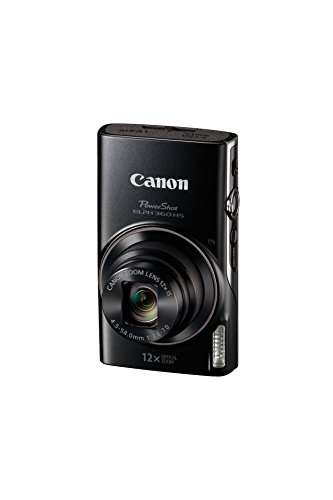
Compact Cameras
A compact has a fixed lens and a body that slips into a jacket pocket. You switch it on, frame with the screen or a small finder, and shoot. That simplicity is the appeal: nothing to assemble, nothing to leave behind, and automatic modes that handle exposure while you learn composition.
The limits are the small sensor and the fixed lens. Low light results trail the larger classes, and you cannot change the lens when you outgrow the zoom range. For travel, family days, and learning to see photographs, though, a compact is the lowest friction start in the Canon range.
Best Bridge Canon Cameras for Beginners
A bridge camera looks like a small DSLR but keeps a fixed lens, and that lens zooms much farther than any compact. It bridges the gap between point and shoot ease and long reach, which is why bird watchers, sports parents, and travelers who refuse to carry a lens bag choose the class.
The trade is sensor size. Most bridge models use a small sensor, so their image quality in dim light sits closer to a compact than to a mirrorless camera, despite the serious looking body. Choose a bridge when reach matters more than low light quality, and skip it if most of your shooting happens indoors or at dusk.
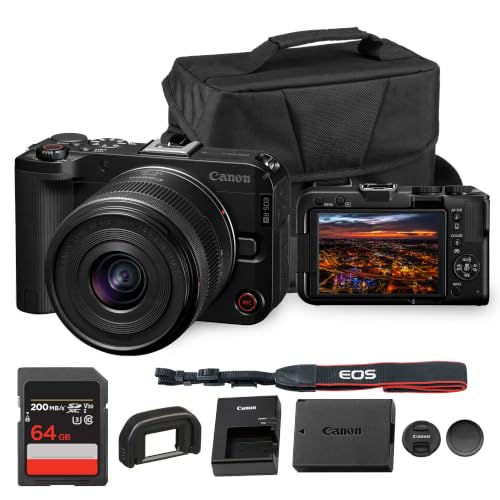
Mirrorless Cameras
Mirrorless cameras drop the mirror box of a DSLR, which makes bodies smaller while keeping large sensors and interchangeable lenses. The electronic finder shows exposure as the sensor sees it, so beginners learn faster because mistakes are visible before the shot, not after it.
This is the growth class. You start with the kit lens, then add lenses as your subjects demand them. The honest warning is cost: the body price is only the entry fee, and the second lens is where the system budget becomes real. For a beginner who expects to keep learning for years, that cost buys the highest ceiling in this guide.
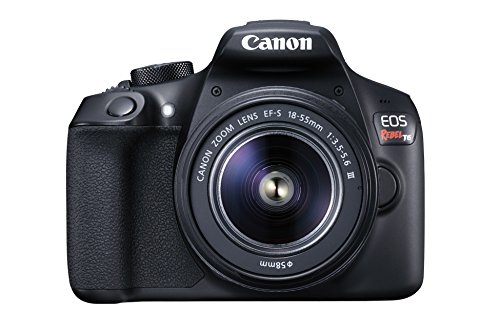
DSLR Cameras
A DSLR uses a mirror and an optical finder, so you look through the lens itself rather than at a screen. Batteries last far longer than in mirrorless bodies, because the finder draws no power while you compose. Controls tend to be larger and more direct, which some learners prefer.
The class is mature rather than new, and that has an upside: the used market is deep, and lenses are plentiful at every price. Bodies are bigger and heavier, and video features usually trail mirrorless equivalents. Choose a DSLR if you value battery life, an optical view, and used bargains over compact size.
Vlogging Cameras
Vlogging cameras are compacts or small mirrorless bodies arranged around video. The defining parts are a screen that flips to face you, a microphone input, and autofocus that tracks a face while you present. If most of what you make is video of yourself talking, this class removes the friction that stops beginners.
The trade offs show up in stills work. Controls for photography can be simpler, and some models limit finder options or weather protection to keep size and price down. Treat the class as a video first tool that also takes good photographs, rather than a general camera that happens to record.
Bridge vs Mirrorless: Which Should a Beginner Choose?
These two classes cause the most hesitation, because both look serious and both sit in the same price band. On reach, the bridge wins without contest: its fixed lens zooms far past what any affordable mirrorless lens covers. On image quality, the mirrorless wins just as clearly, because its sensor is several times larger and gathers far more light.
On cost over time, the bridge is the cheaper whole story, since you buy it once and never buy a lens. The mirrorless body is the start of a system, and its real budget includes lenses over the following years. On size, they are closer than expected: a bridge body rivals a small mirrorless body, though the mirrorless with a long zoom lens grows much larger.
So the deciding question is what you shoot. Wildlife, distant sports, and travel scenes you cannot walk closer to point to the bridge. Portraits, low light, and a wish to keep learning technique point to mirrorless. Readers who shoot mostly stills and want a deeper stills led comparison can also read our guide to the best canon cameras for beginner photographers.
How to Choose the Right Canon Camera
Start with the total system, not the body price. A mirrorless or DSLR kit includes the kit lens, and most owners add a second lens within a year or two, so that second lens belongs in your first budget. It is also worth knowing that a used higher class body, checked for shutter count, a clean sensor, and a working return window, can teach you more than a brand new bottom shelf body at the same money.
Ease of Use for Your Skill Level
Automatic modes are the starting point, not a ceiling. Every type here offers a guided auto mode that chooses settings for you, and the healthy path is to shoot on it while you learn composition, then take over one setting at a time. Menus that explain each option in plain words shorten that path a lot.
Phone transfer matters more than beginners expect. A camera that sends photos to your phone over WiFi in a few taps gets used daily. One that needs a cable and a computer session gets left at home. Our guide to the best digital cameras beginners start with covers transfer and setup basics across brands if you want the wider picture.
Sensor Size and Image Quality
Sensor size is the single biggest driver of image quality in this guide. In rising order you will meet small compact sensors, the 1 inch class, APS C, and full frame. Each step up gathers more light, which means cleaner images in dim rooms and more room to crop without the picture falling apart.
Megapixels are the number sellers push, and they matter least. Any current class has enough for large prints and heavy cropping at social sizes. Spend on sensor size and lens quality before pixel counts. Our guide to the best quality cameras for beginners explains how that quality shows up in real photographs.
Durability and Weather Sealing
Weather sealing is a resistance class, not a waterproof rating. Sealed bodies and lenses shrug off drizzle and dust better than unsealed ones, but no type here is built for submersion or a downpour without cover. Beginners who shoot outdoors in rough weather should budget for a rain cover and a dry bag, whatever the badge says.
Build quality also decides how a camera survives learning. Metal lens mounts, firm dials, and a body that does not flex in the hand all signal a camera that tolerates years of bags, car boots, and cold mornings. Compacts ask for the most care of all, because one drop can bend the lens mechanism and end the camera.
Beginner Friendly Features That Matter
Battery honesty first: maker shot counts are standard test cycle figures, measured in gentle conditions, and real days of heavy screen use return fewer frames. Treat the printed number as a comparison guide between models, never a promise, and carry a spare battery in any class.
Image stabilization earns its keep daily, steadying handheld shots at slower speeds and smoothing video. Guided in camera help, a touchscreen you can tap to focus, and a self timer or remote option for group shots round out the features that genuinely help a first year owner. Skip chasing 4K badges and extreme zoom numbers until your basics are solid.
Canon Cameras for Specific Beginner Needs
Travel light and the compact or a small mirrorless with one lens wins, because the best camera on a trip is the one still on your shoulder at hour six. Family life mixes birthdays indoors with sideline sports outdoors, which is where the bridge reach or a mirrorless with a modest telephoto earns its place. Video first beginners should start in the vlogging class and add a microphone before any lens.
If you are also weighing other brands, our guide to the best digital cameras sets the Canon classes against the wider market. Many beginners narrow to one maker for the menu style alone, and that is a fair reason: controls you understand get used, and controls you fight get abandoned.
How to Make Your Canon Camera Last Longer
- Clean the lens with a proper lens cloth, never your shirt, because shirt fabric drags grit across the glass and scratches the coating over time.
- Carry a spare battery and rotate the pair, so neither cell sits flat or fully charged in a drawer for months.
- Store the camera in a dry, padded bag with the lens cap on, away from radiators and damp cupboards.
- Wipe the body after beach or rain use, and let a cold camera warm up inside its bag so condensation forms on the bag, not the lens.
Frequently Asked Questions
What makes a Canon camera a good first camera?
Consistency is the main reason. Menus, color handling, and control layouts stay familiar across the whole range, so the habits you build on a compact still apply when you move to a mirrorless body, and guided modes explain settings in plain language instead of hiding them. The used and rental markets for the system are also deep, which lowers the cost of changing your mind. A first camera you understand and carry beats a technically stronger one that stays home.
How much should a beginner spend on a first Canon camera?
Most beginners land between about $300 and $900 for the camera itself. Compacts and bridges fill the lower half of that range, while mirrorless and DSLR kits fill the upper half. Hold back part of the budget for a memory card, a bag, and a spare battery, because those are not optional extras in practice. Spending past your comfort to buy features you cannot yet use rarely pays, so buy the class that fits your subjects, then grow inside it.
Is a smartphone enough instead of a first camera?
For casual sharing, a phone is genuinely enough, and its automatic processing hides many beginner mistakes. A dedicated camera pulls ahead on real zoom reach, low light quality, shallow depth of field, and controls you can set deliberately and repeat. The honest test is frustration: if your phone keeps missing the shots you picture, a camera solves that, and if it does not, save the money. Many photographers run both, using each where it is strongest.
What is a kit lens, and is it enough to learn on?
A kit lens is the general purpose zoom bundled with an interchangeable lens body, and yes, it is enough for the first year in most cases. It covers wide scenes through short telephoto, which spans landscapes, groups, and portraits. Its limits are dim light and distant subjects, and noticing those limits is exactly how you learn what your second lens should be. Check which focal lengths you use most in your own photos before buying more glass, because that record is a better guide than any recommendation.
Which Canon camera type handles low light best?
The large sensor classes handle low light best. Mirrorless and DSLR bodies with APS C or full frame sensors gather far more light than the small sensors in compacts and bridges, so they hold detail and keep noise down at the high sensitivities dim rooms demand. A fast lens with a wide maximum aperture helps any class, sometimes more cheaply than a body upgrade. Bridge and compact owners should use stabilization and brace against a wall or table instead of raising sensitivity blindly.
How many megapixels does a beginner actually need?
Fewer than marketing suggests: anything in the current classes, roughly 20 megapixels and up, prints sharply at normal home sizes and crops reasonably for sharing online. Extra megapixels mainly buy cropping room and larger prints, at the cost of bigger files and pricier cards. Sensor size and lens quality change your pictures far more than the pixel count does. If two cameras tie on everything else, take the one with the better lens, not the bigger number.
The Bottom Line
Pick the type before the model. Compacts and bridges ask the least and cap your growth, mirrorless and DSLR systems ask more and reward it, and vlogging models serve video first creators. The product table above lines the classes up with prices, so match it against your subjects and your budget.
Whichever class you choose, the best canon cameras for beginners are the ones matched to how you actually shoot, with money held back for the lens, battery, and bag that complete the kit. Start with the guided modes, shoot often, and let your own photos tell you what to buy next.