
Best Camping Stove With Grill (2026): Buying Guide
Disclosure: We may earn a commission when you buy through links on this page, at no extra cost to you. As an Amazon Associate I earn from qualifying purchases. Learn more
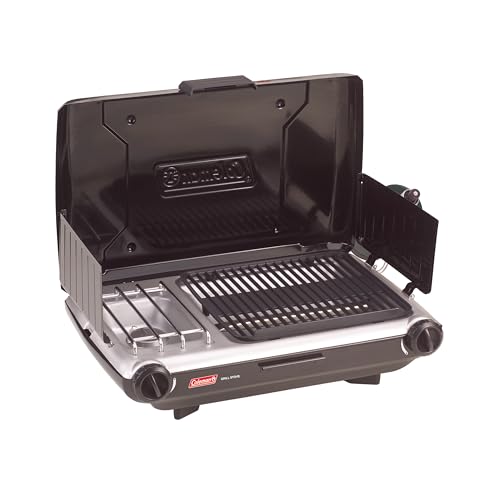
Pick the best camping stove with grill by grill area, burner control, fuel, and packed size for camp meals.
Picture a family campsite at supper time. The kids want grilled cheese and hot dogs, you want soup warming at the same time, and nobody wants to wait for a fire to settle into coals. That scene is exactly where a grill surface earns its space in the car. Choosing the best camping stove with grill comes down to your space, your group size, and your budget, and the comparison table below lays out the main types so you can start with the setup that fits your household.

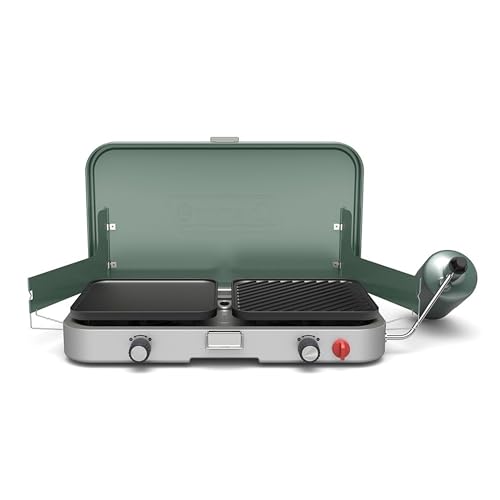


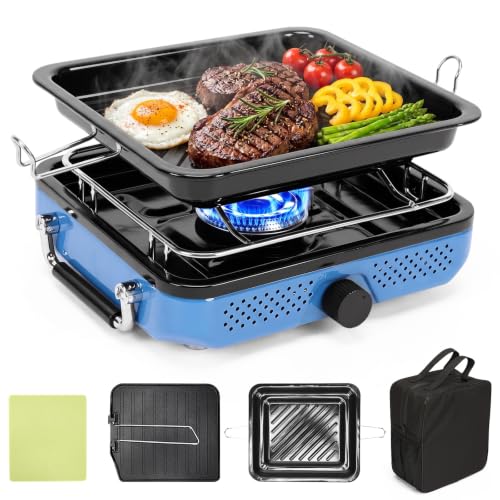
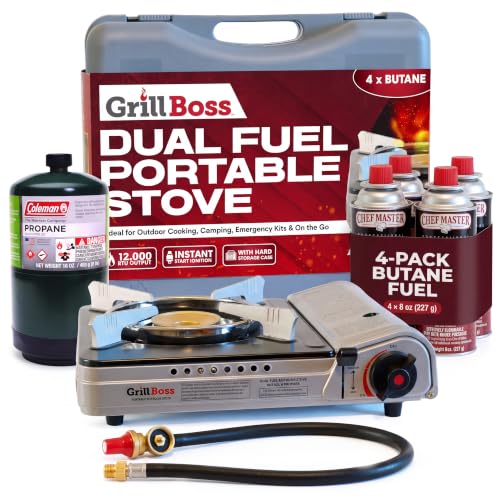

Quick Answer: Which Grill Stove Type Fits You
Most families do best with a two burner stove that carries a grill plate over one burner. It grills sandwiches, burgers, and vegetables on one side while a pot simmers on the other, and it still folds flat for a car trunk. If you cook mostly for one or two people, a compact single burner model packs lighter and stores in a kitchen drawer between trips.
Large groups are the exception. A bigger stove on folding legs gives a wide grill area, but it takes real storage space at home. Match the stove to the group you feed most often, not the biggest group you might feed once a year. If you are still weighing the plain stove formats, our guide to the best camping stove covers the wider field before you narrow in on grill models.
Before You Buy: A Checklist for the Best Camping Stove With Grill
Which Type Fits Your Routine
Start with how you actually camp. Car campers can carry a two or three burner stove and a grill plate without much penalty, so they get the most flexible cooking space. Backpackers face a different trade, since every ounce rides on their back, and most do better with a tiny stove and a simple pan. Tabletop models suit patios and picnic shelters, where weight matters less than a stable base and simple controls.
Features Worth It, and Ones to Skip
A fitted grill plate with raised ridges is worth paying for, since it drains fat away from food and leaves clear grill marks. A windscreen that folds around the burners is also worth it, because a light breeze can stretch cooking times and waste fuel. Push button ignition helps when matches get damp. Skip extras you will rarely use, such as oversized side tables on a stove meant for a small car, or a plate bundle when your family only cooks one style of meal.
Fuel Type and Running Cost
Propane is the common choice for grill stoves, since the canisters are easy to find and work in cold weather. Butane costs less per canister in many stores and suits mild weather cooking, but its output drops as temperatures fall toward freezing. If you are torn between the two gases, the full comparison in butane vs propane stove walks through cold weather behavior, canister shapes, and refill options in detail.
Cooking Area and BTU Output
Grill area decides how much food cooks at once. A plate around 130 to 180 square inches handles four burgers or six sandwiches in one round, while larger plates near 250 square inches suit six or more people. Heat output is listed in BTU per burner, and most family burners fall between about 8,000 and 12,000 BTU. Grill cooking rewards steady medium heat, since a plate that runs too hot will scorch bread and cheese before the middle warms through.
Build Materials and Rust Resistance
Cast iron holds heat evenly and sears well, but it is heavy and needs a light coat of oil after washing so the surface stays protected. Coated aluminum plates weigh far less and release food easily, yet the coating can wear where metal spatulas scrape it, so nylon or wooden tools extend its life. For the stove body, look for enamel coated steel or stainless steel, and check that drip trays slide out, since trapped grease is where rust usually starts.
Realistic Budget Ranges
Under about $50, expect a single burner stove with a small basic grill plate, fine for couples and simple meals. Between about $50 and $100, two burner models appear with better windscreens and sturdier lids. From about $100 to $200, you get larger grill areas, stronger stands, and finer flame control for simmering. Above about $200, stoves add big cooking surfaces and heavier construction aimed at group camps. Spending more mainly buys space and durability, not a different kind of meal.
Three Grill Stove Setups Worth Your Money
Rather than naming specific models, it helps to compare the three setups that cover almost every household. They differ in packed size, grill area, and storage needs.
The Two Burner With a Fitted Grill Plate
This is the default choice for most car camping families. One burner carries the grill plate while the other stays free for a kettle or a pan of beans, so a full meal finishes together. Most fold into a slim case that slides beside a cooler. The main trade is weight, since the plate adds several pounds. Families comparing this format can also read our roundup of the best 2 burner camping stove for plain models without the grill surface.
The Compact Single Burner With a Small Grill Plate
A single burner stove topped with a small grill plate suits solo campers, couples, and apartment dwellers who store gear in a closet. It grills two sandwiches at a time, and the whole kit often fits in a tote with the fuel canister. You give up parallel cooking, so rice or soup must finish before the grilling starts, or rest covered while the plate does its work. For renters who also want a backup cooker during outages, this modest footprint is often the deciding factor.
The Large Stove on a Stand for Group Cooking
Freestanding stoves with folding legs and a wide grill surface serve scout groups, family reunions, and tailgate crowds. The cooking height feels like a home counter, and two or three burners let one person grill while another manages pots. The cost is bulk. These stoves need garage storage and more cleaning after each outing. Buy this size only if group cooking is your normal pattern, since a stove that is annoying to pack tends to stay home.
Do You Really Need a Camping Stove With Grill?
A plain stove plus a cast iron pan cooks almost everything a grill plate cooks, so the honest question is about texture and convenience. A ridged plate drains fat, keeps small items like shrimp and asparagus from slipping through gaps, and gives sandwiches the striped finish many people want. For dedicated camping near the car, our guide to the best camping stove for car camping shows how grill models compare with plain setups for trunk space.
Skip the grill version if you mostly boil water for dehydrated meals, since the plate adds weight and cleaning with no payoff. Also skip it if your cooking is mostly soups and stews. The grill surface earns its place when grilled food shows up on your menu at least once per trip.
Common Buying Mistakes to Avoid
- Buying a grill area sized for a reunion when your usual group is three people, which leaves you scrubbing far more stove than you need.
- Ignoring the packed size, so the stove fits the trunk only when the cooler stays home.
- Choosing butane for late fall trips, where cold canisters lose pressure and the plate never reaches searing heat.
- Forgetting the cost of the plate, since some stoves sell it as a separate accessory that can add a third to the total price.
- Planning to cook inside a tent or closed garage, which is dangerous because these stoves produce carbon monoxide and must only run in open air.
Cost of Ownership and Care
Fuel is the steady cost. A family that grills two meals a day on a weekend trip can use one or two small propane canisters, so keeping a spare at home avoids a store run before every outing. Replacement plates, igniters, and regulator hoses are the other costs to expect over the years, and checking that parts exist for your stove before you buy saves trouble later. Store the stove dry with the plate lightly oiled if it is cast iron, and leave the lid unlatched so moisture can escape.
Cleaning right after cooking keeps the plate easy to maintain. Let it cool until you can hold a hand near it, then scrape residue with a wooden tool, wash with hot water and a stiff brush, and dry it fully. Burned on cheese and sauces come off easier after a short soak in hot water. For the full routine, see how to clean a camping stove, which covers burners, drip trays, and fuel lines as well.
Your Questions, Answered
Can a camping stove with grill be used during a power outage at home?
Yes, with strict limits. Set the stove outdoors on a stable surface, on a porch or open driveway, and carry the cooked food inside. Never run it in a closed kitchen or garage, because the exhaust contains carbon monoxide that you cannot see or smell. Cook outside, eat inside. Used this way, a grill stove reheats soup, grills sandwiches, and boils water for coffee through a long outage.
Does a grill plate slow down boiling on a camping stove?
It can, on the burner it covers. A thick plate spreads heat across its surface instead of sending it straight into a pot, so water on the plate boils more slowly than water on a bare burner. The simple fix is to boil on the open burner and grill on the other. If you own a single burner stove, boil first, set the pot aside wrapped in a towel, then fit the plate and grill.
How long does a camping stove with grill usually last?
The stove body often lasts a decade or more with dry storage, while the grill plate and igniter wear out sooner. A coated plate may need replacing after a few seasons of heavy use once food starts sticking across the whole surface, even after oiling. Cast iron plates last far longer but can crack if dropped on concrete. Keep the model details in a drawer, since ordering the correct plate years later depends on matching the exact stove dimensions.
Is a camping stove with grill a good choice for cooking fish?
Yes. Fish fillets often stick to flat pans and break apart when you turn them, while a hot ridged plate with a light film of oil releases them more cleanly and lets fat drain away. Skin on fillets do especially well, because the skin crisps against the ridges while the top stays moist. Cook fish last when you can, since the plate will hold a mild fish smell into the next round even after a quick scrape.
What size grill plate does a family of five need?
Aim for about 200 square inches or more if everyone eats at the same time, which fits five burgers in one round. A smaller plate around 150 square inches still works when you cook in two rounds and keep finished food warm in a covered pan on the second burner. Pancake style breakfasts take more flat space per person than burgers, so breakfast heavy families should size up.
Final Thoughts
For most households, a two burner stove with a fitted grill plate is the best camping stove with grill choice, balancing cooking space, packed size, and price in a way the other setups cannot match. Couples can step down to the compact single burner type, and regular group cooks can justify the large stand model. Before you order, look back at the product table above, check the packed size against your car and storage shelf, and confirm the plate comes in the box.


