Best Cake Rings of 2026: Complete Buying Guide
Disclosure: We may earn a commission when you buy through links on this page, at no extra cost to you. As an Amazon Associate I earn from qualifying purchases. Learn more

Learn how to choose cake rings by size, height, material, and adjustability, plus care tips, storage advice, and common mistakes to avoid before you buy.
A cake ring is a simple metal band that shapes a cake, a mousse, or a layered dessert while it sets. It helps home bakers get straight sides, even layers, and a neat finish without a special pan for every size. If you want best cake rings for tidy results, start with diameter, height, and how the ring releases, not with fancy extras.
This guide compares ring types, materials, and price levels so you can match a ring to the desserts you make most often. Read the comparison table below, then use the sections that follow to check fit, care, and value before you order.


Who Should Buy Which Cake Ring?
Home Bakers Who Make Layer Cakes
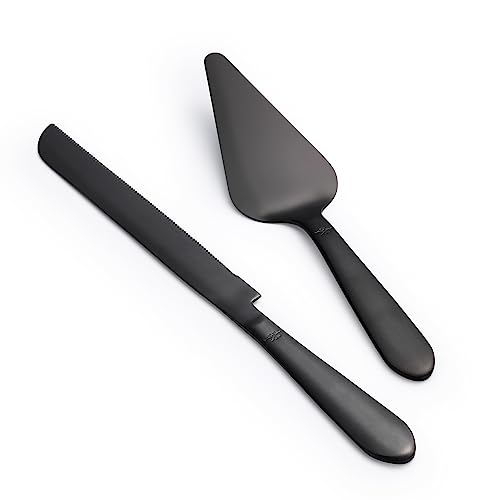
If you stack sponge, cream, and fruit into tall cakes, a ring that holds its shape under pressure matters most. Look for sturdy walls, a height that covers your finished layers, and a smooth inner surface that releases without tearing the sides. A ring in the size you use most often will serve you better than a large set of sizes you rarely touch. When you slice the finished layers, see our guide to the best cake knife for clean cuts.
Bakers Who Make Mousse and No Bake Desserts
For mousse, cheesecake filling, and chilled desserts, the ring works as a mold while the dessert firms up in the refrigerator. A tight seal at the base matters, so pair the ring with a flat tray or a lined board and check that the bottom edge sits flat. Smooth walls help here too, since a rough seam can mark a soft surface. For moving a chilled dessert to a party, see our guide to the best cake carriers.
Occasional Bakers and Gift Makers
If you bake only for birthdays and holidays, a single adjustable ring may cover most jobs at a modest cost. It changes diameter for small and large cakes, which saves storage space in a small kitchen. Choose a simple design with clear size marks so you do not need to measure from scratch each time.
Spending Levels for Cake Rings
Price mainly reflects material thickness, finish, adjustability, and included extras. A basic ring can shape a cake well, while a higher priced ring often holds its round shape longer. Spend where it helps your baking and skip what does not.
Modest Spending for a First Ring
At about $10 to $20, expect a single fixed ring or a simple adjustable ring in thin stainless steel. These rings work well for occasional cakes, though they may flex if you press filling in firmly. Check that the seam is smooth and the edge is not sharp.
Middle Spending for Regular Baking
At about $20 to $40, rings tend to be thicker, better finished, and easier to release. You may find taller rings or clearer size marks at this level. This suits bakers who make layered cakes or mousse desserts several times a month.
Higher Spending for Frequent or Professional Style Use
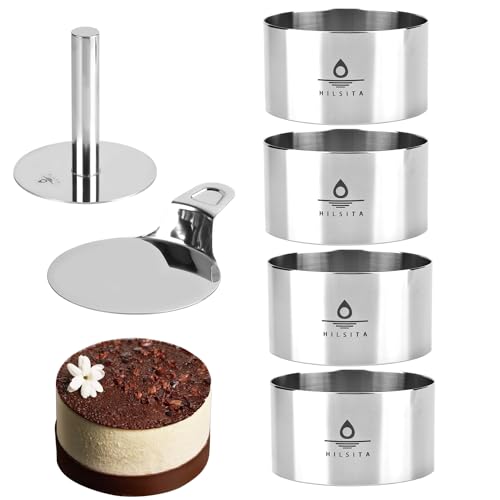
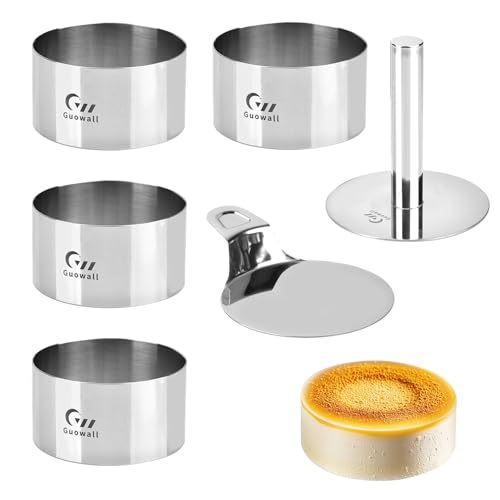
At about $40 to $80, expect heavy gauge steel, precise sizing, and a polished finish that resists staining. Some sets include a base plate or a pusher that lifts a set dessert out cleanly. This suits frequent bakers who want a ring that keeps its shape after many uses.
How to Choose Cake Rings: Buying Guide
Intended Use and Who It Is For
Start by naming the desserts you make most. Layer cakes need height and strength, mousse desserts need a flat seal and smooth walls, and small desserts need a narrow diameter that holds a neat shape.
If you bake many kinds of desserts, an adjustable ring gives you more range, while a fixed ring gives you a truer round shape at one size. If your batter needs smoother mixing first, see our guide to the best cake mixers.
Key Performance Specs
Diameter decides how wide the finished cake will be, so measure your plates, boards, and refrigerator shelves before you choose. Height decides how many layers you can stack, with taller rings suiting multi layer cakes and shorter rings suiting single layers. Stainless steel resists rust and keeps its shape, while thinner metals may bend during release.
Maintenance and Long Term Costs
Cake rings have few long term costs beyond cleaning and storage, but cheap finishes can stain or warp and then need replacing. Look for a finish that wipes clean and dries quickly, and store rings flat or nested so they do not dent. A thicker ring may cost more at first yet last longer.
Safety and Certifications
Check that edges are smooth and rolled where possible, since a sharp rim can cut fingers during washing and release. Food safe stainless steel is a common choice, and a clear maker label helps confirm the material. Follow maker guidance on oven use, since some rings suit baking while others suit chilled desserts only. Never leave hot items unattended, and keep small parts away from children.
Price Versus Value
Value comes from fit, not from the number of pieces in a set. A ring that matches your usual cake size and height is worth more than rings that sit unused in a drawer. Compare thickness and finish across price levels, and favor a ring you can clean and store easily.
Ease of Use and Setup
A good ring should sit flat, adjust without tools if it is adjustable, and release with a gentle push or a warm cloth around the outside. Before buying, ask whether you can line it, fill it, chill it, and lift it off without tilting the cake. If any step sounds awkward, a different height or a ring with a base plate may suit you better.
Types of Cake Rings
Adjustable Rings
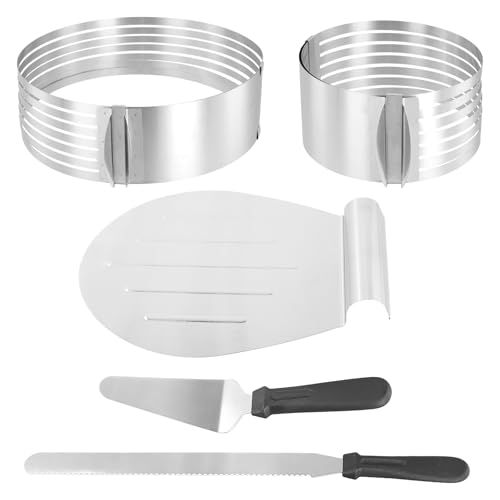
An adjustable ring changes diameter, often from about 6 inches to about 12 inches, which makes it useful for many cake sizes. It saves storage space and suits bakers who make both small and large desserts. Check that the overlap seam stays smooth and does not mark soft fillings.
Fixed Rings
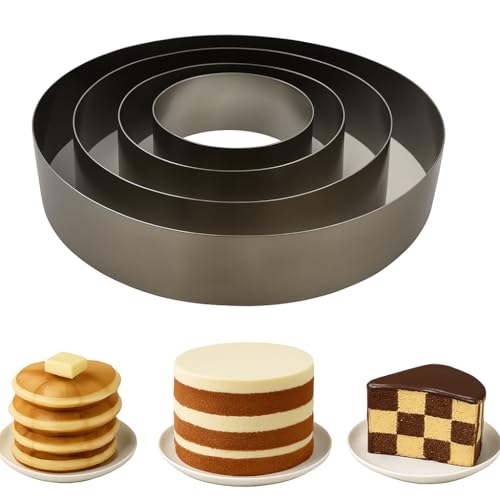
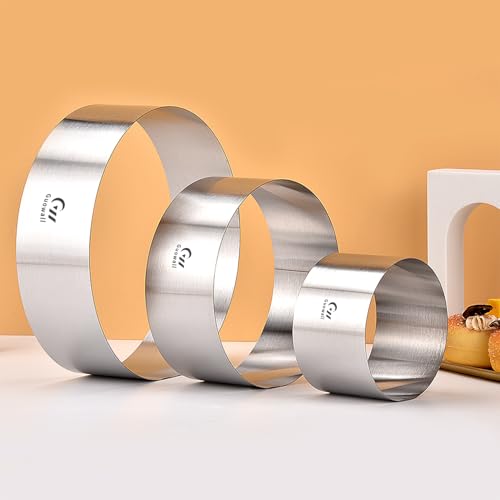
A fixed ring keeps one diameter and usually holds a truer round shape than an adjustable ring. It suits bakers who make the same size cake again and again, such as a standard 8 inch layer cake. Fixed rings also release cleanly, since no overlap seam can catch on the dessert.
Tall Rings
Tall rings, often about 3 inches or higher, suit multi layer cakes and deep mousse desserts that need support while they set. They give room to build layers without filling spilling over the top edge. Measure refrigerator shelf height before you choose one, since tall rings need more space.
Rings With a Base Plate
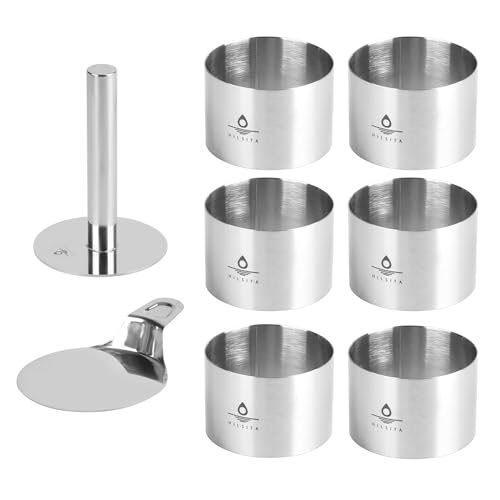
Some rings come with a flat base plate that keeps filling from leaking and makes moving a chilled dessert easier. A base plate helps with soft fillings, though it adds weight and storage bulk. If you often move desserts to a serving plate, this style can reduce mess and tilting.
Tips to Get the Most From Your Cake Ring
- Read the manual before first use, so you know whether the ring suits baking, chilling, or both, and how to release it without damage.
- Line the inside with acetate or parchment where the maker suggests it, since a smooth liner helps soft desserts release with clean sides.
- Clean and inspect regularly, checking for dents, sharp edges, and residue in seams that could affect the next dessert.
- Store in a dry place, flat or nested, so rings keep their round shape and do not rust or dent in a crowded drawer.
Cake Rings: Your Questions Answered
What features matter most when buying cake rings?
Diameter, height, material thickness, and release matter most when you buy a cake ring. Diameter sets the finished cake size, height sets how many layers you can stack, and thicker steel holds its shape better. A smooth inner wall also leaves cleaner sides than a rough seam does. Check whether the ring sits flat on a tray, because even a slight wobble can let filling leak.
How much should I spend on a cake ring?
Most home bakers do well at about $15 to $40, which covers a solid fixed ring or a well made adjustable ring. Occasional bakers can start lower, while frequent bakers may gain from a thicker ring that keeps its shape. Spend more only when you need extra height, a base plate, or sizes you will truly use. Set aside a small amount for liners and a flat tray if you do not own them.
Are expensive cake rings worth it?
Expensive cake rings are worth it when the extra cost buys thicker steel, a truer round shape, or a finish that stays smooth after washing. They are less useful if you bake rarely or only need one common size, since a modest ring can shape a cake just as well. Judge value by how often you bake and how much you care about straight sides. A costly set is poor value if most sizes stay in storage.
How do I maintain a cake ring?
Wash a cake ring soon after use with warm soapy water, dry it fully, and store it flat in a dry place. Avoid harsh scouring pads on polished steel, since scratches can catch on soft desserts and trap residue. Inspect seams and edges for dents or sharp spots, and retire a ring that no longer sits flat. A dry cloth wipe after washing helps prevent water marks.
How long does a cake ring last?
A well made stainless steel cake ring can last for many years with gentle washing and flat storage. Thin rings may bend sooner, especially if forced off a set dessert or stacked under heavy pans. Signs that replacement is due include a ring that no longer holds a round shape, a dented wall, or a rough seam. Keeping rings away from heavy items extends their life.
Wrapping Up
Choose a cake ring by diameter, height, and material first, then weigh adjustability and extras against how often you bake. A ring that fits your usual desserts, releases cleanly, and stores flat will serve you far better than a larger set you rarely use. If you want best cake rings for your kitchen, match the size to your cakes, check the finish, and review the product table above.