Best Bread Lame for Beginners: Blade Types, Grip and Care (2026)
Disclosure: We may earn a commission when you buy through links on this page, at no extra cost to you. As an Amazon Associate I earn from qualifying purchases. Learn more

Best bread lame for beginners guide to straight, curved and swap blade types, grip comfort and safe storage.
Your first scored loaf often tells the story. The dough looked smooth in its basket, yet the cut dragged, stuck, and left a shallow mark that sealed shut in the oven. That moment is rarely about talent. It is usually about a blade and handle that fight your hand instead of guiding it. Finding the best bread lame for beginners means choosing control, safety, and simple care over fancy extras.
This guide helps you choose by the space in your kitchen, the number of loaves you bake each week, and the budget you want to keep. It compares the main types, explains the features that matter while you learn, and shows how to store and clean the tool safely. Use the product table to see the models at a glance.




Quick Answer: The Three Main Types in Plain Terms
If you want the short version, most new bakers start well with a straight blade on a short handle. It gives you a clear view of the cut and works for a single slash down the center of a round loaf. A curved blade suits bakers who want the raised flap of crust that bakers call an ear, because the curve lifts the dough as it cuts. A design with blades you can swap suits bakers who bake often and want a fresh edge without buying a whole new tool.
None of these types is best for everyone. Your hand size, your usual dough, and your storage space matter more than small differences in blade shape. If you also bake softer doughs, our wider guide to the best bread lame covers shapes for those loaves as well.
Before You Buy: A Quick Checklist for Choosing a Bread Lame
Which Type Fits Your Routine
Think about how you bake in a normal week. If you bake one loaf at a time and score a simple line or a cross, a fixed straight blade is calm and predictable, and it stores in a drawer with little fuss. If you bake sourdough rounds and love a bold ear, a curved blade rewards practice, though it asks for a lighter touch at first. If you bake several loaves for family or neighbors, a handle with swap in blades keeps your edge consistent across a long session.
Handle Shape, Grip, and Control
Control is the feature beginners feel first. A handle that fills your palm without forcing your fingers wide lets you guide the blade with your whole hand, which keeps the cut at an even depth. A very thin handle can twist as the dough resists, and a very long handle can feel clumsy in a small kitchen. Look for a smooth finish with no sharp seams and a shape that still feels secure when your hands carry a light dusting of flour.
Materials and Food Safety
Most blades are steel, and most handles are wood, steel, or sturdy plastic. Steel blades hold a fine edge and resist rust when you dry them after washing. Wood handles feel warm and light, but they prefer hand washing and a dry drawer, because long soaks can swell the grain. Plastic and steel handles tolerate more moisture and suit busy family kitchens. Whatever you choose, the blade should sit firmly with no wobble, and any cover should keep the edge fully hidden when stored.
Dishwasher Safe or Hand Wash
Hand washing suits almost every lame and takes under a minute. Warm water and a soft cloth protect the blade and handle, and drying right away stops rust. Some plastic and steel models list dishwasher use as safe, yet the moving water can knock the edge against racks and dull it sooner, so the sink is usually the kinder choice.
Realistic Budget Ranges
Prices stay modest for this tool. Listings in the product table run from about $8 to $18. Basic fixed blade models sit at the low end and cover simple scoring well, while comfortable handles with a cover and spare blades cost a little more and suit most home bakers. Spending more mainly buys comfort, storage, and spare parts, not a magic cut.
Best Bread Lame for Beginners: What Each Style Does Best
Straight Fixed Blade for Most New Bakers
This is the calm starting point for most homes. The blade points in line with the handle, so the direction of the cut is easy to read, and you can watch the line open as you move. It handles center slashes, cross patterns, and simple leaf marks on round and oval loaves. The trade off is the ear. A straight blade can lift a modest flap at a low angle, but it takes more practice than a curved blade. Storage is simple and cost is low.
Curved Blade for Sourdough Rounds
A curved blade bows the cutting edge so only part of it meets the dough at once. That shape slides under the surface and lifts a thin flap, which can open into a crisp ear during baking. It shines on firm sourdough rounds with a taut surface. The learning curve is real, though. Push too deep and the curve digs in. If sourdough is your main loaf, this type rewards the practice. Our guide to the best bread lame for sourdough goes deeper on matching blade curve to firm dough.
Swap Blade Handles for Frequent Bakers
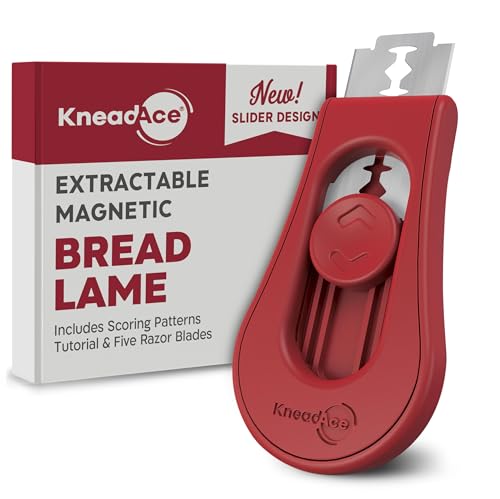
Some handles hold a thin blade that you replace when it dulls, and some let you turn the blade to use a fresh corner. This keeps the feel of the handle constant while the edge stays sharp, which helps when you bake several loaves in one session. You do need to handle loose blades with care during each swap, and you need a safe place for spares where children cannot reach them. For beginners who bake weekly, the steady grip plus a fresh edge is a practical mix of comfort and value.
How This Guide Judges Each Type
This guide weighs five things in order. Ease of use comes first, because a tool you can control teaches you faster than a tool you fight. Next come a secure grip, simple and safe storage, and cleaning that fits a normal kitchen routine. Durability and the cost of spare blades follow, since a low purchase price means little if parts are hard to find. The notes draw on maker specifications and patterns in verified buyer feedback.
Living With It: What Really Matters at Home
Daily use teaches lessons no listing page can. The first is depth. A shallow, confident cut about a quarter inch deep opens well for most loaves, while timid scratches seal shut and deep cuts can tear soft dough. Cold dough straight from the fridge scores more cleanly than warm dough, because the surface stays firm and the blade glides instead of dragging. Technique matters as much as the tool, and our step by step guide on how to use a bread lame walks through angle, speed, and pressure for your first loaves.
Storage shapes home life too. In a small apartment kitchen, a slim fixed blade with a cover slides into a utensil drawer and stays out of the way. In a family home where children help bake, a case that closes fully matters more than a few dollars of savings, because the edge stays hidden between uses. If several people bake, a handle shape that suits both smaller and larger hands helps everyone.
Common Buying Mistakes to Avoid
- Choosing a curved blade first when you mostly bake soft sandwich loaves, which can lead to cuts that dig in and tear the surface.
- Buying the lowest price model with a wobbly blade, which can lead to uneven depth and a cut that wanders off line.
- Skipping a cover or case to save a little money, which can lead to a dull edge from drawer knocks and a real risk when you reach in.
- Ignoring the cost and supply of spare blades, which can lead to baking for months with a dull edge that drags through dough.
- Picking a long handle for a tight workspace, which can lead to awkward angles when you score inside a basket.
Cost of Ownership and Care
Owning a lame costs little beyond the purchase. Your main ongoing cost is spare blades, which are sold in small packs and usually cost a few dollars each year for a home baker. A cover may need replacing if it cracks, and a wood handle benefits from a light rub of food safe oil now and then. There are no power costs and no other consumables, so the yearly cost stays low even if you bake every week.
Care is simple but not casual, because the edge is very sharp. Wash the blade in warm soapy water with the edge facing away from your fingers, rinse it, and dry it at once. Store it covered, never loose among spoons, and keep it out of reach of children. Treat any cut that is deep, bleeding heavily, or near a joint as a reason to seek medical care promptly. Our full routine is in our guide on how to clean a bread lame.
Your Questions, Answered
Is a bread lame worth it for a new baker?
Yes, for most new bakers it is, because a kitchen knife is thick behind its edge and tends to drag through soft dough, while a lame uses a thin blade that slices with little resistance. You do not need one for every loaf. Pan loaves and flatbreads bake well without scoring. But for round loaves where you want the loaf to open in a set place, even a basic model gives cleaner results than a serrated knife.
How long does a bread lame last?
The handle can last for years, because it faces no heat and little force in normal use. The blade is the part that wears. A fixed blade gradually dulls over months of weekly baking, and dough with seeds speeds that wear. Swap blade designs stretch the timeline, since a fresh blade restores the cut in seconds. A handle that loosens, cracks, or lets the blade shift is the true end of life sign, and that tool should be retired.
What should a beginner look for first in a bread lame?
Start with grip comfort and safe storage, because those two shape every use. Would the handle suit a flour dusted hand, and does it come with a cover that stays on? Next, check that the blade sits firm with no side movement. Price comes last for this tool, since the ranges are close together. A modest model with a firm blade and a good cover serves a beginner better than a costly model with loose parts.
What is the best bread lame for beginners who bake only on weekends?
For weekend baking, a straight fixed blade with a cover is usually the sweet spot. You bake too seldom to wear out a blade quickly, so swap blade systems add handling risk without much payoff. A fixed blade is ready the moment you pick it up, needs no assembly with flour on your hands, and stores flat in a drawer between bakes. Choose a medium handle that suits everyone in the house who might score the loaf.
Can a beginner use a bread lame on dough in a proofing basket?
You can, but turning the dough out onto parchment first is easier while you learn. Scoring in the basket limits your wrist angle, and the basket rim can block a longer handle. On parchment, you can turn the loaf toward you as you cut and see the full line. If you do score in the basket, choose a short handle and make one confident pass, since repeat passes tear the surface and blur the pattern.
Final Thoughts
Scoring is a small skill with an outsized effect on how your loaf looks and opens, and the right first tool makes that skill easier to learn. Start with the type that matches your loaves, your kitchen space, and the people who will hold it. For most homes, the best bread lame for beginners is a straight blade with a comfortable grip, a firm fit, and a cover you will actually use. Look back at the product table above to compare the types once more, then bake your next loaf with a calm, confident cut.