
Best Bosch Miter Saw: Sizes, Bevels and Glide Arm Explained (2026)
Disclosure: We may earn a commission when you buy through links on this page, at no extra cost to you. As an Amazon Associate I earn from qualifying purchases. Learn more

Best Bosch miter saw guide: blade sizes, sliding and bevel types, glide arm design and corded or cordless power.
Choosing a Bosch miter saw sounds simple until you face the real decisions: blade size, sliding or fixed, single or dual bevel, corded or cordless, and a glide arm or sliding rails. The best bosch miter saw for you is the one whose cut capacity matches the stock you actually cut, not the largest saw on the shelf. This guide compares Bosch saw types by power, battery platform, weight, and ergonomics so you can narrow the lineup with confidence.
Start with the stock sizes on your project list, then work through the product table to match capacity to budget. If brand loyalty is not settled yet, our guide to the best miter saw shows how Bosch stacks up against the wider field.
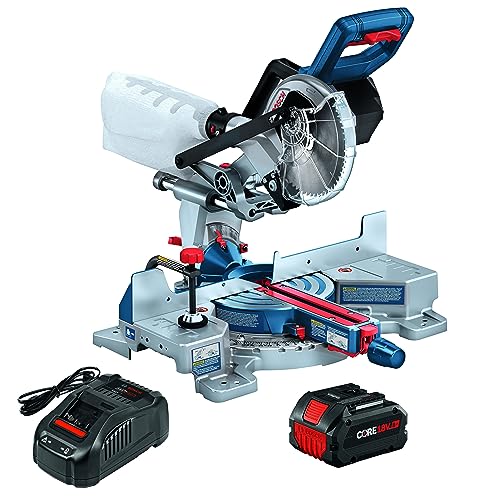


Who Should Buy a Bosch Miter Saw?
Bosch draws three fairly distinct groups of buyers. Finding your group first keeps you from paying for capacity or portability you will never use.
Trim Carpenters and Finish Work Crews
You cut casing, baseboard, and crown all day, and bevel accuracy matters more than raw capacity. A sliding dual bevel saw earns its place in your kit because it tilts both ways, so you flip the stock less often and keep long pieces supported on one side. Weight matters too, since you carry the saw between rooms and floors. Look for smooth bevel locks, clear detents at common angles, and a fence tall enough to support crown nested against it.
Home Workshop Owners Building Furniture and Decks
Your saw lives on a bench or stand and handles everything from picture frames to deck boards and stair parts. A 12 inch sliding model suits you well because the extra capacity covers wide boards in one pass instead of forcing a flip and a second cut. Corded power makes sense here, since the saw rarely leaves the shop and runtime limits only slow you down. Prioritize a rigid fence, a square blade out of the box, and dust collection that keeps your bench area usable.
New Buyers Cutting Their First Trim and Flooring
If this is your first powered saw, a compact 10 inch model is easier to lift, store, and learn on than a large sliding saw. Your early projects are usually flooring, simple frames, and small trim, all well within that capacity. Our guide to the best miter saw for beginners walks through starter skills, and the short version is simple: choose simple controls, a clear blade guard view, and a manual you will actually read before the first cut.
Best Bosch Miter Saw: Key Features to Compare
Five factors separate the Bosch lineup more than any badge on the box. Work through them in this order, because size and type limit every choice that follows.
Blade Size and Cut Capacity
Bosch saws come in 7 1/4 inch, 8 1/2 inch, 10 inch, and 12 inch sizes, and size sets the deepest and widest stock you can cut in one pass. Small saws handle trim and flooring with ease and store on a shelf. A 12 inch blade cuts thicker posts and wider boards, which is why our guide to the best 12 inch miter saw suits deck and framing work. Match the saw to your thickest regular stock, and remember that sliding action adds width capacity without a larger blade.
Sliding Action and Bevel Type
A fixed saw chops straight down and suits narrow stock, while a sliding saw pulls the blade through wide boards for a much larger crosscut capacity. Compound models tilt for bevel cuts, and dual bevel models tilt both left and right, saving you from flipping long or awkward pieces. Single bevel saws cost less and weigh less, so they still make sense for simple trim work. Think about your last ten projects: if most cuts were plain miters on narrow boards, sliding range and dual bevel are luxuries, not needs.
Glide Arm Versus Sliding Rails
Most sliding saws ride on rails that extend behind the saw, so you need clear space at the back of your bench. Bosch is known for a glide arm design that folds instead, letting the saw sit close to a wall while still sliding smoothly. That matters in a small garage shop where bench depth is limited. The trade off is a more complex mechanism with more joints to keep clean. If your bench has room to spare, rails are simple and proven; if space is tight, the glide arm earns real value.
Power Source and Battery Platform
Corded Bosch saws deliver steady power for long shop sessions and cost less for the same capacity. Cordless models free you from outlets on job sites and in yards, and our guide to the best cordless miter saw explains what runtime to expect from modern packs. If you already own Bosch 18V tools, staying on that platform saves the cost of extra batteries and chargers. Most cordless miter saws use brushless motors, which run cooler and stretch each charge further than brushed designs under load.
Cut Guides, Dust Control, and Weight
A laser line is easy to see in bright light, while an LED shadow line casts the actual blade shadow on the stock and stays accurate even if you swap blade thickness. Neither replaces a trial cut on scrap. Dust bags catch only part of the spray, so a saw with a proper port for a shop vacuum keeps your space far cleaner. Finally, check the listed weight honestly: a saw around 50 to 60 pounds is a two hand carry for most people, and that shapes how often you will bother moving it.
How Much Should You Spend?
Listings in the product table start at roughly $350 for a bare 7 1/4 inch cordless saw, while kits that include batteries and 10 inch glide models run about $550 to $660. Compact saws cover trim, flooring, and light shop work well, and the extra money on larger saws buys width capacity, space saving motion, cordless freedom, or a mix of those. Stands, spare blades, and clamps are rarely in the box, so hold back part of your budget for them.
The Bosch Miter Saw Lineup Explained
Think of the lineup as three families. The compact family uses smaller blades, skips sliding action on some versions, and targets trim, flooring, and portable work. The mid family centers on 10 inch and 12 inch sliding compound saws for general shop and site use. The glide arm family replaces rails with the folding arm, aimed at shops where the saw backs up to a wall. Within each family, the real choice is usually bevel range and power source rather than headline power numbers, since motors in this class all spin a blade fast enough for clean cuts in wood.
One question worth settling early is whether a miter saw is even the right tool for your list. Our breakdown of miter saw vs table saw explains the split plainly: miter saws excel at crosscuts and angled cuts on long stock, while table saws rip boards along their length. If your projects are mostly trim, flooring, and frames, the miter saw alone covers you. If you rip boards to width every week, budget for the second saw later rather than forcing one tool to do everything.
Common Mistakes to Avoid
- Buying capacity by blade size alone. Sliding action and fence design change real capacity, so a sliding 10 inch saw can outcut a fixed 12 inch saw on wide boards.
- Ignoring the space behind the saw. Rail models need rear clearance, and discovering that on setup day means rebuilding your bench or returning the saw.
- Skipping the square check. A blade even slightly off square at the detents ruins trim joints, so verify with a reliable square before your first project cut.
- Choosing cordless without owning the platform. Bare tool prices look low until batteries and a charger join the cart, which can erase the saving over a corded saw.
- Cutting stock the fence cannot support. Tall or warped pieces that rock against the fence kick and chip, so clamp work whenever the manual calls for it.
- Judging by motor amps alone. Blade quality and fence rigidity shape cut finish more than a small gap in rated power between similar saws.
Care, Maintenance, and Safe Use
Blow dust out of the slide mechanism, bevel pivot, and motor vents after heavy sessions, since packed dust makes smooth parts feel gritty and worn. Wipe pitch off the blade with a blade cleaner when cuts start to burn or wander, and swap in a sharp blade rather than forcing a dull one. Check fence alignment and detent accuracy every few months, especially after the saw travels in a truck bed. Store cordless packs indoors at a partial charge, and keep the saw itself dry, since surface rust on the table makes stock drag and marks your work.
Safety habits matter as much as upkeep. Wear eye and hearing protection, let the blade reach full speed before it touches wood, and wait for a full stop before lifting the head or reaching near the cut line. Unplug the saw or remove the battery before any blade change or adjustment. If you are still building basic technique, our walkthrough on how to use a miter saw covers stance, hand position, and clamping in detail. Stop and get help from an experienced user if a cut ever feels unstable, because no project deadline is worth a kickback injury.
FAQ
Which Bosch miter saw should a small garage shop choose first?
A sliding 10 inch dual bevel model is the usual sweet spot for a small shop, since it covers trim, shelving, and most furniture stock without dominating the bench. Measure your bench depth before ordering, including room for the slide travel or glide arm at full extension. Also plan where long boards will rest on both sides of the blade, because cramped support, not the saw itself, causes most crooked cuts in tight spaces.
Is Bosch a good miter saw brand overall?
Yes, Bosch sits in the professional tier, with strong motors, well machined fences, and the glide arm system few rivals offer. A practical plus is support: manuals, parts diagrams, and service centers are easy to find, which matters when a saw needs service years later. The honest downside is price, since comparable capacity from value brands often costs less. You pay for refinement and support rather than headline features.
How long does a miter saw usually last?
A well kept miter saw commonly serves 10 years or more in home use, and professional saws often last longer with service. Life shortens fastest through dull blades, dust packed pivots, and drops during transport. One habit helps a lot: store the saw with the head locked down and the cord or battery removed, which protects the blade and keeps springs and switches from sitting under needless strain between projects.
Can a miter saw rip boards like a table saw?
No, and trying is unsafe. A miter saw blade moves down and across the grain, so feeding a board lengthwise invites binding and kickback. Ripping belongs on a table saw or with a circular saw and a straight guide. If budget forces one tool first, buy the one that matches your dominant cut type, and borrow or rent the other for the occasional job until your project list justifies owning both.
Do I really need a stand for a miter saw?
A stand is not required, but it solves the problem most new owners underestimate: supporting long stock at exactly table height on both sides. On the floor or a low bench, boards sag, angles drift, and you end up holding work with one hand near the blade path. A folding stand with extension arms keeps both hands free for the saw and the clamp, and it folds away in shops where a permanent bench is not an option.
Final Thoughts
The right choice comes back to your stock, your space, and your power source. Compact saws serve trim and flooring, sliding dual bevel models cover most shops, and the glide arm design solves tight benches. Compare your shortlist against the product table above, weigh fence quality and weight as heavily as capacity, and the best bosch miter saw for your work should stand out clearly. Buy the saw that fits the projects already on your list, and it will earn its place for years.


