
Best Bosch Table Saw: Jobsite, Benchtop and Cordless Types (2026)
Disclosure: We may earn a commission when you buy through links on this page, at no extra cost to you. As an Amazon Associate I earn from qualifying purchases. Learn more

Best Bosch table saw guide: jobsite, benchtop and cordless types, fences, stands and power sources compared.
Choosing between Bosch table saws can feel confusing because the lineup looks similar at first glance. The saws share the same basic shape, yet they differ in stand style, power source, rip capacity, and weight, and those details decide how a saw fits your shop and your work. If you want the best bosch table saw for your projects, start by matching the saw type to where you work and what you cut, then compare the fence, the blade guard system, and the stand. The product table lines up the main options side by side so you can spot the differences quickly.
This guide walks through the Bosch lineup by type rather than by hype. You will see how the saws compare on power, portability, and ease of setup, and how they stack up against the wider field covered in our guide to the best table saw models from all brands.

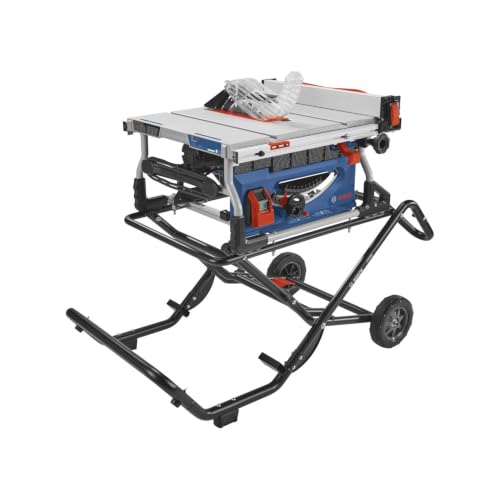

Bosch Table Saw Types Compared
Bosch focuses most of its table saw range on portable saws for jobsites and small shops rather than on large stationary cabinet saws. That focus shapes the whole lineup. You are mostly choosing between a saw on a rolling stand, a compact saw that sits on a bench, and a cordless saw that runs on the Bosch battery platform. Each type below covers who it suits and what you give up to get its strengths.
Jobsite Saws on Rolling Stands
A jobsite Bosch saw on a rolling stand is the default choice for most buyers. The stand folds for transport, the large wheels roll over rough ground and thresholds, and the saw sets up fast once you reach the work area. Rip capacity on this type usually handles sheet goods and wide boards without extra support stands for every cut. The trade off is storage space, since a folded saw on its stand still takes a tall corner of the garage. If you move between rooms, floors, or sites each week, this is the type that saves your back and your time.
Compact Benchtop Saws
A compact benchtop saw drops the stand and shrinks the footprint, so it stores on a shelf and clamps or bolts to a bench when you need it. Weight drops too, which makes it easy to carry out to a driveway or deck for a short run of cuts. The costs are a smaller table, less rip capacity, and more vibration than a saw on a full stand. Readers comparing this class across brands may also want our roundup of the best portable table saw options, since compact saws compete closely on size and weight. Choose this type when storage space matters more than cutting capacity.
Cordless Jobsite Saws
A cordless Bosch jobsite saw runs on the same battery platform as Bosch cordless drills and saws, so your existing packs can power it. Freedom from a cord helps on sites with few outlets and removes a tripping hazard near the saw. Runtime is the limit, since long ripping sessions in thick hardwood drain packs quickly and you will want spares charging while you cut. Blade size also tends to run smaller on cordless models, which caps depth of cut. Pick this type when you already own Bosch batteries and your cutting is mostly trim, flooring, and sheet goods cut to size.
How to Choose the Right Table Saw
Type
Start with where the saw will live and work. A jobsite saw on a rolling stand suits garages and work sites where the saw moves often but still needs full size cutting capacity. A benchtop saw suits apartments, small sheds, and occasional projects where storage wins. A cabinet or hybrid saw from other brands suits a fixed shop with dust collection and heavy daily use, but Bosch puts its effort into the portable classes instead. If you are new to the tool entirely, our guide to the best table saw for beginners explains the safety gear and starter setup that should arrive before your first cuts.
Features Worth Paying For
The fence matters more than almost any other feature. A rack and pinion fence moves both ends of the fence together, so it stays parallel to the blade and sets fast with a dial rather than nudges and repeated measuring. Also worth paying for are a riving knife that rises and falls with the blade, anti kickback pawls, a clear blade guard you will actually leave in place, and a dust port that fits a shop vacuum. Before your first project, read a walkthrough on how to use a table saw so the guard, push stick, and stance habits are in place from day one. A folding stand with large wheels is worth the money if the saw travels weekly.
Cordless vs Corded Power
Corded saws deliver full power for as long as you work, with no packs to swap or charge, and they usually cost less for the same cutting capacity. That makes corded power the safer default for a garage shop with an outlet near the bench. Cordless saws trade some blade size and runtime for total freedom of placement, which shines on remodel sites and outdoor work. Think about your longest typical cutting session. If you rip sheet goods for an hour at a stretch, corded power removes runtime from your worries entirely.
Battery Platform
If you lean cordless, the battery platform decision may outlast the saw itself. Buying into the Bosch 18V platform means the packs and chargers you buy for the saw also run your drills, drivers, and circular saws, which spreads the cost across tools. Check how many packs a kit includes and whether higher capacity packs are available, since table saws draw power fast. If you already own another brand of cordless tools, compare honestly, because a second platform adds charger clutter and spare pack costs.
Brushless Motors
Brushless motors appear on cordless Bosch saws and on some premium corded tools. Without brushes rubbing inside the motor, there is less friction, less heat, and no brushes to wear out and replace. On a cordless saw, the bigger gain is efficiency, since more of each battery charge becomes cutting power instead of wasted heat. Brushless designs also tend to hold speed better as the blade meets resistance in thick stock. You pay more up front, so weigh the premium against how often you cut dense hardwood versus softwood and sheet goods.
Accessories and Warranty
Budget for the accessories that make the saw accurate and safe from the start: a quality blade suited to your main material, a push stick and push block, featherboards for narrow rips, and a stand if your model lacks one. A miter gauge upgrade helps if you cut many crosscuts at set angles. On warranty, check the coverage length for the saw and the motor, and confirm that replacement fences, guards, and throat plates are easy to order. Readily available parts keep a mid priced saw useful for years longer than a cheaper saw with no parts support.
How Much Should You Spend?
Jobsite saws in the product table run from roughly $550 to $715, and a folding stand or a spare blade adds to that. Compact benchtop saws tend to cost less, while cordless kits with extra batteries cost more and mainly buy freedom from the cord. Set your budget by cutting needs first, then leave room in it for blades and safety gear, since a mid priced saw with a good blade cuts better than a costly saw with a dull one.
The Bosch Table Saw Lineup Explained
Seen as a whole, the Bosch lineup answers one question: how portable does your saw need to be? At one end sit compact saws that store in a closet and ride in a car trunk. In the middle sit corded jobsite saws on gravity rise stands, the type most owners picture when they think of a Bosch table saw. At the far end sit cordless jobsite saws for crews already invested in Bosch batteries. Cabinet and hybrid shop saws are largely absent, so woodworkers building a fixed shop around stationary tools often look at other brands for that class, while our guide to the best table saw for woodworking covers the wider shop focused field.
Across the lineup, the shared strengths are rack and pinion fences, thoughtful stand design, and guards that swap without tools on many models. The shared limits are table size and rip capacity compared with stationary saws, plus dust collection that works best with a vacuum attached. Keep the saw aligned by checking fence parallelism and blade angle a few times a year.
FAQ
What is the best bosch table saw?
For most buyers, the best choice is the corded jobsite model on a rolling stand, because it balances rip capacity, fence quality, and storage better than the smaller or cordless options. That answer flips if your work is mostly trim and flooring installs away from outlets, where the cordless model earns its keep. Judge by your longest and widest typical cut rather than by the biggest job you might do once, and the right tier in the lineup usually becomes obvious.
Is Bosch a good table saw brand?
Yes. Bosch has a long record in portable table saws, and owners tend to praise its fences and stands more than its raw power figures. Support also matters after the sale. Bosch sells replacement guards, fences, and inserts through common parts channels, and its service network is broad in the United States. A brand with parts on the shelf years later protects your purchase better than a small spec advantage on day one.
How long does a table saw last?
A jobsite table saw used by a homeowner can last well over a decade, and the motor is rarely the part that ends its life. Fences wear, stand hinges loosen, and switches and cords take abuse on site. You can extend service life by storing the saw dry, blowing dust out of the motor vents, and replacing a worn blade instead of forcing cuts. When the fence no longer holds a setting or the arbor develops play, repair costs start to rival replacement.
Is a table saw worth it if I already own a circular saw?
It can be, because the two tools do different work best. A circular saw excels at breaking down sheet goods and cutting where the work cannot come to the tool. A table saw excels at repeatable rips, narrow strips, and cuts that must match each other exactly. If your projects involve cabinets, shelving, or furniture with many matching parts, the table saw quickly earns its floor space.
How do you clean a table saw?
Unplug the saw first, then remove the blade and wash off pitch and resin buildup with a blade cleaning solution and a stiff brush. Vacuum dust from the cabinet, the blade housing, and the dust port, since packed dust strains the motor and fouls the height adjustment. Wipe the table top with a dry cloth and apply paste wax so stock glides smoothly. Never use water on the cast or stamped top, because moisture invites rust that roughens the surface.
Final Thoughts
The right Bosch saw is the one whose type matches your space and your cutting list. Rolling stand jobsite models serve most garages and remodelers, compact models serve tight storage, and cordless models serve crews already carrying Bosch batteries. Compare the finalists in the product table above against the fence, stand, and power points in this guide, and use our table saw buying guide if you want the broader brand neutral checklist as well. Chosen that way, the best bosch table saw for your shop is simply the one you will set up, guard, and use with confidence on every project.


