Best 12 Inch Miter Saws (2026): Types, Features and Buying Tips
Disclosure: We may earn a commission when you buy through links on this page, at no extra cost to you. As an Amazon Associate I earn from qualifying purchases. Learn more
How to choose the best 12 inch miter saw: saw type, cut capacity, power source, weight and budget, plus the mistakes to avoid.
A 12 inch blade sounds like a simple upgrade, but it changes what you can cut, how much bench space the saw takes, and how much the tool weighs when you move it. Shoppers often compare blade size alone and miss the differences in sliding action, bevel range, and cut capacity that matter more in daily use. Choosing the best 12 inch miter saw starts with matching the saw type to your lumber, trim work, and shop space.
This guide compares the main types by power and performance, battery platform and runtime, and ergonomics and weight. For a broader view, see our guide to the best miter saw range as a whole. The product table on this page lists current options.




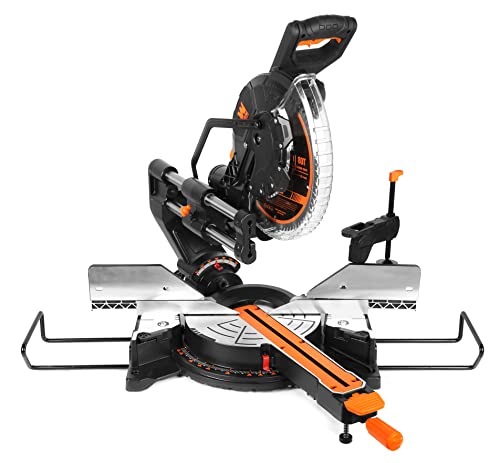
Types of 12 Inch Miter Saw Compared
Instead of ranking individual models, this section compares the three saw types you will actually choose between. Each suits a different mix of board width, angle work, and portability. Read the type that matches your projects first, then use the buying factors further down to compare saws within that type.
Sliding Dual Bevel Saws
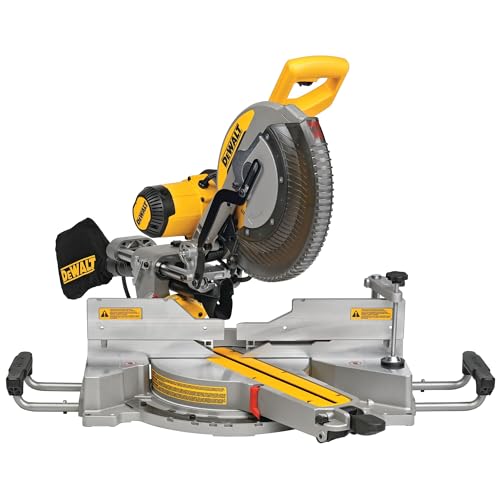
A sliding dual bevel saw gives you the widest cross cut capacity in this size class, because the blade travels on rails while the head tilts to both sides. That combination handles wide deck boards, shelving stock, and crown molding laid flat without flipping the workpiece. The trade off is size and weight. These saws need deep bench space for rail travel, and many weigh enough that moving one alone takes real effort. Choose this type if wide stock and frequent bevel cuts in both directions describe most of your work.
Sliding Single Bevel Saws
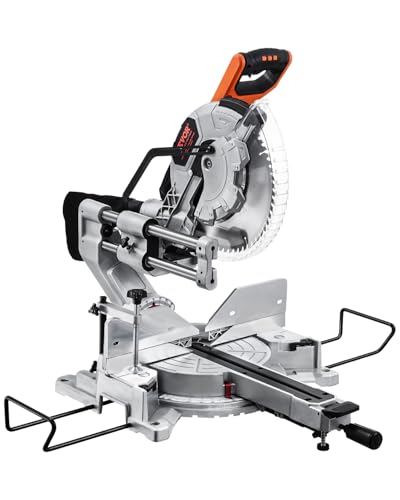
A sliding single bevel saw keeps the rail travel for wide boards but tilts in one direction only. You gain the same generous cross cut width as the dual bevel type, and the saw often costs less. The cost shows up in workflow. When a bevel cut faces the wrong way, you must flip the board end for end and recheck your marks, which slows trim work. Choose this type if you cut wide stock often but make bevel cuts only now and then.
Fixed Head Compound Saws
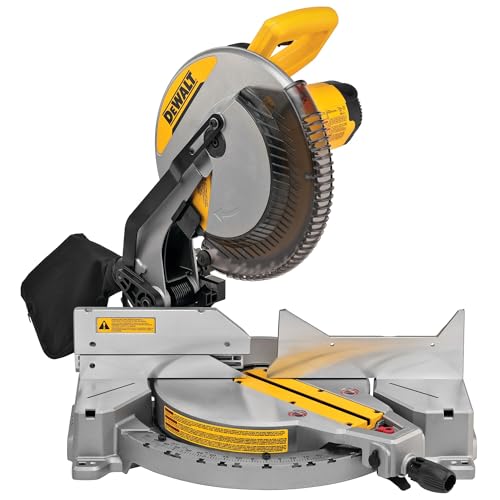
A fixed head compound saw has no rails, so the blade chops straight down in one place. Cross cut width is the smallest of the three types, yet the saw is the most compact and usually the lightest 12 inch option. Accuracy is easy to keep because there are no rails to flex. Choose this type for framing lumber, deck posts, and repeat cuts on stock of moderate width, especially if you carry the saw between rooms.
How We Chose the Best 12 Inch Miter Saws
Our comparison rests on five criteria drawn from maker specifications and verified buyer feedback. We weighed power and performance first, then battery platform and runtime for cordless models, then ergonomics and weight, durability of the fence and detent system, and warranty length. The scores are not based on personal use. Instead, we cross checked maker capacity charts against the complaints and praise that repeat across many owner reports.
How to Choose the Right Miter Saw
Size and Form Factor
Blade size sets the maximum depth and width you can cut in one pass. A 7 1/4 inch saw is light but runs out of depth on thick posts. An 8 1/2 inch saw splits the difference for trim crews. A 10 inch saw covers most framing and finish work at lower blade cost. A 12 inch saw adds depth for stock such as nominal 4 by 4 posts and tall baseboard stood against the fence. If you are weighing the two larger sizes, our breakdown of 10 vs 12 inch miter saw capacity walks through the exact trade offs. Bigger blades also cost more to replace.
Type
Type describes how the head moves, and it should follow your most common cut. Sliding heads extend cross cut width for wide planks and flooring. Compound heads tilt for bevel cuts, and dual bevel heads tilt both ways so you flip the saw setting instead of the board. Cordless models trade some sustained power for freedom from outlets. Compact models shrink the rail design so the saw can sit close to a wall. List your five most frequent cuts, note the width and angle each one needs, and pick the simplest type that covers all five.
Features Worth Paying For
A laser guide projects a line near the cut, while an LED shadow line casts the blade shadow onto the stock for a truer read in bright light. Positive stops at common angles such as 0, 15, 22.5, 31.6, and 45 degrees speed up repeat trim work. A tall sliding fence supports crown molding and tall baseboard without extra jigs. A dust port that fits a shop vacuum matters more than the small bag in the box, because the bag fills fast. Pay for the shadow line and tall fence first.
Cordless vs Corded Power
Corded saws draw steady power from a 15 amp circuit and hold blade speed through dense hardwood all day, which suits a fixed shop bench. Cordless saws free you to cut on a deck or a job site without power, and modern platforms cross cut framing lumber with ease. The limit is runtime under load and the pause to swap packs on long cutting lists. Gas power does not apply to this tool class, so your real choice is outlet or battery.
Battery Platform
For cordless models, the battery platform matters as much as the saw itself. Sticking with a platform you already own saves the cost of extra packs and chargers, and larger capacity packs extend runtime on wide hardwood cuts. Check whether the saw needs one pack or two packs in series, because a two pack design doubles the packs you must keep charged. Also confirm that the charger refills a large pack in a reasonable time.
Brushless Motors
A brushless motor adjusts power delivery electronically instead of through carbon brushes that wear down. That design holds blade speed steadier as the blade enters dense stock, and it removes brush replacement from your maintenance list. Brushless cordless models also stretch each charge further, because less energy turns into heat and friction. The design adds cost up front, and corded brushless models are less common. If you cut hardwood often or rely on battery power, the steadier speed and lower upkeep justify the premium.
Accessories and Warranty
A sturdy stand with extending supports turns long boards from a balancing act into a one person job, and a quality blade suited to your material improves cut finish more than most built in extras. Budget for a finer tooth blade if you cut trim or molding. Warranty terms vary from about one year to several years, and coverage for the motor often differs from coverage for the rest of the saw. Before your first project cuts, read our walkthrough on how to use a miter saw so your setup and stance are right from the start.
How Much Should You Spend?
Entry level 12 inch saws at about $200 to $350 cover basic compound cuts for home projects, with simpler fences and smaller dust ports. The middle range at about $350 to $550 adds sliding action, dual bevel tilt, and better cut line lighting. Premium saws over $550 focus on rail designs that save bench depth, stronger motors, and finer detent accuracy. Spending more mainly buys capacity and smoother adjustments, not a different category of cut. Set your budget by the type you need first.
Is a 12 Inch Miter Saw the Right Size for You?
A 12 inch saw earns its bench space when your work includes thick posts, deep crown molding, or wide boards that a 10 inch saw cannot finish in one pass. It also helps when you stand tall baseboard against the fence instead of laying it flat. The costs are real, though. Blades cost more, the saw weighs more, and small trim cuts gain nothing from the extra diameter. If most of your cutting is flooring and modest trim, a smaller saw may serve you better, and new users may prefer starting with our picks for the best miter saw for beginners.
Consider the alternative tools as well. A table saw rips long boards along their length, which no miter saw should attempt, while a miter saw owns fast and accurate cross cuts and angles. Our comparison of miter saw vs table saw duties explains which tool covers each cut in a small shop. If your project list is mostly cross cuts and repeat lengths, the 12 inch miter saw is the right centerpiece. If ripping sheet goods dominates your list, spend on the table saw first.
Safety belongs in the size decision too. A larger blade carries more energy, so a firm clamp, a working blade guard, and eye and hearing protection matter on every cut. Seek medical care for any cut injury that keeps bleeding, and let a professional service the saw if the guard sticks. Never reach across a spinning blade.
FAQ
What is the best 12 inch miter saw?
The best choice depends on the type that fits your cuts, since no single saw leads on width, weight, and price at once. Sliding dual bevel models suit wide stock, while fixed head models suit framing and tight shops. One check many buyers skip is fence squareness out of the box. Set a trusted square against the fence and blade before your first project, because a small adjustment at setup protects every joint afterward.
What size miter saw do I need?
Measure the widest and tallest stock on your next three projects, then choose the smallest saw that cuts each piece in one pass. Most trim and framing fits a 10 inch blade, while deep crown and thick posts push you to 12 inch capacity. Note your storage space too, because a sliding 12 inch saw needs far more depth than its blade size suggests.
How long does a miter saw last?
A well kept miter saw often serves for many years of home use, and job site saws wear faster under daily dust and transport. The parts that age first are usually the blade, the guard return spring, and the detent plate, all of which you can inspect without opening the motor housing. Replacing wear parts early keeps accuracy from drifting, and a saw that still cuts square after a blade change has plenty of life left.
Is a miter saw worth it?
For repeat cross cuts and angled trim joints, yes, because the saw turns careful layout work into fast and repeatable cuts. Compare the cost with renting. A few weekends of rental fees can approach the price of an entry level saw, and owning one means it is ready for small jobs you would otherwise postpone. It is less worth it if your projects are mostly long rips or sheet goods, since other saws cover those cuts better.
How do you clean a miter saw?
Unplug the saw or remove the battery, then brush dust from the blade guard, rails, and detent slots with a stiff brush. Blow out the motor vents with low pressure air, and wipe the blade with blade cleaner to remove pitch buildup. Check the dust port for packed debris, since a clogged port makes every other cleaning step less effective. Never wash the saw with water.
What is the most reliable miter saw brand?
Reliability tracks service support as much as build quality. Brands with wide parts availability and clear parts diagrams make repairs simple years after purchase, and a nearby service center shortens downtime when a switch or spring fails. Look for a maker that stocks parts for older models. A saw you can repair with common parts will outlast a stronger saw that nobody can service locally.
Final Thoughts
Start with your cut list, pick the saw type that covers it with the least bulk, and then compare power, weight, and warranty inside that type. The product table above pulls those factors together so you can see the trade offs at a glance. For most shops cutting thick or wide stock, the best 12 inch miter saw is the sliding dual bevel type, while smaller shops may be happier with a fixed head model.