Best Boots for Walking on Railroad Ballast: Our 2026 Checklist for Loose Stone
Disclosure: We may earn a commission when you buy through links on this page, at no extra cost to you. As an Amazon Associate I earn from qualifying purchases. Learn more

Compare boots for walking on railroad ballast by stiff soles, ankle support, deep lugs, roomy fit and waterproofing, plus a buyer checklist and care tips.
Ballast is crushed, angular stone that shifts under every step, so a sidewalk boot can roll and jab beside the tracks. The best boots for walking on railroad ballast spread your weight over loose rock, lock your heel and shield the sole of your foot from sharp edges. Use this checklist with the comparison table below.
Work through the factors in order: sole stiffness and ankle support, then fit, grip and weather protection. Treat each one as a pass or fail test, because a boot that fails on fit ends your day early.




Who Should Buy Which Boots for Ballast Walking?
Your hours on stone and your employer rules decide how much boot you need.
Rail Crew and Track Inspectors on Daily Ballast Routes
You walk miles on the shoulder slope and stand on shifting stone. Choose a tall shaft, a stiff shank and a safety toe if your employer requires one. Follow company rules on where you may walk, and never step on the rail head, because polished steel is slick in any boot.
Surveyors, Utility Crews and Yard Workers on Crushed Stone
You move between ballast, gravel, concrete and wet grass in one shift, often carrying tools. Choose a mid height boot with a wide, stable base and a sole that grips stone yet sheds mud. If foot pain, numbness or swelling keeps returning, see a doctor or a foot specialist, and talk with your clinician about personal support needs.
Occasional Walkers Who Cross Ballast for Short Stretches
You cross a yard edge, a siding or a legal trail crossing a few times a month. A lighter hiking style boot with real ankle support can be enough, as long as the sole is stiff across the middle. Soft trail shoes and sandals are not enough, because loose stone rolls under a flexible sole.
Key Features to Compare
Compare each boot against these six factors, in order.
Sole Stiffness and Stone Protection for Ballast
A ballast sole should barely twist when you grip toe and heel and turn them in opposite directions. A full length shank, in steel, nylon or composite, spreads pressure from sharp stones so one edge cannot jab through the midsole. Some work boots add a puncture resistant plate, which helps where yards hide nails or scrap. Soft neutral shoes flex too much for this surface.
Fit, Sizing and Toe Box Room on Uneven Stone
Measure both feet late in the day, at their largest, and size for the longer foot in your thick work socks. Your toes need room to spread as the boot tips on stone, so choose a toe box that lets them lie flat. Your heel should stay seated stepping down a slope of loose rock, because a sliding heel raises blisters fast.
Padding That Absorbs Sharp Stone Through the Sole
Stability matters more than softness on ballast, because a tall, squishy midsole wobbles on loose stone. Look for firm heel cushioning, steady arch support and a modest heel to toe drop of about 8 to 12 mm, which keeps your stance planted. A removable insole helps if you later add a work insole.
Weight and Flexibility Trade Offs for Long Miles
Leather work boots with safety toes often weigh about 4 to 6 pounds per pair, while lighter fabric and leather boots may weigh about 3 to 4 pounds. Flex should happen at the toes, not at the arch.
Keeping Ballast Dust and Puddle Water Out on the Line
Water collects between ties and in low spots, so waterproof boots keep socks dry through wet mornings and shallow puddles. A Gore Tex lining or a similar membrane blocks water while letting some sweat vapor escape, but no membrane feels truly breathable once you work hard in summer heat. On dry, hot routes, mesh panels run cooler.
Outsole Traction and Lug Pattern for Loose Rock
Deep lugs of about 4 to 6 mm bite into loose stone and gravel, and wide spacing stops small rocks packing in and smoothing the sole. A defined heel breast, the stepped edge at the front of the heel, helps stepping down the shoulder slope. Hard rubber lasts longer on sharp ballast, though it grips less on wet steel. For cold shifts, see our guide to the best boots walking on ice, because icy ties change the grip you need.
Which Boot Types Fit Walking on Railroad Ballast?
When you shop for best boots for walking on railroad ballast, you will meet three broad types, and the right choice depends on your hours and safety rules.
Tall Leather Work Boots for Daily Ballast Walking
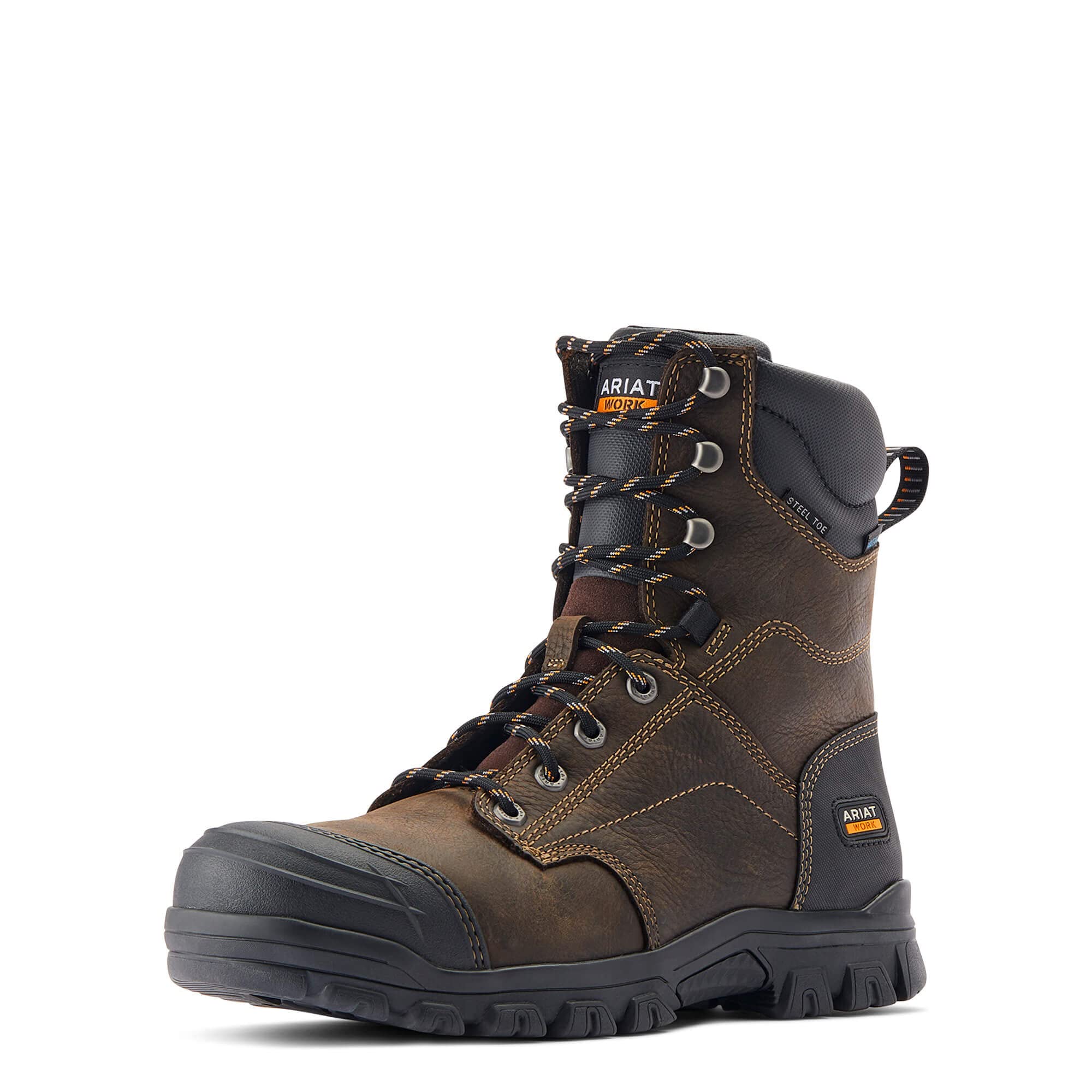
An 8 inch leather boot with a stiff shank gives the most ankle support and abrasion resistance against sharp stone. It suits daily crew who need a safety toe or hazard rating, and often costs about $150 to $300. Flat yard work is a different demand, so see the best boots for walking on concrete if most of your miles are on pavement.
Mid Height Hiking Boots for Mixed Ground and Shorter Routes
A mid height boot with a firm midsole suits walkers who split time between ballast, dirt and grass. It feels lighter and breaks in faster, but the shorter collar gives less support on the sloped shoulder. Workers who also balance on angled surfaces can see our guide to the best boots for walking on roofs, because grip and ankle control matter there too.
Safety Toe Boots for Yards With Impact and Crush Risks
Steel and composite toes protect against dropped tools, couplers and shifting loads in busy yards, and composite toes feel lighter in cold weather. Check the boot rating against your employer rules before you buy. If you stay on the ballast slope all shift, see our guide to the best boots for railroad ballast for the broader railroad focused comparison.
Quick Buyer Checklist for Ballast Boots
Answer each question yes before you order. One no is a reason to keep looking.
- Does the sole resist twisting when you turn the toe and heel in opposite directions?
- Does the collar rise high enough to steady your ankle on the sloped shoulder?
- Can you spread your toes flat inside the toe box in your work socks?
- Does your heel stay seated when you step down a pile of loose stone?
- Are the lugs deep, widely spaced and paired with a clear heel breast?
- Does the waterproofing match your wettest normal week, not your driest?
- Does any safety rating match your employer rules in writing?
Common Mistakes to Avoid
Most bad buys here come from judging a boot on flat store floors.
- Buying soft, flexible walking shoes lets sharp stone jab through the sole and leaves your ankle free to roll.
- Sizing boots in the morning with thin socks gives a fit that turns painfully tight by the end of a shift.
- Choosing shallow, closely spaced lugs lets gravel pack the sole smooth, so grip fades on loose slopes.
- Ignoring vague ratings can leave you with a boot your employer will not accept on site.
- Buying the cheapest thin leather costs a second pair once sharp ballast shreds the upper.
How to Make Your Ballast Boots Last Longer
Brush grit out of the lugs and seams after each shift, because trapped grit grinds at stitching and leather. Air dry wet boots at room temperature away from direct heat, laces loosened so air reaches the lining. Rotate two pairs if you walk daily, since a rest day lets cushioning recover.
Condition leather uppers when they look dry, and check lace hooks and eyelets for bending from snags. Watch heel and lug edges for uneven wear, a sign the boot no longer holds your foot level. Retire a pair when the midsole feels dead, the lugs are worn smooth or the upper cracks at the flex point.
FAQ
What features matter most in boots for walking on railroad ballast?
Sole stiffness, ankle support and deep lugs matter most in boots for walking on railroad ballast, because together they stop sharp stone from jabbing your foot and keep your ankle from rolling. One extra check helps in store: stand on the edge of a low step. If the sole folds around it instead of bridging it, the boot is too soft.
Can I wear boots for walking on railroad ballast all day?
Yes, you can wear boots for walking on railroad ballast all day once they are broken in and fitted with your work socks. Build up wear time over the first week. Carry adhesive bandages during that week, because catching a hot spot early beats treating a blister at mile six.
Do I need waterproof boots for walking on railroad ballast?
You need waterproof boots for walking on railroad ballast if your route crosses wet low spots, morning frost or puddles between ties. Sealed seams matter as much as the membrane, so check how the tongue attaches, because a gusseted tongue keeps water and grit out. In dry summer yards, skip the membrane and take the cooler boot.
How long is the break in period for stiff ballast boots?
The break in period for stiff ballast boots usually runs about one to two weeks of regular wear. Leather collars and stiff shanks soften in stages, and the ankle crease forms where your foot actually bends. Wear thick socks and lace firmly, because a loose collar lets the stiff edge rub instead of molding to your leg.
How should boots for walking on railroad ballast fit around the heel?
Boots for walking on railroad ballast should fit snugly around the heel while leaving clear space in front of your longest toe. A locked heel matters more on ballast than on flat ground, because each sliding step on loose stone multiplies friction. Try a lace pattern that loops through the top hook to pull the heel back, which often fixes mild lift.
Final Thoughts
Start with sole stiffness and ankle support, confirm the fit late in the day in your work socks, then choose waterproofing for your climate. Use the product table above to compare shaft height, lug depth and weight.
Chosen that way, the best boots for walking on railroad ballast feel almost boring on loose stone, and boring is what you want beside the tracks. Your steps stay planted, and the stone stops being the hardest part of your job.