Best Brogue Boots for 2026: Budget, Midrange, and Premium Tiers
Disclosure: We may earn a commission when you buy through links on this page, at no extra cost to you. As an Amazon Associate I earn from qualifying purchases. Learn more

Compare the best brogue boots at every price point. Learn what you get at budget, midrange, and premium levels and where spending more pays off.
Brogue boots span a wide price range, and the gap is not only about looks. Leather grade and sole construction decide how a pair ages. The best brogue boots for you match their materials to how often you wear them, so use the product table to weigh each tier.
This guide skips named products and focuses on what your money buys. You will see which details matter at each price level, which extras you can skip, and how fit and care change the real cost.



Who Should Buy Brogue Boots at Each Price Level?
Your wearing pattern matters more than fashion alone. A pair worn twice a month can be simpler than one worn all week.
Office Workers Who Wear Dress Boots All Week
You need a boot that looks right with tailored trousers and still feels steady on office floors and sidewalks. A midrange or premium pair suits you best, because better leather resists creasing and a stitched sole can be renewed. Choose dark brown or black so one pair covers most outfits.
Occasion Dressers Who Wear Brogue Boots a Few Times a Year
You reach for dress boots at weddings, dinners, and formal events, then store them for weeks. A budget pair can serve you well, since low wear slows damage to a cemented sole and thinner leather. Spend your effort on fit, because a pinching pair stays in the closet.
Commuters Who Walk Far in Dress Boots
You walk to transit, stand on platforms, and cross wet pavement in boots that must look polished at arrival. Look for a rubber outsole, a cushioned insole, and toe room for thicker socks. If your wardrobe leans toward suits and blazers, see our guide to the best men's brogue boots for styles framed around classic menswear.
What Each Price Tier Buys in Leather, Soles and Finish
Price tiers follow materials and construction more than decoration. Perforations cost little to add, while better hides and stitched soles raise the price in ways you can feel over time.
Budget Tier: Smart Looks With Simpler Materials
Budget pairs cost about $50 to $120 and usually pair corrected grain leather or synthetic uppers with a cemented sole. The broguing looks sharp at a normal distance, and the build feels light at first. The trade off is lifespan, because a glued sole that separates usually ends the boot rather than starting a repair.
Midrange Tier: Better Leather and a Sole You Can Renew
Midrange pairs cost about $120 to $300 and are where the best brogue boots for most buyers sit. Uppers often use full grain leather that takes polish well, and many pairs add a stitched welt or a Blake stitch a cobbler can work with later. Cushioning and lining quality also improve, so comfort holds up all day.
Premium Tier: Craft Details That Reward Long Ownership
Premium pairs cost about $300 to $550 and put money into thicker hides, cleaner punching, and hand finished edges. The fit often feels more shaped at the waist of the boot, and leather insoles mold to your foot over time. This tier pays off only when you will wear the pair for years, because the price buys longevity more than style.
Key Features to Compare
Compare these factors in order, since the first shape daily comfort and the later ones decide service life.
Broguing Pattern and How Formal a Brogue Boot Looks
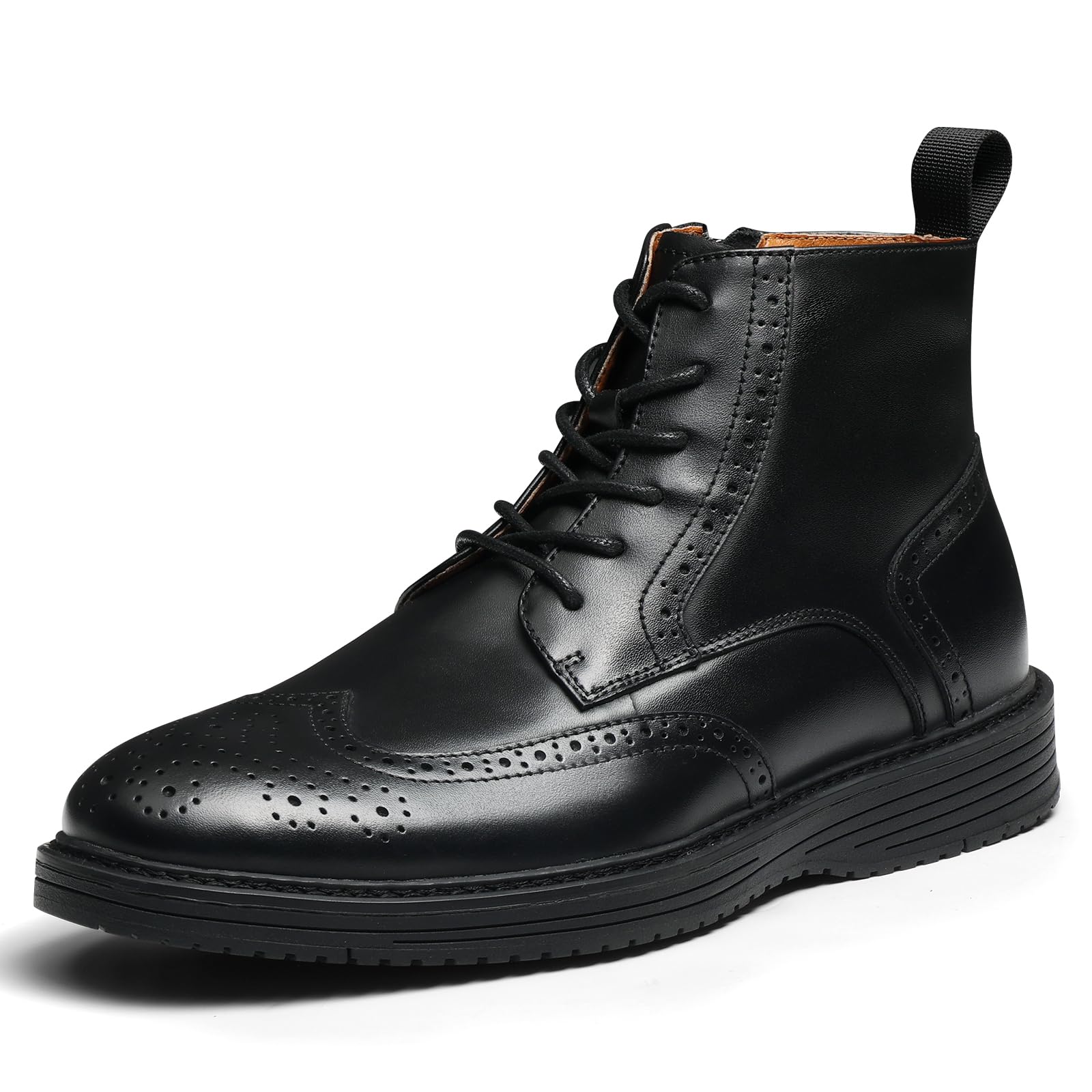
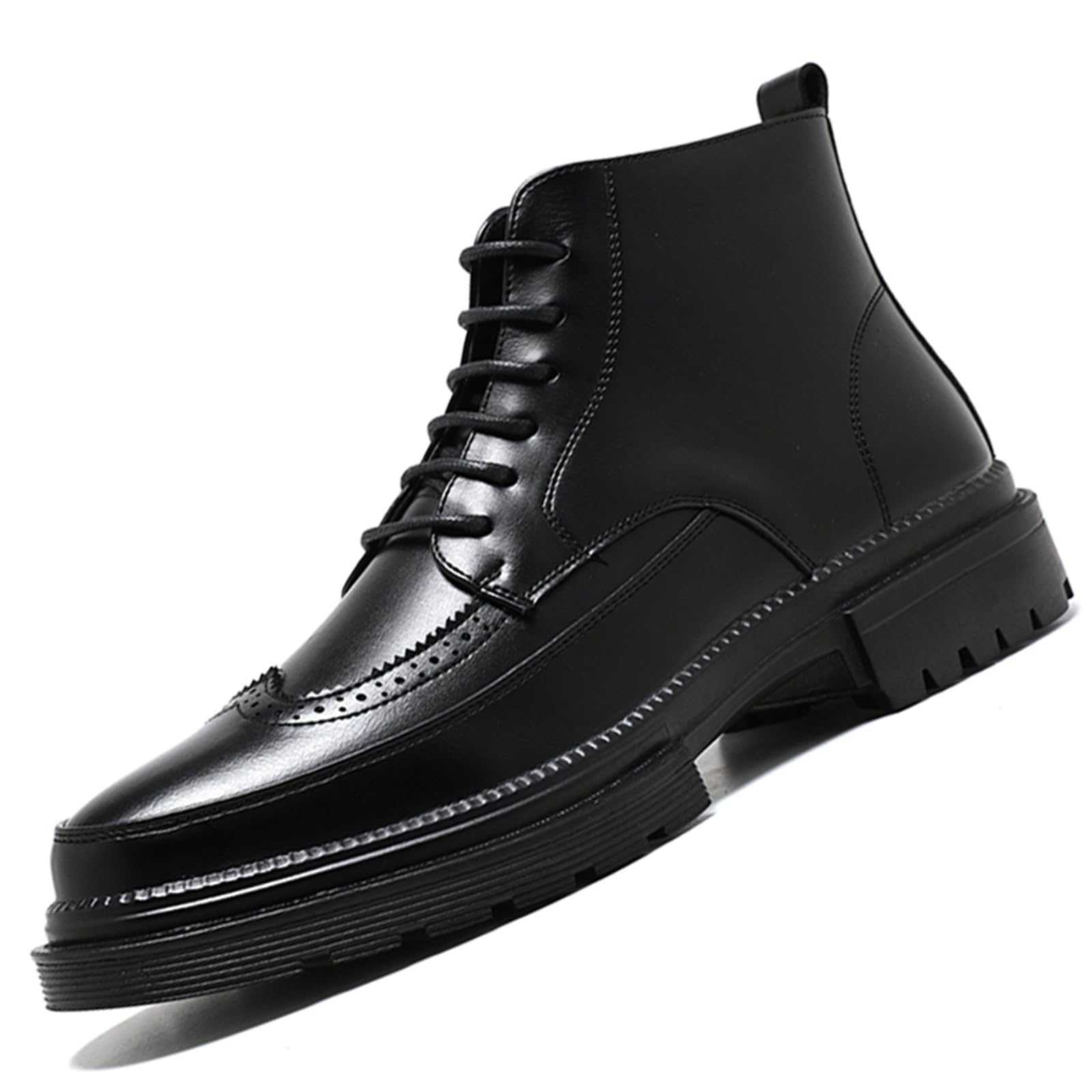
Broguing is the pattern of small punched holes along seams and toe caps, and its amount sets the tone of the boot. A wingtip with heavy perforation reads relaxed and pairs well with denim and tweed. A quarter brogue with light punching on a plain cap looks quieter and suits suits. Choose the pattern for your most formal planned outfit, because heavy decoration limits a boot more than light decoration does.
Leather Quality and Finish
Full grain leather keeps the natural surface of the hide, so it polishes to a deep shine and handles scuffs with cream and wax. Corrected grain leather is sanded and coated for a uniform look, which lowers cost but can crack at flex points sooner. Suede feels softer and hides scratches, yet it stains with water and salt. Pick smooth leather for wet commutes and formal rooms, and suede for dry days.
Sole Construction and Whether a Brogue Boot Can Be Resoled
A Goodyear welt stitches the upper, welt, and outsole together, so a cobbler can replace a worn sole without cutting the upper apart. Blake stitching sews the sole directly through the insole, giving a slimmer profile with fewer resole cycles. Cemented soles are glued, which keeps price low but offers no practical repair path. If you plan to keep a pair beyond one sole, construction matters more than color.
Fit, Sizing, and Toe Box Room in Brogue Boots
Measure both feet late in the day, when they are at their largest, and size for the longer foot. Your toes need room to lie flat inside the toe box without pressing the cap stitching, and the widest part of your foot should meet the widest part of the boot. Dress boots often run narrower than sneakers, so seek a wide fitting if your forefoot feels squeezed.
Outsole Grip and Weather Use
A smooth leather outsole looks elegant and glides on carpet, but it can slip on wet stone, tile, and painted crosswalks. Studded rubber grips those surfaces better and shrugs off rain, at the cost of a heavier and less formal edge. Many commuters choose a thin rubber sole that keeps a dress profile from the side.
Cushioning, Arch Support, and Ankle Stability
Cushioning in dress boots is thinner than in athletic shoes, so the insole and midsole do most of the work. A foam or leather insole with mild arch support spreads pressure during long standing, while a stiff shank keeps the boot from flexing at the arch. The ankle shaft adds stability on uneven pavement, but it should not rub the ankle bone. Try boots on with your own inserts in place if you use them.
Ongoing Costs: Polish, Resoling and Repairs Over the Years
The purchase price is only part of what a pair costs you. A resolable boot may need about $75 to $150 for a resole after years of wear, plus heel caps at about $20 to $40. Add trees, cream, wax, and spare laces at roughly $30 to $60 across the life of the pair. A budget boot avoids repair bills, yet repeated replacement can cost more than one resole.
Common Mistakes to Avoid
- Buying brogue boots by your sneaker size leaves toes cramped, because dress lasts usually run longer and narrower.
- Choosing heavy wingtip broguing for a formal suit makes the outfit look mismatched and limits where the boots work.
- Wearing a smooth leather sole on wet pavement risks a fall, because polished leather offers little grip on slick stone.
- Wearing the same pair every day without rest days keeps the leather damp inside and shortens its life.
- Skipping a wide fitting when your forefoot feels squeezed leads to numb toes and a boot you stop wearing.
- Judging price by decoration alone overpays for punched holes while the sole and leather stay cheaply made.
Care and Maintenance for Brogue Boots
Rest each pair for a day between wears and insert cedar shoe trees while the leather is still warm, so the vamp keeps its shape as it dries. Brush dust from the broguing after each outing, because grit settles in the punched holes and dulls the pattern. Wipe salt lines off with a damp cloth promptly in winter.
Condition smooth leather every few months, or sooner when it looks dry, then add a thin coat of wax for shine and light water resistance. Keep boots away from direct heat while they dry, since hot air can stiffen and crack the upper. Store pairs upright in a dry closet.
FAQ
How long does it take to break in a new pair of brogue boots?
Most leather brogue boots soften noticeably after about three to five short wears. Start with one or two hours at home, then add walking time as the vamp begins to flex with your foot. Thick premium hides may need a week or two of this gradual schedule. Blisters mean the fit is wrong, not that the boot needs more force.
Can I wear brogue boots all day at work?
Yes, you can wear brogue boots all day when the fit leaves toe room and the insole supports your arch. Alternate them with a second pair on consecutive days so your feet meet a fresh insole shape each morning. A rubber sole usually feels kinder by late afternoon than a thin leather sole.
How should brogue boots fit when you first try them on?
Brogue boots should feel firm across the instep, with your heel seated and your toes clear of the cap. Lacing should close without the two sides touching, because leather gives a little across the width but almost nothing in length. Wear your usual socks and walk on a hard floor, since carpet hides a tight forefoot.
How often should you replace a pair of brogue boots?
Replace brogue boots when the upper cracks through, the shaft loses shape, or a cemented sole separates again. A welted pair rarely needs full replacement on a schedule, because resoling resets the wear surface. Watch the heel caps, since a slanted heel changes how your weight lands and can make a sound boot feel unstable.
Are premium brogue boots worth the higher price?
Premium brogue boots are worth the price when you wear them often enough for cost per wear to fall below that of repeated budget pairs. One premium pair worn weekly for five years can cost less per outing than three cheaper pairs that fail early. If you dress formally only a few times a year, that math reverses.
Final Thoughts
Decide your tier first, then judge leather, construction, and fit. The pattern should suit your most formal outfit, the sole your streets, and the toe box your feet. Use the product table to check price, materials, and sole type.
Chosen that way, the best brogue boots become a steady part of your wardrobe rather than a gamble. Buy the best construction your wearing pattern justifies, care for the leather, and the pair will repay you in years of service.