
Best Boot Dryer for Work Boots: Buying Guide for 2026
Disclosure: We may earn a commission when you buy through links on this page, at no extra cost to you. As an Amazon Associate I earn from qualifying purchases. Learn more

Keep damp work boots ready for the next shift: how to pick the best boot dryer for work boots by airflow, heat, and size.
Work boots that stay damp overnight grow odor, lose comfort, and wear out faster. A boot dryer moves warm or room temperature air through the boot so it dries before the next shift, which protects leather, linings, and insoles. This guide explains how to choose the best boot dryer for work boots by airflow, heat control, boot size, and noise.
The product table lists current options. The sections below help you match a dryer to your boots, your space, and your routine.

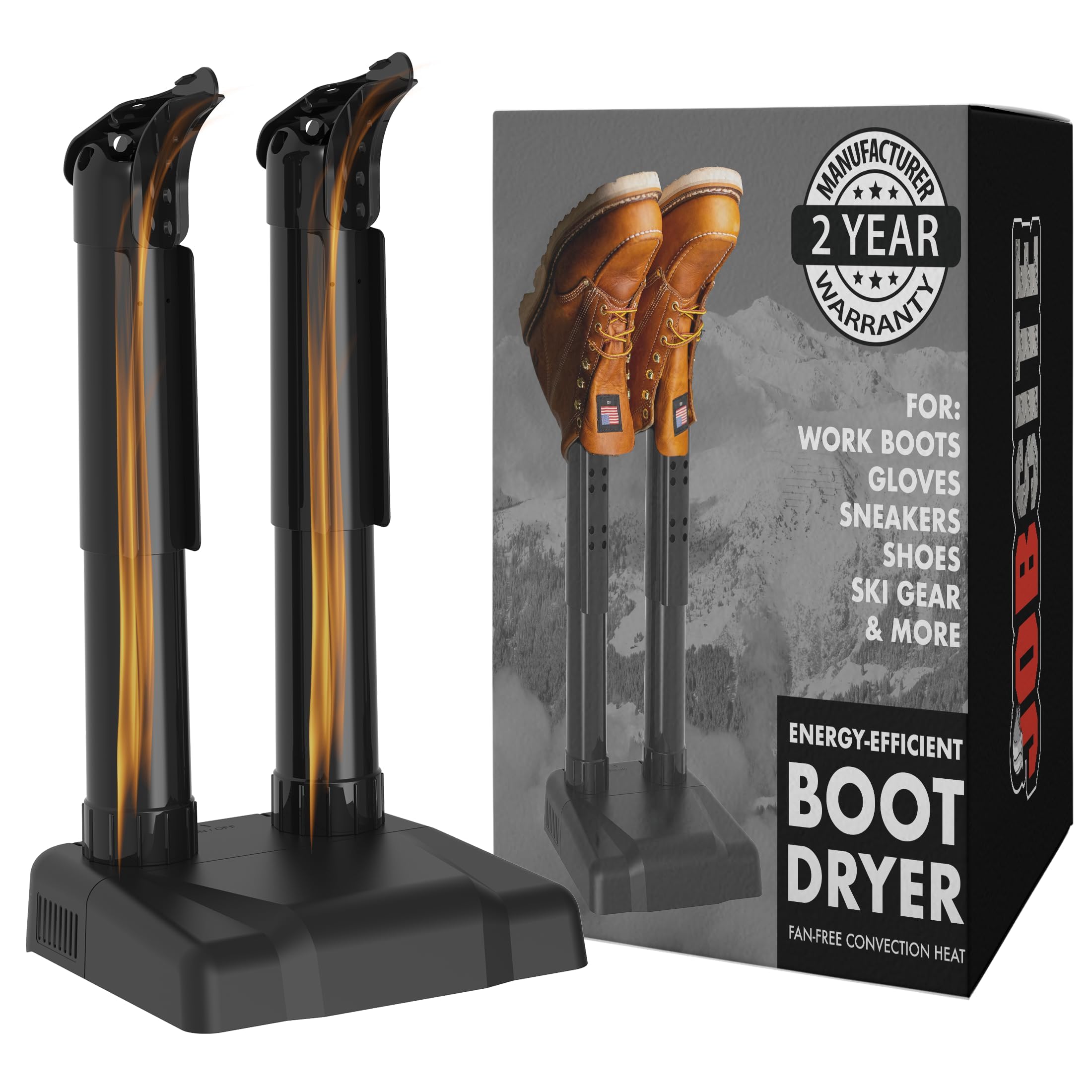
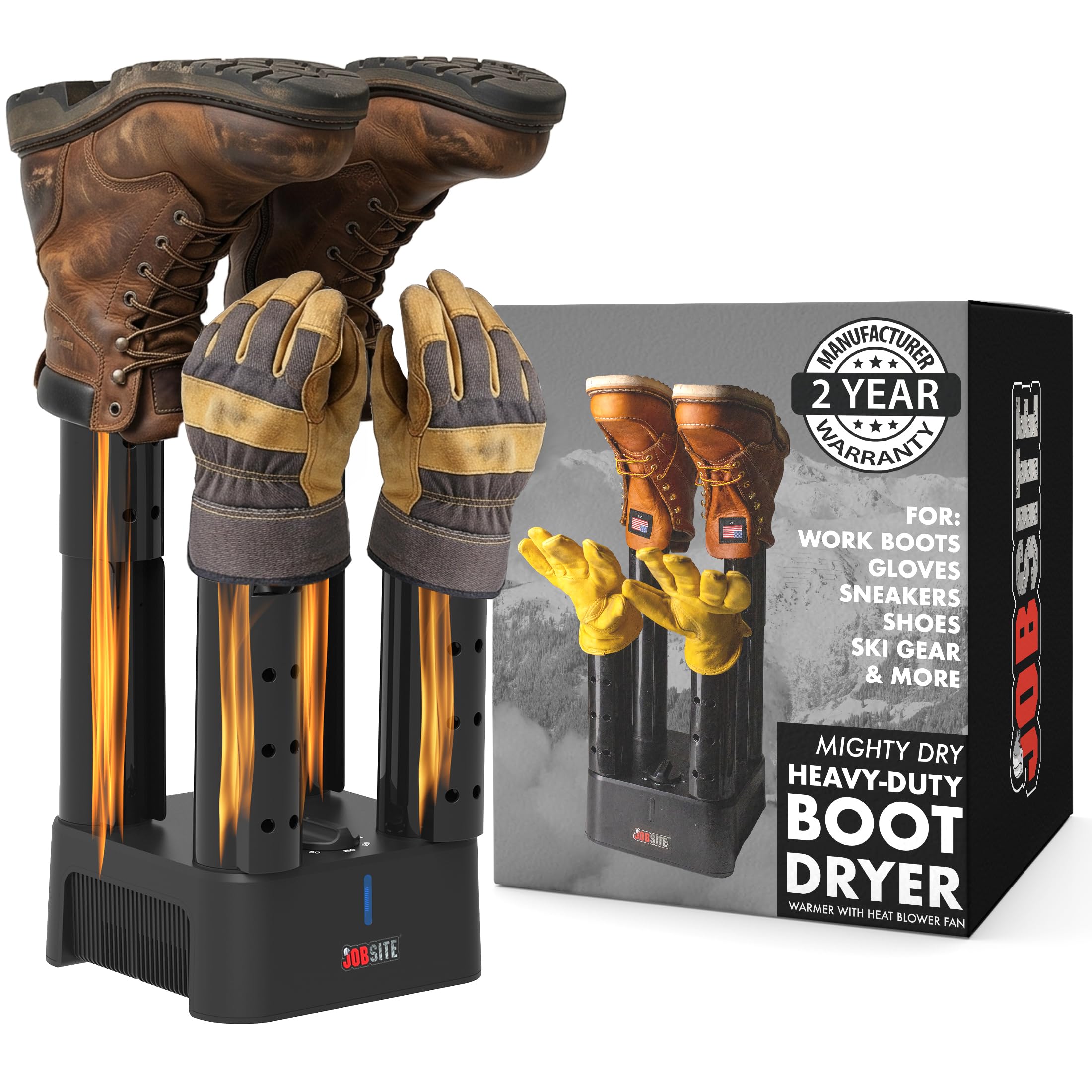
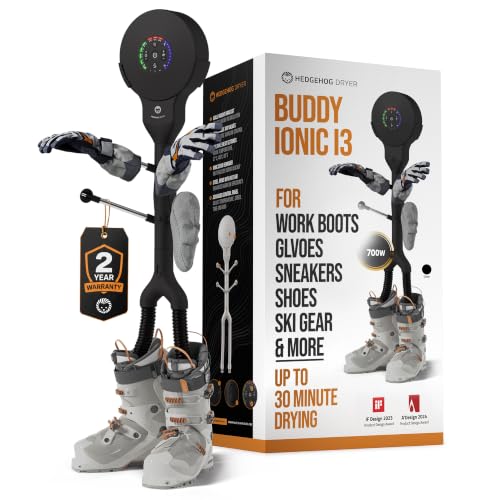
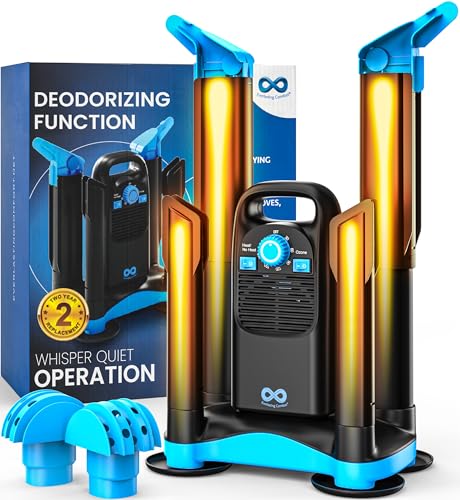
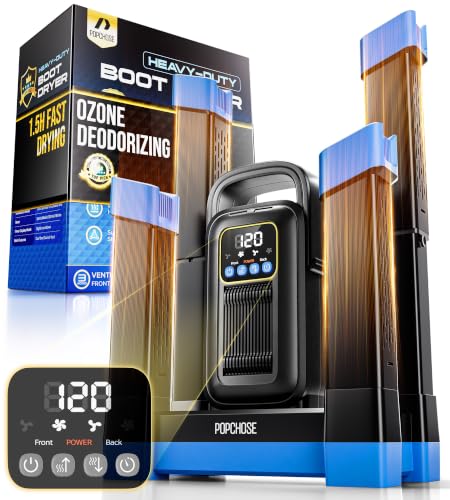


Why Work Boots Need a Dryer
Sweat alone puts a surprising amount of moisture into a boot each day, and rain, mud, or snow adds much more. Damp lining feeds bacteria, which cause odor and break down glue and stitching over time. Leather that dries slowly on a radiator can crack, and boots dried by a hot heater can shrink or separate at the sole. A purpose-built dryer is faster and gentler than those habits, and it lets you rotate a single pair from one shift to the next.
Types of Boot Dryers
Forced air dryers
These use a fan to push warm air through tubes into each boot. They dry the fastest, often in one to three hours, and reach the toe where moisture collects. Expect some fan noise.
Convection dryers
Convection models warm air and let it rise through the boot. They are silent and gentle on leather, but they work slowly, so plan on a night of drying for very wet boots.
Portable and travel dryers
Compact folding units suit lockers, trucks, and job site trailers. Power is lower, so drying takes longer, but they fit where larger units cannot.
Multi pair dryers
Larger racks dry two to four pairs at once. They suit families, crews, and anyone who also dries gloves or liners.
Which Buyer Needs What
Trade and construction workers need strong airflow for boots soaked with mud and sweat. Outdoor workers in wet climates need a dryer that handles daily rain and snow without cooking the leather. Shift workers with one pair need an overnight cycle with a timer so the boots are ready by morning. Anyone with leather work boots should favor low or adjustable heat, because high heat dries out and cracks the leather.
Key Features to Compare
Airflow design
Tubes should reach the toe, not only the opening, so the whole boot dries. Adjustable tubes help with tall boots and short shoes alike.
Heat control
Look for gentle heat, ideally with an air-only mode. Gentle heat dries without damaging leather, glue, or waterproof membranes.
Boot size fit
Check tube length and spacing against your tallest boots. Tall pull-on and lace-up work boots need longer tubes than sneakers do.
Noise level
Fans can be loud in a bedroom or shared space. Convection models and quiet-mode fans are better if the dryer sits near where you sleep.
Timer and safety
An automatic shutoff and timer prevent overheating during overnight use. Look for safety listings from recognized testing labs in general terms, and never leave a heater running unattended for long periods.
Matching the Best Boot Dryer for Work Boots to Your Boot Material
Full grain leather boots need the gentlest treatment, so choose a dryer with low heat or an air only setting and stop as soon as the leather feels dry. Synthetic and rubber boots tolerate more heat but trap moisture in thick linings, which makes strong airflow more important than temperature. Insulated and waterproof boots hold the most moisture, because membranes slow evaporation, so they dry best on a longer cycle with the insoles pulled out. Steel toe and composite toe boots can feel cold and damp for hours, and a dryer that reaches the toe cap area solves that.
Boot height matters too. Tall logger and wellington styles need long tubes or an adjustable stand, while short work shoes fit almost any dryer. Measure your tallest pair before you buy, and leave a little room so the boot does not press on the heater housing.
Where to Put the Dryer
Place the unit on a hard, dry floor in a spot with open air around the intake, such as a utility room, mudroom, or garage corner. Keep cords away from puddles and walkways. Avoid carpet, since fans can draw lint and block airflow. If you share a bedroom, pick a quiet model and run it on a timer before you go to sleep. In a truck or trailer, a compact unit that plugs into a standard outlet or a vehicle adapter is often the best fit.
How to Dry Boots Safely
- Knock off mud and loosen laces, then pull out insoles if they come out.
- Set the dryer on a hard, dry surface with clear space around the air intake.
- Slide the boots onto the tubes and choose gentle heat or air only.
- Set the timer and check that the boots feel warm, not hot, after a few minutes.
- Unplug the unit when the boots are dry and let them cool before wearing.
Dry boots fully before applying leather conditioner, since conditioner trapped with moisture can cause mildew and stiffness.
Choosing by Budget
Simple convection and compact travel dryers often cost about $15 to $40 and suit one pair at a time. Forced air models with timers and adjustable tubes usually fall around $40 to $100. Multi pair racks cost more, around $100 to $150 or above. Spend more for stronger airflow, a timer, and room for several pairs, and not for features you will not use.
Common Mistakes to Avoid
- Using high heat on leather boots, which dries out and cracks them.
- Choosing short tubes that leave the toe damp.
- Drying boots on a radiator or near a fire.
- Ignoring noise when the dryer will sit in a bedroom.
- Buying a multi pair rack when you only dry one pair a night.
Related Guides
For related reading, see our guides to the best work boots, the best men's work boots, the best boots dryer, and the best inserts for work boots.
Frequently Asked Questions
How long does a boot dryer take?
Drying time depends on how wet the boots are, the airflow, and the heat setting. Lightly damp boots may take one to two hours, and soaked boots may need an overnight cycle.
Is heat safe for leather work boots?
Gentle heat is usually safe. High heat can dry out and crack leather, so use lower settings or air only mode for leather boots.
Can a boot dryer remove odor?
Drying fully helps a great deal, since bacteria grow in damp boots. Cleaning or replacing the insoles also helps.
Do I need a dryer for waterproof boots?
Yes. Waterproof boots still get damp inside from sweat, and slow drying keeps them uncomfortable.
Can I dry other footwear in a boot dryer?
Many dryers also handle shoes and gloves, but check size, heat limits, and manufacturer guidance first.
Final Thoughts
The best boot dryer for work boots is the one that reaches the toe, uses gentle heat, fits your tallest pair, and runs quietly enough for where you put it. Check the product table above for current options, and confirm the size, warranty, and return terms before you order.


