
Best Bookshelf Speakers Under 100: A Practical Guide for Buyers 2026
Disclosure: We may earn a commission when you buy through links on this page, at no extra cost to you. As an Amazon Associate I earn from qualifying purchases. Learn more
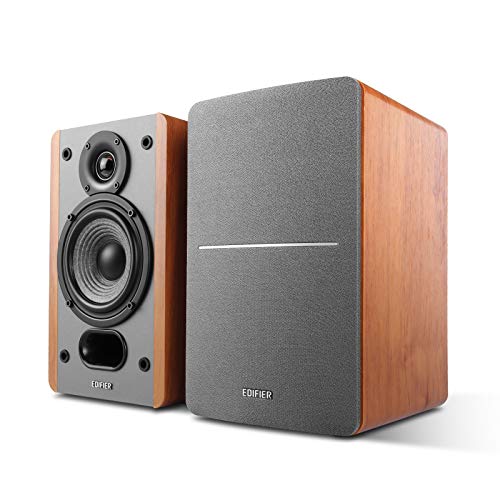
Compare bookshelf speakers under 100 by size, power, sound style, and connections, with room fit, placement, and setup guidance for everyday listening.
Spending less than a hundred dollars on a speaker pair means every choice counts, and the best bookshelf speakers under 100 are the ones that put the money into clear drivers and a sturdy cabinet rather than lights and gimmicks. At this price you will find compact powered pairs for desks, small passive pairs for a spare amplifier, and a few Bluetooth models that suit a bedroom or dorm room.
This guide explains what a hundred dollars buys, how powered and passive designs differ, and which features are worth keeping. Use the product table to compare current prices and ratings, then use the sections below to match a pair to your room and your sources.
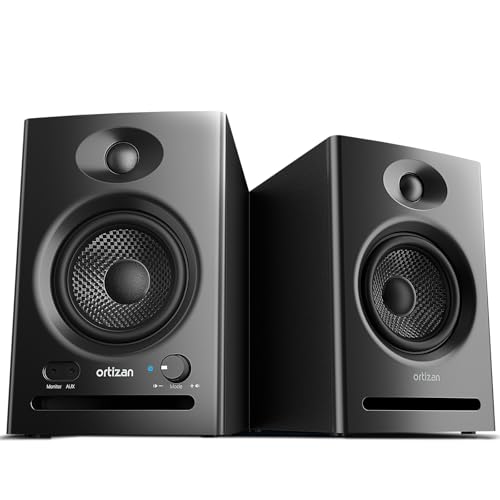

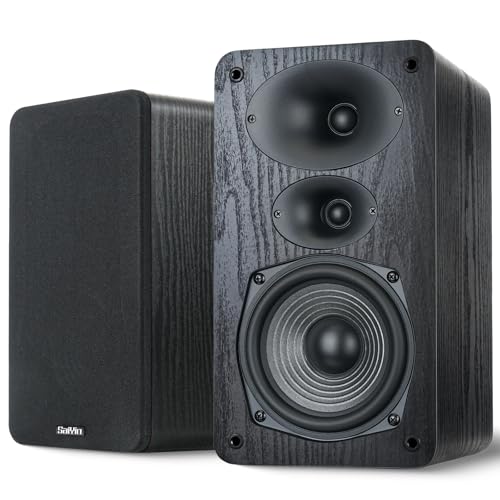
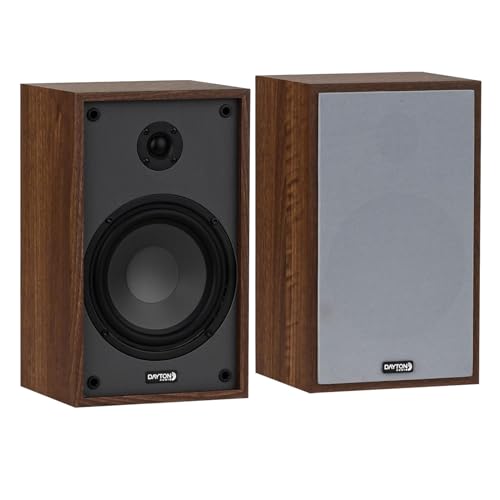
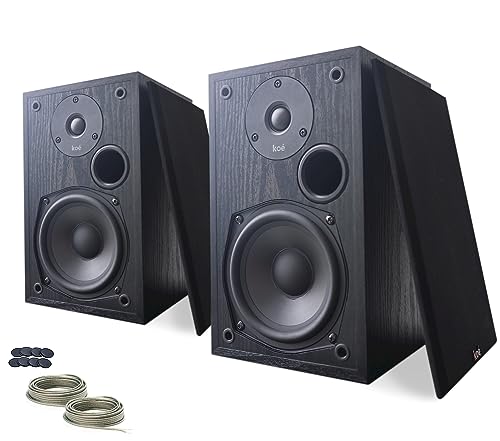


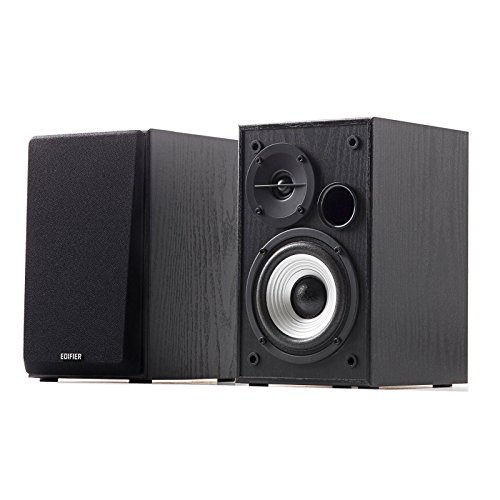
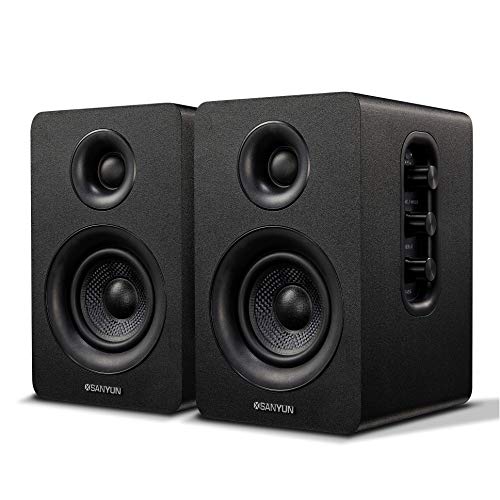
What to Expect Under $100
Expect woofers of about 3 to 5 inches, plastic or MDF cabinets with a vinyl wrap, and modest power. Voices and most music sound clear at desk or bedroom volume, but deep bass and loud, room filling sound are out of reach. A few pairs in the $70 to $99 range use real wood finishes, larger 5 inch drivers, and better amplifiers, and these are usually the best value.
Be wary of huge wattage claims, because peak numbers say little about real output. Look at the driver size, the inputs, and whether a power adapter is included instead of relying on USB power from a computer, which limits volume.
Powered or Passive Pairs
Powered pairs have an amplifier inside one cabinet, so you plug them into the wall and connect a computer, phone, or television. They are the natural choice at this price, because you do not need to buy anything else. Most offer a 3.5 mm or RCA input, and many add Bluetooth.
Passive pairs are cheaper per speaker but need a stereo amplifier or receiver and speaker wire. They make sense only if you already own an amplifier. If you do not, the total cost will pass a hundred dollars quickly, so a powered pair is the smarter spend.
Features Worth Keeping
Driver Size and Cabinet Build
A 4 to 5 inch woofer gives fuller voices and bass than a 3 inch driver, and a separate tweeter adds detail to cymbals, strings, and dialogue. Tap the cabinet: a solid, dense sound suggests better panels. A cabinet that rings hollow will vibrate on bass notes.
Inputs and Controls
A wired input is the most dependable connection, with no pairing steps and no delay for video. Bluetooth is a welcome bonus for phones. Reachable controls matter, so look for a front or side volume knob and, if possible, a headphone jack for late night listening.
Power and Cables
A wall adapter usually gives louder and cleaner output than USB power. Check the cable length between the two speakers, because a short link can limit where you can place them. Tone controls are a plus if you sit near a wall or in a corner.
Placement for Better Sound
Put the speakers at ear height, about as far apart as you sit from them, and angle them slightly toward your seat. A pair of books or a pair of cheap risers lifts the tweeters to the right height. Keep rear ported models a few inches from the wall, and keep the left and right speakers symmetrical so the stereo image stays centered.
Foam pads under the cabinets cut desk vibration and tighten bass. These small changes often improve a budget pair more than any setting on the speaker.
Who These Speakers Suit
A pair under $100 suits students, small apartments, home offices, and second rooms. It fits anyone replacing weak laptop or television speakers and wanting clear dialogue and pleasant music at moderate volume. It does not suit large rooms, parties, or serious bass listening. For those, stepping up to a mid priced pair will bring a bigger improvement than anything at this level.
Types Compared
| Type | Best For | Watch For |
|---|---|---|
| Powered desk pairs | Computer, phone, small room | Limited bass and volume |
| Powered Bluetooth pairs | Bedroom, dorm, television | Short wireless range |
| Passive pairs | Owners of a spare amplifier | Needs amplifier and speaker wire |
Getting More From a Low Budget
Small spending choices add up. A short pair of speaker stands or even two firm stacks of books raises the tweeters to ear height, which sharpens voices more than any setting. Foam pads or small rubber feet cut the buzz that light cabinets add to a desk. If your speakers offer bass and treble knobs, use them gently to match a nearby wall or a hard desk surface.
Think about the source as well. A phone or computer playing high quality files through a wired connection will sound cleaner than a weak Bluetooth link, so use the cable when you can. For television, an optical or analog connection keeps the picture and sound together, which matters more than any extra feature.
Finally, plan for the future. If you enjoy the pair and want more, a small subwoofer or a step up to a mid priced pair is an easy next move, and the first pair can move to a bedroom or an office.
Quick Buyer Checklist
- Does the pair include the input your main source needs, such as 3.5 mm, RCA, or optical?
- Is there a wall adapter rather than USB only power, if you want more volume?
- Do the cabinets fit your desk or shelf with space for cables behind them?
- Is the woofer at least about 4 inches for fuller voices?
- Is the return window long enough to try the pair in your room?
Common Mistakes
- Buying on wattage claims instead of driver size and inputs.
- Choosing a passive pair without an amplifier.
- Powering a pair from USB only and wondering why volume is low.
- Placing speakers on the floor or inside a closed cabinet.
- Ignoring the return policy, which matters most at low prices.
Warranty and returns deserve attention at this price, because quality can vary between batches. Keep the box and receipt until you are happy, and check for hum, crackle, or a weak channel in the first week so a replacement is simple.
Related Guides
For nearby choices, see our guides to powered bookshelf speakers under 100, passive bookshelf speakers under 100, and bookshelf speakers under 500 if you can stretch the budget.
Frequently Asked Questions
Can you get good bookshelf speakers for under $100?
Yes, for clear voices and enjoyable music at desk or bedroom volume. Expect modest bass, and spend on driver quality and inputs rather than extras.
Are powered or passive speakers better at this price?
Powered pairs are better for most buyers, because the amplifier is included. Passive pairs make sense only if you already own an amplifier.
What woofer size should I look for?
A 4 to 5 inch woofer is a sensible target for a desk or small room. Smaller drivers sound thin, while larger ones need more space.
Do I need Bluetooth?
It is convenient for phones, but a wired input is more reliable for a computer or television. Choose a pair with both if you can.
How do I get more bass from a cheap pair?
Move the speakers a little closer to a wall, use foam pads, and add a subwoofer later if the pair has a subwoofer output.
Final Thoughts
The best bookshelf speakers under 100 are the pair that matches your room, connects to the sources you use, and keeps voices clear. Start with a powered model, check driver size and inputs, place the pair at ear height, and compare the product table before you order. A careful choice at this price can sound better than its cost suggests.


