
Best Bookshelf Speakers for Classical Music: A First Time Buyer's Guide for 2026
Disclosure: We may earn a commission when you buy through links on this page, at no extra cost to you. As an Amazon Associate I earn from qualifying purchases. Learn more

Learn how to choose the best bookshelf speakers for classical music with a plain English guide to drivers, dynamic range, placement, and setup basics.
Buying your first serious speakers can feel confusing, because the spec sheets are full of terms that nobody explains. This guide fixes that. We will start with what a bookshelf speaker actually is, translate the important specs into plain English, and show you how the best bookshelf speakers for classical music handle the quiet passages and loud orchestral peaks that make this music so rewarding.
Classical recordings ask a lot of small speakers. A solo piano, a string quartet, and a full orchestra all need clarity, balance, and room to breathe. Use the comparison table below to see the general field, then work through the basics here so you can judge each option with confidence.


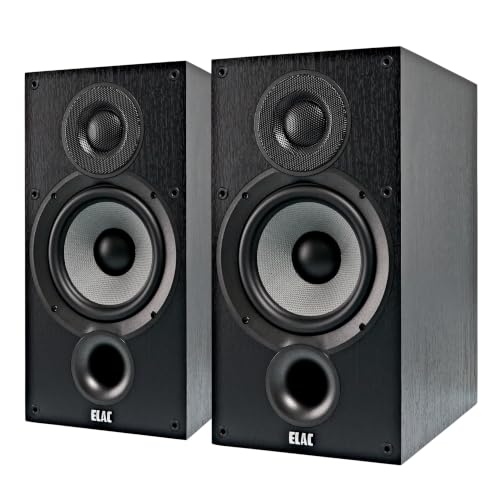


Bookshelf Speakers 101: The Basics
A bookshelf speaker is a compact speaker designed for a shelf, a stand, or a desk rather than the floor. Inside the cabinet sit two drivers in most models: a woofer that handles bass and midrange notes, and a smaller tweeter that handles high notes such as violin harmonics and cymbal shimmer. A circuit called a crossover splits the signal between them so each driver plays the range it handles best.
Speakers come in two broad types. Passive speakers need a separate amplifier or receiver to power them, which gives you more upgrade freedom later. Powered speakers have the amplifier built in, so you connect a phone, a computer, or a streamer and start listening. For a first purchase, powered models are simpler, while passive models suit anyone who already owns an amplifier. Either type can sound excellent with classical music when the basics are right.
Key Specs Explained in Plain English
Specs look technical, but each one answers a simple question about how the speaker will behave in your room. Here are the ones worth your attention, with the levels a first time buyer should aim for.
Features That Matter for Classical Music
Classical music has a wider dynamic range than most genres, meaning the gap between the softest and loudest moments is large. Your speakers need enough clean power to play a full orchestra climax without strain, plus a low noise floor so a whispered solo stays clear. Look for a frequency response that reaches down to about 50 to 60 Hz so cellos and basses have body, and favor smooth, even response over boosted bass. Wide dispersion helps too, spreading string sections naturally across the room instead of beaming them at one chair.
Sound Quality and Tuning
Tuning describes the balance a maker chooses between bass, midrange, and treble. For classical listening, a neutral tuning is the safest start because it presents instruments close to how they were recorded, without adding boom or glare. Driver size plays a part: woofers around 5 to 6.5 inches give small speakers enough authority for piano and orchestral weight, while a well designed dome tweeter keeps violins sweet rather than shrill. If a spec sheet quotes frequency response, trust figures given with a tolerance such as plus or minus 3 dB over figures with no tolerance stated.
Comfort, Fit, and Weight
For speakers, comfort means two practical things. First, fit: measure your shelf depth and height before ordering, and leave space behind rear ported cabinets so bass stays clean. Second, weight: a heavier cabinet usually signals thicker walls that vibrate less, which keeps the sound cleaner, but your shelf must support the pair safely. Long listening comfort also counts. A speaker with smooth treble lets you enjoy a two hour symphony without fatigue, while a bright, sharp tuning can tire your ears within one movement.
Room EQ, Apps and Inputs
Some powered speakers include an app with room EQ, tone controls, and firmware updates. Gentle EQ is genuinely useful in a real room, because cutting a bass bump caused by a wall often improves clarity more than any cable upgrade. Check which streaming options the speaker supports, such as Bluetooth, WiFi streaming, or a wired network input, and pick the ones you will use weekly.
Rookie Mistakes to Avoid
- Judging by bass alone. Heavy bass impresses in a demo but buries the inner detail of strings and woodwinds that classical fans actually listen for.
- Placing speakers flat against the wall. A little space behind the cabinet, or choosing a front ported design, prevents the boomy sound that muddies orchestral textures.
- Forgetting the source. A poor quality stream or a noisy computer output limits even excellent speakers, so use the best input your gear offers.
- Buying far too big or too small. Match the cabinet to your room size so quiet passages stay present and loud ones stay composed.
- Skipping the stands or pads. Speakers sitting directly on a resonant shelf or desk pass vibration into the furniture, which blurs the sound.
Getting Started: Setup and First Use
Unbox the pair and place them so the tweeters sit near ear height when you are seated, with both speakers the same distance from your chair. Start with them about a foot from the wall behind them and angled slightly toward you, then adjust in small steps. Connect your source, begin at low volume, and play a recording you know well, ideally one quiet solo piece and one full orchestra track. Check that the left and right channels are correct, since swapped cables are a very common first day error. Keep any firmware updated through the maker app, and after a week of listening, nudge the positions once more before deciding anything sounds wrong.
FAQs
What features matter most in bookshelf speakers for classical music?
Smooth and even frequency response matters most, because it keeps every instrument in its natural balance. Next come dynamic headroom for loud passages, low distortion for quiet ones, and dispersion that fills your seat evenly. A response reaching near 50 to 60 Hz covers most orchestral weight in a small room. If a maker publishes response with a stated tolerance and offers tone controls or room EQ, treat that as a good sign of honest engineering.
Wired or wireless: which sounds better?
A wired connection sounds better in strict terms because it carries the full signal with no compression and no dropouts. A USB, optical, or analog cable from a good source is the safest route for serious listening sessions. WiFi streaming comes close and adds convenience for whole room listening, while Bluetooth is fine for casual play from a phone. Many first time buyers wire their main source and keep Bluetooth for guests, which covers both quality and ease.
Do I need stands for classical listening?
Stands help. They put the tweeters near ear height, reduce vibration into furniture and let the cabinet breathe, which keeps strings and piano clearer.
How loud do classical recordings need to be?
Classical has wide dynamic range, so set a comfortable level for the quiet passages and leave headroom for the loud ones. A speaker that stays clean at the peaks matters more than one that can play very loud.
Final Thoughts
For a first purchase, remember three things: neutral tuning, enough clean power for dynamic swings, and placement that gives the cabinets room to work. Compare your shortlist in the product table above, and revisit the basics here whenever a spec confuses you. Chosen with those points in mind, the best bookshelf speakers for classical music will make even familiar recordings feel newly detailed. For a wider look at music focused models beyond this genre, see our guide to the best bookshelf speakers for music.


