
Best Bluetooth Bookshelf Speakers under 100: A First Time Buyer's Guide for 2026
Disclosure: We may earn a commission when you buy through links on this page, at no extra cost to you. As an Amazon Associate I earn from qualifying purchases. Learn more

Learn how to choose the best bluetooth bookshelf speakers under 100, with plain English specs, setup steps and mistakes first time buyers should avoid.
If this is your first pair of shelf speakers, the spec lists can feel like a foreign language. Watts, drivers, codecs, and inputs all compete for your attention while you just want clear music from your phone. This guide walks you from the basics to a confident choice among best bluetooth bookshelf speakers under 100, in plain English and in a sensible order.
You will learn what these speakers are, which specs matter at this price, and which extras you can safely ignore. Then you can check the comparison table below with fresh eyes and spot the pair that fits your desk or shelf.


Bluetooth Bookshelf Speakers 101: The Basics
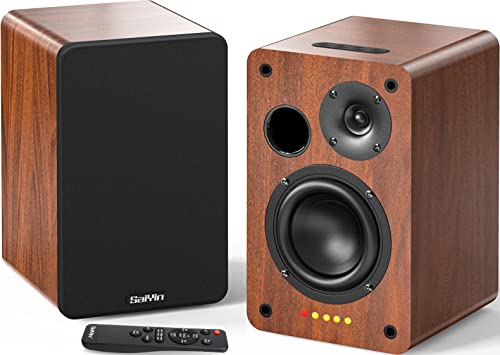
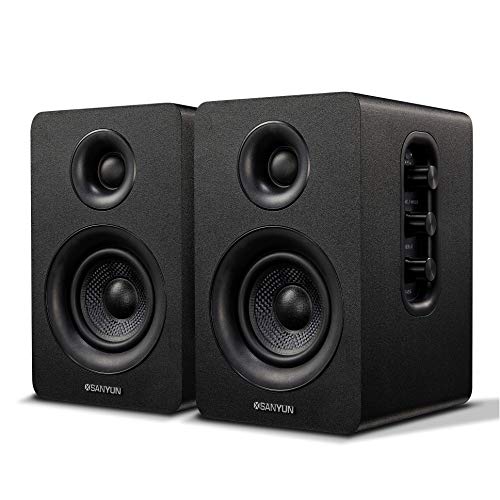
Bookshelf speakers are compact speakers designed to sit on a shelf, desk, or stand and fill a small to medium room. A Bluetooth pair adds wireless streaming from your phone, tablet, or computer without a separate receiver. Most pairs under $100 are powered speakers, which means the amplifier is built into one speaker and a cable links it to the second speaker. That design keeps setup simple because you plug one unit into the wall and connect the pair together.
The sound comes from drivers, the round parts that move air. A woofer handles low and middle notes, while a tweeter handles high notes such as cymbals and vocal detail. Two drivers per cabinet usually sound clearer than one. Your source sends music over Bluetooth, or through a cable if you use a wired input. Volume, pairing, and sometimes tone controls sit on the main speaker or a small remote.
Key Specs Explained in Plain English
What You Can Realistically Get Under $100
Under $100, expect a solid powered pair with Bluetooth, a wired input, and cabinets made of wood composite with a vinyl finish. Sound will fill a bedroom or office well at moderate volume. What gets cut at this price is deep bass, premium finishes, remote quality, and advanced features such as app control or WiFi streaming. Do not cut corners on the basics, though. Clear midrange, low hiss at idle, and sturdy speaker wire terminals matter every day. Spending around $80 to $100 rather than around $40 usually buys noticeably better tuning and build.
Sound Quality and Tuning
Driver size is your simplest clue. Woofers around 3 to 4 inches are common at this price and suit near listening on a desk. Frequency response tells you the range the speaker can reproduce. A low end around 60 to 80 Hz is realistic here and gives music body without a subwoofer. Tuning describes the balance. A neutral balance keeps vocals and instruments even, while a bass boosted balance can sound exciting at first but muddy with speech. For podcasts and calls, favor clarity in the midrange over extra bass thump.
Connectivity (Bluetooth Version, Codecs, Wired)
Look for Bluetooth 5.0 or newer for a stable connection across a room. Codecs are the language used to send audio. Standard SBC works with everything, AAC suits iPhones well, and aptX can help some Android phones. Wired inputs matter more than many first time buyers expect. An AUX or RCA input lets you connect a TV, computer, or turntable setup and removes wireless delay for video. An optical input, when present, is a bonus for TVs. Check the input list against every device you plan to connect before you buy.
Ecosystem and App Features
Most pairs under $100 keep things simple, with physical knobs or a basic remote instead of an app. That simplicity is a strength for many buyers because there is less to update and fewer accounts to manage. If a model does offer an app, useful features include EQ adjustment, input switching, and firmware updates. Ecosystem lock in is rare at this price, which is good news. Any phone or computer with Bluetooth can stream to these speakers, so you are free to change devices later without replacing the speakers.
Battery Life and Charging
Here is a point that saves confusion. Bookshelf speakers in this class do not run on batteries. They plug into a wall outlet, which is why they can play all day at steady volume without recharging. Battery life and charging specs belong to portable speakers, not to powered shelf pairs. If a listing for a bookshelf pair leads with battery claims, read carefully, because it may be a portable speaker in disguise that will sound smaller at your desk. Plan instead for outlet access within cable reach of your shelf.
Noise Cancellation and Isolation
Bookshelf speakers do not offer active noise cancellation, and you do not need it. Cancellation is a headphone feature for sealing out sound around your ears. In a room, what matters is clean output without hiss or hum, plus sensible placement. Keep speakers away from noisy appliances, use the wired input if you hear Bluetooth interference, and place foam pads under the cabinets if a hollow shelf adds buzz. If your room is loud, a pair with clear midrange will carry speech and lyrics better than a louder but muddier pair.
Rookie Mistakes to Avoid
- Buying by watt numbers alone. A big watt claim does not promise better sound. Driver quality, tuning, and cabinet design shape what you hear far more.
- Ignoring your source inputs. List every device you will connect, then confirm the speaker has those inputs, or you may need adapters on day one.
- Placing speakers inside a closed cabinet. Enclosed shelves trap sound and heat. Leave open air around the pair and a little space behind rear ports.
- Expecting deep movie bass. Small woofers have limits. If film rumble matters, choose a pair with a subwoofer output so you can add one later.
- Forgetting speaker placement width. A pair needs room to spread apart. Measure your desk or shelf before you buy, a point our guide to the best bookshelf speakers under 100 covers for wired pairs as well.
Getting Started: Setup and First Use
Setup takes about fifteen minutes. Place the powered speaker near an outlet, set its partner at a similar height, and aim both toward your listening seat so the three points form a rough triangle. Connect the speaker wire between the pair, matching positive to positive, then plug in power. Pair your phone over Bluetooth, start with volume low, and raise it slowly. Play a song you know well and adjust placement before judging the sound.
A practical know how point: toe the speakers inward slightly so the tweeters point near your ears, which sharpens detail at a desk. Keep firmware updated if your model supports updates through an app. Dust cabinets with a dry cloth, keep liquids off the tops, and leave ventilation slots clear. If you also shop portable options, our guide to the best bluetooth speakers under 100 explains how those differ from shelf pairs.
FAQs
Can you get a good bluetooth bookshelf speaker under $100?
Yes, you can get a genuinely good pair under $100 for a bedroom, office, or small living room. Expect clear vocals, pleasant music at moderate volume, and simple controls. What you will not get is deep bass, luxury finishes, or WiFi features. Choose a powered pair with a wired input and solid reviews of low hiss, and the result will satisfy most first time buyers for years.
Is ANC worth the extra cost?
No, because bookshelf speakers do not use active noise cancellation at all. Any seller charging extra for cancellation on a shelf speaker is using confusing wording. Put that money toward better drivers or a subwoofer output instead. If outside noise is your real problem, curtains, a closed door, and clearer midrange tuning will improve your listening far more than a cancellation claim on a speaker box.
Do I need a special codec?
No special codec is required, since standard Bluetooth audio already sounds good for music and podcasts at this price. AAC is a nice match for iPhones, and aptX can suit some Android phones, but neither should drive your choice. Inputs and tuning matter more. One extra point: if you watch video over Bluetooth and notice delay, switch to the wired input for the TV or computer and the delay disappears.
How long does the battery last?
There is no battery to track, because powered bookshelf speakers run from a wall outlet. That is an advantage for home use, since performance stays constant and you never pause music to recharge. The trade off is placement, because the powered speaker must sit within cable reach of power. If you need music away from outlets, such as in a yard, a portable speaker is the right tool instead, as our guide to the best powered bookshelf speakers under 100 notes when comparing formats.
Wired or wireless: which sounds better?
Wired sounds slightly better and has no delay, which makes it ideal for video and for a computer desk. Wireless sounds close for music and removes cable clutter, which is why most people use Bluetooth day to day. The smart approach is to use both. Stream music over Bluetooth, and keep a cable connected to your TV or computer for films and calls. A good pair under $100 should make switching between the two simple.
The Bottom Line
For your first pair, focus on three things: powered design so setup stays simple, clear midrange tuning for voices and music, and the inputs your devices actually need. Ignore battery and cancellation claims, measure your shelf, and plan placement before the box arrives. Judged that way, the best bluetooth bookshelf speakers under 100 offer remarkable value for small rooms. Check the product table above, compare the pairs against these points, and pick the one that fits your space and sources with the least compromise. Our guide to the best bluetooth speakers under 100 dollars is a helpful next read if your budget is firm.


