
Best Black and Decker Portable Air Conditioner in 2026: Size Classes Compared
Disclosure: We may earn a commission when you buy through links on this page, at no extra cost to you. As an Amazon Associate I earn from qualifying purchases. Learn more

Small, mid size and large units compared on cooling rating, noise and running cost, to help you pick the best black and decker portable air conditioner for your room.
Choosing inside one brand sounds simple until you open the listings, where the ratings and room size claims all look alike. This guide sorts the best black and decker portable air conditioner options by size class, hose type, noise, and running cost, so you can match a unit to your room. See our guide to the best portable air conditioner for the wider field. The product table below lists the key ratings.


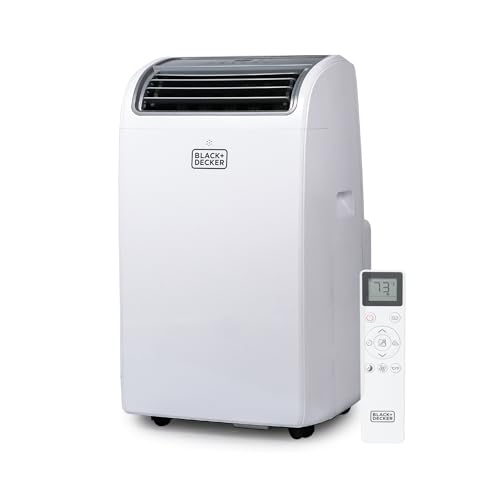

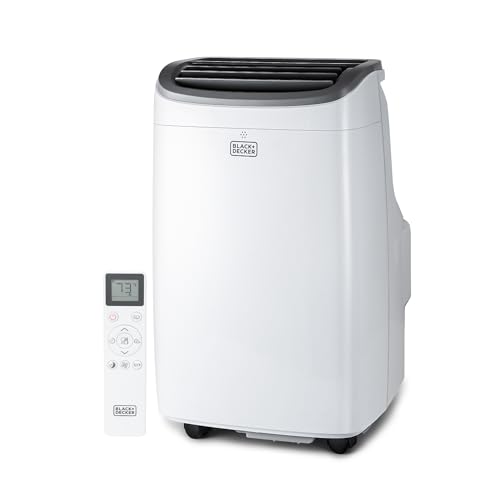
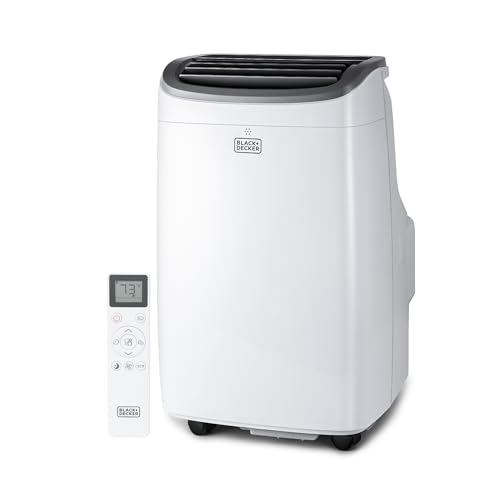


The Black and Decker Lineup at a Glance
The lineup is built around a few size classes rather than dozens of truly different machines. Smaller units suit one closed room, mid size units cover most bedrooms and home offices, and larger units target living areas. Most models offer cooling, a fan mode, and a dehumidifier mode in one cabinet, and some add heat. Nearly all use a single exhaust hose, a window kit, a washable filter, caster wheels, and a remote.
- Smaller class: lower BTU ratings and the easiest storage, made for one small closed room.
- Mid size class: the balance point for most buyers, with enough capacity for bedrooms and offices.
- Larger class: higher BTU ratings for living rooms and studios, with more weight and noise.
- Heat and cool class: cooling plus a heater function, for use in more than one season.
Three Size Classes Compared
Smaller Units for Single Small Rooms
Smaller Black and Decker units, often listed at about 8,000 to 10,000 BTU under the older rating method, fit rooms where the door can stay closed and the sun load is modest. They are the lightest in the lineup, so storage takes less effort. The trade off is headroom. On a very hot day, a small unit may run for hours without reaching the temperature you set. Buy this class for a nursery, a small bedroom, or a compact office, and size up if your room sits at the top of its stated range.
Mid Size Units for Bedrooms and Offices
Mid size units are where most shoppers should start. Ratings in this band aim at ordinary bedrooms, dens, and home offices, and the cabinets stay manageable on casters. You get more cooling margin for warm afternoons, so the compressor can cycle off instead of running at full output all day. Noise still matters here, since a unit that drones will disturb sleep and calls. If two listings look equal on BTU, prefer the one with a sleep mode and a longer window kit, because those details shape daily comfort more than a small rating gap.
Larger Units for Living Areas
Larger units, often listed at about 12,000 to 14,000 BTU under the older rating method, suit living rooms, studios, and combined living and dining spaces. They move more air and pull humidity down faster after cooking or a gathering. The costs are physical. The cabinet is heavier, the hose is harder to hide, and the unit draws more power. Measure your storage space before you buy, and plan where the hose will reach a window without crossing a walkway. This class rewards a fixed spot for the whole season.
How to Compare Black and Decker Portable Air Conditioners
Compare in a fixed order so marketing claims do not distract you. Start with the adjusted cooling rating and your room size, then hose design, noise at low speed, and energy use. After that, look at window kit length, filter access, and how the unit handles condensate water. Smart controls come last, since they cannot rescue a unit that is too small for the room or too loud for the people sleeping near it.
How to Choose the Right Portable Air Conditioner
Size and Form Factor
Portable air conditioners stand on the floor, so footprint and height matter as much as cooling power. Leave clearance around the intake so curtains and furniture do not choke airflow, and keep the exhaust hose as short and straight as you can, because bends trap heat and cut output. Check the weight if you must lift the unit over a threshold. A tall narrow cabinet fits tight corners better, while a wider cabinet can feel more stable on carpet. Confirm the window kit fits your window style, since some kits suit sliding windows poorly without extra sealing material.
Type
Most Black and Decker portable units use a single hose that pushes hot air outside and draws replacement air from indoors. That design is simple and common, but it is less efficient than a dual hose design that draws intake air from outside. If efficiency in a large room is your top priority, compare this lineup with the best dual hose portable air conditioner options before you decide. Cooling only models cost less, while heat and cool models add a heater for mild cold weather. True ventless cooling does not exist here, since every compressor unit must dump heat somewhere.
Features Worth Paying For
A remote control, a programmable timer, and sleep mode earn their keep in daily use, because you can adjust the unit without crossing the room at night. A dehumidifier mode helps in damp basements and humid climates where air feels sticky even at a fair temperature. WiFi control is nice if you want to start cooling before you get home, but it adds setup steps. Pay less attention to long lists of fan speeds you will never use. Two or three usable speeds plus a quiet low setting serve most rooms better than novelty modes.
Room Size and Coverage Ratings
Read coverage claims with care. Many listings show an ASHRAE BTU figure, while the adjusted SACC rating, which reflects real portable use, is lower for the same machine. Use the SACC figure when you compare across brands, and treat the stated square footage as a best case for a shaded room with standard ceilings. If your room is at the edge of a range, choose the next size up. Our guide to the best portable air conditioner for small room explains small room sizing in more depth.
Running Cost and Energy Use
Running cost depends on the watt draw, your local power price, and how many hours the compressor runs each day. A unit that fits the room well cycles off and costs less over a month than a small unit running without pause. Look for the energy efficiency ratio on the listing and keep the filter clean, since blocked airflow makes the compressor work longer for the same cooling. Sealing gaps around the window kit also pays back quickly, because cooled air that leaks out must be cooled again.
Noise Levels for Bedrooms
Manufacturers quote noise in decibels, usually at the lowest fan speed and from a set distance. The compressor adds a deeper hum that a single number does not capture well, and that hum carries through light sleep. Place the unit on a hard flat surface away from the bed, where the cabinet cannot vibrate against furniture. Sleep mode helps by lowering fan speed and dimming lights. If you cool a bedroom every night, study the guide to the best portable air conditioner for bedroom alongside these ratings before you order.
Filters, Tanks and Maintenance
Most models in this lineup evaporate much of their condensate out through the exhaust hose, so you may drain the tank only in very humid weather or in dehumidifier mode. The washable filter needs rinsing on a regular cycle during heavy use, and it must dry fully before it goes back in. Wipe the intake grilles, check the hose for cracks, and store the unit upright with the tank empty. For step by step detail, follow our guide on how to clean a portable air conditioner at the start and end of each season.
How Much Should You Spend?
Smaller cooling only units in this brand often sell for about $250 to $350, while mid size models commonly land at about $350 to $500. Larger units and heat and cool models can run about $500 to $700. Spending more mainly buys capacity, heat, and controls, not a different class of cooling, so do not pay a premium for features your room cannot use. Keep your receipt and try the unit during the return window, on a hot day rather than a mild one.
The Black and Decker Portable Air Conditioner Lineup Explained
The best black and decker portable air conditioner for you depends less on the badge and more on which size class matches your room, because the lineup shares one basic design across most models. Entry models cover small rooms with cooling, fan, and dehumidifier modes. Middle models add capacity and sometimes WiFi. Upper models add heat and the highest ratings in the range. Read each listing for its SACC rating, its hose type, and its window kit contents rather than trusting the headline BTU alone.
Consider the alternatives honestly. A window unit cools more efficiently and costs less to run, but it blocks the window and may break lease rules. Our comparison of portable ac vs window ac walks through that trade off in full. An evaporative cooler costs little to run, yet it only helps in dry climates. A portable unit wins when you need real compressor cooling and the option to move or store the machine later.
FAQ
How do you size a Black and Decker portable air conditioner for a sunny room?
Start with the SACC rating for your square footage, then size up one class if the room gets strong afternoon sun or holds heat from cooking. South and west facing glass adds more load than most coverage charts assume. Closing blinds during peak sun can matter as much as a small BTU increase. Kitchens and rooms with several people or large screens also run hotter than a quiet bedroom of the same size.
Can a Black and Decker portable air conditioner cool an open plan space?
It can cool the area near the unit, but open plan spaces leak cooled air into hallways and adjoining rooms, so far corners will stay warmer. A fan that pushes air toward the seating area helps even out the result. Closing doors to unused rooms shrinks the load without extra power use. If the combined space is large, expect comfort cooling rather than a uniform temperature, and place the unit near where people sit.
Does a Black and Decker portable air conditioner need a window to vent?
Yes, the exhaust hose must send hot air outside, through a window, a sliding door kit, or a suitable vent opening. Running the unit with the hose inside the room cancels out the cooling, since the heat and the cooled air mix in the same space. Check your lease or building rules first, and never vent into an attic or a closed wall cavity, where heat and moisture can cause damage over time.
How long does a Black and Decker portable air conditioner usually last?
With seasonal cleaning and dry storage, many portable units serve for about five to ten years, though heavy daily use in a hot climate shortens that span. Cooling that fades slowly, new rattles, or a compressor that starts and stops in short bursts can signal wear worth a service visit. Simple parts such as hoses and filters are easy to replace. If repair quotes approach the price of a new unit in the same size class, replacement usually makes more sense.
Is a portable air conditioner worth it if you rent your home?
For many renters, yes, because the unit needs no permanent change to the building and leaves with you when you move. That portability has real value if you expect to change homes or cool different rooms across seasons. The compromise is higher running cost and more noise than a fixed unit gives. Renters whose landlord allows window units may save money with that option instead. Decide based on your lease terms, your likely length of stay, and storage space.
Final Thoughts
Match the size class to your room first, then weigh noise, hose design, and running cost, and the best black and decker portable air conditioner for your home becomes an easy call. Small rooms do well with the compact class, bedrooms favor the mid size class, and living areas need the larger class. Check the product table above for ratings, confirm your window type, and order early enough to try the unit on a hot day while returns are still simple.


