Best Aircare Humidifier in 2026: Buying Guide for Console and Single Room Models
Disclosure: We may earn a commission when you buy through links on this page, at no extra cost to you. As an Amazon Associate I earn from qualifying purchases. Learn more

The best aircare humidifier matches your room size and upkeep habits. Compare console, tower and ultrasonic models.
Choosing within one brand sounds simple until you face consoles, towers, and tabletop tanks that all promise relief from dry air. The best aircare humidifier for you depends on how much space you need to cover, how often you accept refilling and cleaning, and how much fan noise you can sleep through. This guide sorts the lineup by type and buying criteria instead of hype.
Below, you will find the main formats compared, the factors that actually change daily use, and clear guidance on sizing, running costs, and upkeep. Use the product table to scan coverage, tank size, and noise at a glance.




Aircare Humidifier Types at a Glance
Aircare is best known for evaporative humidifiers, and the lineup divides mainly by format and coverage. Start with the format that fits your space, because that choice decides tank size, noise, and how much upkeep you will do each week.
Console Evaporative Units for Several Rooms
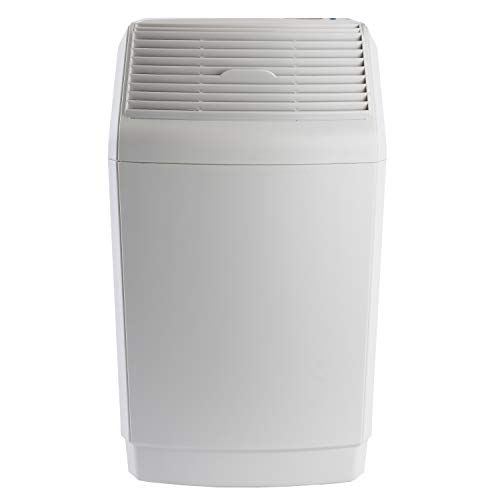
Console units are large floor models with big tanks and a fan that pulls dry air through a saturated wick. Evaporative output rises and falls with the humidity already in the room, so these units are hard to overdo in normal use. They suit open living areas and homes where one central spot can serve several connected rooms.
Tower and Tabletop Units for One Room
Tower and tabletop models trade coverage for a smaller footprint and simpler placement on a dresser, side table, or floor corner. Tanks are smaller, so refilling happens more often, but moving the unit between rooms is easy and cleaning access is usually better. These formats fit bedrooms, home offices, and apartments where a console would dominate the room.
Ultrasonic Cool Mist Units for Quiet Rooms
A few Aircare models skip the wick and use an ultrasonic plate to make a fine cool mist. They run very quietly, which suits a bedroom or nursery, but the trade off is mineral dust on nearby surfaces when you fill them with hard tap water. Using distilled or demineralized water avoids most of that dust, at the cost of buying water. Treat this format as a quiet single room choice, not a fix for dry air across a home.
Who Should Buy Which Type?
Households Humidifying Several Connected Rooms
If winter heating dries out your living room, dining area, and hallway at once, a console is the format built for your problem. One large unit in a central spot beats several small tanks scattered around, since you refill and clean in one place. Shoppers comparing that approach with other formats can also see our guide to the best humidifier for large rooms for sizing context.
Bedroom Sleepers Who Notice Dry Air at Night
If you wake with a dry throat or stuffy nose, a tabletop or tower unit sized for your bedroom will usually serve you better than an oversized console in another room. Our guide to the best humidifier for bedroom covers placement and quiet operation in more depth. Prioritize the lowest fan speed and a display you can dim or turn off.
Parents Adding Moisture to a Nursery
For a nursery, choose a cool mist or evaporative unit sized for that one small room, and place it well out of reach of curious hands. The best humidifier for baby guide explains nursery specific safety points. If your child has ongoing breathing problems, talk with your pediatrician about whether added humidity helps in your case.
How to Choose the Right Humidifier
The factors below decide whether a unit feels effortless or annoying by week two. Work through them in order, since size and type narrow the field before features matter.
Size and Form Factor
Match the format to the floor space and furniture you actually have. A console needs a level spot away from walls so air can circulate through the wick, and you will walk around it daily. A tabletop model needs a stable, water safe surface with room to lift the tank off for filling. Measure the footprint, check the height under shelves, and think about the path to the nearest sink before you commit.
Type
Most Aircare units are evaporative, meaning a fan blows air through a wet wick and no visible mist leaves the unit. This style handles hard water better than ultrasonic models, which can leave fine white dust on furniture when mineral content is high. Warm mist is a different approach that boils water, using more energy and creating a hot surface. If mist temperature is still an open question for you, our cool mist vs warm mist humidifier comparison explains when each makes sense.
Features Worth Paying For
A built in humidistat earns its cost because it cycles the fan to hold your target instead of running at full output all night. An automatic shutoff protects the pump or fan when the tank runs dry. A transparent tank or a clear water window saves guesswork about refills. Night lights, decorative finishes, and scent features add price without adding moisture, so pay for them only if you truly value them.
Room Size and Coverage Ratings
Coverage ratings assume a typical room layout and regular door use, so treat them as a ceiling rather than a guarantee. Measure length times width for each room, add connected spaces together, and choose a unit rated at or slightly above that total. Undersized units run constantly and still fall short, while grossly oversized consoles cycle and take space you did not need to give up. When in doubt, size for the room you close off at night rather than for the whole floor plan.
Running Cost and Energy Use
Evaporative fans use modest electricity, roughly like a small household fan, and the real running cost is consumables. Wicks typically need replacing during the heating season, and using very hard water can shorten their useful life. Add the yearly wick cost to the purchase price when you compare two models, since a cheaper unit with costly or scarce wicks can cost more over two winters.
Noise Levels for Bedrooms
Because evaporative units use a fan, noise rises with speed, and the highest setting on a console can intrude on conversation or sleep. For bedrooms, what matters is the sound on the lowest speed, since that is the setting that will run all night. Place the unit on a solid floor or table, because a hollow surface can amplify vibration and make a quiet model seem louder.
Filters, Tanks and Maintenance
The wick is the working part of an evaporative unit, and it slowly collects minerals until output drops and odor can develop. Rinse the tank often, let parts dry fully during weekly care, and replace the wick when it stays stiff or discolored after cleaning. Our step by step guide on how to clean a humidifier covers descaling and safe cleaning agents. Larger tanks reduce refills but get heavy when full, so check the filled weight if you have limited grip strength or a long walk to the sink.
How Much Should You Spend?
Small personal units commonly sell for about $25 to $50, while single room tabletop and tower models tend to fall around $50 to $100. Large consoles with big tanks and humidistats often land around $100 to $250. Spending more should buy coverage, capacity, and control, not ornament.
The Aircare Humidifier Lineup Explained
The lineup makes more sense once you see it as one technology in several sizes rather than unrelated models. Consoles anchor the range for multi room coverage, midsize units adapt the same wick and fan approach to single rooms, and an ultrasonic option covers quiet single room use. Wick care, fan noise, and refill habits follow you across the range, while coverage and capacity are what really change between tiers.
If you are still deciding whether this brand fits you, compare its evaporative focus with the wider market in our general guide to the best humidifier options. Shoppers who dislike wick replacement or want visible mist often prefer another style. Shoppers who want steady output for large spaces, simple controls, and parts that stay available season after season are the audience this lineup serves best.
Common Mistakes to Avoid
Most returns and complaints trace back to a few avoidable errors at purchase time.
- Buying by tank size alone, because a big tank on an undersized fan still leaves a large room dry.
- Placing a console tight against a wall, because blocked airflow cuts output and strains the fan.
- Ignoring wick availability at checkout, because a unit you cannot maintain loses output within one season.
- Running any humidifier in a closed room without checking humidity, because excess moisture can condense on windows and feed mold.
- Adding scented oils or additives to the tank, because residues coat the wick and shorten its life.
FAQ
What is the best aircare humidifier?
It is the model whose rated coverage matches your measured space without a large surplus, since oversizing adds cost, noise, and floor bulk you never use. For most single room buyers that points to a midsize tabletop or tower, while multi room homes point to a console. Also check that doors and hallways let moist air reach the rooms you counted.
Is Aircare a good humidifier brand?
Aircare suits buyers who want evaporative humidification, especially for larger spaces, and who accept routine wick care as part of ownership. The brand focuses on this one technology rather than chasing every style, which keeps controls simple and parts consistent across sizes. It is a weaker fit if you want silent ultrasonic operation or visible mist.
Which Aircare humidifier should I buy first if I have never owned one?
Start with the room where dry air bothers you most, measure it, and buy the smallest format rated for that space. A single room model teaches you your refill tolerance and cleaning habits at lower cost than a console. If the room reaches a comfortable level on medium speed with the door closed, you sized it right, and you can scale up later with confidence.
How often should an Aircare humidifier be cleaned?
Rinse the tank each time you notice slime or a stale smell, and do a fuller cleaning about once a week during daily use. Before storing the unit for summer, clean it, let every part dry completely, and discard the used wick rather than storing it damp. Store the tank with the cap loose so trapped moisture can escape.
What humidity level should an Aircare humidifier maintain indoors?
Most homes feel comfortable around 30 to 50 percent relative humidity in winter, with the lower end safer when outdoor temperatures drop sharply. Watch your windows as a practical gauge, since steady condensation on the glass means the setting is too high for current weather. A small hygrometer gives a truer reading than the control dial alone, because dials measure air right at the unit.
Can you put essential oils in an Aircare humidifier?
No, not in the water tank or on the wick of an evaporative model. Oils coat the wick fibers, reduce water absorption, and can leave a residue that is hard to rinse out. If scent matters to you, use a separate diffuser instead of treating the humidifier as a fragrance device.
Final Thoughts
The right choice comes down to honest sizing, a format that fits your space, and upkeep you will actually keep up with. Chosen that way, the best aircare humidifier for your home will hold comfortable humidity without daily fuss. Before you order, glance back at the product table above to confirm the coverage and tank size of the type you picked.