Best Bird's Beak Paring Knife in 2026: Choosing a Curved Peeling Knife
Disclosure: We may earn a commission when you buy through links on this page, at no extra cost to you. As an Amazon Associate I earn from qualifying purchases. Learn more

Blade length, steel and handle compared for peeling and trimming round produce, to help you choose the best bird's beak paring knife.
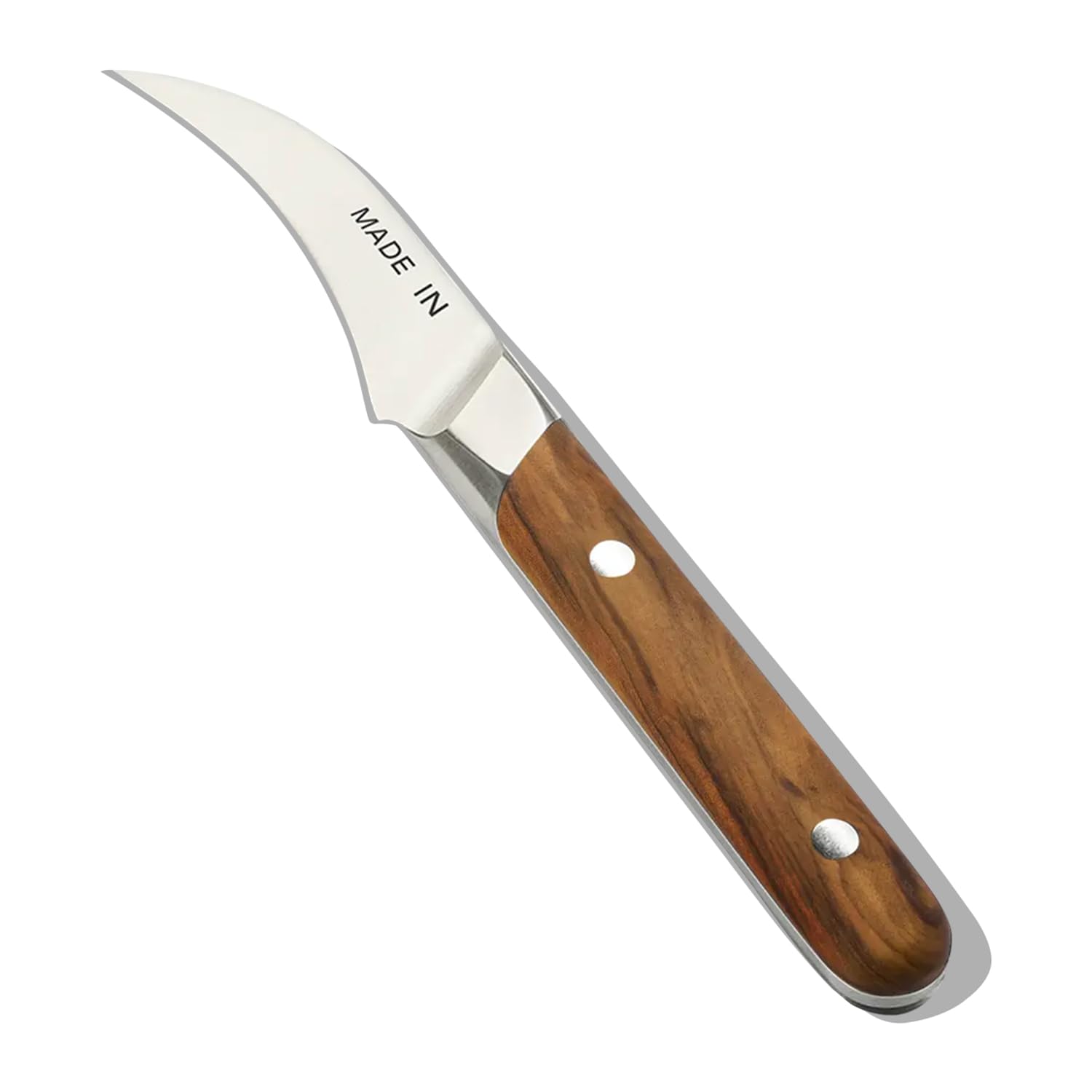
Picture a weekday evening in a small kitchen. Strawberries need hulling for lunches, a few potatoes have deep eyes to remove, and counter space is already tight. A big chef knife feels clumsy for all of it. That is exactly where the best bird's beak paring knife earns its drawer space. Its short curved blade follows the round shape of fruit and vegetables, so you can peel, scoop and trim while the food stays in your hand.
This guide helps you choose by the things that matter at home, including your storage space, how many people you cook for, how often you prep produce and what upkeep you are willing to do. The product table below sums up the main styles, and the sections that follow explain each choice in plain terms.


Quick Answer: Three Styles That Cover Most Homes
Most households choose between three styles of this small curved knife. A light German style version suits family kitchens where several people share prep and the knife gets used daily for potatoes, apples and carrots. A thinner Japanese style version suits cooks who value a fine edge for neat fruit work and garnishes. A simple value style version suits a single cook, a small apartment or a second knife kept just for berries and citrus. The right one depends on your hands, your storage and your routine, which is why the checklist below comes first.
Before You Buy: A Quick Checklist for Choosing a Paring Knife
A bird's beak paring knife is a specialty tool, so buying well means matching details to your kitchen rather than chasing features. Work through size, type, steel, blade shape, handle and budget, and you will narrow the field fast.
Size: Match It to Your Space
Most bird's beak blades run about 2.5 to 3.5 inches long. The shorter end gives you the most control for hulling strawberries and removing the eyes from potatoes, since the tip stays close to your thumb. A blade near 3.5 inches handles larger work such as peeling a big apple or trimming a melon rind without feeling cramped. In a small kitchen, the shorter blade also stores more easily in a crowded drawer or a compact block. Choose based on the produce you handle most, not on the idea that bigger means more useful.
Which Type Fits Your Routine
Paring knives come in several shapes, and each one fits a different routine. A straight blade is the general purpose choice, and our guide to the best paring knife covers that broader group. A serrated edge helps with tomatoes and crusty rolls, which the guide to the best serrated paring knife explains in detail. The bird's beak shape is built for curved work in hand, such as peeling kiwi or segmenting oranges. If you mostly slice on a board, a straight blade may serve you better. If your prep is mostly round produce held in your palm, the curved blade is the specialist worth owning.
Steel Type and Hardness
Most home versions use stainless steel, which resists rust and tolerates a quick rinse and dry. Hardness is often listed on the Rockwell scale, and many kitchen knives fall around 56 to 60 on that scale. A harder blade tends to hold its edge longer but can feel less forgiving if you twist it against a hard pit or bone. A slightly softer blade sharpens quickly with basic tools, which suits a busy household. Some shoppers also look at the best ceramic paring knife options, but ceramic cannot match the scooping strength of steel for this curved shape, so steel is the practical default here.
Blade Geometry: German and Japanese Approaches
German style blades are usually a bit thicker, with a wider edge angle that stands up to daily family use and the odd knock in a busy drawer. Japanese style blades tend to be thinner, with a narrower edge angle that glides through soft fruit and leaves a cleaner cut on delicate garnishes. If that lighter approach appeals to you, the guide to the best japanese paring knife shows how those blades differ across the whole paring category. For a bird's beak shape used at home, thickness matters less than control, so think about how careful you are with edges.
Handle, Bolster and Balance
Because this knife works in your hand rather than on a board, the handle matters as much as the blade. Look for a handle that fills your palm without feeling bulky, with a smooth surface that stays secure when your hands are wet from rinsing produce. Balance should feel neutral, with neither end pulling down. If several people in your home will share the knife, a medium handle that suits average hands is the safer pick.
Realistic Budget Ranges
Prices for this niche knife stay modest. Models under $10 usually cover basic peeling and hulling for occasional use, though edges may need attention sooner. The range of about $10 to $20 is where most families find a comfortable handle and steel that holds up to weekly prep. Spending about $20 to $50 can bring harder steel, a more refined handle and a finish that feels better during long sessions of fruit prep. Paying more than that rarely changes daily results at home. Set your range by how often you cook with fresh produce, not by the hope that price alone brings skill.
Three Types Compared: Finding Your Fit at Home
When you shop for the best bird's beak paring knife for your household, compare the three common types rather than chasing a single winner. The first type is the sturdy family workhorse, with a thicker German style blade and a solid handle that tolerates shared use and storage in a general knife block. The second type is the fine edged Japanese style version, lighter in the hand and aimed at neat work such as fluting mushrooms or shaping melon balls for guests. The third type is the simple value version, light enough for a drawer in a rental kitchen. It feels less refined, but for hulling berries twice a week it does the job. Match the type to your household size and habits first, then check steel and handle details.
How We Chose the Criteria in This Guide
The criteria above come from the jobs this knife actually does in home kitchens. We weighed edge retention against ease of sharpening, balance and comfort against storage needs, and purchase price against the cost of keeping the knife in service. The emphasis is on fitting real homes, including small kitchens and shared family drawers, rather than on professional output. Specs such as blade length and steel hardness are stated as ranges from maker listings.
Bird's Beak Compared With Other Paring Knives
The curved blade is the whole point of this knife, and also its limit. On round foods it follows the surface, so you remove a thinner layer of peel and waste less of the fruit. It also scoops well, which helps with removing seeds from a halved cucumber or taking the core out of a pear. On a cutting board, though, the curve keeps most of the edge off the surface, so it is a poor choice for slicing garlic or portioning cheese. A straight paring knife handles board work better. Think of the bird's beak as a partner to the knives you already own, not a replacement. For a household that eats a lot of whole fruit and cooks vegetables from scratch, that partner gets used daily. For a home that buys mostly prepared produce, it may sit idle.
Common Buying Mistakes to Avoid
- Buying the longest blade for a small kitchen, which makes in hand work less controlled and storage harder.
- Choosing a handle that is too large, so the knife twists when you peel with wet hands.
- Paying for premium steel when you have no sharpening tool at home, so the edge still fades within months.
- Expecting the curved blade to replace a straight paring knife for board work, which leads to frustration and uneven slices.
- Storing the knife loose in a crowded family drawer, where the fine tip and edge get knocked and dulled.
Cost of Ownership and Care
Owning this knife costs little beyond the purchase. Budget for a simple sharpener if you do not own one, since even good steel dulls with daily use on ceramic plates and glass boards. The guide on how to sharpen a paring knife walks through the basic method for small blades. Wash the knife by hand, dry it right away and store it in a block, a sheath or a magnetic strip so the edge stays protected. Hand washing also protects handle materials that can crack after repeated hot dishwasher cycles. The main ongoing cost is a few minutes of care each week. If you are new to working with a blade in hand, the guide on how to use a paring knife covers grip and safe thumb placement.
FAQ
Are bird's beak paring knives worth it for a small home kitchen?
Yes, if you regularly peel or trim round produce such as apples, kiwis, potatoes or citrus. The curved blade removes thinner peel than a straight knife, so you waste less food over time. In a very small kitchen it also earns its place because one short knife covers hulling, scooping and garnish work. If most of your produce comes prewashed and precut, the knife will rarely leave the drawer, and a straight paring knife alone is enough.
How do you clean a bird's beak paring knife safely?
Wash it by hand in warm soapy water right after use, keeping the edge facing away from your fingers as you wipe from the spine toward the edge. The curve can trap pulp near the handle, so rinse that joint well, especially after citrus. Dry the blade fully before storing it, since standing water in a block slot can stain even stainless steel over time. Avoid leaving it loose in a sink of dishes, where the short blade hides and can cut the next person who reaches in.
How long does a bird's beak paring knife last in home use?
A well kept home model can last many years, often well beyond five years of regular use. Life span depends more on habits than on price. Knives stored loose, washed in a dishwasher and used on glass boards dull and chip sooner. The tip is the most fragile part, so avoid using it to pry lids or dig into frozen food. When the edge no longer responds to sharpening or the handle loosens, it is time to replace the knife rather than force it.
Can a bird's beak paring knife be used by left handed cooks?
Yes. This shape is usually ground evenly on both sides of the blade, so it works the same in either hand. What matters more is handle shape. A round or gently oval handle feels neutral for both hands, while a strongly sculpted handle may favor one grip. If two cooks in your home use opposite hands, choose the neutral handle, since control comes from your thumb guiding the food onto the blade.
What size bird's beak paring knife suits a family of four?
A blade around 3 inches is the most flexible choice for a family of four. It is long enough to peel large apples and potatoes for shared meals, yet short enough for hulling berries for children. Families who prep big batches of fruit for preserving may prefer a blade near 3.5 inches for fewer strokes per piece. If children help with simple tasks under supervision, the shorter blade also gives them less edge to manage, though all use should stay guided by an adult.
Final Thoughts
Choosing the best bird's beak paring knife for your home comes down to fit, not fame. Match the blade length to your produce and your storage, pick a handle that every cook in the house can hold with wet hands, and stay within a budget that matches how often you cook. The product table above pulls those points together so you can compare styles at a glance. If your kitchen sees fresh produce most days, this small curved knife will become one of your most reached for tools.