
Best Binoculars to Use with Glasses: Buying Guide for 2026
Disclosure: We may earn a commission when you buy through links on this page, at no extra cost to you. As an Amazon Associate I earn from qualifying purchases. Learn more

Choose binoculars to use with glasses by checking eye relief, eyecup style, and field of view, with clear price bands and fit advice for everyday wearers.
If you wear glasses, you already know the routine: press the binoculars close, watch the edges of the view turn black, and give up on the full picture. The fix is not stronger glass but the right geometry, and choosing the best binoculars to use with glasses starts with one number, the eye relief. This guide explains that number first, then the eyecup styles and field widths behind a full scene. The comparison table below sorts the main classes by fit.
Glasses change three things at once: how far your eye sits from the eyepiece, how the frame meets the eyecup, and how often you switch between glasses on and glasses off. Each factor below maps to a check you can do on a spec sheet or in a store.
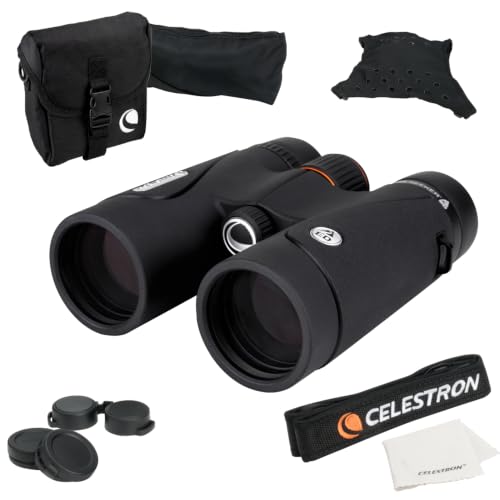

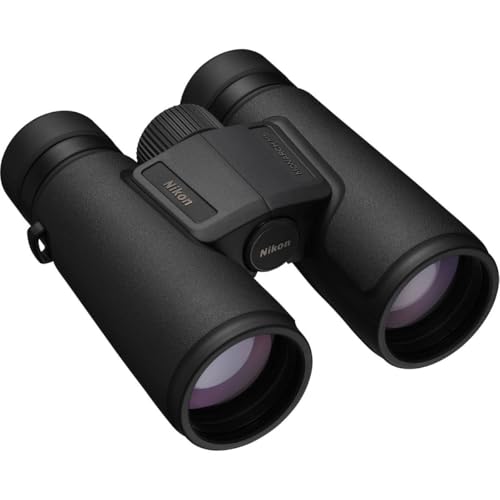


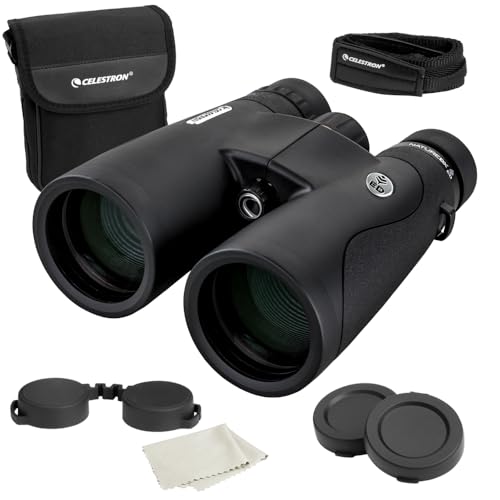

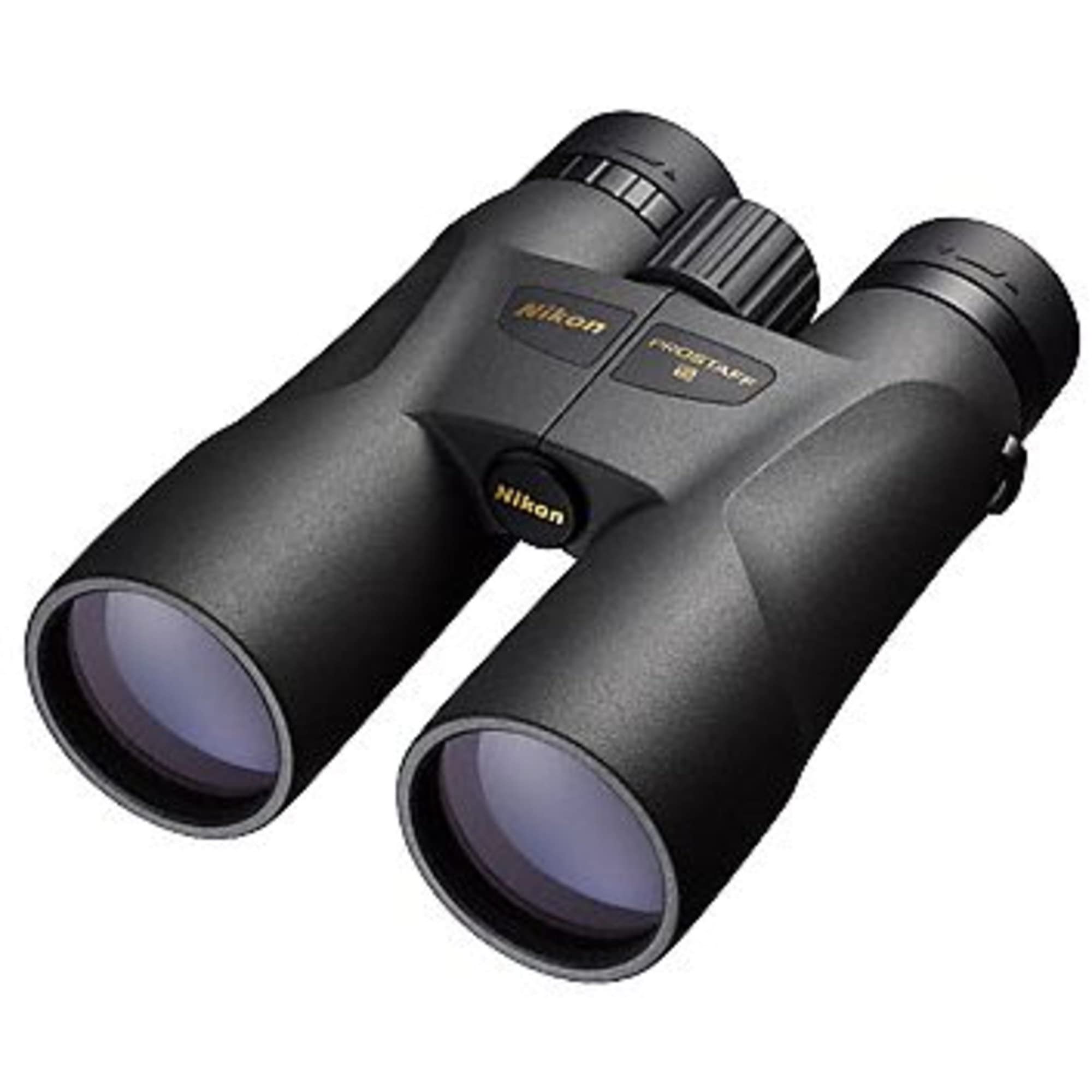
Who Should Buy Which Binoculars for Glasses Wearers?
Everyday Wearers Who Watch Birds, Sports, and School Events
You keep your glasses on all day and you want a pair that simply works when you lift it. Long eye relief of about 17 mm or more and twist up eyecups are your two must haves, because they let you set the eye distance once and trust it. A mid or full size 8x42 pair suits most outings, from shaded woods to evening games. Skip compacts unless their listed relief is unusually generous.
Wearers Who Switch Between Glasses and Contacts
Your eye distance changes with your eyewear, so the eyecups become the key part. Twist up cups with firm steps let you save one setting for glasses and another for contacts, and a clear diopter scale helps you return to your marks fast. Choose cups that move with a positive click rather than a loose slide. That detail decides whether the pair feels tailored or fiddly on every outing.
Wearers Who Share a Pair with Family
A shared pair passes between glasses wearers and bare eyed viewers, often in the same minute. Look for eyecups that change position quickly, a wide interpupillary range, and a diopter ring that stays put once set. Full size pairs serve sharing best, since their longer relief forgives a fast handoff. Add a wide neck strap, because a shared pair gets passed by the strap more than by the body.
Key Features to Compare
Three checks decide the fit for a glasses wearer, taken here in order. Eye relief comes first because it governs whether the full field reaches your eye, eyecups come second because they hold that distance, and field of view comes third because it sets how much of the scene survives. Shoppers comparing the best binoculars to use with glasses should run the three checks in this order before price.
Eye Relief Governs the Whole Fit
Eye relief is the distance from the eyepiece surface to the point where the full image forms, measured in millimetres. Your glasses hold your eye farther back, so the image point has to sit farther out to meet you. Read about 16 mm or more as the glasses friendly class, with about 17 to 20 mm giving room for thicker frames. Below about 14 mm, the outer field closes into black edges, and no focus setting can bring it back.
Our guide to the best eye relief binoculars for glasses gathers the longest relief classes in one place for a faster shortlist.
Eyecups That Twist, Stop, and Stay
Eyecups set the gap between your glasses and the eyepiece, and style decides how repeatable that gap is. Twist up cups turn through several small steps and hold each one, so you can park them at the exact height your frames need. Fold down rubber cups roll back for glasses and up for bare eyes, which suits sharing but wears at the fold over time. Treat the cup as a twist class feature: if you change eyewear often, firm twist up cups beat a small gain in magnification.
A broader shortlist of wearer focused pairs appears in our guide to the best binoculars for people with glasses.
Field of View You Can Actually See
Field of view is quoted in degrees or in feet at 1,000 yards. Glasses steal the edges first, so a wide field protects your full view: a scene that starts wide still feels complete after the frame takes its share. An 8x pair often shows about 7 to 8.5 degrees, while a 10x pair shows about 6 to 6.5 degrees. For a wearer, that width is the margin that keeps the picture whole.
Size, Power, and Brightness for Wearers
Full size 8x42 and 10x42 pairs pair long relief with a healthy exit pupil, about 5.3 mm and about 4.2 mm, which keeps the view bright at dusk. Compacts in the 8x25 class are light in a pocket but often list relief near 10 to 14 mm, tight for frames. If you wear glasses full time, let relief outrank small size every time.
Types of Binoculars for Glasses Wearers
The three size classes trade relief, brightness, and pocket space. If you want wearer focused models only, start with our guide to the best binoculars for glasses wearers and run the relief check above on each candidate.
Compact Binoculars
The 8x25 and 10x25 classes slip into a jacket pocket and weigh about 300 grams, which tempts many buyers. Their eyepieces sit close, though, and listed relief often lands near 10 to 14 mm, so wearers lose the field edges. Choose a compact only when its relief clears about 16 mm, which a few travel pairs manage.
Mid Size Binoculars
The 8x32 and 10x32 classes split the difference, with relief often around 15 to 18 mm and weight near 450 to 550 grams. They fit a day pack, serve travel and trail use, and keep most of the field for a wearer. For wearers who walk far, this is the balanced class.
Full Size Binoculars
The 8x42 and 10x42 classes carry the longest relief figures and the brightest dusk views, at about 600 to 750 grams. They are the safest default for a full time wearer and the easiest class to share. On the water, spray and motion add their own demands, and our guide to the best binoculars for marine use covers sealed classes built for decks.
Common Mistakes to Avoid
- Buying by magnification alone, which ignores the relief figure and leaves you with a powerful pair whose edges you cannot see.
- Leaving the eyecups fully raised while wearing glasses, which parks your eye too far back and shrinks the field into a tunnel.
- Pressing the eyepieces hard against your lenses, which scratches both surfaces without fixing a short relief design.
- Skipping the diopter setup, which leaves one side slightly soft and strains your eyes over a long session.
- Choosing a compact for its size without checking relief, which trades the full picture for a lighter pocket.
Care and Maintenance Tips
Glasses wearers bring the eyepieces close to skin and hair all day, so eyepiece care matters more than usual. These habits protect the optics you compared in the product table above.
- Wipe eyepieces with a microfiber cloth and a drop of lens fluid, because skin oil builds fast where glasses nearly touch the glass.
- Blow grit off the lenses before wiping, since a single grain dragged across a coating leaves a mark.
- Keep the strap adjusted so the pair rests on your chest rather than swinging against buckles and zips.
- Work the eyecups through their steps now and then and clear dust from the threads, so your settings stay firm.
Binoculars to Use with Glasses: Questions Answered
How much eye relief do glasses wearers need in binoculars?
Most wearers do well with about 16 mm or more, and wearers with deep frames should aim for about 18 to 20 mm. The printed figure is measured from the eyepiece surface, and your frame adds distance the spec sheet cannot see, so treat the number as a floor rather than a promise. If you can, hold a candidate pair in the store with your everyday glasses on and check for black edges.
Can I use binoculars while wearing sunglasses?
Yes, if the eye relief is long enough for the extra frame, and the same twist up cup settings usually serve both pairs of eyewear. Sunglasses dim the scene, so a brighter class with a larger exit pupil, like an 8x42 at about 5.3 mm, holds up better than a compact in shade. Dark lenses also hide your eye position, so seat the cups by feel rather than by sight.
Should glasses wearers choose 8x or 10x binoculars?
Most wearers are happier with 8x, because the wider field leaves more margin after your frames take the edges, and the steadier image is kinder during long sessions. Choose 10x when your targets sit far away and you can brace your elbows, since the narrower field shows every shake. Either power works with glasses; the relief figure, not the magnification, decides whether the fit succeeds.
What does the diopter adjustment do if I already wear glasses?
The diopter ring fine tunes focus for one eye, because glasses are ground to a shared prescription while your two eyes rarely match exactly. Set the ring with your glasses on: focus the left side with the main wheel, then sharpen the right side with the ring alone. Note the mark, and you can restore the setting in seconds after anyone else uses the pair.
How much should I spend on binoculars to use with glasses?
Wearers can find honest pairs at about $80 to $150, the broad middle runs about $150 to $300, and premium glass with long relief costs about $300 to $600. Spend first on relief and coatings, because a mid price pair with 18 mm of relief serves a wearer better than a costly pair with 13 mm. Keep a little budget back for a good strap and case.
Final Thoughts
For a glasses wearer, fit is the feature, and eye relief is where fit begins. Set a floor of about 16 mm, choose eyecups that hold a setting, and let a wide field protect the edges your frames would otherwise steal. On that basis, the best binoculars to use with glasses for most wearers is a full size 8x42 with long relief and firm twist up cups. If the pair must also cover travel and sightseeing, our guide to the best general use binoculars covers the all round classes; hold their relief figures to the floor set here. Compare your shortlist in the product table above, and lift each pair with your own glasses on before you decide.


