
Best Binoculars for Hunting with Rangefinder in 2026: Which Type Is Right for You?
Disclosure: We may earn a commission when you buy through links on this page, at no extra cost to you. As an Amazon Associate I earn from qualifying purchases. Learn more

Compare types of the best binoculars for hunting with rangefinder, from ranging distance and glass quality to weight and budget, before you buy a pair.
Combining your glass and your rangefinder into one tool sounds simple, yet the models on the market split into very different types built for very different hunts. A pair that shines on open prairie can feel bulky in thick timber, and a compact pair that carries all day may give up ranging distance and low light brightness. This guide compares the main types of best binoculars for hunting with rangefinder options by design, so you can match the format to your terrain and your budget.
The comparison table below gathers the key options in one place, and the sections after it explain what those numbers mean in the field. For hunting glass without a laser, see our guide to the best rated binoculars for hunting.
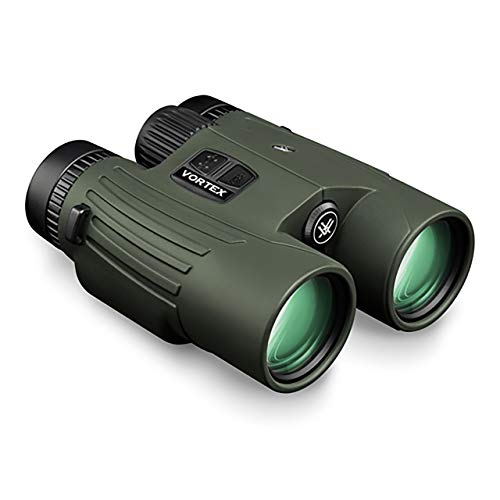

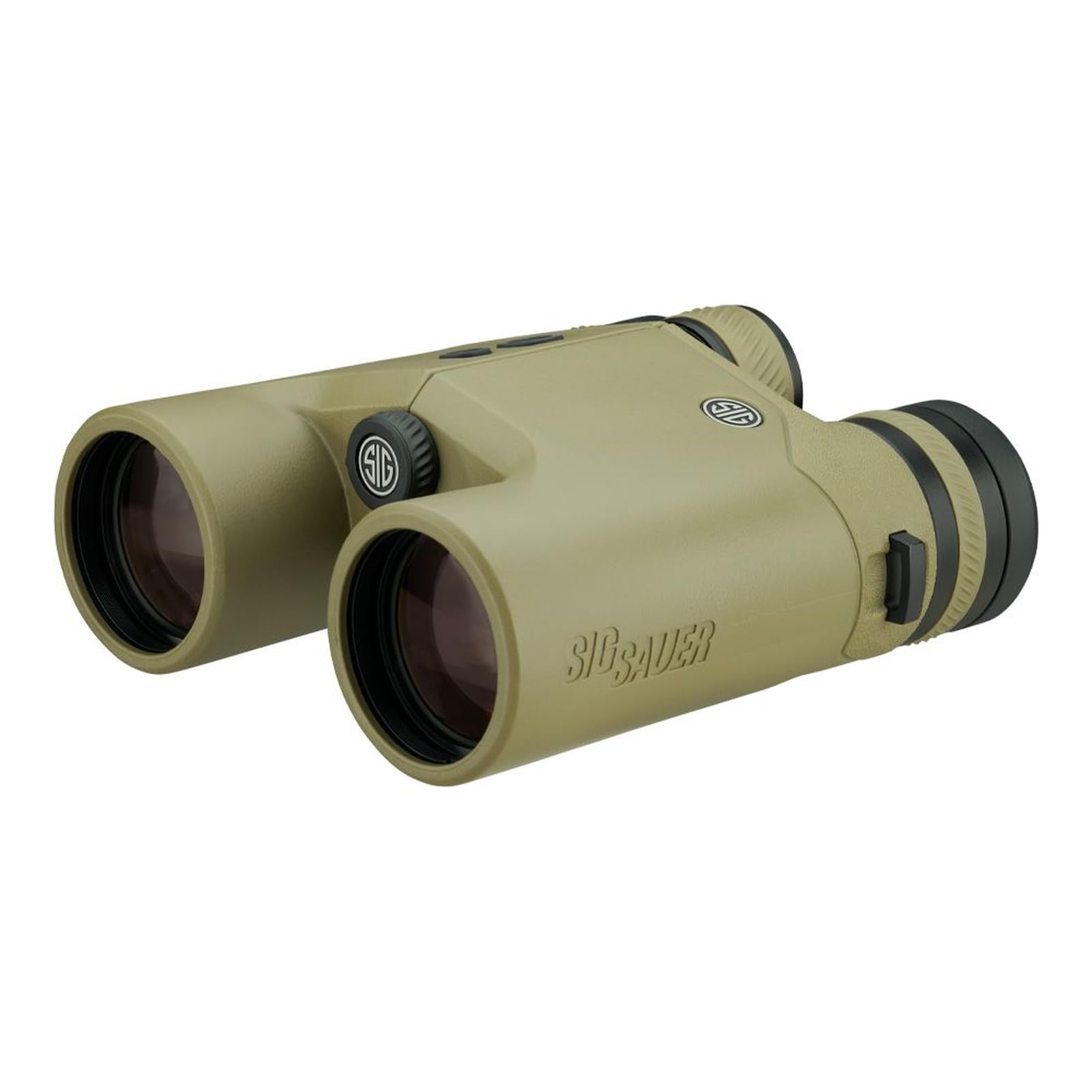
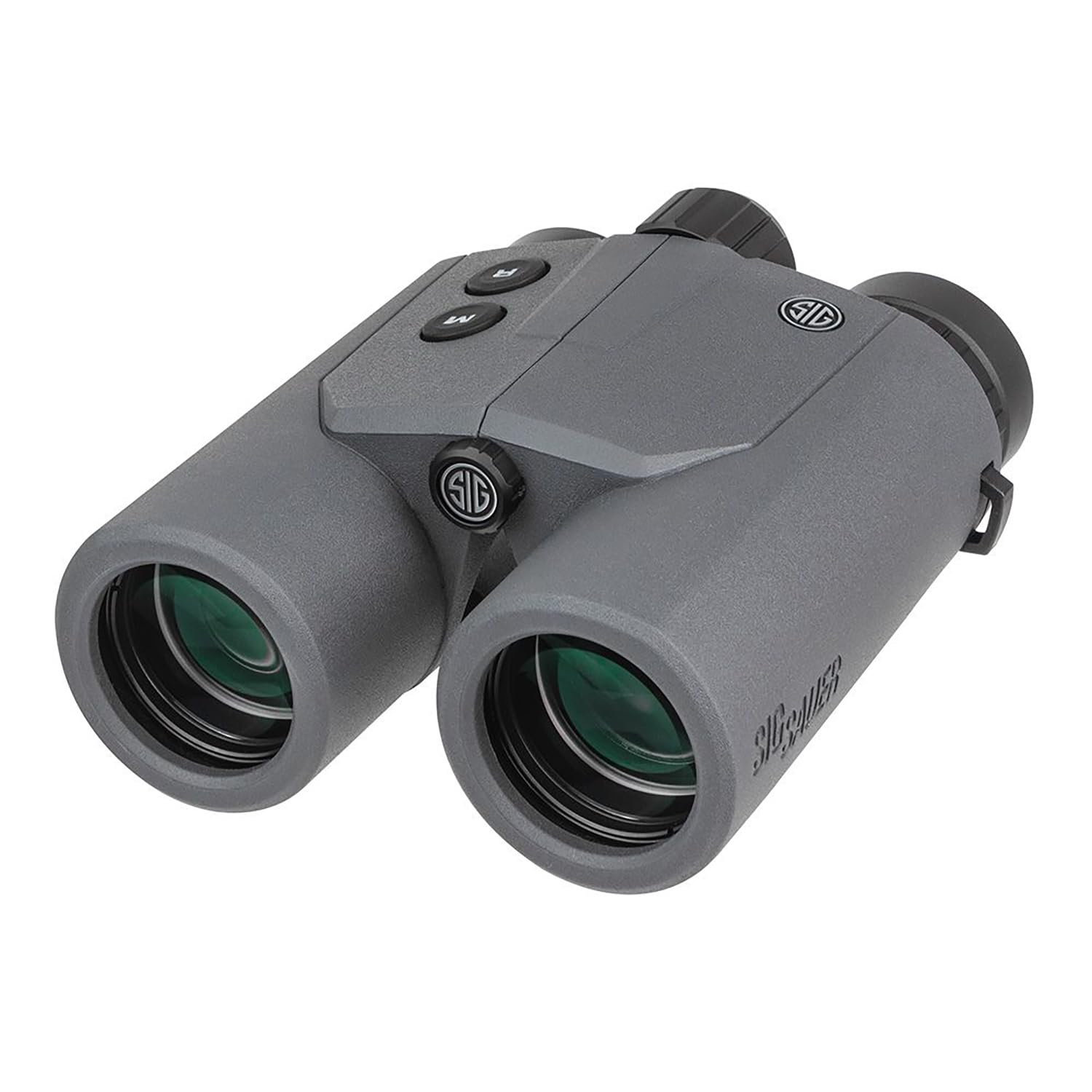
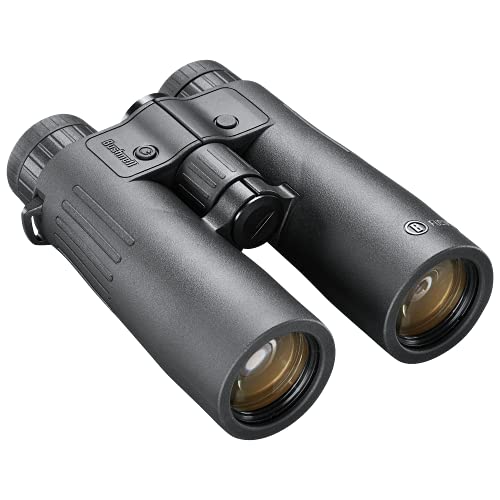

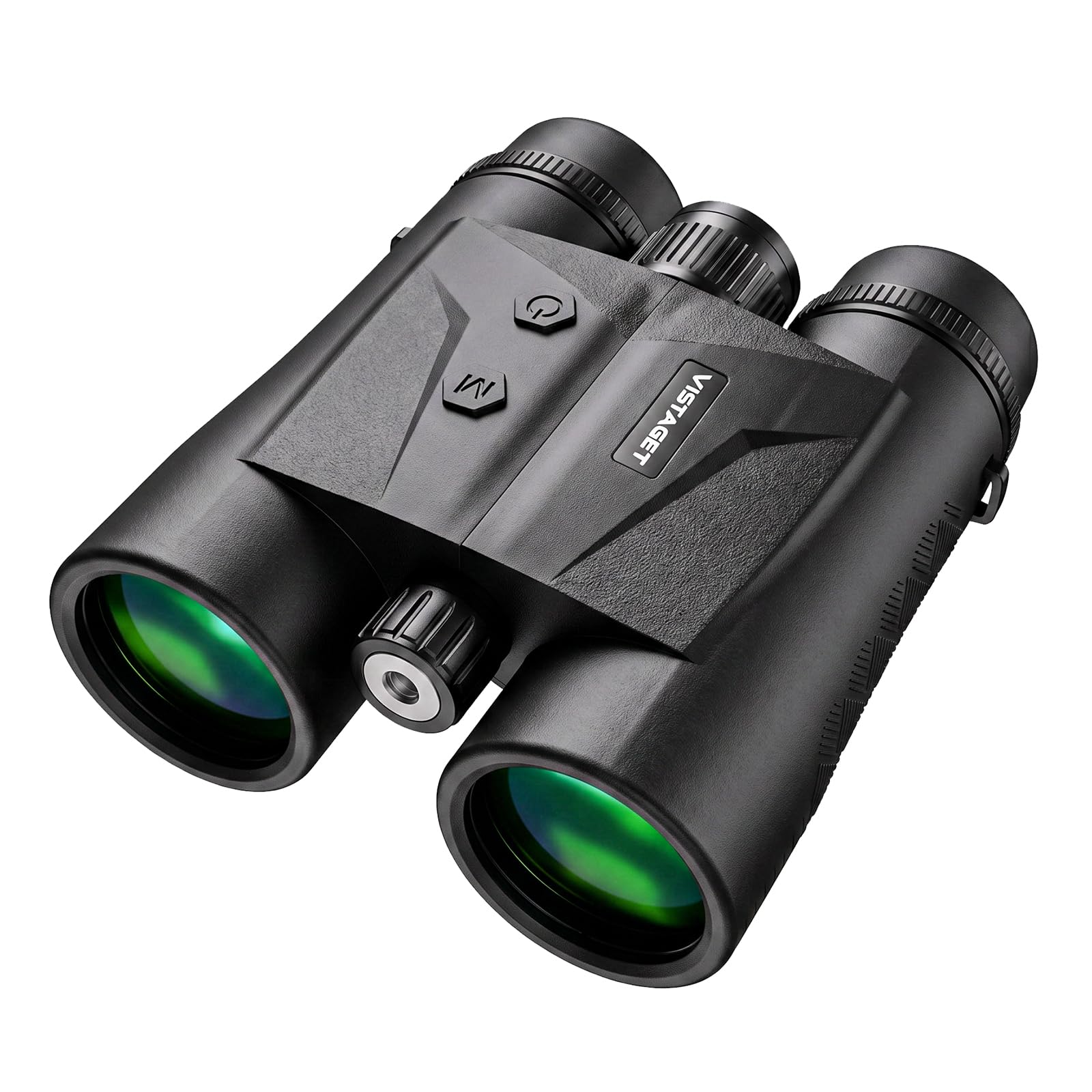
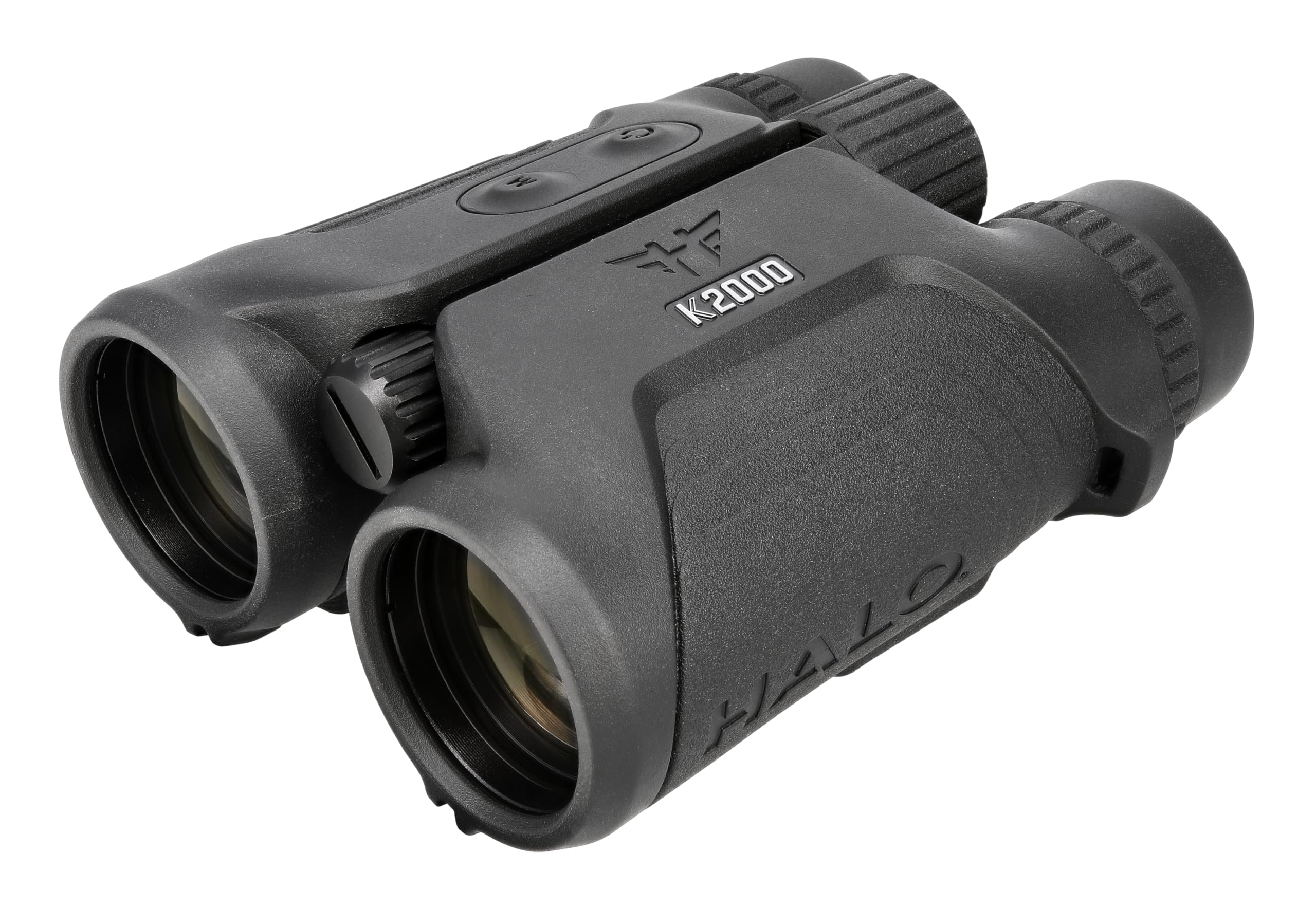
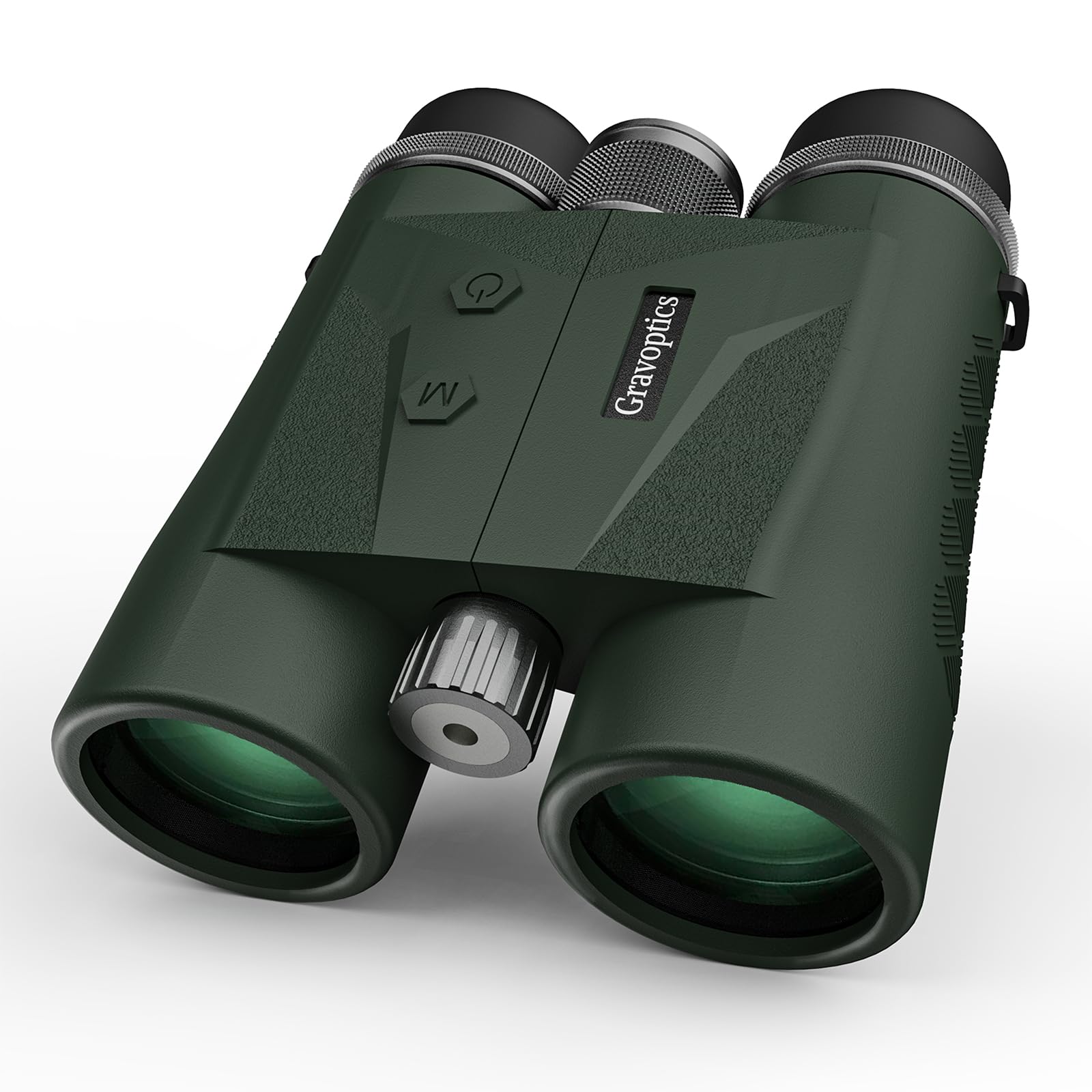
Types of Rangefinding Binoculars Compared
Every rangefinding binocular pairs an optical system with a laser that measures distance and shows the result on a display inside the view. The types differ mainly in size, magnification, and how much ballistic help the electronics provide.
Full Size 10x42 Models for General Hunting
The 10x42 format is the default choice for most rifle hunters, because it balances reach, brightness, and size. Ten power magnification identifies game and judges antlers at several hundred yards, while the 42 mm objective lens gathers enough light for the first and last minutes of legal shooting time. Most full size models range deer sized targets well past 1,000 yards under good conditions and add angle compensation for steep shots.
The trade off is weight, often around 30 to 34 ounces, because the laser, display, and battery add bulk that plain binoculars do not carry. On a chest harness the weight spreads out and becomes easy to forget. If you hunt mixed country and want one pair that does everything well, this is the format to start with.
Compact 8x32 and 10x32 Models for Hunters Who Cover Ground
Compact binoculars shrink the objective lens to 32 mm, which trims weight into the low 20 ounce range and makes the pair far easier to carry on long spot and stalk days. Eight power versions feel steadier and show a wider field of view, which helps when you scan brush edges or follow moving game. Ten power compacts keep more detail at distance but amplify hand shake and narrow the view.
The smaller lens gathers less light, so compacts look dimmer at dawn and dusk than a 42 mm pair, and their lasers often top out at shorter distances. Choose a compact pair when you count ounces for mountain hunts or when your glassing happens mostly in decent light.
Long Range 15x56 Models for Open Country and Western Hunts
High power 15x56 models are built for one job, finding and evaluating game at extreme distance across basins, coulees, and desert flats. The big objective lens keeps the image bright despite the high magnification, and these units usually carry the strongest lasers, with reflective target ranges that can exceed 2,500 yards. Mounted on a tripod, they can replace a spotting scope for many glassing sessions.
Hand held, though, 15 power is hard to hold steady, and the narrow field of view makes these binoculars poor tools for timber. They also sit at the top of the price range, often around $1,500 or more. Pick this type only if long distance glassing from a tripod is central to how you hunt.
Full Size vs Compact: Which Should You Choose?
Start with light. If most of your shots happen in the first or last half hour, the 42 mm objective lens of a full size pair delivers a brighter image and a larger exit pupil in dim woods. Compacts win on carry comfort, and over a week of climbing that can matter more than a slightly brighter image at midday.
Next, compare ranging needs honestly. A whitetail hunter in timber rarely needs a reading past 400 yards, so a compact laser is plenty, while a western rifle hunter may need reliable deer readings at 800 yards or more, which pushes you toward full size or long range models. The product table above lets you line up your two finalists side by side.
Budget matters too, because rangefinding models cost more than plain glass at every size. If money is tight, our guide to the best inexpensive binoculars for hunting shows what plain binoculars offer, and you can pair them with a separate handheld rangefinder instead, at the cost of speed when an animal appears suddenly.
How to Choose the Right Rangefinding Binocular
Once the type fits your hunt, the details decide whether the pair earns its place in your pack. When you shop for the best binoculars for hunting with rangefinder models in your size class, work through the factors below in order. Shoppers who want formats without the hunting focus can also see our guide to the best binoculars with rangefinder for general use models.
Why a Built In Rangefinder Helps, and Where It Falls Short
The core benefit is speed and accuracy at the moment of truth. You glass an animal, press one button, and read the exact distance without lowering the binocular and finding the animal again through a separate unit. The reading also comes from the same view you are studying, so you range the animal itself rather than a bush in front of it.
The limits are real. These binoculars cost more, weigh more, and depend on a battery that can die on a cold morning, and the electronics age faster than the glass. If you hunt a fixed stand at marked distances, a separate rangefinder may serve you just as well for less money.
Ranging Performance: Distance, Angle Compensation, and Ballistic Data
Manufacturers advertise maximum range on reflective targets like buildings, so treat that headline number as a best case. The deer or game range is more useful, and it is often half to two thirds of the reflective number. For most hunting, reliable readings on animals out to 800 or 1,000 yards cover every ethical shot, and extra distance mainly helps you range landmarks while planning a stalk.
Angle compensation matters whenever you hunt slopes, because it converts the straight line distance into the horizontal distance gravity actually acts on. Some models store ballistic profiles that turn the range into a holdover or turret correction on the display. Bowhunters should instead look for a close minimum range, often as low as 5 or 6 yards, plus a fast scan mode for moving game.
Magnification and Objective Lens Size
The two numbers in a model name describe power and lens size, so 10x42 means ten times magnification through a 42 mm front lens. Higher power shows more detail but shrinks the field of view and magnifies hand tremor. For deer hunting in woods and fields, 8 power shows a wider, steadier picture; our guide to the best binoculars for deer hunting explains deer specific glass choices in more depth.
Divide the objective size by the magnification to estimate the exit pupil, the beam of light reaching your eye. A 10x42 gives about 4.2 mm, while an 8x42 gives about 5.25 mm, and the larger beam looks brighter as light fades. In bright open country the difference shrinks, so match the math to the hours you actually hunt rather than chasing the biggest lens.
Glass Quality and Low Light Performance
Two pairs with identical numbers can look very different, and the gap comes from glass and coatings. Extra low dispersion glass reduces color fringing around antlers and branches, which keeps edges crisp at long range. Fully multi coated lenses pass more light, and quality roof prisms use phase correction coatings that keep contrast high when you glass into shadowed timber.
You can judge much of this in a store by looking at a dark corner and at bright window edges. Check that the image stays clear nearly to the edge of the field, and that whites look white rather than yellow or blue.
Durability and Weather Sealing
Hunting glass lives outdoors, so waterproof and fogproof construction is not a luxury. Look for housings sealed with O rings and purged with nitrogen or argon, which keeps internal moisture from fogging the lenses when you move from a warm truck into cold air. Rubber armor absorbs bumps against rocks and tree stands, and it quiets the sound when the binocular taps a rifle stock.
Also check the focus wheel and diopter for a firm, smooth feel you can work with gloves on, and pick lens caps that tether to the housing rather than loose caps. Read the warranty terms before you buy, because coverage for the electronics is often shorter than coverage for the optics, and that difference matters at this price.
Display, Controls, and Battery Life
The in view display should be bright enough to read against snow and dim enough not to wash out a dawn image, so adjustable brightness with several levels is worth having. Red or orange readouts are easier to see in most light than black ones. The ranging button should fall under your index or middle finger without shifting your grip, and the menus should let you set units and modes at home.
Most models run on a single CR2 or CR123 battery and deliver a few thousand ranges per cell, but cold weather shortens that count sharply. A clear low battery indicator prevents surprises, and one spare battery in an inside pocket stays warm and ready.
Common Mistakes to Avoid
- Judging a rangefinder only by its advertised maximum distance, because that number reflects buildings, not deer in brush.
- Buying 15 power for timber hunting, where the narrow view and hand shake make finding nearby game slower instead of faster.
- Skipping angle compensation for mountain or tree stand hunting, which leads to holds based on the wrong distance on steep shots.
- Forgetting to set the diopter and display focus, so the image looks sharp but the readout stays blurry.
- Leaving the battery in all year, which risks a dead or leaking cell on opening morning.
- Choosing by price alone and ignoring warranty terms on the electronics, which get fewer covered years than the glass.
How to Make Your Rangefinding Binocular Last Longer
Clean the lenses with a soft lens cloth or brush, never your shirt, because grit trapped in fabric scratches coatings over time. Blow loose dust off first, then wipe in small circles from the center outward. A chest harness protects the binocular from swinging into rocks; see our guide to the best binoculars harness for hunting for carry options that fit rangefinding models.
Store the pair in a dry, padded bag at room temperature, and take the battery out before long storage so a leak cannot damage the electronics. Before each season, check the focus wheel, the diopter, and the display, and run a few test ranges against known distances at home. If the laser returns inconsistent numbers on clear targets, replace the battery first, because a weak cell is the most common cause.
Frequently Asked Questions
What features matter most in binoculars for hunting with a rangefinder?
Reliable ranging on game out to your longest ethical shot matters most, followed by angle compensation and glass that stays bright at dawn and dusk. After that, look at adjustable display brightness, a ranging button you can reach without shifting your grip, and solid warranty coverage for the electronics. Buyers often miss minimum range: bowhunters need readings down to about 5 yards, and not every model ranges that close.
Which magnification is better for low light deer hunting, 8x42 or 10x42?
An 8x42 is usually better in low light because its larger exit pupil delivers a brighter, steadier image during the last minutes of shooting light. The wider field of view also helps you pick up deer moving through cover. A 10x42 still works well and adds detail for judging antlers, so if your hunting mixes open fields with woods, the 10 power may suit you better overall.
What does 8x42 or 10x42 mean on hunting binoculars?
The first number is magnification, so 8x or 10x makes the animal appear eight or ten times closer than with the naked eye. The second number is the objective lens diameter in millimeters, and a larger lens gathers more light. Note that a 10x42 with a laser weighs more than a plain 10x42 with the same numbers, because of the added electronics and battery.
How far can hunting rangefinder binoculars range a deer?
Most full size models range a deer reliably between about 800 and 1,200 yards in clear conditions, even when the box advertises a much longer reflective range. Rain, fog, bright midday sun, and dark hair all shorten real world results. Resting the binocular on a pack or tripod steadies your aim and noticeably improves how often the laser returns a reading at long distance.
How much should a first time buyer spend on rangefinder binoculars for hunting?
Plan on about $300 to $600 for an entry level pair with sound glass and a laser that covers typical deer ranges, and about $800 to $1,500 for brighter optics, stronger ranging, and ballistic features. Spending more mainly buys low light clarity and longer, more consistent readings rather than extra magnification.
Final Thoughts
Choosing well comes down to three things: pick the type that fits your terrain, confirm the laser ranges game at your real distances with angle compensation, and insist on glass that stays clear in low light. Match your shortlist against the product table above, and the right best binoculars for hunting with rangefinder choice for your style of hunting should be clear.


