
Best Binoculars Harness for Hunting at Every Price: What Your Money Really Gets You 2026
Disclosure: We may earn a commission when you buy through links on this page, at no extra cost to you. As an Amazon Associate I earn from qualifying purchases. Learn more

A price guide to the best binoculars harness for hunting: what fit, padding, quiet fabric and weather sealing cost at each level.
Hunting optics can cost far more than the strap that carries them, yet a poor carry system can ruin a long day in the field. A best binoculars harness for hunting search returns simple webbing straps, padded chest rigs, and fully enclosed packs at prices from about $25 to about $150. This guide explains what each spending level actually delivers, which upgrades are worth paying for, and how to match a harness to your binoculars, your clothing, and your hunting style.
Use the product table to see the main harness styles side by side, then read the spending sections before you decide. A light harness that fits well and stays quiet will serve a still hunter better than a heavy rig that shifts or blocks a quick raise to the eyes.


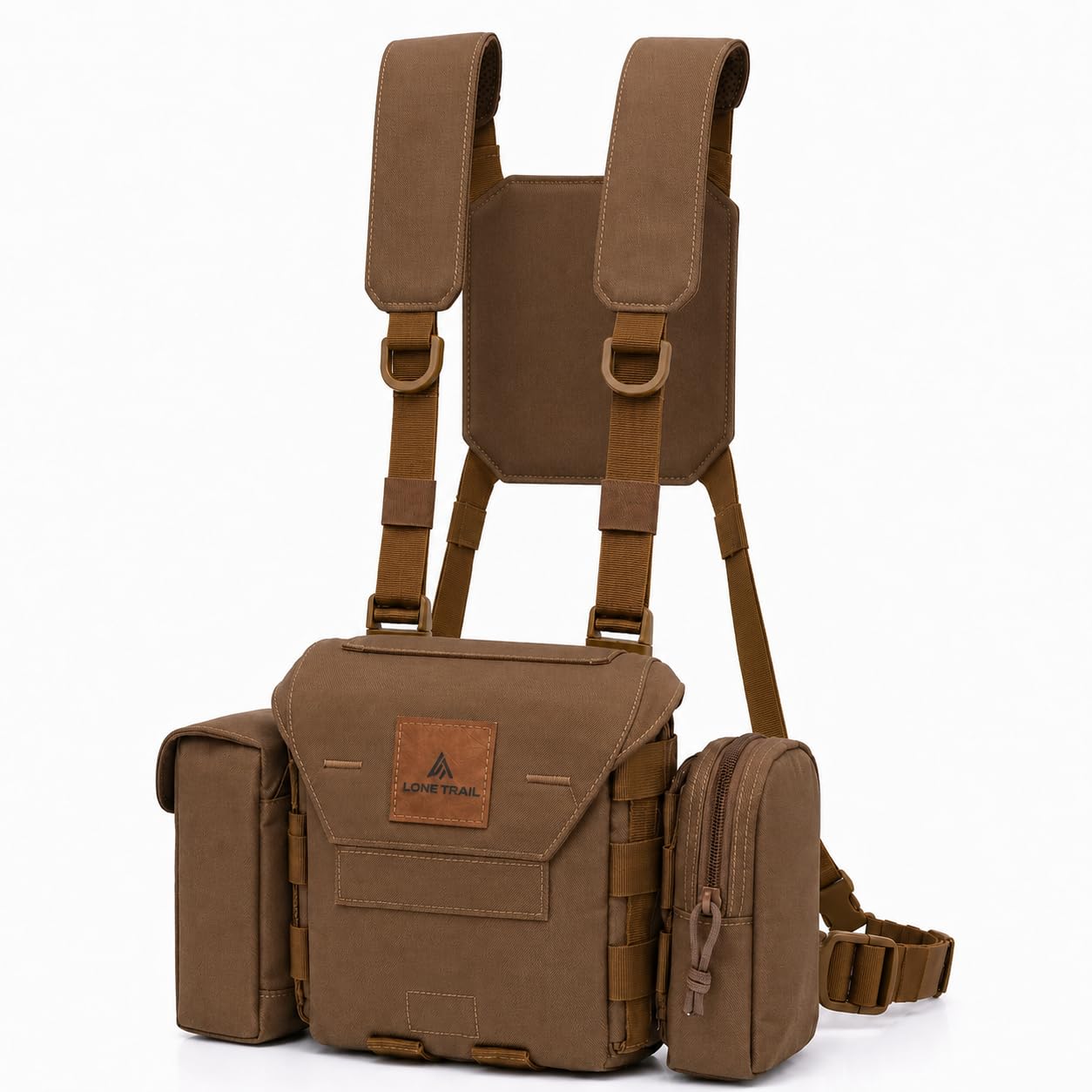
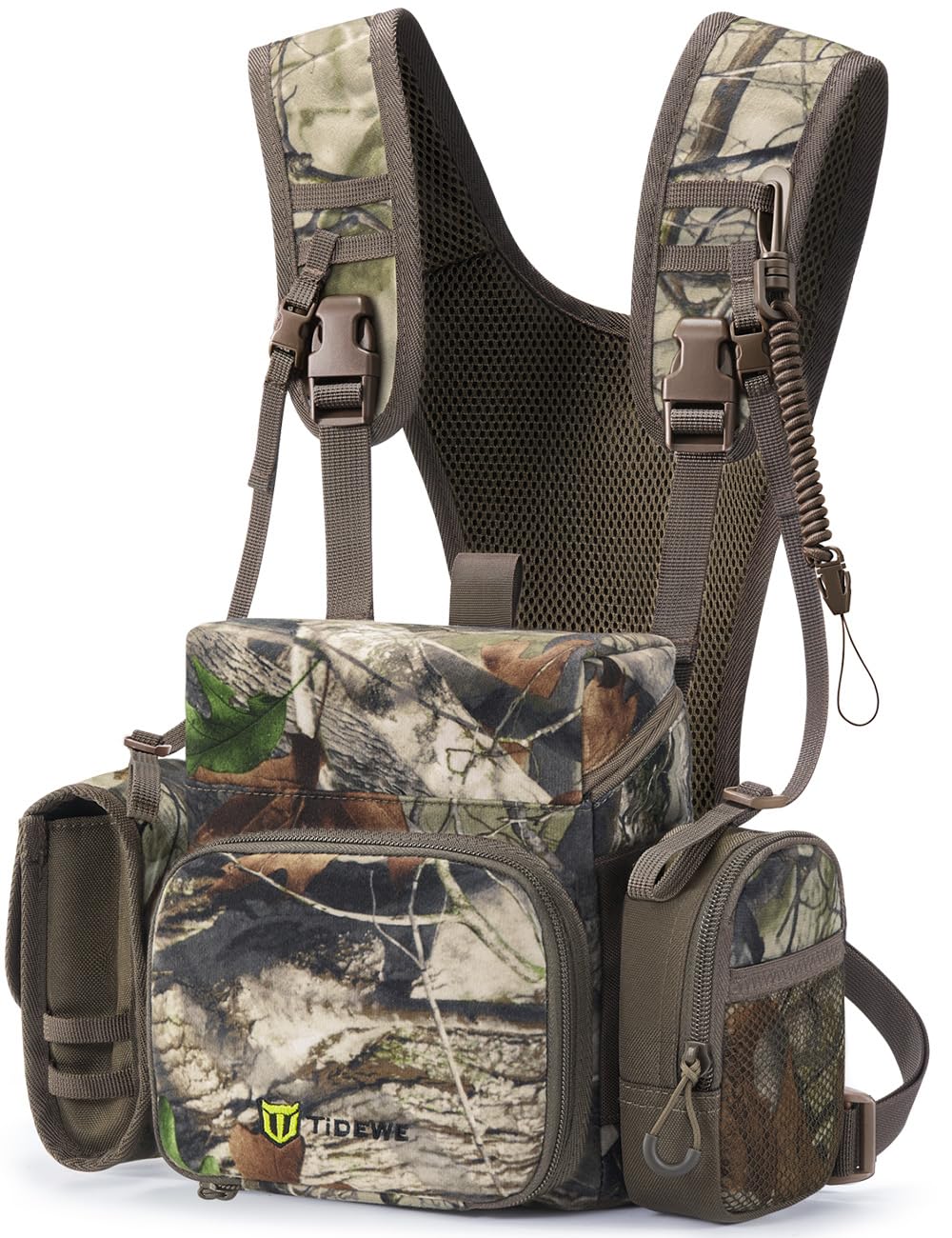

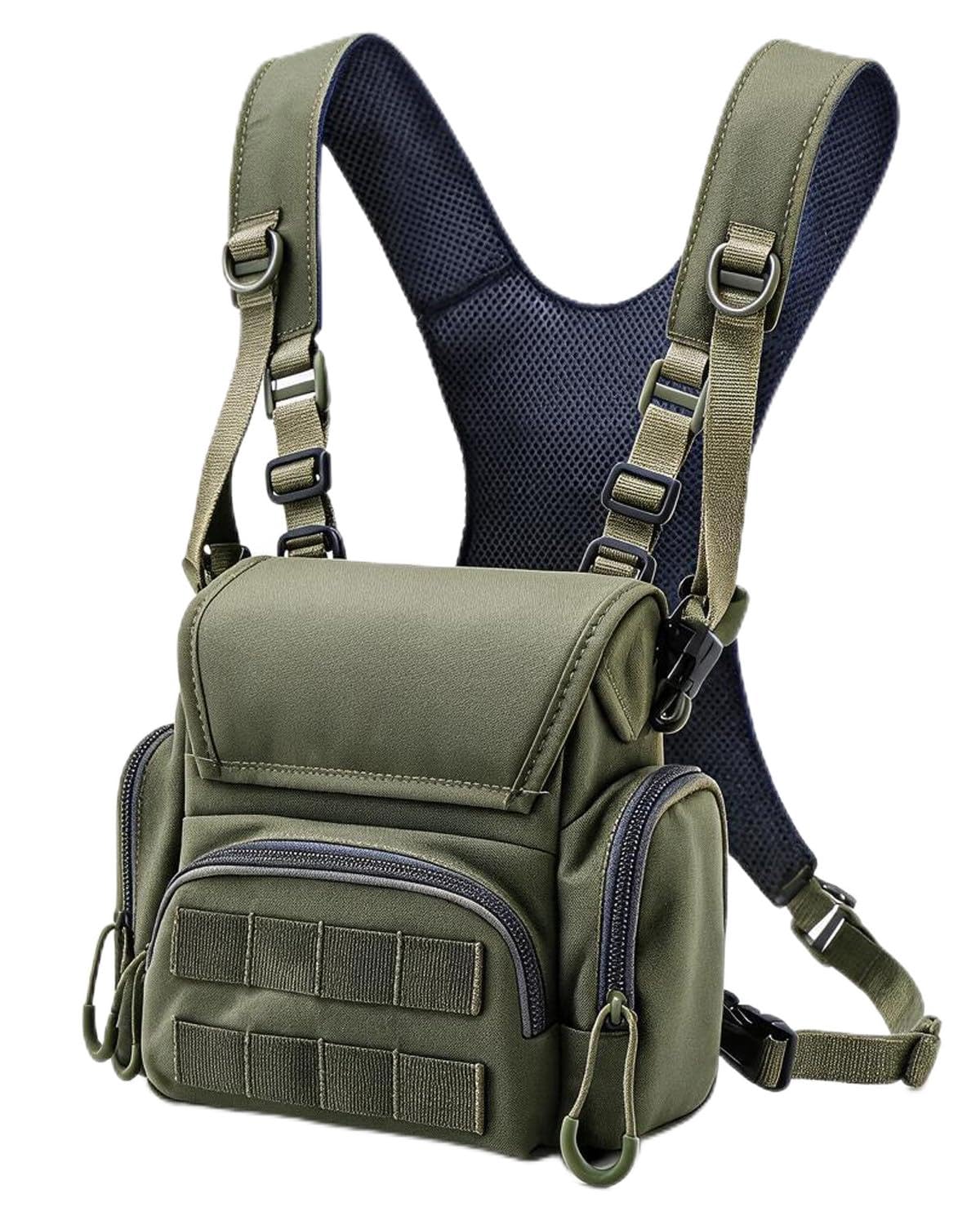


Best Binoculars Harness for Hunting: Spending Levels Explained
Price alone does not tell the whole story. Strap width, padding, and attachment design all change with price. The three levels below describe what you can reasonably expect, not a list of items to buy.
Low Cost Harnesses: Simple and Light
Low cost harnesses usually use plain webbing straps, simple clips, and little or no padding. They suit hunters who carry compact binoculars for short walks and who want the lightest possible system. The trade off is comfort on long days, because narrow straps can dig in and unpadded straps can shift when you bend or climb. Check that the clips fit your binocular body and that the strap length adjusts easily over a jacket.
Mid Cost Harnesses: Comfort for Regular Days Out
Mid cost harnesses add wider padded straps, better weight spread across the shoulders and back, and quieter fabric. They suit hunters who glass often, walk several miles, or carry full size binoculars. Compare the harness against your normal pack, jacket, and rifle sling before you pay extra for storage you may not need.
Higher Cost Harnesses: Built for Hard Use
Higher cost harnesses tend to use stronger stitching, denser padding, sealed zippers, and a close fitting case that protects the lenses. They suit hunters who hunt in rain, snow, thick brush, or steep ground, and who need the binoculars to stay put while they move. The main risk at this level is bulk, so try the fit over your hunting layers and check that you can still raise the binoculars smoothly with gloves on.
What Each Price Level Delivers in Practice
Think of price in terms of time in the field rather than brand prestige. A harness that feels fine for an hour at home can feel very different after five hours on a hillside. The levels below link price to comfort, protection, and ease of use.
Entry Level: What to Expect
Entry level harnesses cost about $25 to about $50 and focus on carrying, not on protection or storage. Expect adjustable straps, basic clips, and a simple fit that works over light clothing. Look for straps that stay in place and clips that do not twist, and accept that you may need to add a separate rain cover in wet weather.
Middle Level: The Choice Most Hunters Use Most
Middle level harnesses cost about $50 to about $100 and usually offer the best balance of comfort, quiet fabric, and weather resistance. Padding spreads weight better, straps stay put, and many models keep the binoculars close to the chest without bouncing. This level suits deer hunters, waterfowl hunters who walk to a blind, and anyone who glasses for long periods.
Top Level: When Extra Spending Makes Sense
Top level harnesses cost about $100 to about $150 and add tougher materials, better sealing, and a more refined fit. Spending more pays off when you hunt in harsh weather, carry heavy full size optics, or need silent access in close cover. It also helps when a harness must work with a heavy pack and a thick jacket without tangling. Before you spend at this level, confirm the case size fits your binoculars, including lens caps, and that the opening works one handed.
Features Worth Paying For and Ones to Skip
Not every feature earns its price. Some features change comfort and success in the field, while others add weight or noise without helping you glass better. Judge each feature against your hunting style, not against a feature list.
Features That Matter Most for Hunting
Hunting places demands on a harness that a general carry strap does not meet. You need quiet fabric that does not rustle against brush, a fit that keeps optics close when you crouch, and fast access when game appears. A harness that swings or bounces will slow your raise and may alert game, so for deer hunting, stillness and a smooth draw matter more than extra pockets, and you should try the raise from a crouched position if you can. See our guide to best binoculars for deer hunting for help matching optics to that style of hunting.
Durability and Weather Sealing
Water resistance and fog resistance matter for the binoculars themselves, but the harness must also cope with rain, mud, and brush. Look for tightly woven fabric, reinforced stitching at strap joins, and clips that do not corrode after wet days. A harness with a storm flap or a close fitting cover protects lenses from rain and dust while you walk.
Lens Size and Viewing Power
Binocular size shapes harness choice more than any other factor, since compact models need only a light strap while 8x42 and 10x42 models need wider straps and a case that holds their weight without sagging. Higher magnification makes a steady hold more important, so a harness that keeps the binoculars snug against the chest helps you settle the view faster. If you plan to upgrade optics later, choose a harness with some size range rather than one that fits only your current pair. See our guide to best rated binoculars for hunting when you compare sizes and weights.
Steady Hold and Movement Control
A good harness does the work of a steadying aid by holding optics close and limiting bounce. Wide shoulder straps, a chest connector, and a snug back panel all reduce swing when you walk, climb, or glass from an awkward stance. Avoid designs that let the binoculars hang far from the body, because that movement makes the image harder to settle.
Weight Balance and Carry Comfort
Weight balance matters more than total weight alone. A harness that spreads load across both shoulders and the upper back will feel lighter than a narrow strap carrying the same optics. Padded straps help, but padding that is too thick can trap heat and add bulk under a jacket.
Try the harness over the layers you actually hunt in, and walk, bend, and sit while wearing it. Adjust the fit if pressure builds on one shoulder or the straps slip, because a poor adjustment can make a good harness feel bad.
Long Term Costs to Factor In
The purchase price is only part of the cost. Replacement clips, a rain cover, a lens cleaning kit, and a repair or replacement after heavy use all add up over several seasons. Cheaper webbing may need replacing sooner, while a well made harness may last longer but cost more to repair if a zipper or buckle fails. Check the maker warranty, keep spare clips if your design uses a less common fitting, and follow maker guidance for cleaning and storage and local hunting rules for your area and season.
Frequently Asked Questions
What features matter most in binocular harnesses for hunting?
Fit, quiet fabric, weight balance, and fast access matter most in a hunting harness. A harness that fits your chest and shoulders, stays silent in brush, and lets you raise optics smoothly will help more than extra storage. Check strap width, attachment strength, and case opening with gloves on before you buy. The right harness is the one that disappears while you walk and works instantly when you glass.
Is a smartphone enough instead of binoculars and a harness?
A smartphone is not a good substitute for binoculars on a hunt. Phone zoom loses detail at distance, struggles in low light, and drains the battery when used for long glassing sessions. Binoculars give a wider, brighter, and steadier view, and a harness keeps them ready without using your hands. Keep the phone for maps, photos, and safety, and use optics for spotting and judging game.
How much should I spend on my first hunting harness?
Most first time buyers do well at about $50 to about $100, where padding, quiet fabric, and a secure fit are common. Spend less if you carry compact optics for short hunts and want a simple system. Spend more if you carry full size optics, hunt in wet weather, or need a protective case. Match the harness to your binocular weight first, then to your hunting style, and do not pay for storage or extras you will not use.
What does 8x42 or 10x42 mean?
The first number is magnification and the second number is the objective lens diameter in millimeters. An 8x42 model magnifies eight times and has a 42 millimeter front lens, while a 10x42 model magnifies ten times with the same lens size. Higher magnification brings game closer but narrows the view and makes shake more visible. Wider objective lenses gather more light, which helps at dawn and dusk, but they also add weight that your harness must support.
What specs matter most for beginners?
Beginners should focus on fit, weight, and ease of use rather than on the highest magnification. A comfortable harness, a clear and bright view, and a simple attachment system will help you learn to glass well. Check that the harness adjusts easily, that the binoculars sit close to your chest, and that lens caps stay attached. A mid range magnification such as 8x is often easier to hold steady than 10x, especially when you are still learning to scan slowly.
Which harness style is better for low light hunting?
A harness style that holds optics snug against the chest is better for low light hunting, because it lets you raise and settle the view without fumbling. Low light success depends more on the binoculars than on the harness, but a stable carry helps you hold a steady image when light is poor. Choose a case with a quiet opening and a fit that works with gloves, so you can glass at dawn and dusk without noise or delay. Dark fabric also helps you stay less visible in a blind or a treestand.
Our Verdict
Choose by fit, weight balance, and quiet access first, and let price follow those needs. A mid cost harness suits most hunters, while a higher cost rig earns its price in harsh weather or on long, steep hunts. Check size against your binoculars, try the fit over your hunting layers, and keep the system simple enough to use without thinking. The picks in the table sum up the styles, and best binoculars harness for hunting buyers who match the harness to their optics and their ground will get the most value from any budget.


