Best Batteries for Lawn Mowers in 2026: Which Type Is Right for You?
Disclosure: We may earn a commission when you buy through links on this page, at no extra cost to you. As an Amazon Associate I earn from qualifying purchases. Learn more

Choosing the best batteries for lawn mowers starts with your machine: cordless packs for push mowers, group U1 starting batteries for riders.
Choosing a mower battery is confusing because one name covers two different jobs. The best batteries for lawn mowers include large lithium packs that power a cordless mower for a full cut, and compact 12 volt starting batteries that only crank an engine on a riding mower. Use the product table to separate those jobs first.
Start with the machine you already own. Its voltage system, battery compartment and charger decide most of the choice before price enters the picture. The sections below compare each type, then cover the fit and runtime checks that prevent a wasted purchase.


Types of Batteries Compared
Every mower battery belongs to one of two families. Cordless and robotic mowers run entirely on their packs, while gas riders use a small battery only for starting. Match your family first, then compare chemistry inside it.
Lithium Ion Packs for Cordless Push, Self Propelled and Robotic Mowers
These packs supply all cutting and drive power, so capacity decides how much grass you finish on one charge. They are light for their energy, recharge in about 30 to 90 minutes and hold their charge well between cuts. Robotic mowers use a fixed version that returns to its dock to recharge on its own. The limits are cost and loyalty to one brand platform, since packs rarely swap across brands. Expect about $100 to $300 for a large pack.
Flooded Lead Acid Starting Batteries for Riding Mowers and Tractors
This traditional choice for gas riders delivers a short burst of cranking power rather than a long steady run. Prices are the lowest here, usually about $40 to $90. You must keep terminals clean, check fluid level on serviceable models and charge the battery during winter storage. Choose this type if low cost matters most and you accept routine upkeep.
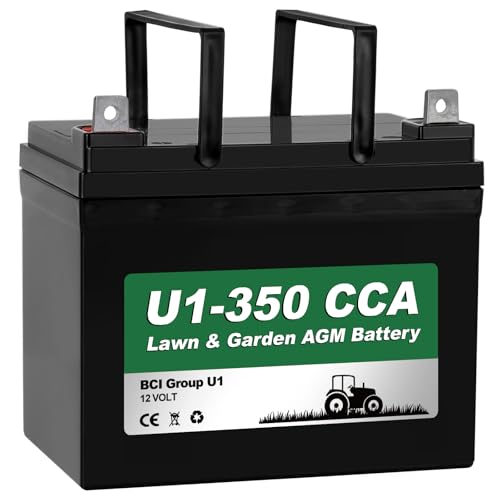
Sealed AGM Starting Batteries for Riding Mowers and Tractors
AGM batteries do the same starting job as flooded models, but the electrolyte is held in glass mats, so the case is sealed and spill resistant. That design tolerates vibration better and needs no fluid checks, which suits machines that bounce over uneven lawns. If you are comparing those machines, see our guide to the best ztr lawn mowers for deck and acreage notes. Expect about $70 to $140.
Lithium Iron Phosphate Starting Batteries for Riding Mowers
Lithium iron phosphate starting batteries are the premium step up for riders. They weigh far less than lead acid, hold a charge for months and can last many more seasons. The catch is price, often about $150 to $300, plus charging limits. Your mower charging system and any winter maintainer must suit lithium chemistry, so confirm both before you buy. Choose this type for a long ownership plan.
Lithium Packs vs Lead Acid Starting Batteries: Which Should You Choose?
These families never substitute for each other, because one runs a motor for an hour and the other cranks an engine for seconds. Judge a pack by runtime and platform fit, and a starting battery by cranking strength and fit in its tray. Readers still shopping for a complete cordless machine can see our guide to the best battery charged lawn mowers.
How to Choose the Right Battery
Work through these checks in order. In practice, the best batteries for lawn mowers are simply the ones whose fit you verified before you compared price.
Voltage, Amp Hours and Runtime for Cordless Mower Packs
Voltage names the platform, with common systems at 40, 56, 60 or 80 volts, and a pack only fits mowers built for that system. Amp hours describe stored energy, so a 5 amp hour pack stores about twice the energy of a 2.5 amp hour pack at the same voltage. Higher capacity extends battery runtime on thick grass and on self propelled models, where the drive motor draws extra power. For half an acre, plan on one large pack or two smaller packs.
Cold Cranking Amps and Group Size for Riding Mower Batteries
Cold cranking amps measure the burst a starting battery can deliver, and most lawn tractors need about 145 to 300 cold cranking amps depending on engine size and climate. Group size names the outer dimensions and terminal placement, and U1 is the most common group for riders. Measure your tray and note the height, because a taller battery can touch the seat. Match or modestly exceed the original cranking rating rather than chasing the highest number.
Platform and Charger Compatibility for Cordless Mower Batteries
A pack must match the brand platform, the voltage and the slot shape on both mower and charger, and meeting only one of those three is not enough. Owning the platform already for a trimmer or blower cuts total cost, since one charger serves every tool. If you are weighing whole machines alongside packs, see our guide to the best electric battery lawn mowers for platform comparisons. Never use a charger built for a different chemistry.
Terminal Layout, Polarity and Physical Fit for Riding Mower Batteries
On a riding battery, the positive terminal can sit on the left or the right, and cables are cut short at the factory, so a reversed layout may not reach. Photograph the old battery in place before removal and compare that photo with the listing diagram. Check cable condition at the same visit, because corroded ends can mimic a weak battery. Riders who also need a walk behind machine can see our guide to the best battery operated push lawn mowers.
Chemistry, Lifespan and Total Cost of Mower Batteries
Chemistry sets both lifespan and upkeep. Flooded lead acid usually lasts about 2 to 4 seasons, sealed AGM about 3 to 5 seasons, and lithium packs often about 3 to 5 years or several hundred charge cycles. Judge cost across that lifespan rather than on shelf price alone, and include a charger if yours does not suit the new chemistry.
Common Mistakes to Avoid
- Buying a cordless pack outside your mower voltage platform leaves you with a battery that fits no tool you own.
- Choosing a riding battery by voltage alone, without checking group size and terminal side, leaves cables that cannot reach.
- Storing a lead acid battery in a discharged state over winter shortens its life and can leave it unable to crank in spring.
- Charging a lithium pack with a lead acid maintainer can damage the pack and void its warranty.
- Ignoring a swollen or cracked battery case risks an acid leak and a sudden failure during a cut.
Care and Maintenance: Tips to Get the Most From Your Battery
Store batteries indoors in winter, away from freezing and summer heat, and keep a lead acid battery on a suitable maintainer so it stays charged. Charge lithium packs after each cut, then store them partly charged if the maker advises it for long breaks. Keep blades sharp and never cut more than one third of the grass blade at once, because a dull blade forces the motor to work harder and drains a pack faster. If a case swells, leaks or smells unusual, stop using it and take it to a retailer or service professional.
Clean riding battery terminals with cables disconnected and tighten them snugly on reinstall. Wipe cordless pack contacts with a dry cloth only, and keep packs out of rain. Take every spent battery to a recycling point.
FAQ
What size battery does a riding lawn mower need?
Most riding lawn mowers need a 12 volt battery in group size U1 with about 145 to 300 cold cranking amps. Garden tractors with larger engines sit at the top of that range, while small riders sit at the bottom. Copy the group and cranking numbers from your old battery label before you shop, rather than guessing from the tractor brand.
Does a zero turn mower use the same battery as a lawn tractor?
Yes, most zero turn mowers use the same U1 group starting batteries as lawn tractors. The difference is placement and vibration, since many models mount the battery where it shakes more over rough ground. That is one case where a sealed AGM battery earns its higher price. Terminal side still matters on these tight installs.
Can I replace a lead acid mower battery with a lithium one?
You can in many riders, but only when the maker confirms the charging system suits lithium iron phosphate chemistry. The alternator output was designed around lead acid, and a mismatch can undercharge the new battery or shorten its life. Keep your old battery until the first full mowing confirms clean starts. This swap never applies to cordless packs, which are platform specific.
How can I tell when a lawn mower battery needs replacing?
Slow or labored cranking on a fully charged riding battery is the clearest sign it needs replacing. On a cordless mower, the parallel sign is a pack that finishes far less grass than last season despite a full charge. Swelling, cracks or corrosion that returns within days of cleaning also point to replacement. A retailer load test settles doubtful cases in minutes.
How long does a lawn mower battery usually last before replacement?
A lawn mower battery usually lasts about 2 to 4 seasons in flooded lead acid form and about 3 to 5 years as a lithium pack. Calendar age matters as much as use, because packs age on the shelf as well as on the mower. Write the purchase month on the case, so a weak spring start is easy to judge against its true age.
Do two smaller mower packs equal one large mower pack?
Two smaller packs can cover the same yard as one large pack, but only if your mower runs them one at a time and you swap midway. Some mowers draw from two packs at once, and in those models the pair is a requirement, not an option. Check which layout your mower uses first.
Our Verdict
Match the family first, then the fit, then the capacity. Cordless owners should buy inside their voltage platform and size amp hours to their acreage, while riding owners should match group size, terminal side and cranking amps before comparing chemistry. Use the product table to confirm those points.
With those checks done, the best batteries for lawn mowers for your machine will usually be the obvious name left standing.