Best Bass Marine Speakers: Matching the Right Model to Your Routine for 2026
Disclosure: We may earn a commission when you buy through links on this page, at no extra cost to you. As an Amazon Associate I earn from qualifying purchases. Learn more

Match features to your boat and routine with this guide to the best bass marine speakers, covering size, power, salt resistance, and mounting choices.
There is no single marine speaker that suits every boat. A pair that thrills on a quiet fishing skiff may vanish under the engine and wind noise of a center console running offshore, and a setup built for a wake boat would overwhelm a small sailboat cockpit. This guide to the best bass marine speakers starts with your routine on the water, then matches size, power, and protection to it.
You will see which features matter for each kind of boating, which mistakes waste money, and how to care for speakers in salt and sun. Check the comparison table below for sizes and ratings, then read on to fit them to your boat.


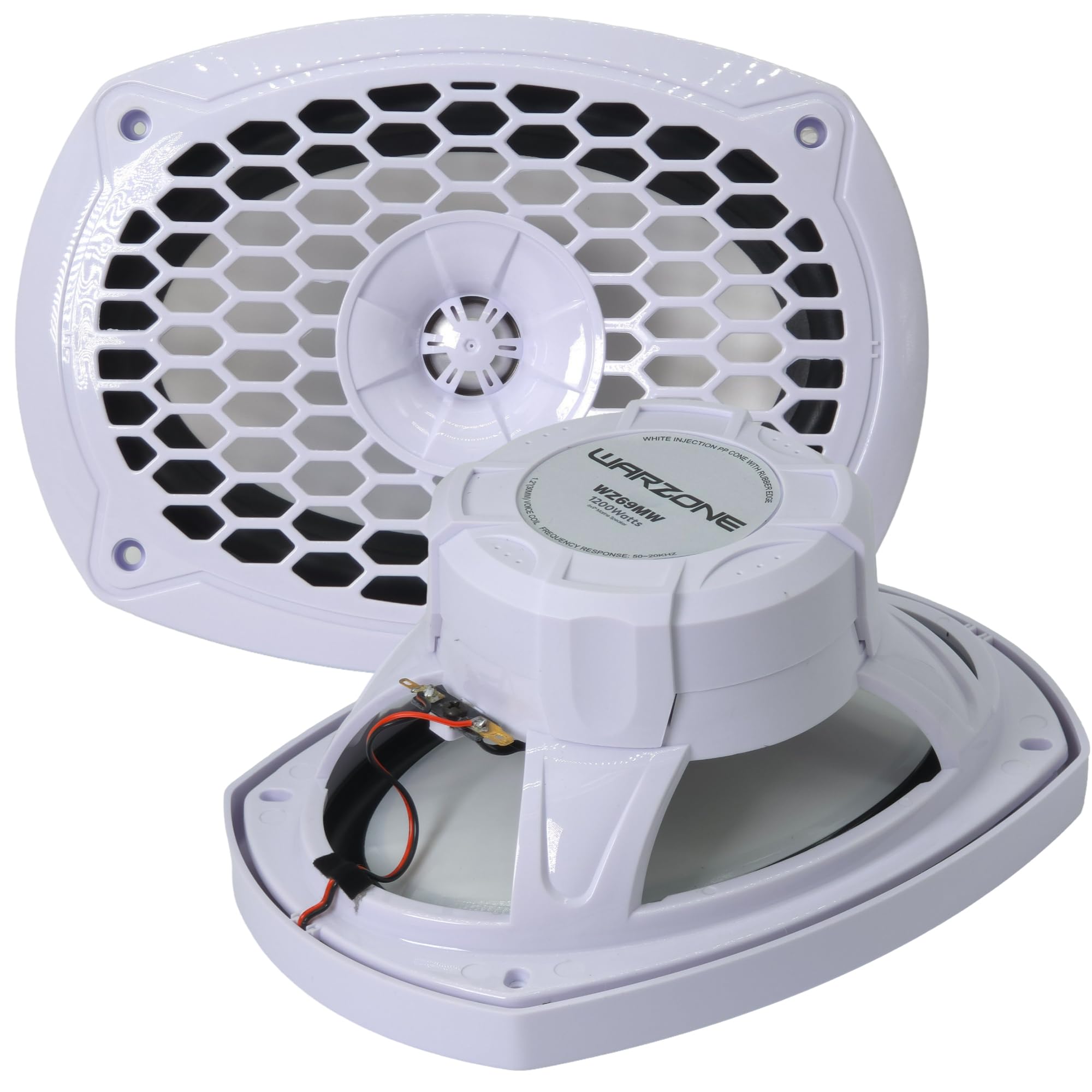

Who Should Buy Which Bass Marine Speakers?
Your engine, your cruising speed, and your mounting space decide more than any brand claim. Work through the four routines below and note which one sounds like your typical day, because the right answer changes with each one.
For Casual Day Boaters and Families
If your boat anchors at sandbars and cruises at gentle speeds, prioritize clear sound at moderate volume and strong weather protection. A standard 6.5 inch coaxial pair powered by a marine head unit covers most cockpits without an extra amplifier. Bass needs are modest because you listen close to the speakers at low speed. Spend your budget on sealed, UV stable cones and stainless hardware instead of raw power. Simple controls matter too, since guests and kids will use the system. This setup keeps music present under conversation without draining the battery during long anchor stops.
For Anglers and Early Morning Runs
Fishing boats split their time between quiet drifting and loud runs to the next spot. You need speakers that stay clear at speed yet sound balanced at idle, plus grilles and cones that shrug off spray, bait residue, and constant rinsing. Compact pairs with high sensitivity work well because they play loud on head unit power alone, saving battery for electronics and livewells. Mount speakers high and forward when you can, away from rod holders and washdown spray. If you often run in open water, adding a compact powered subwoofer under a console gives low end that small pairs cannot produce alone.
For Wake Boats and Water Sports Crews
Wake and surf boats ask the most from marine audio: the rider behind the boat sits far away in heavy wind and engine noise. Tower speakers with larger drivers and horn style tweeters project sound rearward, while in boat pairs handle the cockpit. Bass at the rider position needs real power, so plan on a marine amplifier and, for full low end, a subwoofer in a sealed location. Wire runs and mounting clamps must match your tower diameter exactly. This is the routine where undersizing hurts most, because volume at distance eats power fast.
For Sailors and Overnight Cruisers
Sailboats and cruisers value low power draw, corrosion resistance, and compact size over maximum output. Under sail the cockpit is quiet, so modest pairs sound full, and efficient speakers protect the house battery on long passages. Choose models with sealed backs if they mount near lockers or berths, so moisture stays out of the cabin side. Bluetooth input from a phone or chartplotter keeps wiring simple. For overnight boats, also weigh how the speakers handle constant humidity below deck if you add a cabin pair, since marine ratings vary widely between models.
Key Features to Compare
With your routine clear, compare the features that separate a speaker that lasts one season from one that lasts five. Marine duty is harsh: salt fog, UV light, vibration, and fresh water rinses attack every material.
Placement and Mounting Space
Measure cutout diameter and mounting depth before anything else, because boat panels hide fuel lines, wiring, and foam flotation behind them. Shallow areas under gunwales may force a slimmer speaker even if you wanted a larger one. Placement also shapes bass: speakers mounted low in a cockpit fire into legs and coolers, while higher mounts project better at speed. Corners and enclosed consoles reinforce low end, so a pair in an enclosed helm can sound fuller than the same pair in open fiberglass. If you are weighing larger oval drivers for tight panels, see our guide to the best marine 6x9 speakers for bass.
Build, Weight, and Materials
Marine speakers earn their rating through materials: polypropylene cones, rubber surrounds, sealed motor structures, and grilles that resist UV cracking. Stainless or coated mounting hardware prevents the rust streaks that cheap screws leave on gelcoat. Weight matters on tower mounts, where heavy speakers stress clamps and add top weight that affects handling. Check that the grille removes for cleaning but locks firmly, because a loose grille rattles at speed and can fall overboard. Avoid foam surrounds and untreated paper cones entirely; both fail quickly in salt air even if they sound fine in the store.
Sources, Controls, and App Features
Your head unit or source decides daily convenience. Bluetooth streaming with a strong, sealed antenna helps when your phone sits in a dry bag across the cockpit. Some systems support wired remotes at the helm or swim platform, which beats pulling out a phone with wet hands. App based equalizers let you add bass for open water running and pull it back at the dock where neighbors sit close. Firmware updates arrive through the head unit rather than the speakers, so choose a source from a maker that supports its marine line over time. For general marine options beyond bass focused models, see our guide to the best marine speakers.
Sound Quality and Tuning
On open water, midrange clarity matters as much as bass, because wind strips away detail first. A speaker with strong output between the low and midrange keeps vocals and instruments present while the bass driver works below. Larger cones, 8 inch pairs or a dedicated subwoofer, move the air needed for true low notes; small pairs roll off early no matter what the box claims. Sensitivity ratings help you predict volume on limited power: higher sensitivity plays louder per watt. If you compare home style bass ideas, remember boat cockpits have no walls to help, which our guide to the best bass speakers explains in room terms.
Practical tip: set your equalizer on the water at cruising speed, not at the dock. Settings that sound full in a quiet marina often turn thin at 25 knots, and the reverse causes booming bass that annoys everyone at anchor.
Common Mistakes to Avoid When Buying Bass Marine Speakers
- Buying car speakers for a boat: car models lack sealed builds and UV protection, so salt air corrodes them within a season or two.
- Judging by peak wattage: peak numbers say little; match the continuous RMS rating to your head unit or amplifier output instead.
- Ignoring mounting depth: a speaker that hits a fuel line or will not sit flush creates leaks, rattles, and a painful reinstall.
- Skipping an amplifier for tower setups: projecting bass to a rider takes power that no head unit alone supplies.
- Forgetting the warranty terms: check whether coverage includes corrosion and water intrusion, and keep proof of proper installation.
Care and Maintenance Tips
Rinse speakers gently with fresh water after saltwater trips, using low pressure so you do not drive water past seals. Wipe cones and grilles with a soft cloth, and inspect screws and clamps each season for corrosion or loosening from vibration. Keep firmware on your head unit updated for stable Bluetooth, and store removable grilles or covers out of direct sun during winter storage. If your boat sits in the water year round, a quick monthly check for cracked grilles and green corrosion on terminals prevents small issues from becoming silent speakers mid season.
FAQs
How long does the battery last?
Marine speakers have no battery of their own; they draw from your boat electrical system, so play time depends on your house battery and charging. A head unit and pair at moderate volume draw modest current and can run for hours at anchor on a healthy battery. Adding a large amplifier and subwoofer raises the draw sharply. Watch your battery monitor, and start the engine periodically on long anchor days to stay safe.
Do I need a special codec?
No special codec is required, because the speakers themselves receive an analog signal from your head unit or amplifier. Codecs apply only to the Bluetooth link from your phone to the head unit, where AAC and similar options can improve clarity slightly. On a windy boat, speaker sensitivity and power will change what you hear far more than any codec. Choose the head unit for its marine sealing and controls first.
What IP rating do I need for outdoor use?
True marine speakers are built for direct spray and salt fog, and many carry ratings around IPX5 to IPX7 for the front face. For exposed tower or deck mounts, choose the higher end of that range with sealed backs and corrosion proof terminals. Cockpit speakers under a hardtop face less water but still need full marine construction for salt air. A rating alone is not enough: check that the maker also tests for UV and salt fog exposure.
Wired or wireless: which sounds better?
Wired speakers sound better and louder on boats, because they draw steady power from the boat system and avoid Bluetooth compression and pairing drops. Portable wireless speakers have a place on small boats without installed systems, and our guide to the best bass wireless speakers covers that route. For any boat with a helm and a battery, a wired marine install is the durable, better sounding choice.
The Bottom Line
Match the speaker to your routine first: quiet cockpit, fishing runs, tower projection, or low draw cruising. Then confirm marine grade materials, honest power handling, and a mounting depth that fits your panels. Use the product table above to compare finalists, and your best bass marine speakers will keep their bass through seasons of sun, spray, and long days on the water.