Best Automotive Scanner: Every Type Explained Side by Side for 2026
Disclosure: We may earn a commission when you buy through links on this page, at no extra cost to you. As an Amazon Associate I earn from qualifying purchases. Learn more

Compare the best automotive scanner types side by side, from basic code readers to workshop tools, with compatibility checks and prices.
Shopping for a scan tool means wading through four very different kinds of device, all wearing similar names and all promising to explain your warning light. The gap between the cheapest and the dearest is not build quality alone; it is how much of your car's conversation each type can hear. This guide compares the classes directly so you can pick the best automotive scanner type for your skills and your car.
The comparison table below puts the four classes side by side with their typical prices and limits. After it, each type gets its own section, followed by a head to head between the two most popular classes and the checks that decide whether any of them will work well on the vehicle in your driveway.

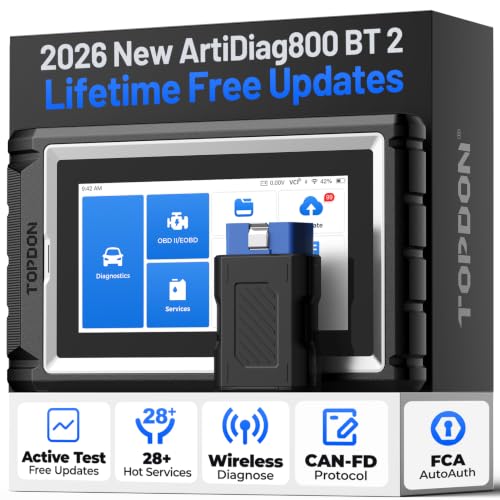
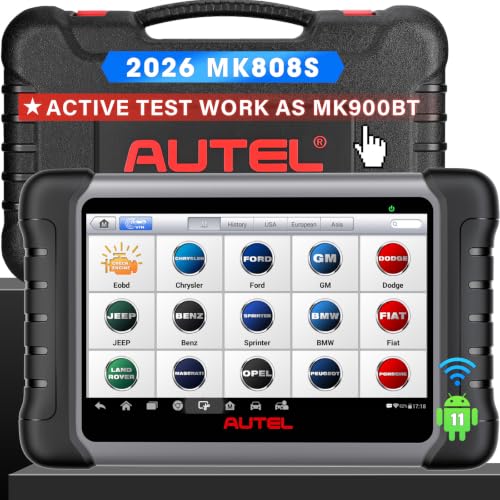
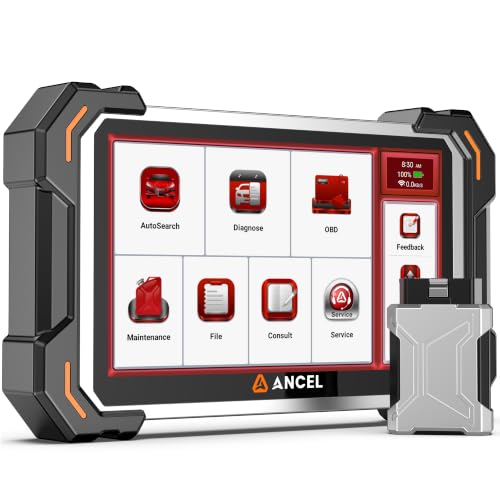

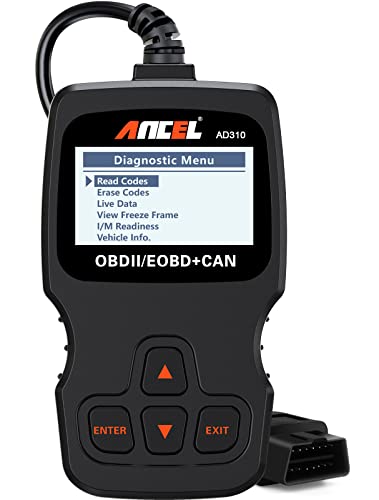
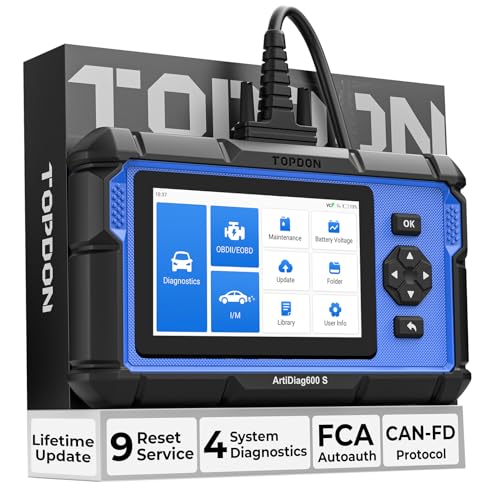
Best Automotive Scanner Types Compared
The naming alone causes half the confusion in this category, because one tool may be sold as a scanner, a diagnostic tool, or under the longer label covered in guides to the best automotive diagnostic scanner. Ignore the label and sort by class instead. Every type below uses the same port under the dashboard; what changes is the screen, the software depth and the number of vehicle systems it can reach.
Whichever class you choose, read the results with care. A code identifies the system or circuit that reported readings outside its expected window, and it does not identify the failed part. The sensor, its wiring, or a mechanical fault the sensor is reacting to can all produce the same report, which is why a code starts an investigation rather than finishing one.
| Type | Best For | Typical Price | Reads | Main Limit |
|---|---|---|---|---|
| Basic code reader | A first check engine light | about $20 to $50 | Engine codes and readiness checks | Engine system only |
| Phone dongle and app | Owners who live on their phone | about $15 to $40 plus the app | Engine codes and some live data | Depends on app quality |
| Handheld with live data | Home diagnosis | about $60 to $200 | Codes, live data and freeze frame | Coverage varies by make |
| Workshop grade scanner | Serious home shops and pros | about $300 and up | Most systems and service functions | Price and learning curve |
Basic Code Readers
The code reader is the smallest and simplest class: a pocket sized unit with its own tiny screen and a cable that plugs into the port. It reads stored engine codes, shows whether the car's readiness checks have run, and clears codes once a repair is done. There is no live data on most units and no access to brakes, airbags or other systems. Choose this class if your only question is why the light came on, and you want the answer before deciding whether the car goes to a shop.
Handheld Scanners With Live Data
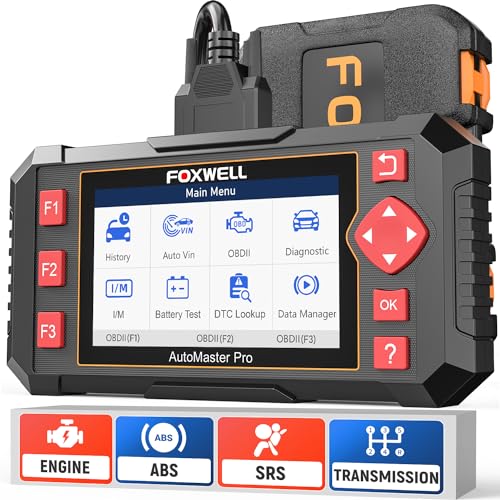
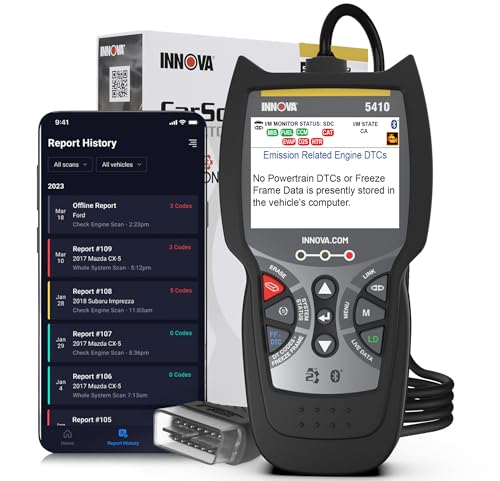
The handheld class keeps its own screen and buttons but adds the ability to watch sensor values while the engine runs, which is the step that turns code reading into diagnosis. Better units graph those values, store freeze frame snapshots and cover systems beyond the engine, such as brakes and airbags, on the makes listed in their coverage charts. They run from the car or an internal battery and need no phone. Choose this class if you plan to trace faults yourself rather than simply report them.
Phone Dongles and Apps
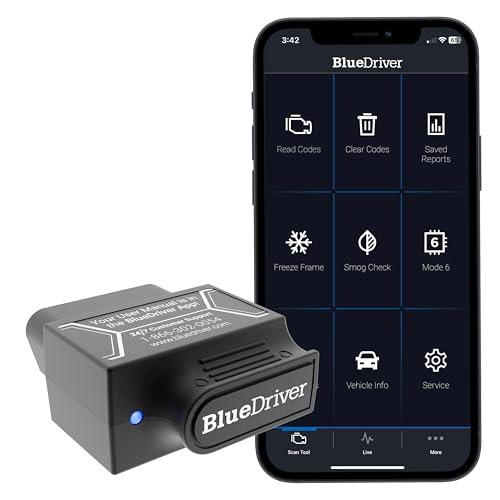
A dongle is a thumb sized plug with no screen at all, because your phone does that job over a wireless link. The hardware is cheap, and the app decides almost everything: a strong app shows live data, graphs and clear code definitions, while a weak one shows little more than a code number. Watch for subscription traps, because some apps charge yearly for features the box implies are included. Choose this class if you travel light, want a tool that lives in the glove box, and are willing to judge the app as carefully as the plug.
Workshop Grade Scanners
The workshop class arrives as a larger tablet with a wide screen, coverage across nearly every system on the makes it supports, and service functions such as brake service resets and battery registration. Guides to the best professional automotive diagnostic scanner cover this shelf in depth, including the update fees that often begin after the first year or two. The learning curve is real, and much of the depth goes unused in a home garage. Choose this class if you maintain several cars, help friends and family, or run a small shop.
Code Readers vs Handheld Scanners: Which Should You Choose?
These two classes account for most home purchases, and the choice turns on what you will do with the answer. A code reader tells you which system complained; a handheld with live data lets you watch that system behave and test whether a suspected cause fits. On price the gap is modest, roughly the cost of one hour of shop labor, and on updates the handheld usually wins because its maker maintains a broader coverage list. Storage favors the reader, which disappears into a glove box, while the handheld earns its space only if it comes out more than once a year.
Pick the reader if the car is under warranty, if a shop will do the repairs anyway, or if the tool is a just in case purchase. Pick the handheld if you own an older car outright, enjoy tracing faults, or want to confirm a repair worked before clearing the code. When in doubt, the handheld is the class most owners grow into rather than out of, and the product table above shows how its price sits against the rest.
How to Choose the Right Automotive Scanner
Ease of Connection
Every class here is plug and play, so connection ease is about small frictions rather than installation. Cable length decides whether you can sit in the driver's seat while you work, and stiff cables fight you in cold weather. Dongles pair once and then connect on their own, but the pairing step confuses some owners the first time. Port access also varies by car, because a few models tuck the socket behind a trim panel that must be pulled down before anything can plug in.
Performance Specs
Performance for a scanner means depth, not speed. Count the systems it can open on your make, the number of live data streams it shows at once, and whether it captures freeze frame data and runs readiness checks. Shoppers sorting listings for the best rated obd2 scanner should read the one star reviews for coverage complaints about their own make, because star averages reward easy menus more than deep access. At the top end, two way control, which lets the tool command a component to test it, marks the line between home and workshop classes.
Vehicle Compatibility
Coverage charts are summaries, not promises. A tool may open every system on one make and only the engine on another, and diesel or European coverage is often a separate, shorter list. Guides to the best odb2 scanner explain the shared port standard in more depth, and the short version is that the plug is universal while the conversation behind it is not. Match the tool to your exact vehicle, year and engine before comparing any other feature. For a wider look at plug-in models, see this home buying guide to OBD2 diagnostic scanners.
There is also a ceiling on what any class can report, because the car's computers only pass on what their sensors measure, so worn parts outside sensor coverage can cause symptoms with no code stored at all.
Features and Extras
Freeze frame data is the extra worth insisting on, because it saves the speed, load and temperature recorded at the moment a fault set. That snapshot is also why you should write codes down before clearing them: clearing wipes the snapshot along with the code, repairs nothing by itself, and the light simply returns while the fault remains. Battery voltage checks, printable reports and screens in your own language are genuinely useful. Colored cases and bonus lights are not features, and they should not sway the choice between classes.
Safety Features
Scanner safety is mostly about attention and cables. Never read live data while driving; park, or hand the screen to a passenger if a fault only appears on the road. Route the cable clear of pedals, steering parts and the moving belts at the front of the engine.
A dongle left plugged in for weeks can drain a battery slowly, so unplug it between uses. Viewing codes from airbag or high voltage hybrid systems is fine, but probing their wiring is a professional job, not a learning exercise.
Care and Maintenance Tips
These tools ask for little care, and most early failures are cable failures. Coil the cable loosely rather than wrapping it tight around the unit, keep the connector pins clean and dry, and never pull the plug out by the cord. Install software updates while they are still free, because skipped updates are the usual reason an older tool cannot read a newer car. Store the unit indoors away from dashboard heat, and if it has an internal battery, charge it every few months while it sits so the battery does not fade in the drawer.
Automotive Scanners: Your Questions Answered
What specs matter most on an automotive scanner?
Systems coverage for your make matters most, followed by live data and freeze frame capture. One factor buyers underestimate is the screen: live data is hard to follow on a tiny display, and bright daylight in a driveway makes weak screens nearly unreadable. If you will watch values while a helper revs the engine, screen size and brightness will shape your experience more than any single software feature on the box.
Will an automotive scanner work with my car?
The plug will fit any car built to the shared port standard, but the depth behind that plug is the variable part, so check the maker's coverage list for your exact model and engine. Two exceptions deserve a warning. Motorcycles use entirely different connectors and are outside this category altogether, and some older imports need an adapter that may limit the tool to basic engine codes even when it connects.
Does an automotive scanner need professional installation?
No, an automotive scanner plugs in by hand and needs no professional installation at any class level. The one modern complication sits at the workshop end: some newer cars lock advanced functions behind a maker account, so a high end tool may ask you to register before it opens certain service menus. Basic code reading stays open on those cars, and the registration is a software step rather than a workshop visit.
How long does an automotive scanner last?
A handheld or workshop unit can serve for many years, because the hardware is simple and the port standard changes slowly. The classes age differently, though. App based dongles carry a risk the others do not: if the maker abandons the app, the plug can become useless overnight even though it still works physically. A self contained handheld has no such dependency, which is part of what its higher price buys.
Final Thoughts
Choose the class by the work you will actually do: a reader for answers, a handheld for diagnosis, a dongle for convenience, and a workshop unit for breadth across many cars. Then confirm the coverage list names your vehicle, and only then compare prices inside that class. Do that and the best automotive scanner for your garage is a settled question, so use the product table above to check your shortlist before you buy.