Best Auto Floor Mats for 2026: Every Type Explained Side by Side
Disclosure: We may earn a commission when you buy through links on this page, at no extra cost to you. As an Amazon Associate I earn from qualifying purchases. Learn more

Compare the best auto floor mats by type, from rubber trays to molded liners, with plain fit, pedal safety, and price guidance for every driver.
Walk into any auto parts store or scroll any online listing and you will find dozens of mat styles that all claim to protect your carpet. Rubber trays, plush carpet squares, rigid molded liners, and universal sets you cut yourself can look similar in photos while behaving very differently in a real footwell. Choosing the best auto floor mats gets much easier once you compare them type by type instead of brand by brand.
This guide explains each type side by side: how it is built, what it holds back, where it falls short, and who it suits. The comparison table below sums up the types at a glance, and the sections after it walk through fit, price, warranty, and the one safety point that matters more than any other feature.





Types of Auto Floor Mats Compared
The four types below cover nearly everything on sale. Price and coverage rise together, so the real question is how much protection your driving actually demands.
| Type | Best For | Pros | Cons | Typical Price |
|---|---|---|---|---|
| Vehicle specific molded liners | Drivers who keep a car for years and face slush, mud, or work grime | Edge to edge coverage, tall raised lips, stays put on factory retention posts | Highest price, firm feel underfoot, sold per vehicle | About $120 to $250 |
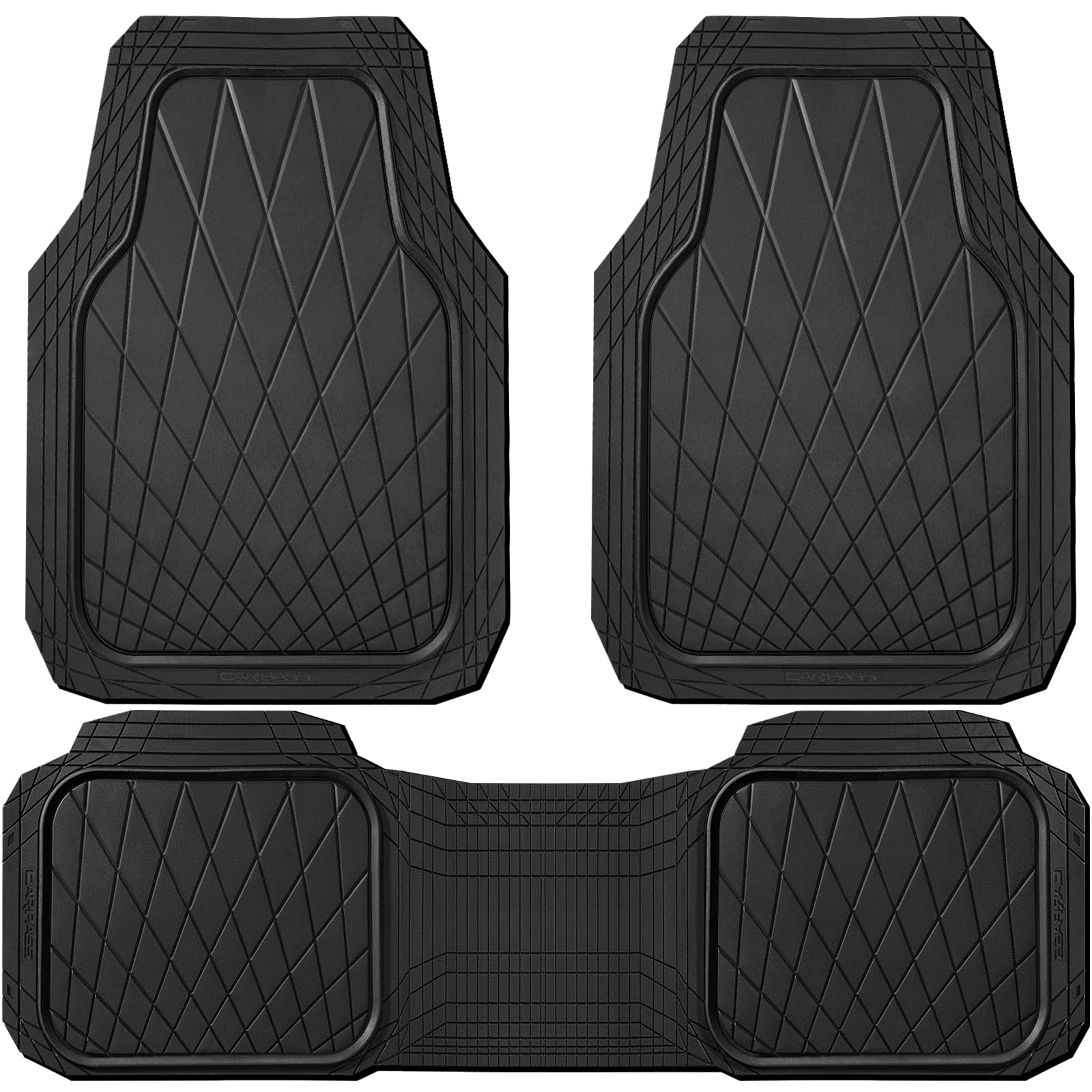
| Heavy rubber tray mats | Wet climates, families, and anyone who tracks in grit | Deep channels hold water and gravel, flexible, easy to hose clean | Less complete coverage than molded liners, can look plain | About $50 to $110 |
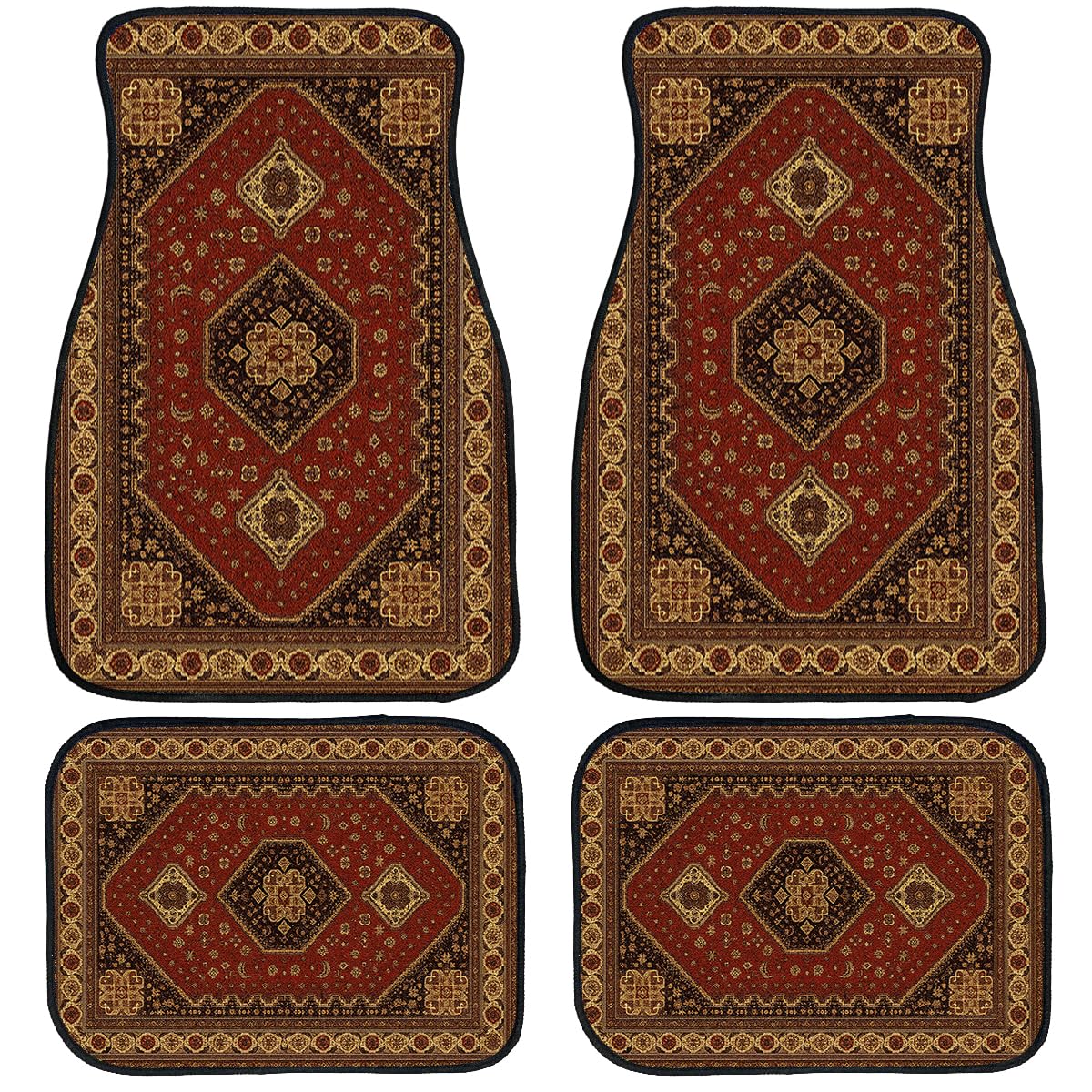
| Carpet mats | Dry climates and drivers who want a factory look | Quiet, soft underfoot, wide color range, often the lowest mid price | Absorbs spills instead of holding them, stains and wears at the heel | About $40 to $100 |
| Trim to fit universal mats | Older cars, second cars, and tight budgets | Cheapest entry, one set fits many vehicles, quick to install | You do the cutting, coverage gaps at the edges, thinnest materials | About $20 to $45 |
Premium Options
Premium mats are vehicle specific liners molded from firm thermoplastic to match one exact footwell shape. The molding follows every contour, climbs the sides of the footwell, and ends in a raised lip that can hold a surprising amount of meltwater, spilled coffee, or road salt brine before anything reaches the carpet. Because the shape is exact, the liner locks onto the factory retention posts and barely moves in daily use.
The trade offs are price and feel. A full set often costs about $120 to $250, and the firm surface feels more like a tray than a cushion under your shoes. Drivers who keep a vehicle for many winters, haul kids and dogs, or work outdoors usually find the coverage worth it, while a driver in a mild climate may never use the extra protection they paid for.
Mid Range Options
Mid range mats are usually heavy rubber trays or better carpet sets sold for a group of similar vehicles rather than one exact model. Rubber trays in this band have deep channels and a modest raised edge, so they trap gravel, sand, and moderate amounts of water while staying flexible enough to pull out and shake clean in seconds. They give up the last inch of edge coverage that molded liners provide.
Carpet sets in this band add a heel pad and denser pile over budget versions. They suit drivers who want a finished interior look with real durability, as long as liquid spills are rare. For most commuters in mixed weather, this band around $50 to $110 is where protection and price balance best.
Compact Options
Compact options are trim to fit universal mats sized for smaller footwells and smaller budgets. You lay the mat in the footwell, mark where it meets the seat rails and the wheel arch, and cut along printed guide lines with sturdy scissors. The result fits a subcompact or an older car that no longer has vehicle specific options on sale.
The honesty point is that your cut decides both coverage and safety. Cut too generously and the mat can bunch toward the pedals; cut too small and slush runs off the exposed edges onto the carpet. Work slowly, check the fit after every trim, and leave clear space around the pedal area. Drivers who take their time get a tidy result for about $20 to $45.
Budget Options
Budget mats are thin rubber or basic carpet sets with shallow channels and minimal edging. They stop dry dirt, dust, and light shoe grit from grinding into the factory carpet, which is a real benefit for a second car or a short term vehicle. They are also the easiest type to replace when they wear through.
What they cannot do is contain liquid. Meltwater from one pair of snowy boots can exceed the channels and spill over the edge, and thin rubber can curl at the corners in heat. If your winters involve slush, step up at least one band. If your driving is mostly dry pavement, a budget set changed every couple of years is a sensible, low cost plan.
Premium Options vs Mid Range Options: Which Should You Choose?
Coverage is the biggest gap between the two bands. A molded premium liner protects the carpet up the sides of the footwell and under the pedals, while a mid range tray protects the floor area your shoes actually touch. In a snowy climate that extra coverage keeps salt brine off carpet edges where rust and stains start.
Cleaning effort differs too. Premium liners lift out and rinse flat, and their smooth surface sheds dried mud quickly. Mid range rubber trays also hose clean, but deep channels hold grit that needs a brush. Carpet in either band needs vacuuming and the odd shampoo, which takes longer.
On price, premium sets run about $120 to $250 against about $50 to $110 for mid range. On fit security, premium liners match factory retention points exactly, while mid range sets rely on nibbed backing and general shape. Choose premium for long ownership and harsh weather; choose mid range when your weather is moderate and your budget has other jobs to do.
How to Choose the Best Auto Floor Mats
If you are still sorting out the broader category, our first time buyer guide to best auto mats covers the basics before you compare types. Once the types make sense, the factors below decide between them.
Key Performance Features
The features that matter are lip height, channel depth, material thickness, and backing grip. A raised lip of about an inch or more holds real liquid; shallow lips are decoration. Deep channels move water away from your shoes so it does not pool under your heels. Thicker material resists curling and heel wear, and a nibbed or textured backing keeps the mat planted between cleanings.
Price vs Value
Value means cost per year of clean carpet, not the lowest sticker. A budget set at about $25 replaced every two years can cost more over a decade than one molded set at about $180 that lasts the life of the car. Match the spend to how long you will keep the vehicle and how much mess your routine produces each week.
Warranty and Customer Support
Warranty length tracks the price band closely. Premium liners often carry long or even lifetime coverage against cracking and curling, mid range sets usually offer one to three years, and budget mats may offer only a short returns window. Before buying, check what the warranty actually covers: defects in material are standard, while wear at the driver heel is usually excluded at every price.
Intended Use and Who It Is For
Start from your mess, not from marketing photos. Daily commuters in rainy regions need liquid control, which points to trays or liners, and our guide to best floor mats for car shopping breaks down commuter needs in more detail. Pickup owners who climb in with muddy boots should look at the heavier duty choices in our guide to best floor mats for truck sets, where deeper channels and larger coverage matter most. Drivers in dry, mild areas can honestly choose carpet and enjoy the quieter cabin.
Size, Weight, and Fit for Your Space
Fit is where this product category turns from convenience into safety. A vehicle specific set follows the footwell exactly, while a universal set only fits as well as your trimming. Weight matters at cleaning time: thick rubber and molded liners are heavier to lift out, which is worth knowing if you clean mats weekly. Whatever you buy, confirm the set is shaped or cut to leave the pedal area completely clear.
Pedal Safety Comes First
This is the one non negotiable point in this whole guide. The driver side mat must be secured with the vehicle retention posts or clips so it cannot slide forward under the pedals. Never stack a new mat on top of an old one, because the doubled thickness can catch on the accelerator. A loose mat that bunches or rides up over the pedal travel is a known cause of crashes, so any mat that curls, creeps, or interferes with the brake or accelerator comes out of the car immediately, not at the next cleaning.
Setup and Care Tips
Before the first drive, read the fitting notes that come with your set and check the retention clips on the driver side. Lay each mat flat for a few hours if it arrives rolled, then install and press the pedal through its full travel by hand to confirm nothing touches the mat. The listings gathered under best automotive floor mats show how retention hardware varies between vehicle specific and universal sets, so compare your hardware before ordering.
Clean mats regularly so grit does not grind through the surface: shake or vacuum weekly, hose rubber and liners as needed, and let every type dry fully before it goes back in. After any removal for cleaning, refit the mat, reconnect the retention clips, and check pedal clearance again before driving. Store spare or seasonal mats flat in a dry place so the edges do not take a permanent curl.
Auto Floor Mats: Your Questions Answered
Are expensive auto floor mats worth it?
They are worth it when your weather and routine actually use what the money buys: exact fit, tall raised lips, and materials that resist cracking for many years. A driver facing slush, road salt, or muddy job sites protects carpet that costs far more to clean or replace than the liner set. In a mild, dry climate the same money buys protection you will rarely need, and a mid range tray usually serves just as well.
How do I maintain an auto floor mat?
Shake loose grit out weekly so it cannot grind into the surface, and vacuum carpet mats on the same schedule you vacuum the cabin. Rubber trays and molded liners can be hosed down and left to dry fully in the shade, which also prevents trapped moisture smells under the mat. Avoid harsh solvents on rubber, since they can dry the surface and speed up cracking. Always refit a clean mat onto its retention clips before driving.
How long does an auto floor mat last?
A molded thermoplastic liner commonly lasts the life of the vehicle, while heavy rubber trays usually give about five to eight years of daily use. Carpet mats wear fastest at the driver heel and often look tired after about two to four years, and thin budget mats may need replacing every one to two years. Replace any mat sooner if it cracks, curls at the edges, or no longer stays fixed in place, because a moving mat is a safety problem.
What features matter most when buying auto floor mats?
Fit security comes first: the mat must match your footwell and lock onto the retention posts so it can never reach the pedals. Next is liquid handling, meaning raised lip height and channel depth matched to your climate. Material comes third, with rubber and thermoplastic for wet mess and carpet for dry comfort. Price band and warranty follow after those three, because a cheap mat that slides or spills is not a bargain at any price.
How much should I spend on an auto floor mat?
Most drivers land in the mid range, about $50 to $110 for a full set, which buys real channels, decent thickness, and a warranty of a year or more. Spend about $120 to $250 on vehicle specific liners if you keep cars a long time or face serious slush and mud. Budget sets at about $20 to $45 make sense for a second car or a short term vehicle. Whatever the band, never let price talk you into a loose universal fit on the driver side.
Final Thoughts
Every type in the product table does one job at a different level: containing what your shoes bring in. Match the type to your climate and your mess, insist on a secure driver side fit, and let price follow those two decisions. Chosen that way, the best auto floor mats for your car are simply the ones that stay put, hold your weather, and clean up without a fight.