Best Automotive Floor Mats by Budget for 2026
Disclosure: We may earn a commission when you buy through links on this page, at no extra cost to you. As an Amazon Associate I earn from qualifying purchases. Learn more

Compare best automotive floor mats by budget, from trim to fit sets to molded liners, with pedal safety, material and long term cost guidance inside.
Prices for vehicle floor mats stretch from a few dollars for a thin universal set to well over a hundred dollars for a molded liner system, and the listings rarely explain what the extra money actually buys. This guide sorts the best automotive floor mats by budget, so you can see what each step up adds in coverage, material and fit before you spend anything. The product table lays the main options side by side.
Budget is the right starting point here because mats are a simple product with a short list of jobs. A mat has to cover the footwell, trap water and grit, stay exactly where you put it and clean up without a fight. Every dollar above the basic level should improve one of those jobs in a way you can point to, and this guide will keep asking that question at each band.




Choosing the Best Automotive Floor Mats for Your Driving
Think of the market as three shelves rather than a single ladder. The bottom shelf holds universal mats you trim yourself, the middle shelf holds sets shaped for a group of similar vehicles, and the top shelf holds liners molded for one exact floorpan. Your climate, your passengers and how long you plan to keep the vehicle decide which shelf deserves your money.
The Understated Basics Shelf
The lowest band, at about $15 to $35 for a full set, buys flat or lightly channeled mats in thin rubber or carpet that you cut to shape with scissors. Coverage is approximate, the edges sit flat rather than climb the footwell walls, and the material is chosen for price rather than for years of heel wear. For an older runabout, a work vehicle that already carries dust for a living, or a short term fix while you decide on a better set, this band does the honest minimum. Just know that the savings come from your own trimming time and from accepting gaps at the edges where grit will collect.
The Shaped Set Shelf
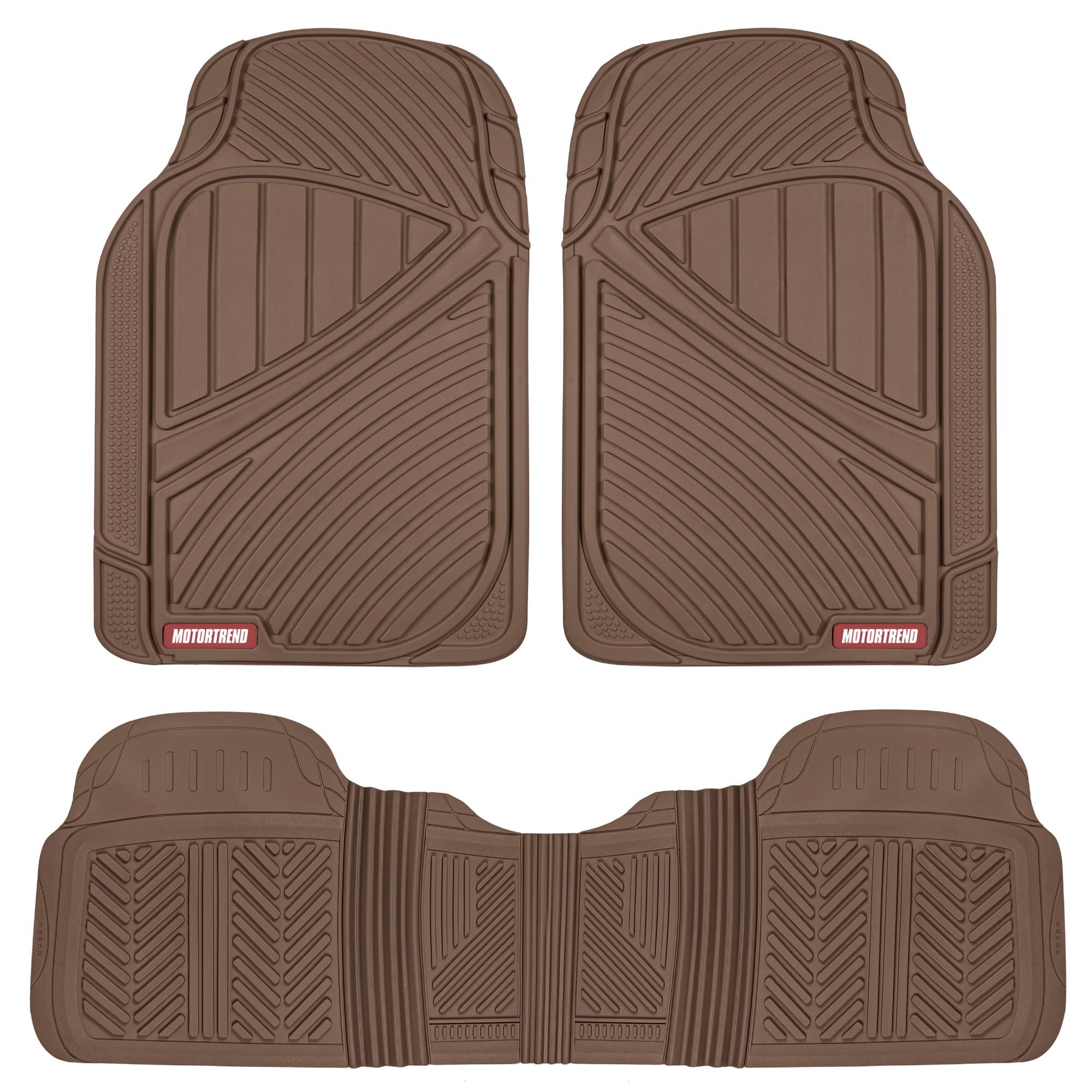
The middle band, at about $40 to $80, buys mats cut for a vehicle family, with deeper channels, a raised lip around the edge and a thicker heel area under the driver pedals. You still check the fit against your exact model year, but the shape arrives mostly finished and the coverage reaches the spots where boots actually land. Most daily drivers belong on this shelf, because the step up from the bottom band buys real water holding capacity and a mat that stays put far better. Drivers comparing family cars often start with our guide to best floor mats for car to see how shaped sets differ from universal ones.
The Molded Liner Shelf
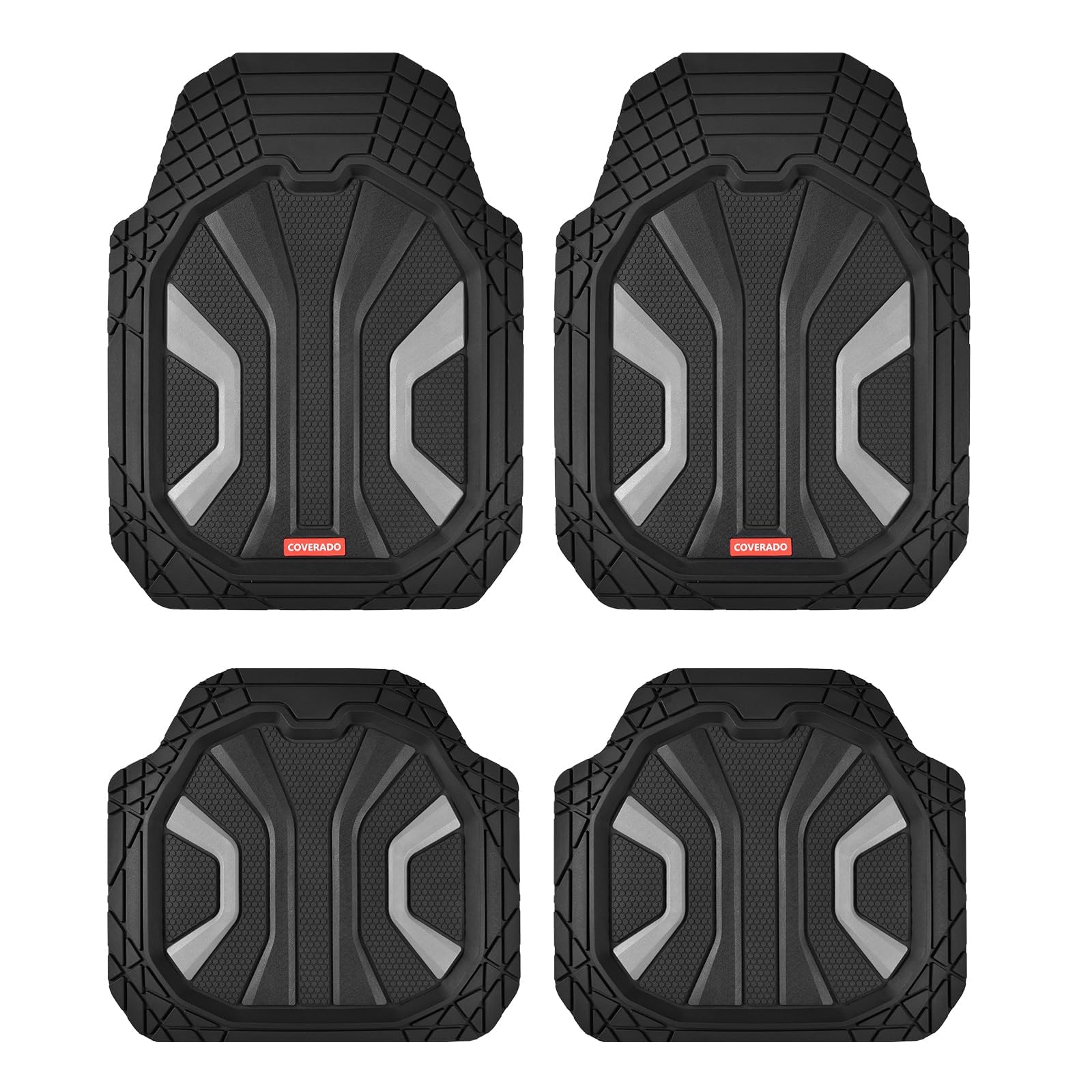
The top band, at about $90 to $180 and sometimes more for a full cabin plus cargo set, buys a stiff tray molded from a scan of one specific floorpan. The walls climb several inches, the surface holds a spilled drink or a load of melting snow without spreading it, and the driver mat locks onto the factory retention posts exactly. This shelf suits vehicles kept for many years, regions with long wet winters and owners who carry dogs, tools or sports gear that sheds dirt. Pickup owners who need that same tray coverage across a much wider floor should look at best floor mats for truck before settling on a car sized set.
What Each Price Step Actually Adds
Reading the product table above with a budget lens makes the pattern clear. Money in this category buys shape first, then material thickness, then surface detail, in that order. A buyer who understands that order can stop paying once the step on offer no longer matters for the way the vehicle is used.
What the Lowest Step Buys
At the bottom, your money buys presence rather than precision. You get a barrier between shoes and carpet, a surface you can shake out at a fuel stop and a price low enough that replacing the set every couple of years is painless. What you give up is edge coverage, so slush that lands near the door sill can still reach the carpet, and the thin material can curl at the corners once heat and cold have worked on it. Treat this step as protection for vehicles where the carpet is already worn, or as a stopgap for a newly bought used car while you learn its exact floor shape.
What the Middle Step Buys
The middle step buys fit that is close enough to forget about. Channels deep enough to hold a bootful of rain, a lip that keeps that water off the carpet during a turn and a driver mat with a reinforced patch where the heel pivots all arrive at this level. Sets here usually include a shaped rear row rather than two small rectangles, which matters if children or colleagues ride in the back. For most households this is where spending stops making sense, because the remaining gains at the top are about extreme weather and exact tray walls rather than everyday protection.
What the Top Step Buys
The top step buys containment. A molded tray holds liquid the way a baking pan holds batter, so a tipped water bottle or a pair of soaked boots stay a cleaning job rather than a damp carpet problem for a week. The stiff material also resists the folding and bunching that thinner mats develop, and the surface texture is usually molded in rather than printed on, so grip survives years of use. Owners of taller vehicles with a third row or a large cargo floor can compare tray coverage in our guide to best suv floor mats, where the extra rows change what a full set needs to include.
Where Extra Money Earns Its Keep, and Where It Does Not
Not every feature that raises the price raises the protection. This section separates the spending that changes daily use from the spending that mostly changes the look of the listing photo.
Material and Thickness Decide Lifespan
Rubber and modern rubber like compounds stay flexible in cold weather, rinse clean with a hose and resist the cracking that cheap vinyl shows after a few winters. Carpet style mats look warmer and quieten road noise a little, but they hold moisture against the floor and need drying time after a wash. Thickness matters most under the driver heel, where a thin mat can wear through in a single season of commuting. Pay for a reinforced heel zone and a material that stays flat in winter, because those two traits decide whether a set lasts two years or six.
Coverage Pattern Matters More Than Color
A mat protects only the floor it actually covers. Look at where your own boots land when you swing into the seat, at the dead pedal area to the left of the pedals and at the tunnel side where a passenger rests a foot on long drives. Sets that extend under the seat rails and up the footwell walls earn their price in wet climates, while a perfectly color matched mat that stops short of those zones does not. When you compare listings sold under slightly different names, such as the sets in our guide to best auto floor mats, judge them by a coverage sketch or a fitted photo rather than by the headline photo alone.
Pedal Safety Is Worth More Than Any Upgrade
No feature on any mat matters if the driver mat can move. A mat that slides forward can bunch against the pedals, catch the edge of the accelerator or change how the brake pedal feels underfoot, and the risk is highest with cheap universal mats that were trimmed loosely and never anchored. Every set, at every price, must be held by the vehicle retention posts or clips, or by a grip backing that genuinely holds on your carpet. This is the one place where the lowest budget demands the most care, because a loose fit is the standard weakness of the bottom band.
Details That Rarely Justify a Higher Price
Logos pressed into the surface, contrast stitching on carpet mats and scented material add cost without adding protection. A cargo mat bundled into a set is worth paying for only if you actually load dirty gear; otherwise buy the cabin rows well and skip the bundle. Metal look trim plates and very deep tread patterns styled after off road tires mostly make cleaning slower, since grit packs into the grooves. Spend first on fit, material and retention, and let appearance choose only between sets that already pass those three checks.
Pedal Safety Rules for the Driver Mat
Read this section before any set goes into the vehicle, whatever it cost. The driver side mat must be secured with the vehicle retention posts or clips whenever the floor provides them, and the mat eyelets must sit fully on those posts so the mat cannot travel forward. If your vehicle has no posts, choose a mat with a serious grip backing and check its position with your hand before every long drive until you trust it.
Never stack mats. A new mat placed over an old one can slide as a pair, doubles the thickness under the pedals and defeats the retention system the vehicle maker designed. Take the old mat out before the new one goes in, every time. A mat that bunches, curls at the edge or reaches toward the pedals comes out immediately and does not go back in, even for a short trip, because a short trip is still driving.
After every refit, cleaning or trim adjustment, sit in the driver seat and work each pedal through its full travel with the engine off. Your heel should rest on the mat without the mat edge lifting, and the accelerator and brake should move and return freely with no contact from the mat at any point. Repeat that check after the first week of use, because new mats settle and sometimes creep as they relax into the footwell shape. Always follow the vehicle maker's instructions for mat installation.
Costs That Arrive After the Purchase
The purchase price is only part of what a set costs you. Universal mats charge you time instead, often thirty minutes or more of measuring and trimming, plus the risk that one cut too many leaves a gap you cannot undo. Molded liners charge almost no fitting time but cost more to replace if you change vehicles, because a tray shaped for one floorpan rarely suits the next car.
Cleaning is a small but real running cost. Rubber and molded sets need only water and a stiff brush, while carpet mats may need a cleaner and a full day of drying in damp weather. Replacing a single worn driver mat is cheaper than replacing a set, and drivers who wear one spot through can look at a single best floor mat replacement rather than buying four pieces again. Warranty length grows with price in this category, from almost none at the bottom to several years at the top, so divide the price by the years you honestly expect to keep both the mats and the vehicle.
Automotive Floor Mats: Questions Answered
How much should I spend on an automotive floor mat set?
Spend about $40 to $80 if you drive daily in mixed weather, because that band buys shaped coverage and a reinforced heel area. Drivers in dry regions with garaged cars can spend less, at about $15 to $35, and still get useful protection. Spend into the molded band, about $90 to $180, only when you face long wet winters, carry messy loads often or plan to keep the vehicle for many years.
How do I maintain an automotive floor mat?
Shake loose grit off weekly and wash rubber or molded mats with water and a stiff brush, then let them dry fully before refitting. Full drying matters because a mat laid back over damp carpet traps moisture and smells within days. Carpet style mats need vacuuming and a longer drying window after any wet cleaning. After every wash and refit, repeat the pedal clearance check described earlier in this guide before driving.
Are expensive automotive floor mats worth the money?
Expensive sets are worth it when their tray shape solves a problem you actually have, such as melting snow, beach sand or a dog that rides daily. The molded walls and exact retention fit are real gains, not decoration. They are not worth it for a garaged car in a dry climate, where a shaped midrange set protects the same carpet for years. Judge by your weather and your cargo, not by the price tag itself.
How long does an automotive floor mat last?
A shaped rubber set usually lasts about three to five years of daily driving before the heel area thins or the edges lose their shape. Molded liners often last longer, since the stiff material resists folding and wear in one spot. Thin universal mats may need replacing after one or two winters. A simple check helps: if the mat no longer lies flat, no longer holds water or no longer stays anchored, its working life is over.
What features matter most when buying automotive floor mats?
Fit, retention and material matter most, in that order. A mat cut or molded for your floorpan covers the zones boots actually use, a retention system keeps the driver mat away from the pedals and a flexible cold resistant material survives winters without curling. After those three, look at channel depth for water holding and at how easily the surface rinses clean. Color, logos and trim details can decide between two sets that already pass the main checks.
Final Thoughts
Good buying in this category is mostly about refusing to pay for the wrong things. Set your band by climate and by how long you will keep the vehicle, then spend inside that band on fit, retention and material rather than on styling. Use the product table above to compare the options at your price before you order.
The best automotive floor mats for your car are the ones that cover your footwells fully, lock onto the retention posts without moving and clean up in minutes after a wet week. Buy the cheapest set that honestly does those three jobs, check the pedal clearance every time the driver mat goes back in, and your carpet will stay protected for years.