
Best Atmos Bookshelf Speakers 2026: Compact Home Theater Guide
Disclosure: We may earn a commission when you buy through links on this page, at no extra cost to you. As an Amazon Associate I earn from qualifying purchases. Learn more
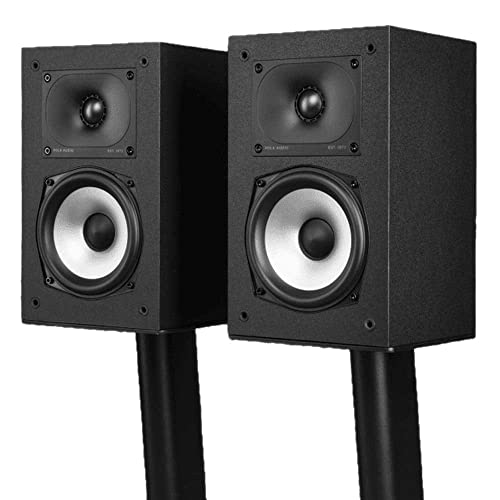
Best atmos bookshelf speakers for compact home theaters: how Atmos enabled and Atmos compatible bookshelf models differ, with sizing and setup tips.
Bookshelf speakers are the easy way to build an Atmos system in a modest room. The best atmos bookshelf speakers either include an upward firing driver for height effects or are tuned to work as surround and height channels alongside a Dolby Atmos receiver.
The product table lists compact Atmos compatible speakers from Polk, Klipsch, ELAC and Sony. The sections below explain the profiles and how to place them.


Three Buyer Profiles to Start From
Small room upgrade
If you have a soundbar or basic stereo, Polk Monitor XT series bookshelf speakers give high quality sound and can serve as surrounds or height channels.
Atmos enabled height
Klipsch RP-500SA and RP-140SA, ELAC Debut A4.2 and Sony SSCSE include upward firing drivers or modules designed for Atmos height channels.
Hybrid stereo and movies
Some shoppers want one pair that plays music in stereo and doubles as surrounds. Compact bookshelf speakers with strong midrange suit that.
How to Choose the Best Atmos Bookshelf Speakers
- Receiver: needs Dolby Atmos decoding and enough channels.
- Room size: small speakers work in rooms up to a medium size.
- Tone match: use the same brand across the front, center and surrounds when you can.
- Placement: bookshelf height or stand mounted, angled to the listener.
- Ceiling: needed for upward firing drivers.
Types of Atmos Bookshelf Speakers
Standard bookshelf speakers that are Atmos compatible work as surrounds or wall mounted heights. Atmos enabled bookshelf speakers have a built in upward firing driver. Add on modules sit on top of other speakers to add height effects.
Care and Maintenance Tips
Keep speakers dusted, check cable connections and avoid placing them directly against walls. Re-run the room calibration if you move them. Follow the manufacturer's instructions.
Typical Specs of Compact Atmos Speakers
Bookshelf speakers range from 10 to 16 inches tall and 8 to 15 pounds each. Woofers measure 4 to 6.5 inches with a one inch tweeter. Sensitivity is typically 85 to 90 dB, impedance is 4 to 8 ohms and recommended amplifier power is 20 to 100 watts per channel. Prices run from 120 to 300 dollars a pair.
Placement rules
Mount bookshelf surrounds at or slightly above ear level, a few feet behind and to the sides of the listener. Height speakers go high on the front or side walls, angled toward the seats, or on tops of other speakers if they have upward firing drivers. Keep speakers at least a few inches from walls to reduce boom.
Subwoofer pairing
Compact speakers roll off below about 55 to 70 Hz, so a powered subwoofer fills in the bass. Set the receiver crossover at 80 Hz as a starting point.
Room Size and Distance
Bookshelf Atmos setups work best in rooms from small to medium, up to about 300 square feet. In bigger rooms, tower speakers or more height channels help fill the space. Seat the listener about two to three times the distance between the front speakers from the screen.
Example Systems at Three Budgets
Starter, around 400 dollars of speakers
A pair of Polk Monitor XT15 for the front or surrounds, with an entry level Atmos receiver and a basic subwoofer. Add height modules later.
Mid range, around 700 dollars of speakers
Polk XT20 pair for surrounds, a Polk center and a Klipsch RP-500SA pair as Atmos enabled heights.
Upgraded, around 1,000 dollars of speakers
ELAC and Klipsch Reference bookshelf speakers across the front and surround channels, with Atmos enabled modules on top.
Troubleshooting Thin Sound
- Weak bass: add or move the subwoofer and check the crossover setting.
- Dialogue unclear: raise the center channel level or use a dedicated center speaker.
- Surrounds too loud: lower their level by a few decibels.
- Harsh treble: aim speakers slightly off axis and add soft furnishings.
Questions to Ask Before You Buy
- Does my receiver decode Dolby Atmos and have enough amplifier channels?
- Do I have shelf, stand or wall space for the cabinets?
- Will the speakers match my front speakers in tone?
- Do I need an upward firing driver, or will I mount them high on the wall?
- Is my room small enough for bookshelf speakers to fill?
Stands and Isolation
Speaker stands raise bookshelf speakers to ear level and reduce desk and shelf resonance. Look for stands rated for the speaker weight, and use isolation pads for tidier bass. Wall brackets save space and place surrounds exactly where you want them.
Care and Maintenance
Dust cabinets with a dry cloth, check wire connections each year and keep speakers away from heat sources. Recalibrate after moving them.
Related Guides
See best bookshelf speakers, best powered bookshelf speakers, best amplified bookshelf speakers, best bargain bookshelf speakers and best atmos speakers.
FAQs
Can any bookshelf speaker do Atmos?
Not by itself. Atmos needs a compatible receiver. Regular bookshelf speakers can serve as surrounds, but height effects need an upward firing driver or ceiling and wall placement.
How many speakers do I need?
A basic Atmos layout adds two height speakers to a 5.1 system, called 5.1.2.
Do I need a subwoofer?
Compact speakers sound fuller with a subwoofer for low bass.
Where should I place them?
Place them at ear level for surrounds and on top of other speakers or high on the wall for height.
Can I use powered bookshelf speakers?
Not directly in a receiver based Atmos system, since they have built in amplifiers. They fit stereo setups, and a few models connect for wireless surround use.
How high should height speakers be?
Mount them as high as you can, typically at least four feet above ear level, angled toward the seats.
Do bookshelf speakers need a stand?
Not always, but stands or wall mounts raise them to ear level and improve imaging.
How big a room can they fill?
Up to about 300 square feet with a subwoofer. Larger rooms may call for towers.
The Bottom Line
Choose compact speakers that fit your room and your receiver. Compare the product table, and the best atmos bookshelf speakers will give you compact, immersive sound.


