Best A Frame Ladders in 2026: Buying Guide and Top Options
Disclosure: We may earn a commission when you buy through links on this page, at no extra cost to you. As an Amazon Associate I earn from qualifying purchases. Learn more

A practical guide to the best a frame ladder: sizes, features, budget ranges, and mistakes to avoid before you buy.
An A frame ladder stands on its own, so you can work in the middle of a room, over a garden bed, or anywhere a wall is not close enough to lean against. That freedom is why most households own one. The hard part is picking the right height, material, and load rating, because a ladder that feels fine in the store can feel wobbly or cramped once you are standing on it with a drill in hand. This guide walks you through finding the best a frame ladder for your jobs, and the comparison table below sums up the main types side by side.
If you are still deciding whether an A frame design suits you at all, our wider guide to the best ladder covers every ladder style in one place. Here, we stay focused on self supporting step ladders and the details that separate a steady one from a shaky one.





Who Should Buy Which A Frame Ladder?
Your ceiling height and the kind of work you do most often decide the size you need. Match yourself to one of the three groups below before you look at features.
Apartment Dwellers and Light Household Users
You change light bulbs, hang curtains, reach the top shelf of a closet, and water a hanging plant now and then. A short two or three step model is tall enough for ceilings around 8 feet, and it folds flat enough to slide behind a door or into a coat closet. Weight matters more than reach for you, so a light aluminum frame you can carry one handed from room to room is the practical choice. Look for wide steps rather than narrow rungs, since you will often climb in socks or soft house shoes.
Homeowners Who Paint and Do Repairs
You paint walls and trim, clean gutters on a single story ranch, prune small trees, and swap outdoor light fixtures. A 6 or 8 foot ladder gives you the reach for standard rooms and eaves without forcing you onto the top cap, which is never a safe standing spot. You will use the ladder for hours at a time, so a model with a paint tray or a project bucket shelf saves trips up and down. Fiberglass rails are worth considering if any of your work happens near wiring or outdoor outlets.
Contractors and Frequent DIY Builders
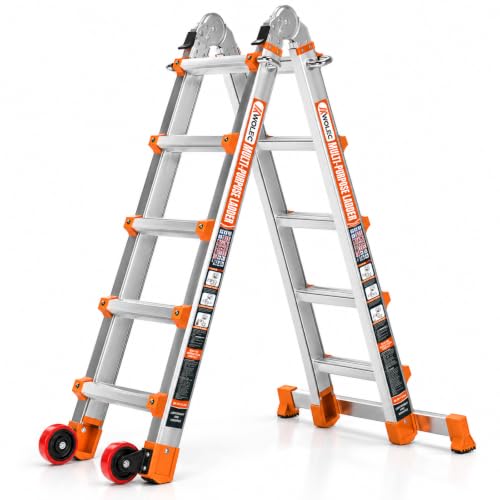
You hang drywall, run cable, frame walls, and spend full workdays going up and down. You need a duty rating that covers your body weight plus tools and materials, and steps deep enough to stand on while you work overhead. A multi position model that converts between step ladder, extension, and stairway setups earns its keep on varied job sites. If most of your work stays on flat floors, though, a fixed twin step ladder with access from both sides lets a second person work opposite you and saves repositioning time.
Key Features to Compare
Height and Safe Reach
Ladder height is measured to the top of the closed frame, but what matters is how high you can reach while standing on a safe step. A common guide is that your safe standing level sits about 2 feet below the top, and your reach extends roughly 4 feet above that standing level. So a 6 foot ladder suits work up to about 10 feet, such as a standard ceiling and the wall above it. Buy for the tallest job you do regularly, not the tallest job you can imagine, since extra height adds weight and makes the ladder awkward indoors.
Material: Fiberglass or Aluminum
Aluminum ladders are lighter and usually cost less, which suits anyone who carries the ladder often or stores it up high. Fiberglass rails do not conduct electricity, so they are the safer pick around wiring, and they shrug off sun and weather better on outdoor jobs. The trade off is weight, since a fiberglass model of the same size can feel noticeably heavier on a long carry. Our breakdown of fiberglass vs aluminum ladder construction walks through strength, dent resistance, and care in more depth if you are torn between the two.
Duty Rating and Load Capacity
Every ladder carries a duty rating that states the total load it is built to hold, and that total includes you, your clothing, your tool belt, and anything you carry up. Ratings run from light duty household models around 200 pounds up through extra heavy duty models rated at 375 pounds. Add up your real working weight honestly and choose a rating with room to spare. A ladder used near its limit flexes more underfoot, and that flex reads as wobble even when nothing is wrong. Painters and builders who haul buckets and tools should step up at least one rating class.
Step Depth and Top Cap Design
Steps on household ladders are often about 3 inches deep, while trade models offer deeper treads that support more of your foot. Deep steps matter most when you stand in one spot for several minutes, such as taping a ceiling line, because a narrow step concentrates pressure on a small part of your foot. The top cap is your work surface, so look for molded slots for screwdrivers and a drill, plus a recess that cradles a paint can or a small parts tray. Ribbed step surfaces help your shoes grip when dust or paint mist settles on the metal.
Stability and Spreader Bars
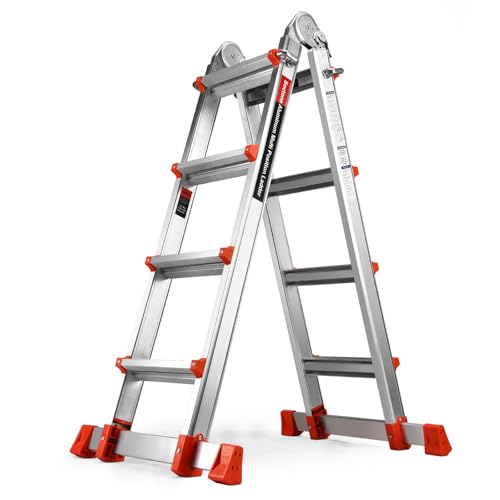
An A frame ladder stays upright because its front and rear rails are held apart by spreader bars on both sides. Those bars must lock fully open before you climb, and sturdy metal bars with a positive lock feel far more secure than thin stamped pieces. Wide feet with rubber boots keep the ladder from skating on tile, sealed concrete, or deck boards. Some taller models add a handrail you can hold while climbing or lean against while working, which helps when you carry something up with one hand. A ladder that rocks on a flat showroom floor will rock worse on your driveway.
A Frame Ladders Compared With Other Ladder Types
The A frame shape wins on convenience: it opens in seconds, stands anywhere, and stores flat against a wall. Extension ladders reach much higher and are the right tool for roof work, but they need a wall or eave to lean on and two hands to carry safely. If storage space is your main problem, a collapsing model from our guide to the best telescoping ladder shrinks down to fit a car trunk, and many telescoping A frame versions still stand on their own once opened, with the trade off that more joints and locks need checking before each climb. Attic access is a separate problem again, and our roundup of the best attic ladder covers the pull down stairs built for that job. For the broad middle of household work, the A frame remains the easiest ladder to live with.
Setting Up and Climbing Safely
Place the ladder on a firm, level surface and open it until both spreader bars click or settle fully into their locked position. Give each rail a firm shake before you climb. Face the steps as you go up, keep three points of contact, and keep your hips inside the rails rather than leaning out to one side. Never stand on the top cap or the top step. Our companion guide on how to use a ladder goes deeper on placement angles and moving along a wall. Stop work and get down if the ladder shifts, a foot sinks into soft ground, or wind picks up while you are outdoors.
Common Mistakes to Avoid
- Standing on the top cap to gain a few inches, which puts your center of gravity above the support the frame can offer.
- Climbing with the spreader bars only partly open, so the rear rails can fold inward under load.
- Using an aluminum ladder for electrical work, where a metal rail can carry current to your hands.
- Leaning out sideways to reach a spot instead of climbing down and moving the ladder, a habit behind many falls.
- Setting the feet on loose soil, mulch, or a drop cloth that lets one leg sink or slide mid job.
- Carrying heavy tools in your hands while climbing, leaving no hand free to hold the rails.
Care and Maintenance
Wipe mud, paint, and concrete dust off the rails and steps after messy jobs, since grit ground into the step surface wears the grip pattern down over time. Check the spreader bars and their rivets every few months and tighten any fitting that has worked loose. Inspect fiberglass rails for cracks or splintering and aluminum rails for dents near the feet, and retire a ladder with bent rails rather than trying to straighten them. Store the ladder indoors, folded and hanging flat or standing in a dry corner, since long sun exposure fades and weakens fiberglass resin. A ladder kept clean and stored dry gives years of steady service.
FAQ
What size A frame ladder do I need for 10 foot ceilings?
For a 10 foot ceiling, an 8 foot ladder is the comfortable pick. You will stand about 6 feet up, on a step that sits safely below the top, and your hands will reach the ceiling without stretching onto your toes. A 6 foot model forces you onto its highest allowed step, which leaves no margin when you hold a paint roller tray or a light fixture above your head.
Can you use an A frame ladder on stairs?
A standard A frame ladder should not be used on stairs, because its four feet sit at one fixed level and one side will hang in the air. Multi position ladders solve this by letting one side extend longer than the other, so all four feet rest firmly on different steps. If stair work is a regular job for you, such as painting a stairwell, that adjustable design is the safe way to handle it rather than stacking blocks under a short leg.
How long does an A frame ladder last?
A well kept ladder often lasts a decade or more of household use. The end of its life is set by condition rather than age: bent rails, cracked fiberglass, worn or missing feet, and loose rivets at the hinges all mean it is time to replace it. Outdoor storage shortens life fastest, since sun breaks down fiberglass resin and rain works into joints. Inspect before each big job and retire the ladder at the first sign of structural damage.
How do you clean an A frame ladder?
Wash the rails and steps with warm water, a mild detergent, and a stiff brush, then rinse and dry the ladder fully before folding it away. Work dried paint loose with a plastic scraper rather than a metal one, which can gouge the step surface. While you clean, run a cloth along the fiberglass rails: rough or fuzzy patches can signal sun damage worth watching. A light wipe of the hinges keeps grit out of the folding joints.
How much should you spend on an A frame ladder?
Expect to pay around $50 for a basic light duty household step ladder, about $125 to $300 for a telescoping or multi position A frame with more reach and a higher duty rating, and more for premium designs. Spending up usually buys stability and comfort features such as a project tray and locking spreader bars rather than extra height alone. For a fuller look at sizing your budget to your home, see our guide to the best ladder for home use.
Final Thoughts
Start with your ceiling height, add up your real working weight, then choose the material that fits where you will use the ladder most. The product table above pulls those choices together so you can compare types at a glance. Pick the best a frame ladder that meets your reach and rating needs with a little room to spare, keep its spreader bars locked and its feet on solid ground, and it will handle years of painting, pruning, and repairs without drama.