
Best Attic Ladder: Types, Fit and Buying Guide (2026)
Disclosure: We may earn a commission when you buy through links on this page, at no extra cost to you. As an Amazon Associate I earn from qualifying purchases. Learn more

Measure your opening and ceiling height first, then pick the best attic ladder by type, duty rating and door insulation.
An attic ladder is a permanent fixture, not a tool you can swap out next season, so a poor choice stays with you for years. Picking the best attic ladder starts with two measurements, your ceiling height and your rough opening, and then comes down to capacity, insulation, and how much floor space the unit needs to open. This guide walks you through each of those decisions in order.
Below you will find the main ladder types compared, the features that actually separate one unit from another, and the measuring steps to complete before you order anything. Start with the comparison table below, then use the sections that follow to narrow your choice to the type that fits your home.




Who Should Buy Which Attic Ladder?
Homeowners Replacing a Worn Wooden Unit
If your current ladder creaks, the steps feel soft, or the door no longer closes flat, a standard folding wood or aluminum unit in the same rough opening size is usually the simplest replacement. Matching the existing opening means the frame swap can often be done without cutting ceiling joists. Choose a duty rating above your old unit if the steps showed wear, since that flexing usually means the ladder was working near its limit.
Households That Haul Heavy Storage Bins
If you carry storage bins, luggage, or seasonal gear up and down several times a year, capacity and step comfort matter more than saving a little money. Look for a higher duty rating, wider and deeper steps, and a sturdy handrail. Our guide to the best ladder for home use covers the portable ladders that handle the jobs an attic ladder cannot, such as gutters and exterior walls.
Owners of Tight Hallways and Small Landings
Some ladders need a long arc of clear floor to unfold, and that rules them out in a short hallway or a small bedroom. If your landing space is limited, a scissor style or compact folding unit is the better fit, since these extend mostly downward instead of swinging out. Measure your landing space before you fall in love with any model, because no feature matters if the ladder cannot fully open in the room.
Attic Ladder Types Compared
Folding wood ladders are the traditional choice and often the lowest priced. The sections fold onto each other and store inside the frame, the steps are wide, and the wood feels warm and quiet underfoot. The trade offs are weight and durability, since wood units tend to be heavier and the hinges and steps can loosen over time.
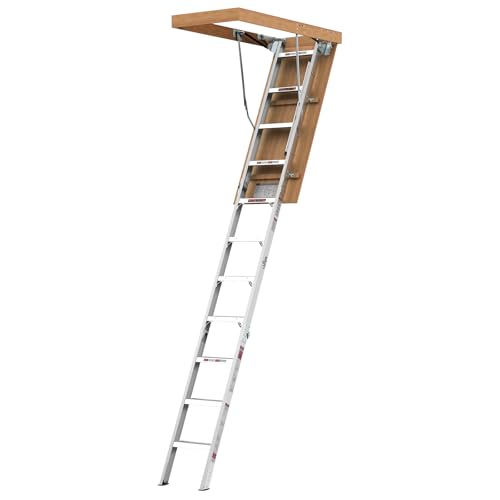
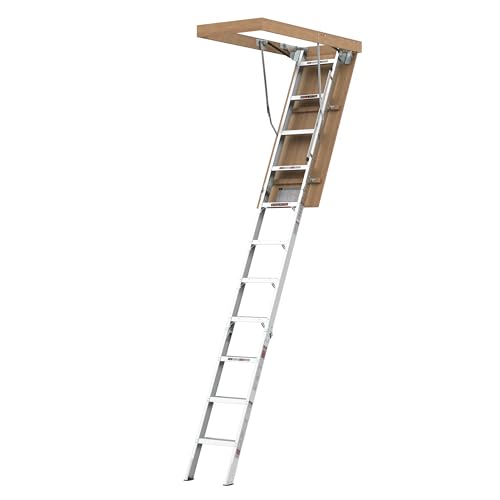
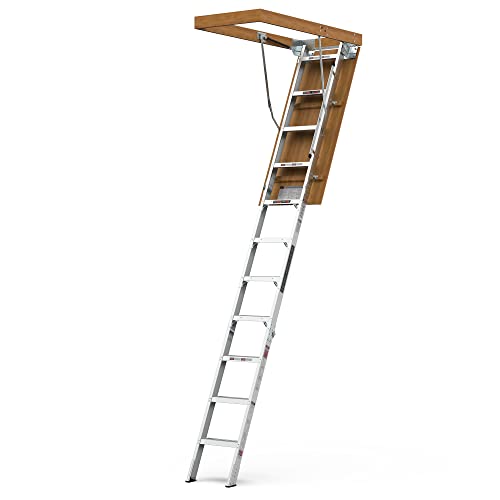
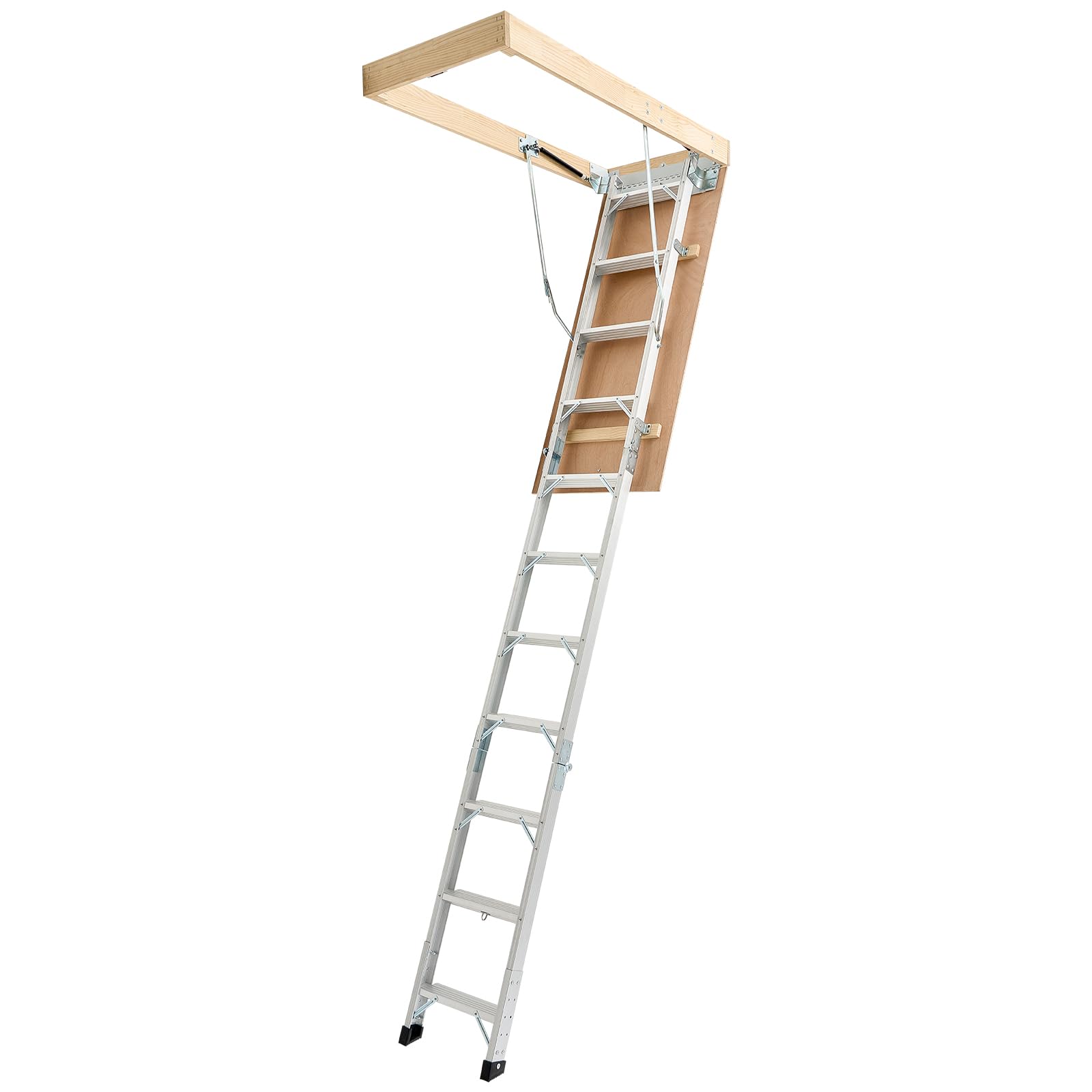
Folding aluminum ladders follow the same basic design but weigh less and resist moisture better, which suits humid climates and garages. They usually carry higher duty ratings than basic wood models at a similar opening size. The steps can feel colder and noisier, and dented rails are harder to repair than wood.
Scissor style and telescoping metal ladders extend downward in a compact motion, so they need less swing clearance and can suit openings where a folding unit will not fit. They also tend to offer insulated doors and clean sealing. The steps are often narrower, the price runs higher, and the moving parts need more attention over the life of the unit.
Key Features to Compare
Rough Opening Size and Ceiling Height
These two numbers decide which ladders you can even consider. Common rough openings are about 22.5 by 54 inches and 25.5 by 54 inches, and each model is built for a stated ceiling height range, often about 7 to 10 feet or 8 to 12 feet for taller units. A ladder built for a shorter ceiling than yours will not reach the floor, and cutting or extending sections voids the design limits the maker set. Measure first, then shop only within the models that match both numbers.
Duty Rating and Load Capacity
The duty rating tells you the total load the ladder is built to carry, and that total includes you plus everything in your arms. Ratings commonly run from about 250 to 375 pounds. Add your body weight to the heaviest bin you realistically carry, then choose a rating with room to spare. A ladder used near its limit flexes more, wears its hinges faster, and feels less steady, so the extra capacity is comfort and service life, not just a safety margin.
Insulation and Door Sealing
The attic door is a hole in your ceiling insulation, and a thin uninsulated panel leaks heated and cooled air all year. Better units use a thicker insulated door, sometimes with a stated R value, plus weatherstripping around the frame to seal the gap. In a home with a bedroom or hallway below the attic, this is one of the few upgrades you feel every month on your energy bill. If you plan to add an insulation cover later, check that the frame design leaves room for one.
Step Depth, Handrails, and Grip
You climb an attic ladder carrying things, often with one hand, so step design matters more here than on a ladder you climb empty handed. Deeper steps give your whole foot support on the way down, and a grooved or textured surface helps when dust covers the treads. A handrail on one or both sides gives you something to hold while you step through the opening at the top, which is where most people feel least steady.
Material Choice: Wood, Aluminum, or Steel
Wood is quiet and affordable but heavier and more prone to loosening joints. Aluminum cuts weight and shrugs off moisture, while steel shows up in scissor mechanisms where compact strength matters. The same trade offs appear in portable ladders, and our breakdown of fiberglass vs aluminum ladder materials explains how weight, weather, and electrical safety compare if you are choosing other ladders for the house at the same time.
Swing Clearance and Landing Space
Manufacturers list two space figures beyond the opening itself: the swing clearance, meaning how far the ladder section sweeps as it unfolds, and the landing space, meaning the floor area the opened ladder occupies. Both must be clear of doors, furniture, and walls in your room. A unit that fits the ceiling opening can still fail in the room below, so compare these numbers against your tape measurements before ordering, not during installation.
How to Measure and Check Fit Before You Buy
Start in the room below the attic. Measure the existing rough opening between the ceiling joists, both length and width, using the framing size rather than the door panel size. If you are cutting a new opening, plan its location so it runs parallel to the joists and leaves the required clearance at both ends.
Next, measure the ceiling height from the finished floor to the ceiling surface, and compare it with the height range printed in the ladder specifications. Then clear the floor and mark out the landing space and swing clearance for the model you are considering, using painter tape so you can see whether a door swing or a piece of furniture conflicts with it.
Finally, go into the attic if you safely can and check the space above the opening. The folded ladder and frame need room, stored items should sit clear of the unit, and the joists around the opening must be sound. If the framing looks altered, cracked, or undersized, have a carpenter or a qualified installer check it before you buy, since the frame carries the full load of the ladder and climber. Our guide on how to choose a ladder covers the general sizing logic that applies to portable ladders too.
Common Mistakes to Avoid
- Ordering by door panel size instead of rough opening size, which leaves you with a frame that cannot fit between the joists.
- Ignoring the ceiling height range, so the ladder ends up too short to reach the floor or too long to fold away.
- Choosing a duty rating based on body weight alone and forgetting the storage bins you carry, which overloads the steps and hinges.
- Skipping the landing space check, then finding the opened ladder blocks a bedroom door or lands against a wall.
- Cutting ceiling joists to make an opening fit without adding proper framing, which weakens the floor structure above the room.
- Treating the ladder as a portable one and leaning boxes against the folded sections in the attic, which can bend rails and strain hinges.
How to Make Your Attic Ladder Last Longer
Keep the steps and the floor contact points clean, since grit ground into the treads wears the surface and makes footing less secure. A quick sweep of the steps each season and a wipe of the hinges keeps dust out of the moving joints. Check that the feet sit flat on the floor, because a ladder that rocks puts uneven stress on the frame every time you climb.
Once a year, inspect the bolts, pivot arms, and springs, and tighten any hardware that has worked loose. Wood units may need a check for split steps or rails, and any cracked part means the ladder should stay closed until it is repaired or replaced. Keep the door seal in good shape by replacing worn weatherstripping, and store nothing on top of the closed door inside the attic. Safe climbing habits matter as much as upkeep, so review how to use a ladder if others in your household are new to attic access.
FAQ
Are attic ladders worth it compared with a portable ladder?
For regular attic access, yes. A fixed ladder is always in place, opens in seconds, and leaves both the opening and the climbing angle consistent every trip. A portable ladder needs storage space, a safe place to lean, and enough room at the right angle below the hatch. Households that open the attic only once or twice a year may manage without one, but frequent trips quickly justify the installation. A best folding ladder guide can help if you go the portable route instead.
How long does an attic ladder last?
A well installed ladder in a dry attic commonly serves for decades, and the door, springs, and hardware usually age faster than the frame. The clearest end of life signs are cracked steps, rails that have bent, or a door that no longer seals or latches even after adjustment. When the structure itself is damaged, replacement is safer than repair, since the unit carries your full weight above a hard floor.
Can you install an attic ladder by yourself?
It is possible for an experienced do it yourself homeowner, but plan on a helper regardless. The unit is heavy and awkward, it must be lifted into the opening and held level while the frame is secured, and that is genuinely difficult with one pair of hands. Most makers design the job around two people and temporary support braces. If your project involves cutting joists or moving wiring, hiring an installer is the sensible call.
What ceiling heights need a special attic ladder?
Standard units are built for common residential ceilings, roughly 8 to 10 feet. Rooms with ceilings above about 10 feet need a model made for taller ranges, and very tall spaces may call for a commercial style unit. Never solve a height gap by standing the ladder on blocks or by adding an extension the maker did not design for it, since the feet must sit flat and the angle must stay as engineered.
Does an attic ladder need a fire rated door?
It depends on where the opening sits. Many local building codes require a fire rated separation between a garage and the living space, and an attic opening in a garage ceiling can fall under those rules, which is why some ladders are sold with fire rated doors. Check your local code or ask your building department before choosing, especially for a garage installation, because replacing a non compliant door later costs more than buying the right one first.
Final Thoughts
The right choice is mostly decided before you shop: your rough opening, ceiling height, and landing space narrow the field to a handful of units. From there, spend your money on capacity, step comfort, and an insulated, well sealed door rather than on extras you will never notice. Look back at the product table above, match it against your measurements, and the best attic ladder for your home should be the one that fits every number on your list.


