
Best 90 Lb Adjustable Dumbbells in 2026: Buying Guide and Top Options
Disclosure: We may earn a commission when you buy through links on this page, at no extra cost to you. As an Amazon Associate I earn from qualifying purchases. Learn more

A practical guide to the best 90 lb adjustable dumbbells: sizes, features, budget ranges, and mistakes to avoid before you buy.
Sets that reach 90 lb per hand differ a lot in how they change weight, how the handle feels under load, and how much room the pair takes up. Choosing the best 90 lb adjustable dumbbells means matching the adjustment style, the increments, and the build quality to the way you train. This guide compares the main build styles and helps you judge whether 90 lb is the right ceiling for your goals.
Use the comparison table below to scan the key specs side by side, then read on for the details behind each one. For the broader picture, our guide to the best adjustable dumbbells covers every size class, while this article stays focused on the heavy tier.




Who Should Buy 90 Lb Adjustable Dumbbells?
Strong lifters who have outgrown 50 lb sets
If your rows, presses, and goblet squats already pass 50 lb per hand, a lighter set becomes a ceiling you hit every week. A 90 lb pair gives you years of headroom for progressive overload without buying a second set later, and one pair still replaces a whole rack of fixed weights.
Home gym owners short on floor space
A fixed dumbbell run from 10 lb to 90 lb needs a long rack and a lot of flooring. Two adjustable dumbbells on a compact stand cover the same range in a footprint closer to a small bench. That matters in a garage corner or spare room, and it is why heavy adjustable sets anchor many setups in our roundup of the best adjustable dumbbells for home gym use.
Partners or families training at different levels
One set that starts light and climbs to 90 lb can serve two people with very different strength levels. A newer lifter works through the low and middle settings while a stronger partner pushes toward the top end. Smaller starting weights and comfortable grip sizes matter here, a point we also cover in our guide to the best adjustable dumbbells for women.
Key Features to Compare
Weight range and increment size
Every 90 lb set reaches the same top weight, but the steps along the way decide how useful it feels in practice. Increments of 2.5 lb or 5 lb let you add load gradually on presses and curls, where a 10 lb jump can stall progress for weeks. Check the lowest setting too, since some heavy sets start at 10 lb while others start higher.
Adjustment mechanism and change speed
Dial systems change weight with a turn at each end of the handle, pin systems use a sliding selector, and plate loaded designs ask you to add or remove plates by hand. Dial and pin designs change in a few seconds, which suits circuits, supersets, and drop sets. Plate loaded designs change more slowly but feel the most like traditional dumbbells once locked. How often you switch weights mid workout should drive this choice more than any spec sheet.
Build quality and materials
At 90 lb per hand, the mechanism carries serious load, so construction matters more than it does on lighter sets. Steel plates and metal internals tend to feel tighter and resist wear better than parts made mostly of plastic. Look at how the plates lock, whether there is wobble at the heaviest setting, and what the warranty covers. A long parts warranty signals that the maker expects the selector system to survive years of daily changes.
Handle shape, grip diameter, and knurling
You will hold this handle for every rep, so its diameter and texture shape comfort and control. Thick handles challenge grip strength and can feel awkward for smaller hands, while very smooth handles slip as palms sweat. Moderate knurling gives purchase without tearing skin during high rep sets. Contoured handles suit some lifters, though straight handles rotate more naturally for curls and presses.
Footprint, trays, and storage
Most heavy sets need their storage tray for the selector mechanism to work correctly, since you change weights with the dumbbell seated in the tray. Measure the tray footprint, not just the dumbbell, and plan space for both trays plus room to step in and lift. An optional stand raises the set to a comfortable height and saves your lower back from picking 90 lb up off the floor many times each week.
Length at each setting and exercise fit
Some designs keep every plate attached and stay the same length at any weight, while others leave unused plates in the tray so the dumbbell gets shorter at light settings. A shorter dumbbell feels better for curls and presses where a long bar can bump your thighs or shoulders. A constant length design feels predictable but bulky at low weights.
Three Build Styles Compared
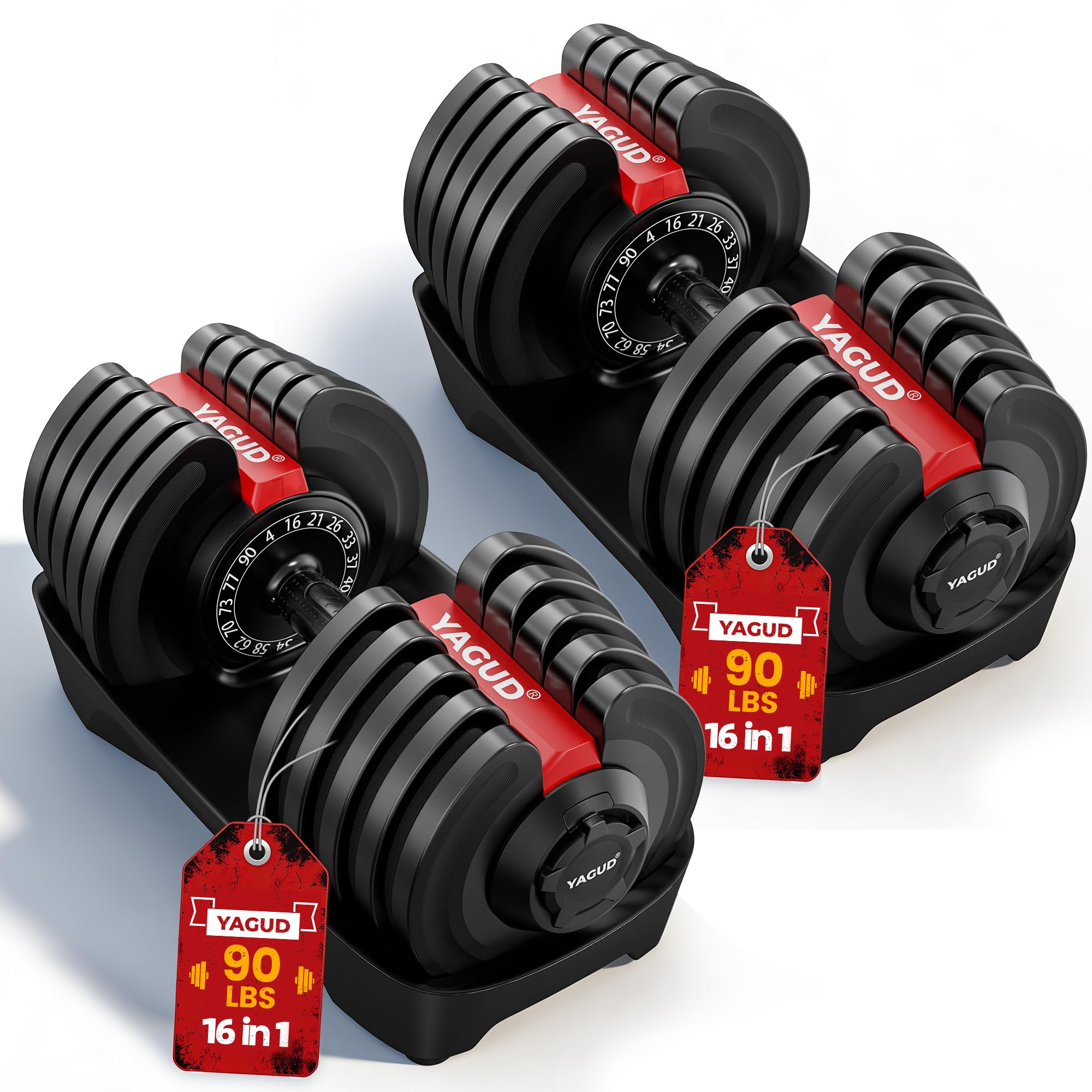
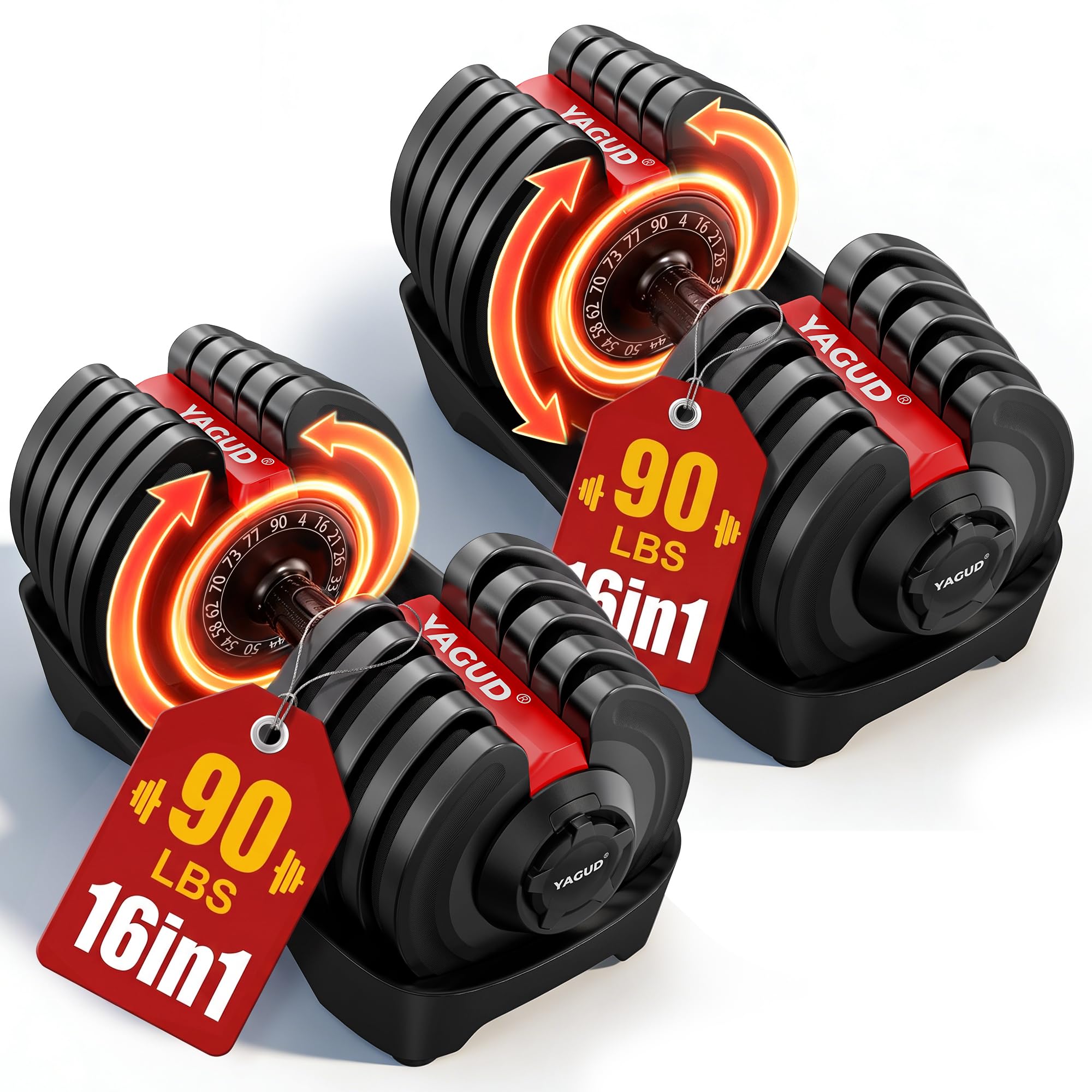
Dial selector dumbbells are the fastest to change and the most common style in this size class. You set the dial, lift, and the chosen plates come with the handle while the rest stay in the tray. The tradeoff is a mechanism with more moving parts. For brand level detail on how the two biggest names differ, our bowflex vs powerblock comparison breaks down the design philosophies.
Expanding block style dumbbells use a pin and nested plates inside an open frame. They stay compact, change weight quickly, and often accept expansion kits that raise the ceiling later. Their squared shape rests on the thigh comfortably before a press but feels different from a round dumbbell. Our bowflex 552 vs 1090 article shows how this style scales from mid size sets up to the heavy tier.
Plate loaded adjustable dumbbells work like small barbells, with a handle, plates, and a locking collar or threaded end. They are usually the most durable style and the easiest to repair, since each part is simple and replaceable. Changes take longer, and the length grows as you add plates. Lifters who train straight sets with long rests often accept slower changes in exchange for a solid, traditional feel.
Is the 90 Lb Size Right for You?
Be honest about the heaviest weights you will use in the next two years. Most lifters press, row, and squat far more than they curl, so base the decision on your big compound lifts, not your isolation work. If your rows already pass 70 lb, the 90 lb ceiling gives you room to grow. If your heaviest lift sits near 50 lb and progresses slowly, a smaller set may serve you for years at a lower price.
Also weigh the jump to the next tier. Our guide to the best 100 lb adjustable dumbbells explains who needs that extra 10 lb per hand, mainly very strong lifters using dumbbells as their primary heavy tool. For most home gyms, 90 lb per hand covers presses, rows, lunges, and deadlift variations for a long time, and the money saved can fund a bench or flooring instead.
Noise, Floors, and App Programs
Plate rattle is the main noise concern with selector designs, since nested plates can click against each other during fast reps. Rubber coated plates and tight tolerances reduce the sound, which matters for early morning training in shared housing. Train over rubber mats, because even a short drop can crack a floor and damage the mechanism. These sets are built for lifting, not dropping.
Some heavy sets pair with training apps that track your selected weight, count reps, or offer guided programs. A subscription can add structure, but the dumbbells should earn their place on hardware quality alone. Check whether the features you care about sit behind a monthly fee, and treat the program as a bonus, never the reason to buy.
How Much Should You Spend?
Price in this tier reflects materials, increment size, and warranty more than raw weight, since every set here reaches 90 lb. Expect most quality pairs to fall roughly in the about $400 to $800 range, with plate loaded designs sometimes costing less and premium dial designs costing more. A stand usually adds about $100 to $200. Spending more makes sense when it buys smaller increments, metal internals, and a longer warranty.
Common Mistakes to Avoid
- Buying for your curl weight instead of your row and press weight, which leaves you with a ceiling you pass within months.
- Ignoring increment size, then finding that 10 lb jumps make it hard to progress on smaller muscle groups.
- Skipping the tray measurement, so the set does not fit the corner you planned.
- Dropping the dumbbells after heavy sets, which can bend selector parts and void the warranty.
- Choosing a grip diameter too thick for your hands, making every set feel harder than it should.
- Forgetting to budget for a stand or mats, so the set lives on the floor.
Care and Maintenance
Keep the trays and selector parts free of dust and chalk, since grit inside a dial or pin path makes changes feel rough over time. Wipe plates and handles with a lightly damp cloth after sweaty sessions and dry them fully to protect the finish. Store the set indoors in a dry room, because garage humidity can corrode uncoated plates. Every few weeks, run each dumbbell through its full range and confirm every setting locks with a firm click before you lift.
FAQ
What size adjustable dumbbells do I need as a beginner?
Most beginners do well with a set that begins near 5 lb or 10 lb and climbs as high as their budget allows. Strength grows quickly in the first year, especially on rows and leg work, so buying headroom once is usually cheaper than replacing a small set. If your budget forces a choice, favor finer increments at light weights over a very high ceiling.
Can you do drop sets with 90 lb adjustable dumbbells?
Yes, as long as the set changes weight quickly and sits back in its tray between drops. Dial and pin designs suit drop sets best because each change takes seconds and needs no loose plates on the floor. Plate loaded designs make drop sets awkward, since you must unload and relock each side under fatigue. Keep the tray directly in front of you so the plates seat fully every time.
Are expensive adjustable dumbbells worth it?
They can be, when the higher price buys metal internals, smaller increments, and a warranty that lasts several years instead of one. Heavy sets take repeated loading at awkward angles, and cheap selector parts are the most common failure point in this category. If you train three or more days a week, durability usually repays the difference. Once a week lifters may never stress a budget set enough to notice the gap.
How long do adjustable dumbbells last?
A well built set used indoors and never dropped can serve for a decade or more, with the handle and plates outlasting the selector parts. The mechanism wears first, so makers that sell replacement parts add real long term value. You can extend the life of any set by returning it gently to the tray instead of setting it down hard on concrete.
How do you clean adjustable dumbbells?
Use a soft cloth with mild soap and water on handles and plates, then dry everything at once so moisture does not sit inside the selector housing. Avoid soaking the dumbbell or spraying cleaner into the dial or pin path, because liquid inside the mechanism can cause sticking. A stiff nylon brush clears stubborn chalk from knurling. Clean the tray wells too, since grit there transfers onto the plates each time you rack the set.
Are 90 lb adjustable dumbbells safe for overhead pressing?
They are, provided every plate locks fully before the lift and you confirm the setting on both ends of the handle. Give the dumbbell a gentle shake over the tray after each change to confirm nothing shifts. Never press a set with a damaged lock, a cracked plate, or a selector that turns without resistance. If a lock ever fails mid set, stop using that dumbbell until the maker supplies replacement parts.
Final Thoughts
The right choice here comes down to three things: increments small enough for steady progress, a mechanism that survives daily changes, and a handle you can hold with confidence at heavy weights. Match those to your strongest lifts and your floor space, and the best 90 lb adjustable dumbbells for your gym will be clear. Before you order, compare the finalists once more in the product table above and confirm the tray dimensions against your space.


