
Best 100 Lb Adjustable Dumbbells (2026): What to Look For
Disclosure: We may earn a commission when you buy through links on this page, at no extra cost to you. As an Amazon Associate I earn from qualifying purchases. Learn more
How to pick the best 100 lb adjustable dumbbells: the features that matter, who each style suits and what to avoid.
A 100 lb setting sounds simple until you shop for it. Some sets stop well short of that weight per hand, some reach it only with add on plates sold separately, and some grow so long at heavy settings that presses and rows feel awkward. The best 100 lb adjustable dumbbells give you true heavy capacity in one pair, without filling a room with fixed weights. The comparison table below sums up the main types side by side.
This guide walks through the three design families, the increments and locking systems that matter at heavy loads, and the space a full pair needs. If you are still weighing lighter options, start with our guide to the best adjustable dumbbells first.



Three Types Worth Comparing
Every heavy adjustable set uses one of three basic ideas to change weight. The design shapes how fast changes feel, how the dumbbell sits in your hand, and how much room the pair takes up. Match the type to the way you train.
Dial and Selector Types
Dial types sit in a molded tray, and you turn a dial or move a selector at each end to choose a weight. Plates you leave behind stay in the tray, so the dumbbell keeps a tidy length at light settings. Changes are fast, which suits circuits and supersets. The trade off is more moving parts, plus a frame that can feel bulky in smaller hands. This is also the family most people picture when they read a bowflex vs powerblock comparison.
Block Style Types
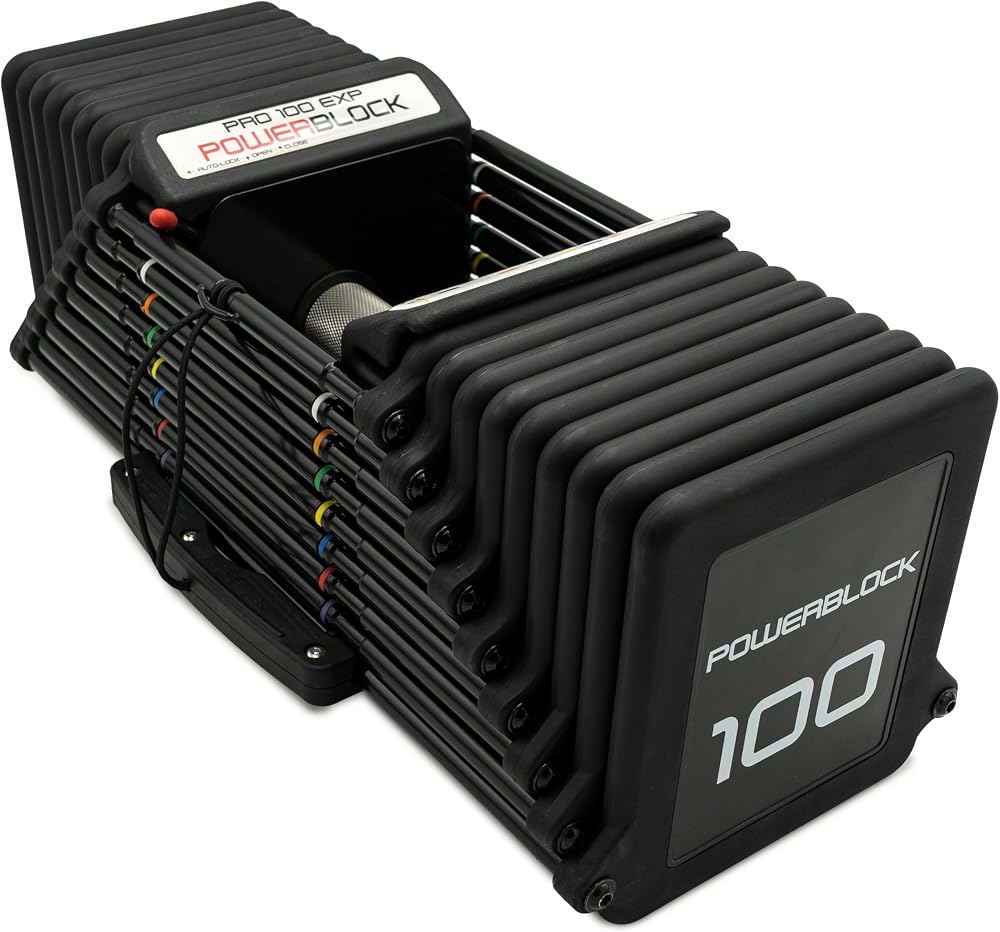
Block style types use nested weight blocks inside a cage like frame, and you move a selector pin to add or remove blocks. The shape stays compact and balanced at almost every setting, and the flat sides rest comfortably on your thighs before a press. The square profile can feel odd for curls at first, and pin changes take a few seconds longer than a dial turn when you switch weights often.
Plate Loaded Types
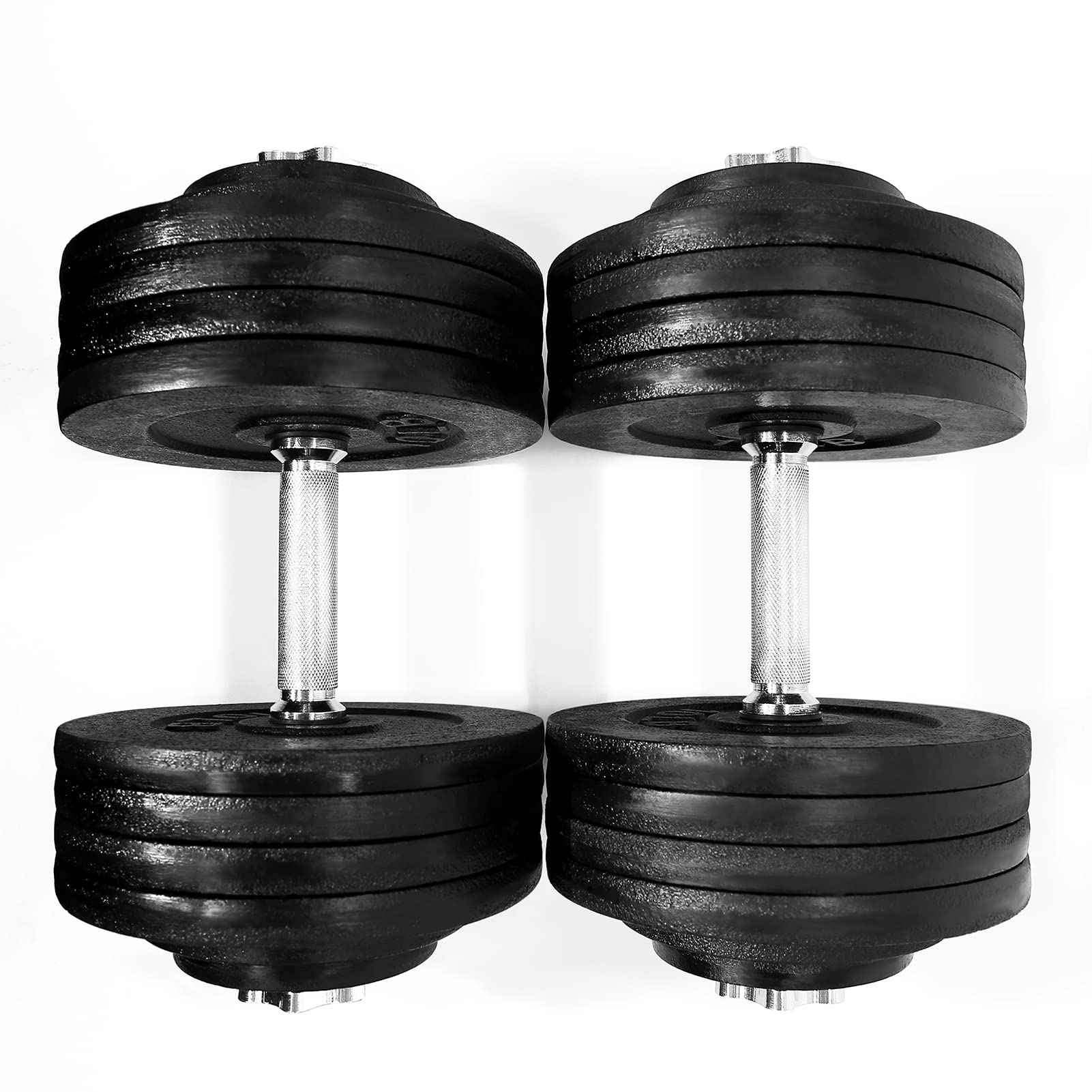
Plate loaded types work like small barbells. You slide plates onto each end of a handle and secure them with a collar or a threaded lock. They feel the most like fixed dumbbells and tend to shrug off heavy use for years. The cost is time, since every change means loading both ends of both dumbbells. They suit straight sets with long rests far better than fast paced sessions.
How to Compare These Dumbbells
Judge any heavy set on five points. Build quality comes first, since a lock or frame that flexes at 100 lb is a safety problem, not a quirk. Next check true weight capacity per hand, then footprint and storage, then noise in use, and finally the warranty and whether spare trays, pins, and collars are sold on their own.
Is a 100 Lb Set the Right Size for You?
A set that tops out at 100 lb per hand is a specialist purchase. It earns its price and floor space only if your training will use the upper half of the range now or within the next year or so. The three groups below get the most from that capacity.
Heavy Home Lifters Training Compound Moves
If you press, row, and do goblet squats or Romanian deadlifts at home with loads past 70 lb per hand, a lighter set already limits you. A 100 lb ceiling lets you keep adding load without buying fixed pairs for the top end. Prioritize locking security and a handle that stays comfortable under full load over raw change speed. Our guide to the best adjustable dumbbells for home gym covers the wider setup around a heavy pair.
Lifters Who Have Outgrown a 50 Lb Set
Many lifters buy a 50 lb or 52.5 lb pair first, then outgrow it on rows and presses within a couple of years. Moving straight to a 100 lb ceiling avoids a second mid size purchase you would outgrow again. Check that the new set still offers small steps at the low end, since you will use the light settings for warm ups and isolation work.
Two Lifters Sharing One Heavy Pair
Partners or family members with different strength levels can share one heavy pair when the range runs from light warm up weights to a full 100 lb. One person can press at 35 lb while the other rows at 85 lb in the same session, taking turns on the tray. Sharing works best with a dial or block type, since plate loading slows down every swap.
Key Features to Compare
Weight Range and Increments
Confirm that 100 lb means 100 lb in each hand, not the pair combined, and check whether reaching it needs expansion plates sold apart. Increments matter just as much. Steps of 2.5 lb or 5 lb let you progress on presses and curls, while jumps of 10 lb can stall smaller lifts for weeks. Some sets use fine steps at light weights and larger steps up high, which is a sensible pattern. Count the settings you will truly use, not just the headline ceiling.
Adjustment Speed and Locking
At heavy loads, the locking system is the heart of the dumbbell. Plates or blocks should seat with a clear click or a firm pin engagement, and nothing should shift or rattle when you shake the loaded dumbbell over its tray. Dial and pin systems change in seconds and suit drop sets, while collars and threaded locks take longer but give a simple, visible check. Whatever the system, both ends must show the same setting before you lift.
Handle Shape, Grip, and Balance
A handle that works at 30 lb can punish your hands at 90 lb. Look for a grip diameter you can close your fingers around fully, with texture that holds chalk and sweat without tearing skin. Balance counts too, since a much longer dumbbell at heavy settings changes the path of curls and presses. If thick grips are a concern, our guide to the best adjustable dumbbells for women covers smaller grip options.
Build Quality and Durability
Steel plates and reinforced frames handle heavy use better than thin plastic shells around the weight stack. A longer warranty on the frame and plates signals maker confidence, though coverage on moving selector parts is often shorter. Avoid any set whose plates wobble at mid range settings, since that play usually grows as parts wear.
Footprint, Tray, and Stand Options
A pair at this weight needs a stable home. Trays keep unused plates organized and protect the selector parts, but they add length, so measure your floor area with the tray included. A stand raises the pair to a height that spares your back when you pick up a heavy setting.
Noise and Floor Protection
Metal plates and blocks make noise when they meet a tray or the floor, and at 100 lb the sound and the impact both grow. Rubber coated plates and padded trays soften contact, and a thick mat under the storage spot absorbs the rest. If you train early or late with others sleeping nearby, favor coated weights and set every rep down under control.
How Much Should You Spend?
Expect a true 100 lb per hand pair to cost far more than a light starter set. Plate loaded pairs often land at about $400 to $700, while dial and block style pairs commonly run about $600 to $1,000, with stands and expansion kits adding more. Spending more mainly buys faster changes, finer increments, and stronger frames, not extra weight. Most heavy sets skip app linked tracking, and a paid program subscription is rarely worth it for lifting alone.
Common Mistakes to Avoid
- Buying on the headline weight alone, then finding the set reaches 100 lb only with expansion plates sold separately.
- Choosing 10 lb jumps for every setting, which stalls progress on presses and curls that need smaller steps.
- Dropping adjustable dumbbells after a hard set, which can bend selector parts and crack trays.
- Setting the two ends to different weights, which unbalances the dumbbell and strains your wrist.
- Storing the pair on bare concrete, where damp and grit work into the mechanism over time.
- Skipping the stand to save money, then lifting a 100 lb pair off the floor cold at every session.
How to Make Your Adjustable Dumbbells Last Longer
Return the dumbbells to the tray or stand after every session so plates, pins, and collars stay together and off the floor. Keep the set indoors in a dry spot, and lift it onto a mat rather than dragging it. Before heavy sets, give each end a firm tug and a shake over the tray to confirm the lock is fully seated. Inspect handles, collars, and selector parts monthly for cracks or bent pins, and stop using a damaged end until the maker advises on repair.
FAQ
What size adjustable dumbbells do you need for heavy training?
Start from your current working weights. If your heaviest dumbbell move already uses about 70 lb or more per hand, a 100 lb ceiling gives you room to grow for years. If your top load is near 40 lb, a smaller set will serve you for a long time at a lower price. One check is to add your likely two year progress to your current top weight, then buy the ceiling just past that figure.
How long do 100 lb adjustable dumbbells last with regular use?
A well built set used three or four times a week can last many years, since the plates themselves rarely wear out. The selector parts, pins, and trays usually show wear first. Before you buy, check whether the maker sells spare pins, dials, and trays on their own, since easy access to small parts can extend the life of the whole set well past the warranty period.
Are expensive 100 lb adjustable dumbbells worth the extra cost?
They can be, if the premium buys finer increments, faster changes, and a stronger frame you will use for a decade. Compare the price with the cost of fixed pairs covering the same range, plus the rack those pairs would need. Where higher prices only add app features or styling, the value is weaker. New lifters may prefer our guide to the best adjustable dumbbells for beginners first.
How do you clean 100 lb adjustable dumbbells without harming the mechanism?
Wipe handles and plates with a cloth that is damp, not wet, then dry everything before returning the set to its tray. Never spray cleaner straight into a dial, pin slot, or collar thread, since liquid can carry grit deeper and wash away factory lubricant. A soft brush clears chalk dust from grip texture well. If plates have rubber coating, skip harsh solvents, which can dry and crack the surface.
Can beginners train safely with a 100 lb adjustable dumbbell set?
Yes, as long as you start at the lowest settings and treat the top end as a goal, not a starting point. A heavy capable set changes weight in small steps, so early sessions can look exactly like training with a light pair. Add one habit from day one: after each change, check that both dumbbells match and each end shows the same number. That quick check prevents the uneven loads behind most early mishaps.
Do 100 lb adjustable dumbbells need a stand?
A stand is optional, but at this weight it helps more than with light sets. Picking up a dumbbell set near 100 lb from floor level, cold, at the start of every session loads your lower back in its weakest position. A stand brings the handles to a height where you can grip, brace, and lift with better form. If space rules out a stand, store the pair on a low, sturdy platform.
Final Thoughts
The right heavy set is the one whose ceiling, increments, and locking system match your training. Dial types change fastest, block types stay compact and balanced, and plate loaded types feel most like fixed weights. Measure your space, confirm the true per hand capacity, and use the product table above to compare the types again. Chosen well, the best 100 lb adjustable dumbbells can be the last pair your home gym needs.


