
Best 7 Piece Knife Sets (2026): Sizes, Types and Prices
Disclosure: We may earn a commission when you buy through links on this page, at no extra cost to you. As an Amazon Associate I earn from qualifying purchases. Learn more

Choosing the best 7 piece knife set? A seven piece set covers daily prep for most small households.
Your current knives live loose in a drawer, the one you reach for most is dull, and dinner prep takes longer than it should. The best 7 piece knife set solves that daily friction without filling your counter the way a large block does. This guide helps you choose by space, household size, and budget, and the comparison table below sums up the main types at a glance.
Seven pieces sounds precise, yet brands count pieces in different ways, so two sets with the same label can hold different tools. Reading the piece list matters more than the number on the box. If you are also weighing other sizes, start with our guide to the best knife set and then return here to judge this size on its own merits.


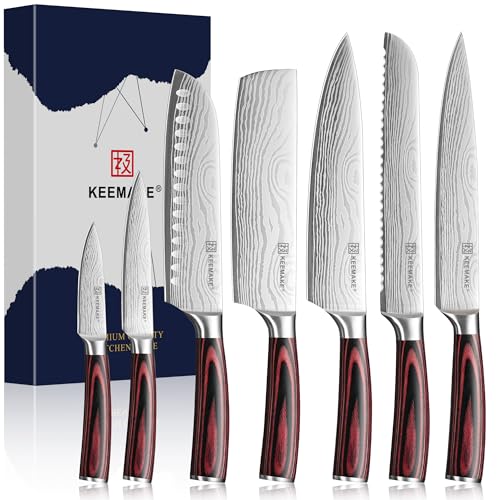
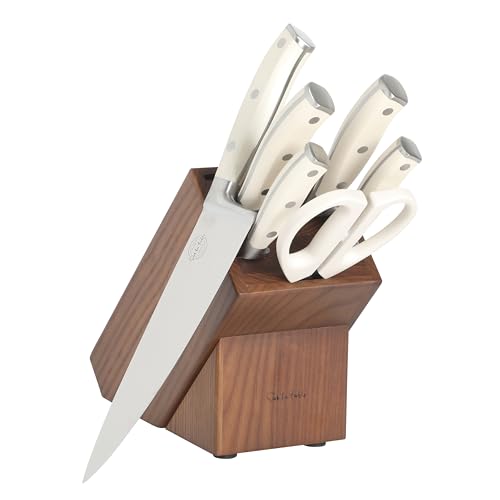


Quick Answer: What a Good Seven Piece Set Gives You
For most homes, the right set covers daily prep with a chef knife, a bread knife, a utility knife, and a paring knife, plus storage and one useful extra. That mix handles vegetables, proteins, bread, and small trimming jobs without paying for specialty blades you may use twice a year. Three builds dominate: a classic block set, a compact set for small kitchens, and a heavier forged set for households that cook most nights.
Before You Buy: A Quick Checklist for Choosing a Knife Set
Work through these points in order, because size and routine should narrow your list before steel grades and prices enter the picture.
Size: Match It to Your Space
Count blades, not pieces, before you judge any set. In many seven piece sets the block, a honing steel, and kitchen shears take three of the seven slots, which leaves only four actual knives. Four well chosen blades can still cover daily cooking, but you should know that is what you are buying. Measure the counter spot where a block would sit, including height clearance under cabinets, and check that open drawers will not strike it during busy cooking.
Which Type Fits Your Routine
Match blade style to the food you cook most weeks. German style blades are thicker and heavier, with a curved edge that suits a rocking chop through root vegetables and herbs. Japanese style blades are thinner and lighter, with a straighter edge that suits clean slicing of fish, cucumbers, and ripe tomatoes. If your household does a mix of both, a middle weight blade with a gentle curve is the safer daily choice for cooks of different skill levels.
Features Worth Paying For and Ones to Skip
Pay for safe storage, a honing steel you will actually use, and shears that come apart for washing. A block with correctly sized slots protects edges and keeps sharp blades away from searching fingers. Skip extras that inflate the piece count without adding a cutting task, such as tiny knives that duplicate the paring knife. A sharpener built into a block slot can help beginners, yet decorative finishes add cost while doing nothing for the way a blade cuts food.
Steel Type and Hardness
Most sets in this size use stainless steel, which resists rust and tolerates a busy family kitchen where a knife may sit wet for a few minutes. High carbon stainless blends add better edge holding while keeping that rust resistance. Hardness is listed on the Rockwell scale, often shortened to HRC, and many home sets fall around 54 to 58 HRC. Softer steel dulls sooner but sharpens quickly and resists chipping, while harder steel holds an edge longer and needs more care when you sharpen it.
Blade Geometry: German and Japanese Styles
Geometry decides how a blade moves through food more than the steel name does. A German profile has a pronounced belly, so the edge rolls smoothly from tip to heel during a rocking chop. A Japanese profile is flatter and thinner behind the edge, so it slices with less wedging in onions and apples. Shoppers who want to study the lighter slicing style can read our guide to the best japanese knife set before deciding which profile belongs in their kitchen.
Handle, Bolster and Balance
Hold the set description against your own hands and habits. A handle should fill your palm without forcing your fingers open, and its surface should stay secure when your hands are damp from washing produce. A full bolster adds weight near the middle and can protect fingers, while a half bolster lets you grip closer to the blade for controlled cuts. Good balance sits near the point where handle meets blade, so the knife feels neutral rather than tip heavy or butt heavy.
Realistic Budget Ranges
Expect clear steps in what your money buys at this size. Sets at about $50 to $100 usually use stamped blades, lighter handles, and a basic block, which can still serve a first apartment well. Sets at about $100 to $250 often add forged blades, better balance, and sturdier blocks. Sets at about $250 to $500 focus on harder steel, finer finishing, and handles shaped with more care. Spending past that brings smaller gains for most home cooks, so let fit guide you before price.
Types Compared: Three Ways Seven Piece Sets Are Built
Since this guide names no specific products, use these three builds as your shortlist, described by construction rather than by brand.
Classic Block Sets for Most Homes
A classic block set stores four or five blades upright in a wood or composite block beside your prep area. This layout keeps the chef knife and paring knife within one step of the board, which suits families who cook varied meals through the week. Slots also guard edges from the knocks that dull knives in drawers. If this layout appeals to you, compare it with the wider options in our guide to the best block knife set to see how slot counts change the footprint.
Value Sets for Tight Budgets and First Kitchens
Value sets keep costs down with stamped blades cut from a flat sheet of steel, simple handles, and a compact block. They weigh less, which new cooks often find less tiring during long chopping sessions for soup or a party tray. The trade off is edge life, since softer stamped steel needs honing more often to keep cutting cleanly. For a renter or a student kitchen, that upkeep is a fair exchange for a low entry price.
Forged Sets as a Longer Term Choice
Forged sets start from a single piece of heated steel shaped under pressure, which gives the blade a bolster, a thicker spine, and a weightier feel. Many cooks find that weight reassuring when cutting dense squash or a whole chicken. These sets cost more and reward owners who wash blades by hand and store them with care. Households training a serious home cook may also want to see the best professional knife set options to understand the next step up in build quality.
How to Compare Seven Piece Sets Without Guessing
Start with the piece list and name the job of every slot, since a set earns its price only when each piece does distinct work. Next, note the steel type and hardness for the chef knife, because that blade does most of your cutting. Then check block dimensions against your measured counter space, and weigh cost against what you already own.
Is a 7 Piece Knife Set the Right Size for You?
For households of one to four people who cook at home several nights a week, the best 7 piece knife set is usually the sweet spot. You get the four core blades plus storage and support tools, without paying for steak knives bundled into sets of fourteen or twenty pieces. Choose a smaller five piece set if your kitchen has almost no counter space and you rarely bake bread. Choose a larger set if you host dinners often, or add one specialty blade separately if you fillet fish weekly.
Common Mistakes to Avoid
- Buying by piece count alone, because the block and shears may leave you with fewer blades than you expected.
- Choosing a block that is too tall for your cabinets, so it ends up exiled to a distant corner away from your board.
- Paying for steak knives in a seven piece set when your household rarely serves steak, which wastes slots you needed for prep blades.
- Ignoring handle fit for the smallest hands in the house, since an oversized grip makes careful cuts feel clumsy and tiring.
- Putting new knives loose into a crowded drawer, because edges bang against other tools and dull within weeks.
Cost of Ownership and Care
Ownership costs stay low for this product, yet they are not zero. Budget for a honing steel if your set lacks one, a whetstone or a professional sharpening visit once or twice a year, and a replacement block if slots wear loose. Hand washing with warm water and mild soap, followed by prompt drying, protects edges and handles from dishwasher heat. Our guide on how to sharpen kitchen knives walks through the basic method when honing no longer restores the edge.
Storage shapes how long your set stays sharp. A block, a magnetic strip, or a tray inside a drawer all work, as long as blades never rest edge against edge. Keep block slots clean by shaking out crumbs, since grit can scratch a blade each time you slide it home. For more on storage choices, read our article on how to store kitchen knives.
FAQ
Are knife sets worth it compared with buying knives one at a time?
A set is worth it when its blade mix matches your weekly cooking and you own no good knives yet, since one purchase gives you matched storage and the core shapes at once. Buying one at a time wins when you already own a chef knife you love, because you can add only the gaps and spend more on each piece. Compare the set price with the cost of the three blades you need most to decide.
How many knives should a kitchen have for two cooks working together?
Two cooks working at the same time need two full size blades, since sharing one chef knife slows both people down and invites rushed handoffs. A seven piece set gives you one chef knife, so the second cook often ends up with the utility knife, which works for smaller produce but not for a large onion or a melon. If you regularly cook side by side, plan to add a second chef knife.
Can seven piece knife set blades go in the dishwasher?
Some stainless sets may allow it, but dishwasher cycles still work against your knives in three ways. Racks let edges knock against plates and other tools, heated drying can stress handle materials, and strong detergents can spot the steel. Hand washing takes about a minute per blade right after prep, while food is still soft and easy to remove. That small habit keeps edges sharper for longer, so treat the dishwasher as an emergency option only.
How often should you hone the knives in a seven piece set?
Hone the chef knife and utility knife lightly every few uses, since these blades meet the board most often and their edges roll out of alignment quickly. The bread knife needs no honing because of its serrated edge, and the paring knife needs it less often because it mostly cuts in the air or on soft produce. A few calm strokes per side are enough, because honing realigns an edge rather than removing metal.
What size knife set does a family that hosts Sunday dinners need?
A family hosting Sunday dinners needs enough table knives for guests, which a seven piece set does not provide, since its slots go to prep blades and storage. For six guests you would need six steak knives alone, nearly doubling the piece count. Hosts often do better with a seven piece prep set plus a separate steak knife set for the table.
Final Thoughts
Judge every set by its blade list, its fit on your counter, and how its handles feel in daily use. The best 7 piece knife set for your home is the one whose blades cover your weekly meals and whose storage suits your space. Use the product table above to compare builds, then choose the type that matches your routine.


