Best 5 Piece Knife Set: Buying Guide (2026)
Disclosure: We may earn a commission when you buy through links on this page, at no extra cost to you. As an Amazon Associate I earn from qualifying purchases. Learn more

German or Japanese style, block or sheaths: how to choose a compact 5 piece knife set for everyday prep.
Picture a weeknight dinner in a small apartment kitchen. You are slicing an onion with a dull knife that came with the rental, and the board keeps sliding because the drawer is too crowded for a big block. A compact set built around the knives you reach for daily solves both problems. This guide to the best 5 piece knife set options for real homes walks through fit for your space, your household size, and your budget, and the comparison table below sums up the main styles side by side.




Quick Answer: What a Typical 5 Piece Set Covers
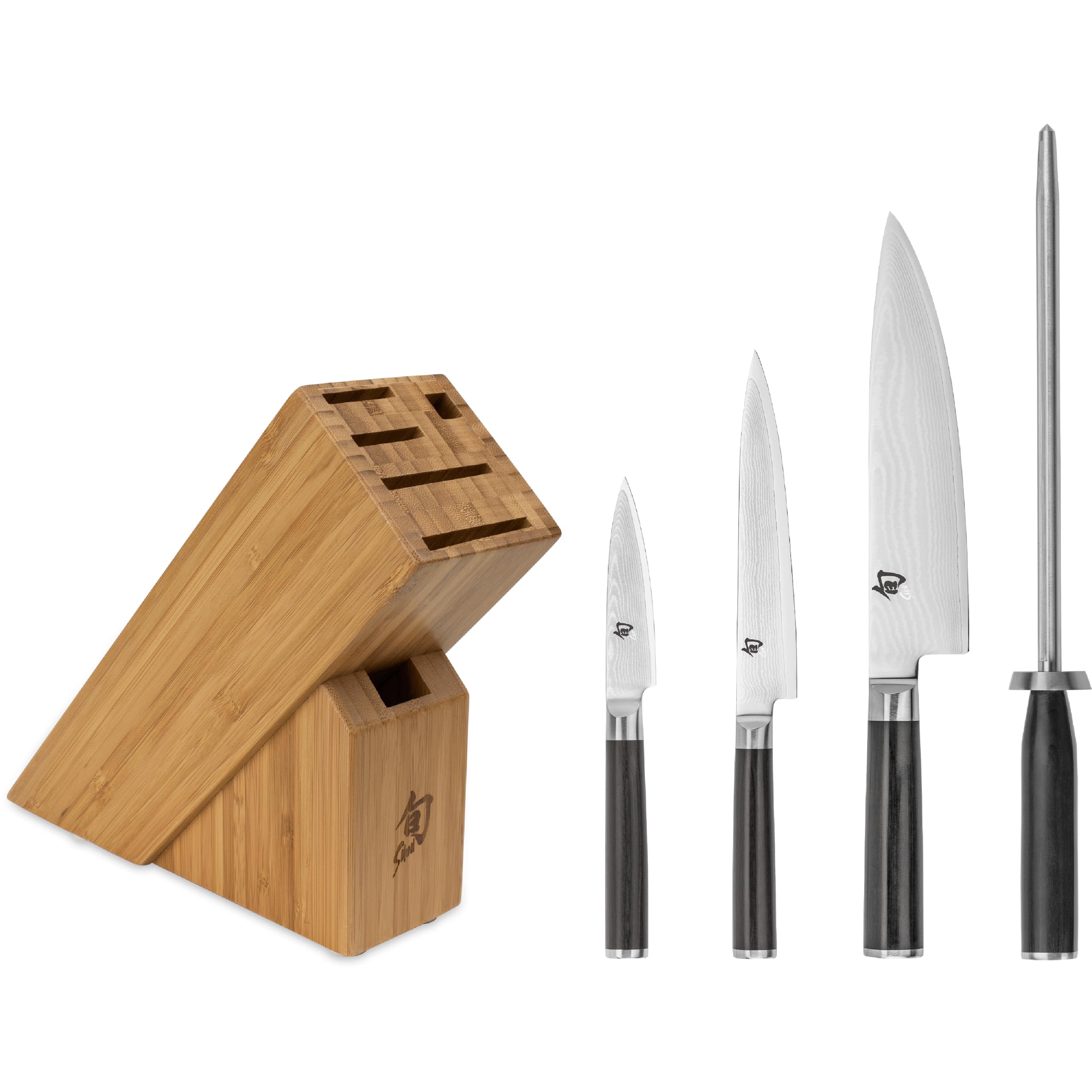
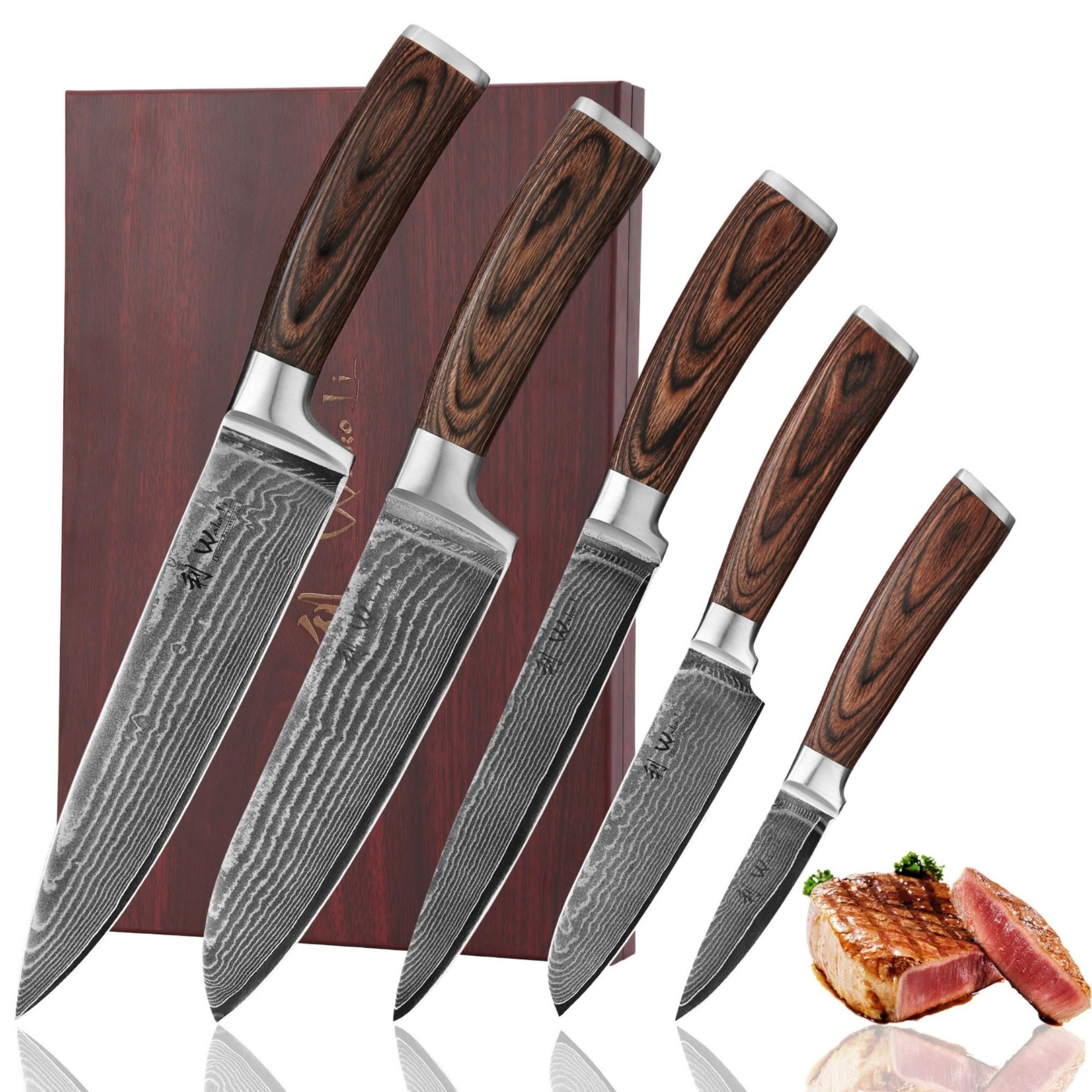
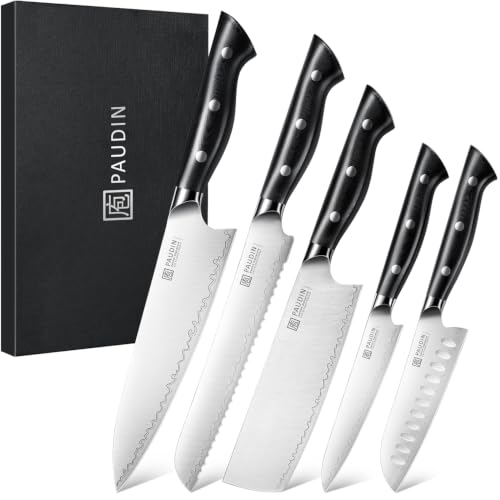
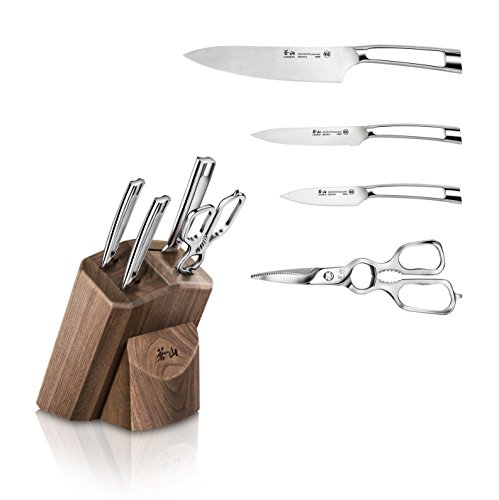
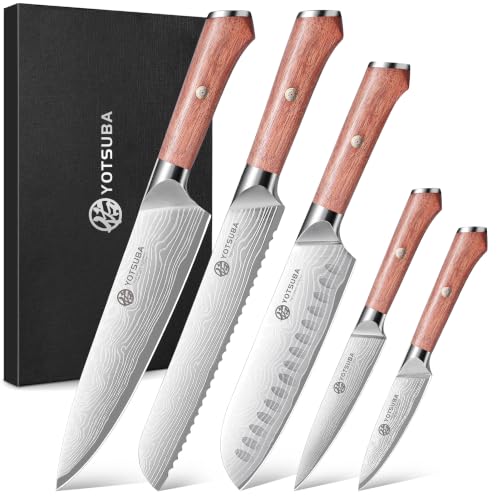
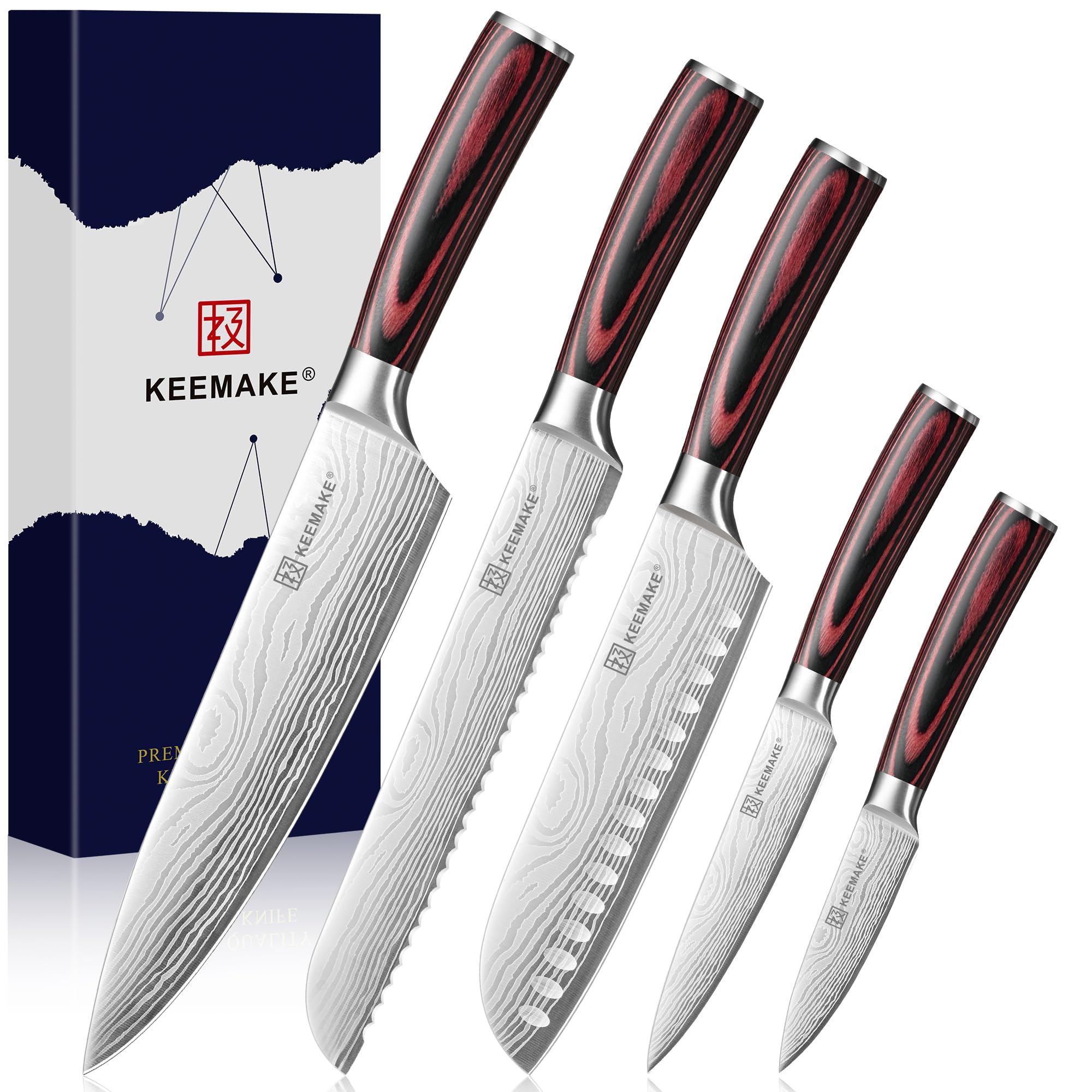
Most five piece sets pair a chef knife or santoku with a utility knife, a paring knife, and either a bread knife or kitchen shears, all stored in a block or tray. That mix handles the large share of everyday prep, from breaking down a chicken to trimming strawberries. If you cook for a crowd most nights, a larger set may serve you better, and our guide to the best knife set sizes explains how the counts compare.
Before You Buy: A Quick Checklist for Choosing a Knife Set
Size: Match It to Your Space
Count your storage before you count knives. A counter block needs roughly a square foot of clear space plus room to pull blades out at an angle, so measure the gap under your upper cabinets first. Renters and small kitchens often do better with an in drawer tray or a magnetic strip on the wall, both of which keep counters clear. Sets run from 3 piece starter kits up through 20 piece collections padded with steak knives and tools, and five pieces sits at the lean end. Choose the count that matches the meals you actually cook each week, not the holiday feast you host once a year.
Which Type Fits Your Routine
German style knives use thicker blades and a pronounced curve that suits a rocking chop, while Japanese style knives are thinner and lighter for a straight up and down cut. Damascus refers to layered steel with a patterned finish, pretty but mostly about looks at this size. Stainless steel resists rust in humid kitchens, while high carbon steel takes a finer edge but needs drying right after washing. Ceramic blades stay sharp yet chip on bones and frozen food. Forged blades, shaped from a single piece of steel, tend to feel sturdier than stamped blades cut from sheet metal.
Features Worth Paying For, and Ones to Skip
A block protects edges and keeps blades away from fingers, and a magnetic block does the same job while showing the whole set at a glance. Sheaths matter if your knives will live in a drawer, since bare edges dull fast against other utensils. A roll bag suits cooks who carry knives to a class or a second home. Built in sharpeners sound handy, yet the preset angle rarely matches every blade in the set, so treat that slot as a bonus rather than a reason to buy. Steak knives rarely belong in a five piece set, because they crowd out a prep knife you would use daily.
Steel Type and Hardness
Hardness is rated on the Rockwell scale, shown as HRC. Softer German style steel often lands around 56 to 58 HRC, which dulls sooner but shrugs off rough use and sharpens quickly on a basic steel. Harder Japanese style steel, often around 60 to 62 HRC, holds a fine edge through weeks of prep but can chip if you twist the blade in a squash or pry at a lid. For most home cooks, the middle ground near 58 to 60 HRC balances edge life with forgiveness. Whatever the rating, plain stainless with no exotic claims is fine for daily cooking.
Blade Geometry: German vs Japanese
Geometry shapes how a knife moves through food. German profiles curve along the edge, so the blade rocks through piles of herbs and garlic with the tip staying on the board. Japanese profiles run flatter, which suits push cutting neat rows of cucumber or onion. Edge angle matters too. A wider angle near 20 degrees per side feels sturdy for hard vegetables, while a narrower angle near 15 degrees per side glides through ripe tomatoes but needs gentler handling. If you are drawn to the thinner style, our roundup of the best japanese knife set options covers that shape in more depth.
Handle, Bolster, and Balance
Balance decides whether a set feels tiring by the third onion. A full bolster, the thick band of metal between blade and handle, adds weight and a finger guard, while a half bolster leaves more of the edge usable for sharpening. Wood handles look warm but need oiling, and molded synthetic handles grip well with wet hands. The knife should rest neutrally where blade meets handle, not tip forward or drag backward. Smaller hands often prefer a shorter handle with a slim grip.
Realistic Budget Ranges
Under about $50, expect stamped stainless blades, light handles, and a simple block, fine for a first apartment. Around $100 to $200, forged blades, better balance, and sturdier blocks become common, and this is where most households get the best value. Near $300, you pay for harder steel, finer finishing, and handles that feel shaped rather than molded. Above that, gains shrink for everyday cooking, and the money often goes to appearance. Leave room in the budget for a honing steel and a decent cutting board, since both protect the edge you just paid for.
Three Styles of 5 Piece Set Compared
Instead of chasing a single winner, match the style to your home. The first style is the classic block set in German steel, built for cooks who chop heartily and want blades that forgive a busy week. The second is the compact Japanese style set, often sold with a slim magnetic block or tray, aimed at smaller kitchens and cooks who value light, precise cuts. The third is the storage flexible set with sheaths and no block at all, which suits renters who cannot drill into walls and anyone short on counter space. Each style can be the right answer, depending on your cabinets and your cooking habits.
Think about who else uses your kitchen. A shared household with teens or roommates usually does better with sturdy German style blades and a block that keeps edges covered. A couple cooking mostly vegetables and fish may love the lighter Japanese style. If a full block set appeals to you most, compare shapes in our guide to the best block knife set styles before you decide. Cooks building a long term kit for serious daily use can also see how the best professional knife set category differs in steel and handle design.
How to Evaluate a Set Before You Order
Start with the maker spec sheet rather than the listing photos. Confirm the steel type, the hardness rating, the blade lengths, and whether the stated piece count includes the block itself, since some brands count storage as a piece. Read buyer reviews with an eye for repeated comments about rust spots or loose handles, since patterns matter more than any single complaint. Check the warranty length and the return window too, because grip comfort is personal and hard to judge from a screen.
Is a 5 Piece Knife Set the Right Size for You?
Five pieces fit households of one to four people who cook a handful of meals at home each week. You get the core prep knives without paying for duplicates, and every slot in the block earns its place. Move up a size if you regularly cook two proteins at once or want a dedicated carving knife. Move down only if you truly cook simple meals, since a 3 piece set leaves no bread knife and no spare when the chef knife is in the wash. For most real homes, five pieces is the smallest count that still feels complete.
Common Buying Mistakes to Avoid
- Counting the block as a knife, then feeling shortchanged when only four blades arrive.
- Buying a tall block that cannot fit under low upper cabinets, so it ends up exiled to a corner.
- Paying for extra features like a built in sharpener while skipping basics such as a paring knife.
- Putting good knives in the dishwasher, where heat and jostling dull edges and crack handles.
- Choosing the hardest steel available, then chipping it on frozen food or bones.
- Ignoring the cost of a board and a honing steel, which the set needs from day one.
Cost of Ownership and Care
The purchase price is only part of what a set costs you. Budget for a honing steel at around $15 to $30, a sharpener later on, and a wood or plastic board that will not wreck your edges the way glass boards do. Hand wash and dry each knife right after use, and store blades in the block, on a strip, or in sheaths rather than loose in a drawer. Our walkthrough on how to store kitchen knives covers safe options for tight spaces. Hone little and often, and a mid range set can serve a household well for many years.
FAQ
How many knives should a kitchen have?
Most home kitchens run well on three core knives, a chef knife, a paring knife, and a serrated bread knife, with a utility knife as a handy fourth. A five piece set adds storage and one flexible extra, which covers nearly all daily prep. Extra specialty blades only earn their space if you fillet fish or carve roasts often. Start with the core, cook for a month, and let your actual meals tell you whether anything is missing.
Are knife sets worth it compared with buying knives one by one?
A set usually costs less than the same knives bought singly, and the blades share one storage solution that fits your counter from the start. Buying one by one lets you pick each shape and handle separately, which suits cooks with strong preferences. For a first real kitchen or a household replacing worn out knives all at once, a set is the simpler and cheaper route. If you already own one knife you love, build around it instead of duplicating it in a set.
What knives do I really need in a 5 piece set?
Look for a chef knife around 8 inches, a paring knife near 3 to 4 inches, a utility knife in between, and a serrated bread knife, plus the block or tray as the fifth piece in many sets. Some sets swap the bread knife for kitchen shears, which helps if you spatchcock chicken or open packaging often but hurts if you bake crusty loaves weekly. Check the exact list before ordering, because the label five piece tells you the count, not the contents.
How often should I sharpen the knives in a 5 piece set?
Honing and sharpening are different jobs. A honing steel straightens the edge and can be used weekly or even before each big prep session, while true sharpening removes metal and is needed only a few times a year for most home cooks. A good test is slicing a ripe tomato. If the blade skids on the skin instead of biting in, it is time to sharpen. The step by step guide on how to sharpen kitchen knives explains stones, angles, and when a professional service makes sense.
Can I put a 5 piece knife set in the dishwasher?
It is best not to, even when a listing calls the knives dishwasher safe. High heat can warp handles and loosen rivets, detergent is abrasive, and blades bang against racks and other utensils, which dulls and nicks the edge. Hand washing takes under a minute per knife with warm water and mild soap, and drying right away prevents water spots and rust on higher carbon blades. Treat the dishwasher claim as a durability note, not a care instruction.
What makes the best 5 piece knife set different from a cheap one?
Steel quality and handle balance matter most, followed by how the knives are stored. A set with a forged chef knife, a paring knife and a bread knife that you actually use beats a longer set padded with rarely used pieces.
Final Thoughts
The right set fits your cabinets, your hands, and the meals you cook most weeks. Match the count to your household, pick a steel and shape that suit your cutting style, and save part of the budget for storage and care. When those basics line up, the best 5 piece knife set for your home stops being a guess and becomes an easy daily tool. Use the product table above to compare the main styles once more before you order.