
Best 500Wh Portable Power Station: Buying Guide (2026)
Disclosure: We may earn a commission when you buy through links on this page, at no extra cost to you. As an Amazon Associate I earn from qualifying purchases. Learn more

Everyday, solar ready or UPS type: how to size and choose a 500Wh portable power station for outages and shared charging.
The lights flicker during a storm, the WiFi drops, and someone in the house still has a laptop battery at nine percent and a phone that needs charging before morning. That small, ordinary moment is exactly where the best 500wh portable power station earns its place. It is big enough to keep the essentials in a living room, bedroom, or home office running for hours, yet small enough to carry with one hand and store in a closet.
This guide helps you choose by room, by the number of people sharing it, and by budget. The comparison table below lines up the main types side by side, and the sections after it explain the specs that actually decide whether a unit fits your home.

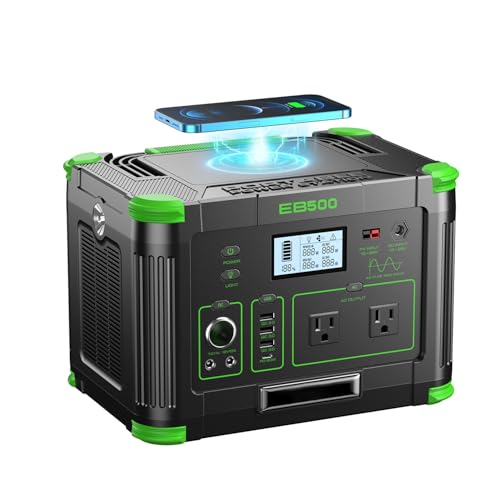


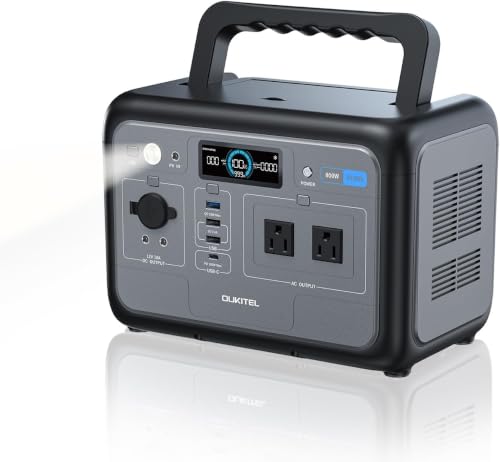
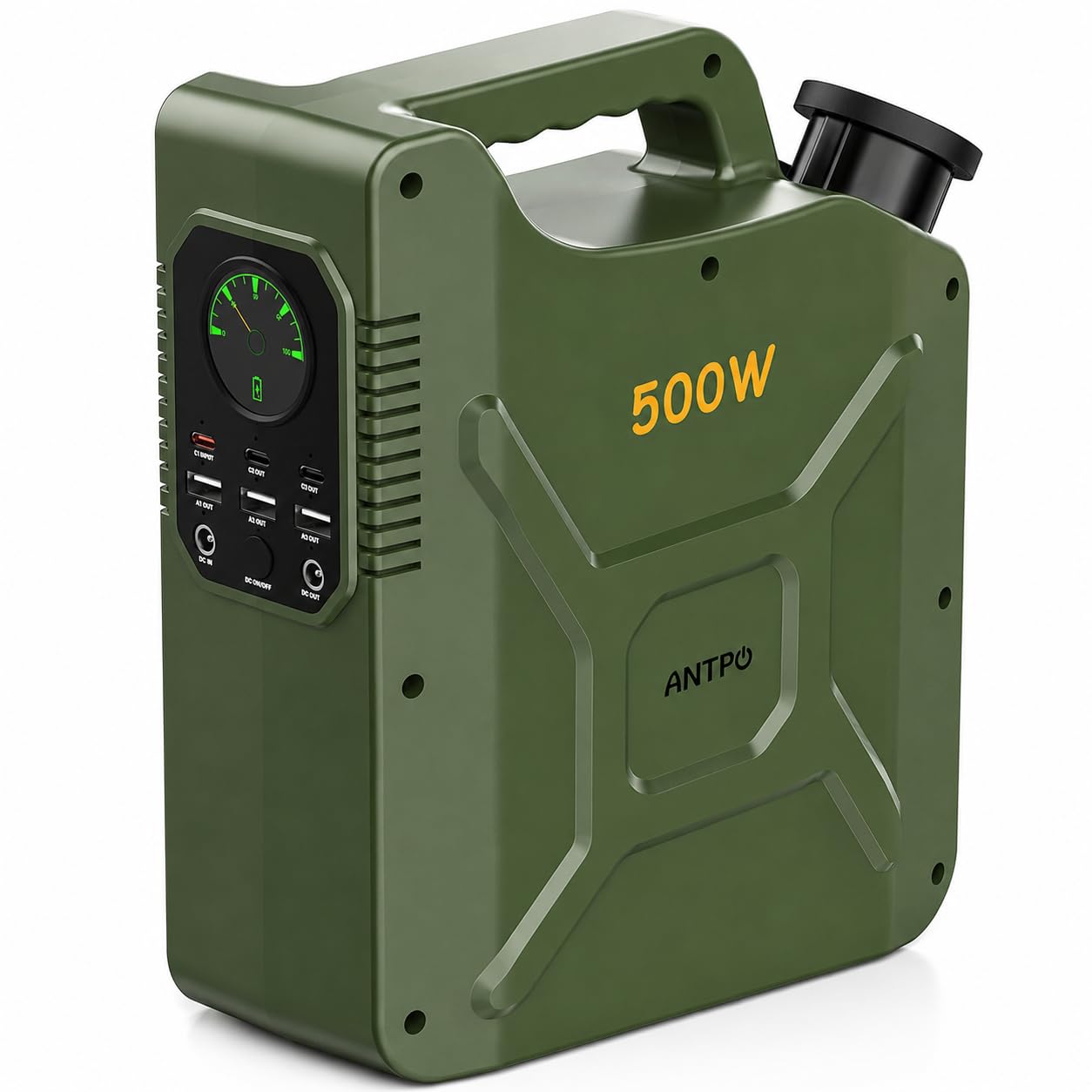

Quick Answer: The Three Types Worth Comparing
Nearly every model in this size class falls into one of three types, and picking the type first saves you from comparing spec sheets never meant for your situation. The first type is the compact everyday unit, built around a lithium iron phosphate battery, modest output, and a weight most adults can carry room to room easily. The second type is the solar ready unit, which adds stronger solar input and extra ports so it can recharge away from a wall outlet. The third type adds a UPS function, so it can sit beside a desk or router and take over the instant the grid drops.
If the station will travel to a campsite or a tailgate as often as it sits at home, start with our guide to the best portable power station for camping, since outdoor use rewards lighter weight and faster solar input more than extra outlets.
Before You Buy: A Quick Checklist for Choosing a Portable Power Station
Size: Match It to Your Space
Capacity is measured in watt hours, and the number tells you how much energy the battery holds. A 300wh unit suits phones, lights, and a laptop for an evening. A 500wh unit stretches that to a small TV, a router, and several devices through a longer outage. Stepping up to 1000wh or 2000wh adds appliances with heating elements or motors, but the box grows heavier and harder to store. For most apartments and family homes, 500wh is the point where usefulness rises faster than size, cost, and shelf space.
Which Battery Type Fits Your Routine
Most current models in this class use lithium iron phosphate cells, often shortened to LiFePO4. This chemistry tolerates far more charge cycles than older lithium ion cells, so a station you recharge weekly can keep most of its capacity for years. It also runs cooler and is more forgiving of being stored partly charged. Older lithium ion designs are sometimes lighter for the same capacity, which matters if you carry the unit often. For a station that mostly lives at home, cycle life usually matters more than a small weight saving.
Features Worth Paying For, and Ones to Skip
Pay for a pure sine wave inverter, since it delivers clean power that sensitive electronics such as laptops and medical devices handle safely. Pay for at least two AC outlets and both USB A and USB C ports if several people will share the unit. Solar input is worth it if you have a sunny balcony or yard; our guide to the best portable power station with solar panel explains panel pairing in detail. App control is a nice extra for checking charge from another room. Skip paying extra for built in speakers, decorative lighting, or wheels on a unit this light, since none of them help during an outage.
Compatibility Checklist
Before ordering, confirm four things. First, the AC outlets match your country and plug shapes. Second, the rated output in watts exceeds the largest single device you plan to run, with headroom for the surge many motors draw at startup. Third, the solar input limit, stated in watts and volts, matches the panel you own or plan to buy. Fourth, check the physical footprint against the shelf, cabinet, or corner where the station will live, including space for the charging cable to bend without strain.
Performance per Dollar
A fair way to compare value is to divide the price by usable capacity. Stations in this class often land somewhere around $0.60 to $1.00 per watt hour, and paying above that range should buy you something concrete, such as faster wall charging, a UPS function, or a longer warranty. A low price per watt hour means little if the inverter output is too weak for your devices, so weigh cost per watt of AC output as a second check before deciding.
Power Draw and Cooling Needs
Every station loses some energy as heat while converting battery power to AC power, and the cooling fan runs more as you approach the rated output. Place the unit on a hard, flat surface with the vents clear, never on a bed or under a blanket while it works. If quiet matters in a bedroom, look for a stated fan noise level and a silent charging mode, since some models let you slow the charge rate at night in exchange for near silent running.
Warranty and Brand Support
Look for at least a two year warranty, and check whether the maker sells replacement charging cables and offers support in your country. Battery capacity fades slowly over time, so a clear warranty process matters more than a long list of accessories. Keep your proof of purchase, and register the product if the brand offers it, since registration speeds up service.
Realistic Budget Ranges
Under $200, expect basic models with fewer ports and slower charging, fine for phones and lights. Under $300, you reach the heart of this class, with lithium iron phosphate cells and enough output for a TV or small fridge. Under $500, you are usually paying for a larger capacity class or premium extras such as expansion batteries. Under $1000 and under $2000, you have left the 500wh class entirely and entered whole room or partial home territory, which most buyers of this size do not need.
How to Judge Any 500wh Station Before You Order
Start with the maker spec sheet rather than the marketing banner, and note four numbers: usable capacity, continuous AC output, surge output, and rated cycle life. Then read verified buyer reviews with one question in mind, whether owners who run loads like yours report the runtime the math predicts. If you want a wider view of the category before narrowing down, our guide to the best portable power station covers every size class in one place. Treat any runtime claim that ignores inverter losses with suspicion, since real output is always lower than the nameplate capacity suggests.
Is a 500wh Portable Power Station the Right Size for You?
Do the simple math. Add up the watts of everything you want to run at once, then divide 500 by that total to estimate hours, and shave off about 15 percent for conversion losses. A router at 10 watts, two phone chargers at 15 watts, and a lamp at 10 watts could run for roughly twelve hours. A 40 inch TV at about 80 watts runs for around five hours. A full size fridge cycles on and off, so it may last a night but not a full day. If your list includes a space heater, a microwave, or a power tool, this class is too small, and our guide to the best portable power station for home backup covers the larger sizes built for that job. If you are still unsure where you land, the walkthrough at what size power station do i need turns your device list into a capacity target.
Common Buying Mistakes to Avoid
- Confusing watts with watt hours. Watts describe how strong the output is right now, while watt hours describe how long the battery lasts, and mixing them up leads to a unit that starts your device but dies within the hour.
- Ignoring startup surge. Fridges and pumps can draw two or three times their running watts for a few seconds, so a station rated only for the running number may shut down at the worst moment.
- Buying capacity you will never carry. A larger station sounds safer, but if it is too heavy to move to the room that lost power, the extra capacity helps no one.
- Skipping the replacement cost check. Solar cables, car charging leads, and expansion batteries add up, so price the accessories you know you will want before choosing the cheaper base unit.
Cost of Ownership and Care
Running costs are small. Charging 500wh from the wall costs only a few cents of electricity at typical home rates, and solar charging costs nothing beyond the panel itself. The real ownership cost is battery wear, and you control most of it. Store the station at roughly half to eighty percent charge in a cool, dry place, and top it up every three to six months if it sits unused. Avoid leaving it at zero charge for weeks, since deep discharge while stored shortens cell life. Keep the vents and fan intake free of dust with a dry cloth, charge it after every outage so it is ready for the next one, and run it through a full cycle a few times a year to keep the battery gauge accurate.
Your Questions, Answered
How long does a 500wh portable power station last on one charge?
It depends entirely on the load. Divide 500 by the watts your devices draw together, then reduce the result by about 15 percent for conversion losses. A 50 watt load lasts roughly eight hours, while a 200 watt load lasts about two hours. Loads that cycle, such as a fridge compressor, stretch longer than the plain math suggests because they rest between runs.
How do you charge a portable power station with solar panels?
Connect the panel to the solar input port with the cable supplied for that connector type, then place the panel in direct sun angled toward the light. A panel rated at 100 watts typically delivers 60 to 80 watts in real conditions, so refilling an empty 500wh battery takes most of a sunny day. Charge times printed on boxes assume perfect midday sun, so plan on longer in the morning, evening, or winter.
Can a 500wh power station run a CPAP machine overnight?
Often yes, with the right settings. Most CPAP machines draw about 30 to 60 watts, and turning off the heated humidifier and heated hose cuts that draw sharply, sometimes by half or more. On DC power through a car style adapter, the machine skips the AC conversion loss entirely and can run a full night or longer. If you depend on a CPAP, talk with your clinician about backup power needs for your prescribed settings.
How many years will a 500wh portable power station last?
Lithium iron phosphate models are commonly rated for about 3000 cycles before capacity falls to roughly eighty percent of new. At one full cycle per week, that is well over a decade of service, though calendar aging means real life is closer to eight to ten years. Units with older lithium ion cells are usually rated for far fewer cycles, which is the main reason the newer chemistry dominates this class.
Can you leave a portable power station plugged in all the time?
Models with a true UPS or pass through function are designed for this, and they switch to battery power within milliseconds when the grid fails, which keeps a router or desktop running without a restart. For other models, check the manual, since some makers advise against running loads while charging because it adds heat and wear. If you plan to leave the station connected permanently, choose one that states this use is supported.
What should I look for in the best 500wh portable power station?
Check the continuous AC output against your biggest device, the number of ports, solar input limits and whether the unit has a UPS function. Battery chemistry and warranty length matter for long term value.
Final Thoughts
For most homes, the best 500wh portable power station is the one whose type matches your routine: a compact everyday unit for outages and shared family charging, a solar ready unit if you can recharge off grid, or a UPS equipped unit guarding a desk and router. Use the product table above to compare the types against your device list, your rooms, and your budget. For a deeper walkthrough of sizing, charging, and safety checks before you buy, the power station buying guide pulls the whole decision into one place.


