
Best 50 Ft LED Strip Lights: Buying Guide (2026)
Disclosure: We may earn a commission when you buy through links on this page, at no extra cost to you. As an Amazon Associate I earn from qualifying purchases. Learn more

RGB, RGBIC or tunable white: how to choose a 50 ft LED strip for even brightness, smart control and a clean install.
Choosing a strip in this length sounds simple until you picture the far end glowing dimmer than the start, or a reel that stops a few feet short of the last corner. The best 50 ft led strip lights solve both problems with even brightness, a color range that suits your room, and a power setup built for a long run. The comparison table below groups the main types by brightness, color, and how they install, so you can match a type to your space before you buy.


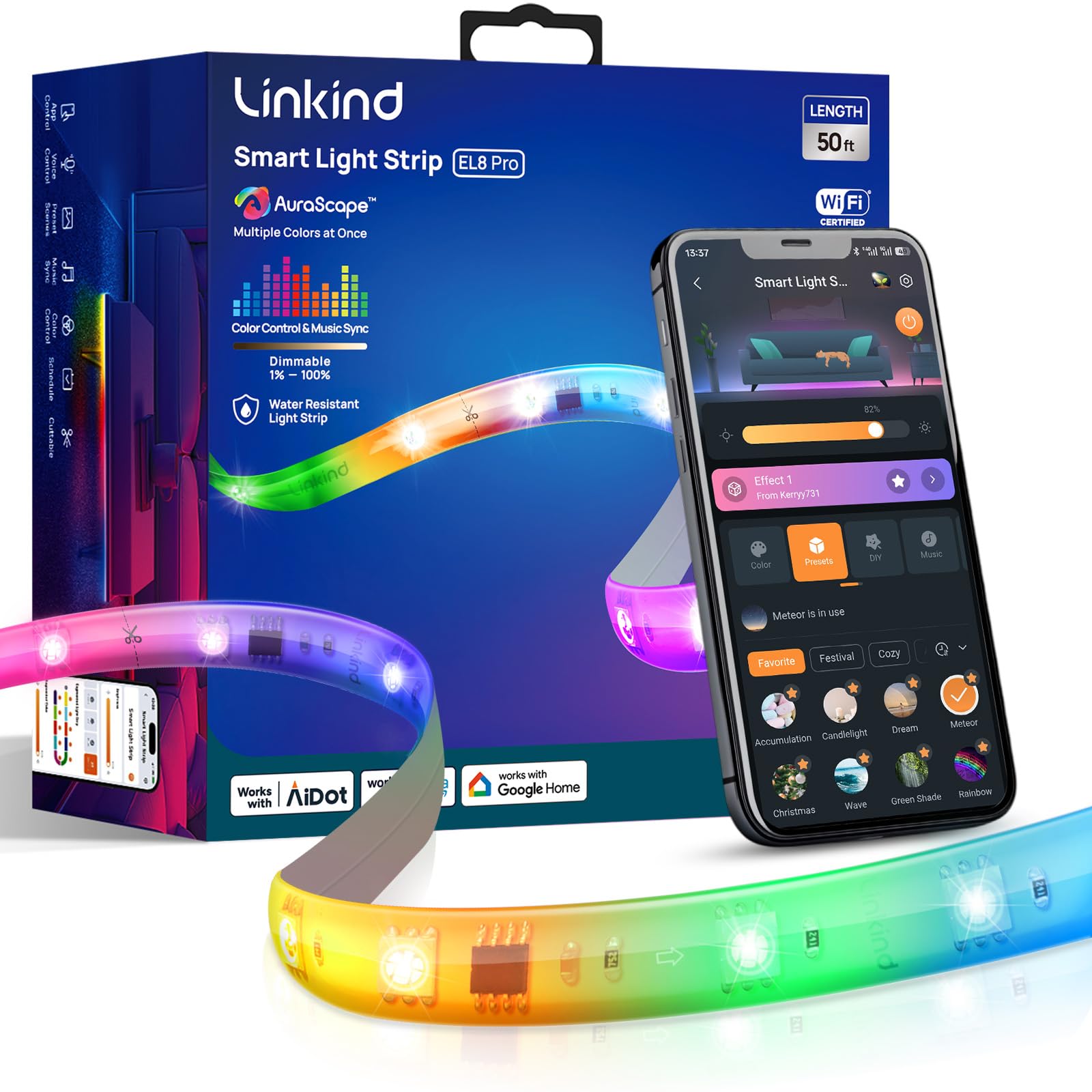
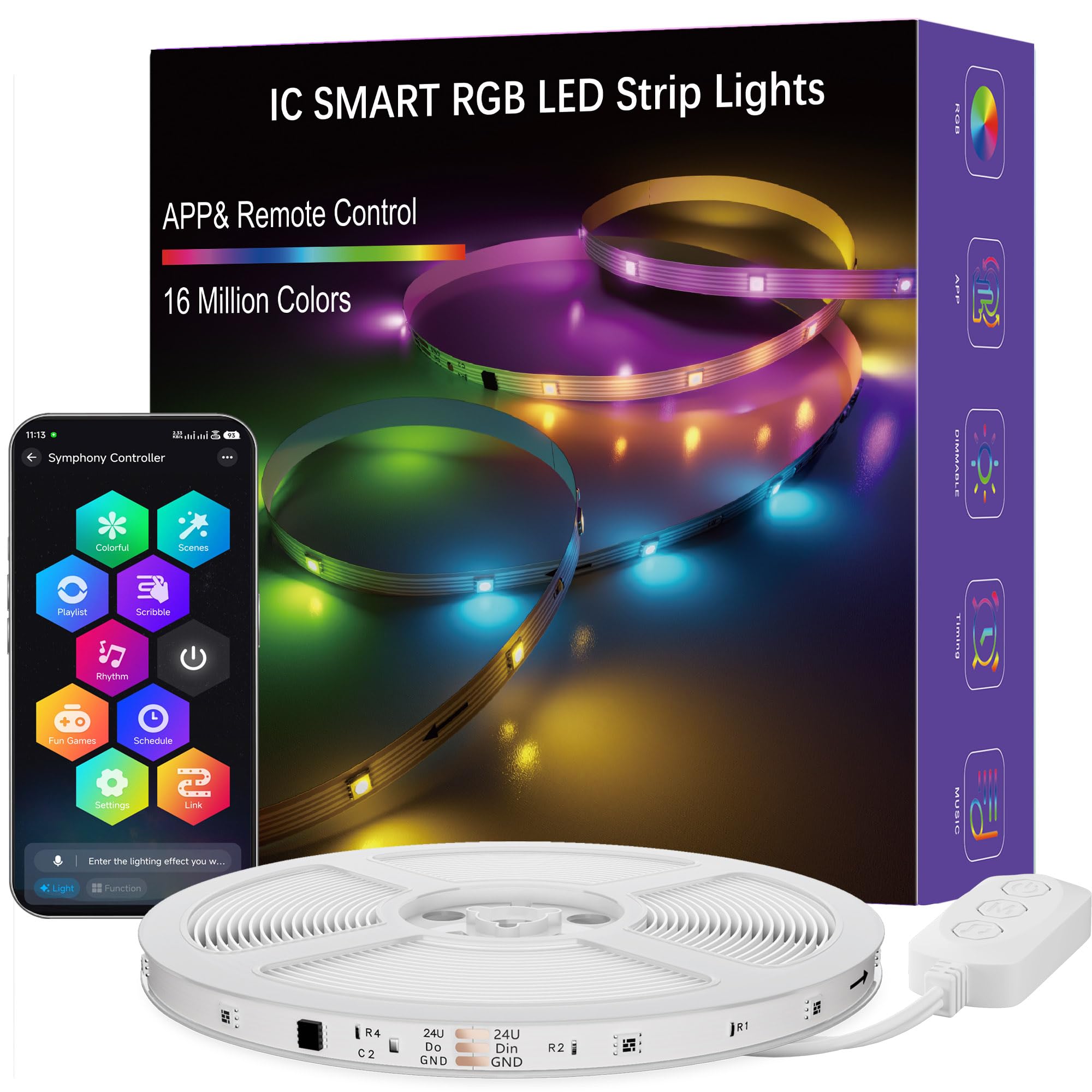

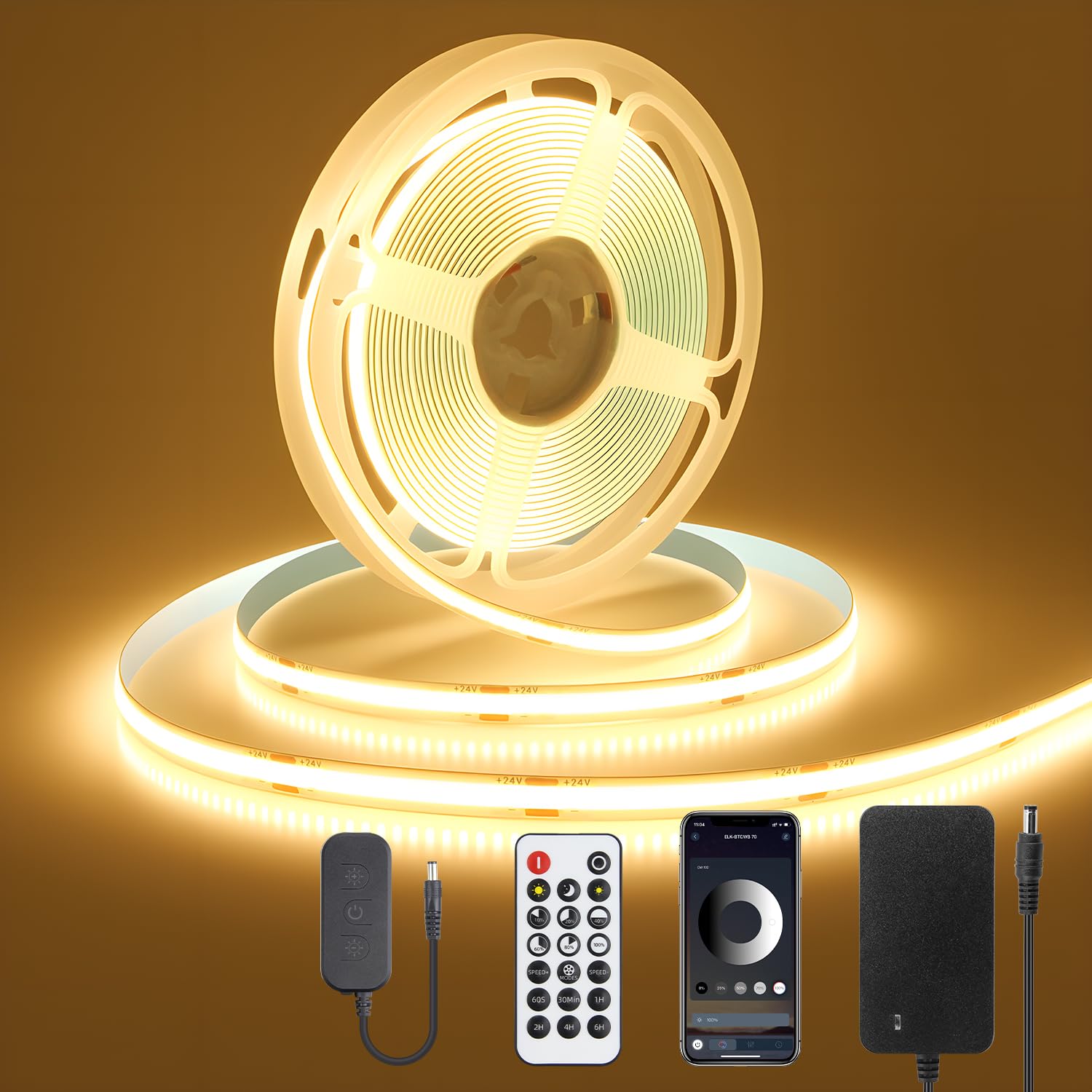


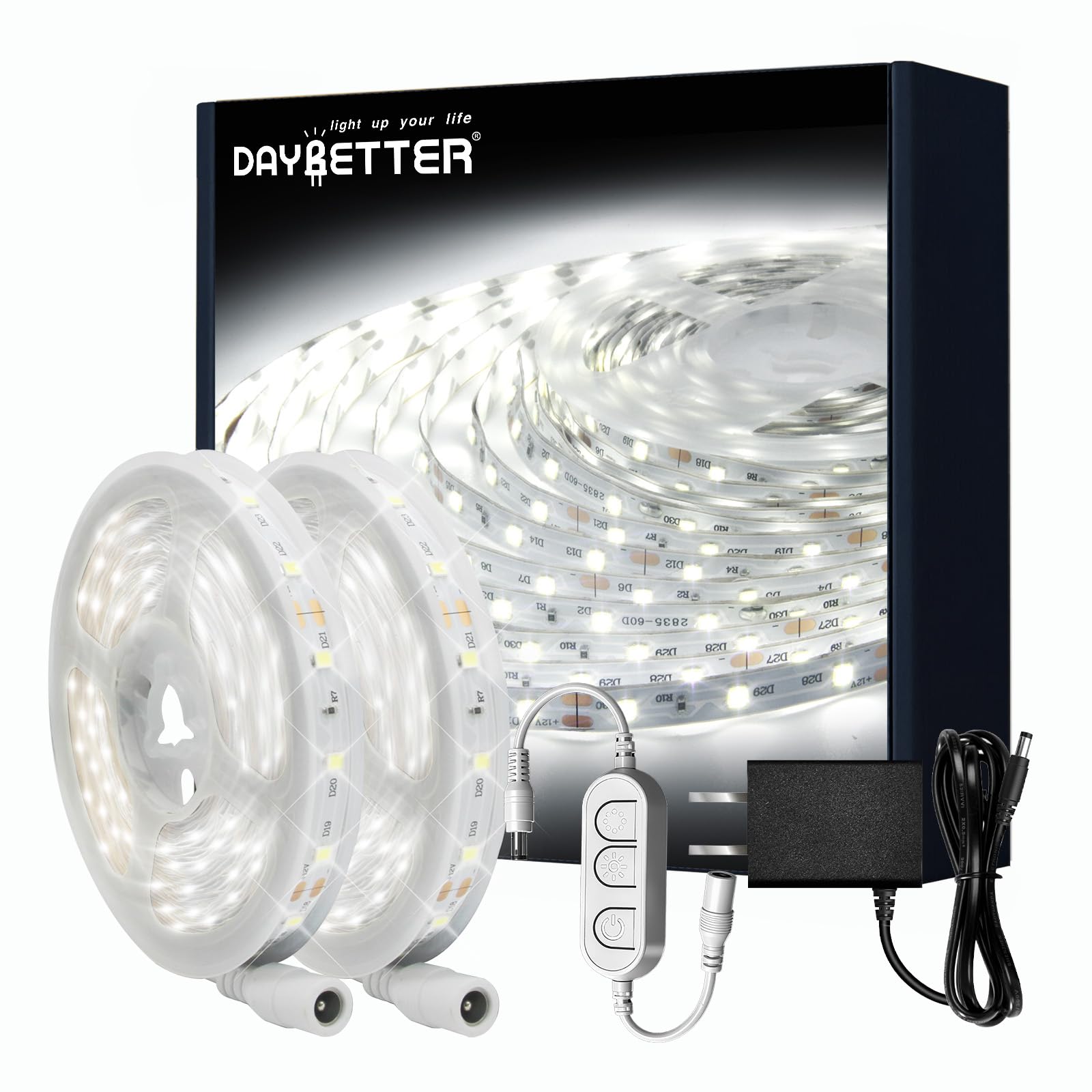
Types at a Glance
Three broad types cover most homes. Color changing RGB strips give you saturated color for media rooms and parties. RGBIC strips light segments in different colors at once, which suits gaming setups and accent walls. Tunable white strips skip party colors and shift from warm to cool white, which suits kitchens and rooms where you read or cook. For a wider view of lengths and styles, see our guide to best led strip lights.
Three Types Compared for a 50 ft Run
RGB Strips for Simple Color
An RGB strip shows one color across the whole run at any moment. You pick a color, a brightness level, and a simple effect such as fade or flash, and the full 50 ft follows. That simplicity keeps cost down and makes a basic remote easy for guests to use. The limit is real, though. You cannot show a gradient or let one end glow blue while the other glows orange, so choose RGB only when a single color at a time is truly enough.
RGBIC Strips for Multicolor Effects
RGBIC strips carry control chips along the strip that let segments show different colors at the same time. The result is flowing gradients, chasing effects, and scenes that move around a room. To understand the control difference before you pay for it, read our explainer on rgb vs rgbic and note which effects each system can actually produce. RGBIC costs more than plain RGB, and most RGBIC strips cannot be cut and rejoined as freely, so measure carefully before ordering.
Tunable White Strips for Daily Living
Tunable white strips use warm and cool diodes side by side, so you can set a soft warm glow for the evening and a clearer cool tone for cleaning, cooking, or desk work. They usually render colors in a room more accurately than a color strip set to white, which matters over counters and mirrors. If your main goal is useful light rather than effects, this type is often the most satisfying choice over years of daily use, even though it offers no party colors.
What Changes Most Over a 50 ft Run
These factors change most over a long run: total brightness in lumens, color temperature range, strip density, power supply size, and how the strip handles corners and cuts. They come from maker spec sheets and common buyer questions.
How to Choose the Right LED Strip Lights
Size and Form Factor
Length options usually run 16 ft, 32 ft, 50 ft, 65 ft, and 100 ft, and each step up changes the power plan. A 50 ft reel covers most single rooms in one run, while two smaller reels can suit two separate walls with a gap at a door. Form matters too. A flat tape strip sits close to a surface and hides well under cabinets, while a rope style strip has a rounded cover that spreads light more softly and handles gentle curves with less risk of kinks.
Type
Beyond RGB, RGBIC, and tunable white, you will see smart, outdoor, waterproof, USB powered, battery powered, COB, and neon styles. COB strips pack diodes so closely that the light looks like one smooth line with no visible dots, which is lovely in view but often costs more. USB and battery power suit short strips only, since a 50 ft run draws far more power than a small port or pack can supply for long.
Features Worth Paying For
A remote is worth having even on a smart strip, since it works when your phone is in another room or the WiFi is down. App control earns its cost when you want timers, schedules, and saved scenes you can recall in one tap. Spend first on a strong power supply, dense diodes, and solid adhesive or mounting clips, because those parts decide how the strip looks and lasts after the novelty of extra effects fades.
Lumens and Color Temperature
Brightness for a full reel is often quoted as total lumens, but lumens per foot tells you more about how the run will look. Around 100 to 200 lumens per foot gives gentle accent light, while about 300 lumens per foot or more can support tasks in a kitchen. Color temperature runs from about 2700K for warm light to about 6500K for a cool daylight tone. Warm settings flatter living rooms and bedrooms, while cooler settings help you see detail at a counter or desk.
Fixture Size and Placement
Strip width is commonly about 8 mm to 12 mm, and width decides whether the strip fits inside the aluminum channel or connector you plan to use. Placement shapes the result just as much. Mounted under a cabinet lip or behind a ceiling cove, the strip stays out of sight and the light bounces softly into the room. Mounted in direct view, diode dots and glare show. For a full ceiling outline, our guide to best led strip lights for ceiling covers cove and crown placement in more depth.
Dimmable and Smart Options
Almost every 50 ft strip dims, but the method matters. A basic remote dims in steps, an app dims smoothly, and voice control through a smart speaker suits hands busy cooking. Check that dimming stays smooth at low levels without flicker, since flicker shows most when a room is dark. If smart features fail, a plain remote backup keeps the light usable, so favor kits that include both.
Installation: Hardwired vs Using a Plug
Most 50 ft kits use a plug in power supply, which keeps setup simple and lets you move the strip later. Hardwired setups connect through a driver hidden in a wall or cabinet, giving a cleaner look with no visible cord, but they need comfort with wiring or help from an electrician. Plan the outlet position first, work from the power source outward, and use corner connectors or gentle loops at turns rather than folding the strip flat, which can crack the circuit board.
How Much Should You Spend?
Basic RGB reels often cost under $20, and they suit a teen room or a short term setup where simple color is enough. Spending about $20 to $50 usually buys denser diodes, a larger power supply, and better adhesive. Above about $50 to $100, you pay for RGBIC effects, COB smoothness, tunable white range, or stronger smart features. For a strip you will run every day for years, the middle range tends to give the best balance of brightness and control for the money.
Is a 50 ft LED Strip the Right Size for You?
Measure the full path before you decide, including every turn and drop, then add about 10 percent for slack at corners. A typical bedroom perimeter falls near 45 to 55 ft, so one 50 ft reel often fits with little waste, which is why this length suits our guide to best led strip lights for bedroom so well. A small den may need only 32 ft, and paying for length you cut away and discard wastes money.
Consider voltage drop as part of the size choice. On a long run fed from one end, the far end can look dimmer and shift color slightly. Feeding power from both ends, choosing a 24 volt strip, or splitting the path into two runs from a central supply all reduce that fade. For spots exposed to rain, indoor reels are the wrong pick. Those spaces need a rated jacket and sealed connectors, and our guide to best outdoor led strip lights explains the ratings to look for.
Common Mistakes to Avoid
- Sticking the strip down before checking it works, which leaves you peeling adhesive off paint when a section arrives faulty.
- Feeding a full 50 ft run from one end on a low voltage kit, which leaves the far end visibly dimmer.
- Folding the strip sharply at corners, which can crack the board and kill the lights past the fold.
- Mounting on dusty or greasy surfaces, which causes the strip to sag and fall within weeks.
- Cutting away from the marked cut points, which breaks the circuit for every diode past the cut.
- Hiding the power supply in a sealed space with no airflow, which shortens its life through heat buildup.
How to Make Your LED Strip Lights Last Longer
Dust dulls output and traps heat, so wipe the strip gently with a dry or slightly damp cloth every few months while the power is off. Our walkthrough on how to clean led strip lights adds safe steps for sticky kitchen grime near cabinets. An aluminum channel acts as a heat sink and diffuses the light, so it pays off twice. Keep the power supply in open air, and coil unused length loosely rather than in a tight bundle that traps heat.
FAQ
What size LED strip lights do I need for a typical bedroom?
Measure all four walls at the height where the strip will sit, then subtract wide openings such as closets. Most bedrooms total about 45 to 55 ft around the ceiling, so a 50 ft reel fits many rooms with a small trim at the final cut point. If your total lands well under that range, a 32 ft reel costs less and avoids feeding power across length you never use.
How long do 50 ft LED strip lights last?
Most quality strips are rated for about 25,000 to 50,000 hours, which works out to many years of evening use. Real life depends heavily on heat and on how hard you drive the diodes. A strip in an aluminum channel run at moderate brightness will usually outlast the same strip stuck to wood and run at full power nightly. The power supply often wears out before the diodes do, and it is the cheaper part to replace.
Are expensive 50 ft LED strip lights worth the extra cost?
They can be, when the price buys things you will see every day: denser diodes with no spotty dots, smoother dimming, and a power supply sized for the full run. Effects libraries and fancy packaging matter far less. If the strip is a short term decoration for one event, a budget reel does the job. If it becomes your main room lighting each evening, paying more for even brightness and solid controls is easier to justify.
Can I cut a 50 ft LED strip and use both pieces?
Yes, if you cut only at the marked points, usually every few inches along the strip. The piece still attached to the controller works right away. The leftover piece needs its own connector and power source, or a soldered lead, before it lights. Plan cuts before you mount anything, keep track of polarity marks on the pads, and test both pieces on the floor. RGBIC strips allow fewer reconnection options, so check the kit instructions first.
Why does the far end of my 50 ft LED strip look dimmer?
That fade is voltage drop: resistance in the thin copper traces slowly lowers voltage along the run. It shows first as weaker brightness and slightly warmer color near the end. Feeding power at both ends is the cleanest fix on a strip already mounted. On a new install, a 24 volt model or a supply placed at the midpoint prevents most of the fade. Shortening the run alone will not cure it.
How do I pick the best 50 ft led strip lights for one room?
Measure the full path first, then choose the color type, a power supply sized for the whole run and a way to feed power evenly. Add a remote as a backup to app control.
Final Thoughts
The product table above pulls the types together, so compare brightness per foot, color range, and power setup side by side before you order. If you want simple color on a budget, choose RGB. If flowing scenes are the point, choose RGBIC. If the strip will serve as daily light, choose tunable white. Measured well and powered evenly, the best 50 ft led strip lights turn one long line of light into the feature your room was missing.


