Best 5 cu ft Chest Freezers (2026): Types Compared and Buying Guide
Disclosure: We may earn a commission when you buy through links on this page, at no extra cost to you. As an Amazon Associate I earn from qualifying purchases. Learn more

A practical guide to the best 5 cu ft chest freezer: manual, garage ready, and feature rich models, plus size, airflow, and running cost.
A spare freezer sounds simple until a bulk grocery run fills your kitchen freezer and leaves you stacking bags on top of each other. A compact chest model solves that problem without taking over a whole wall. If you want the best 5 cu ft chest freezer for your home, this guide helps you choose by room space, household size, and budget rather than by brand claims alone. Use the comparison table below to see how the main types differ at a glance.
This size suits many apartments, small houses, and garages because it holds a useful amount of food while staying easy to place. The sections below cover sizing, defrost style, features, placement, running costs, and care, so you can match a model to your routine.
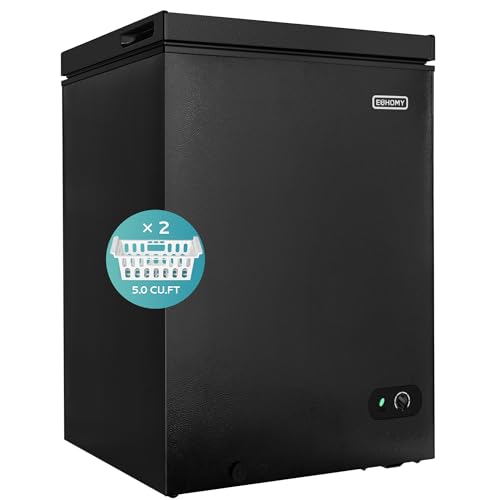

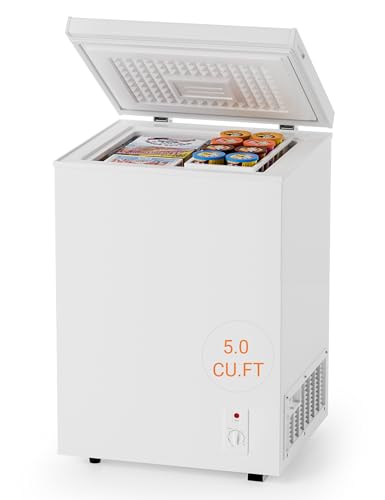
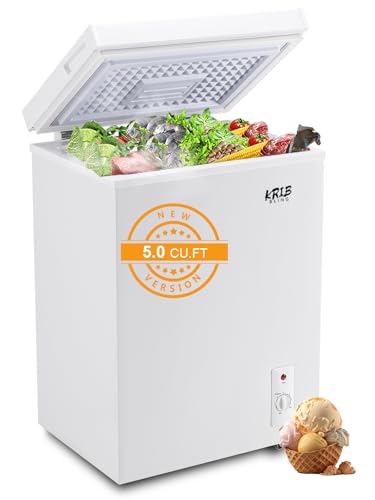

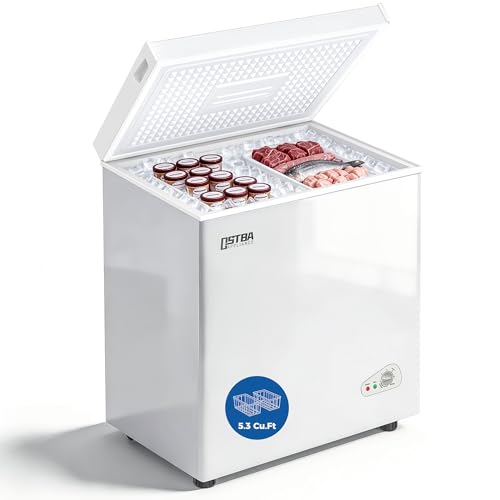
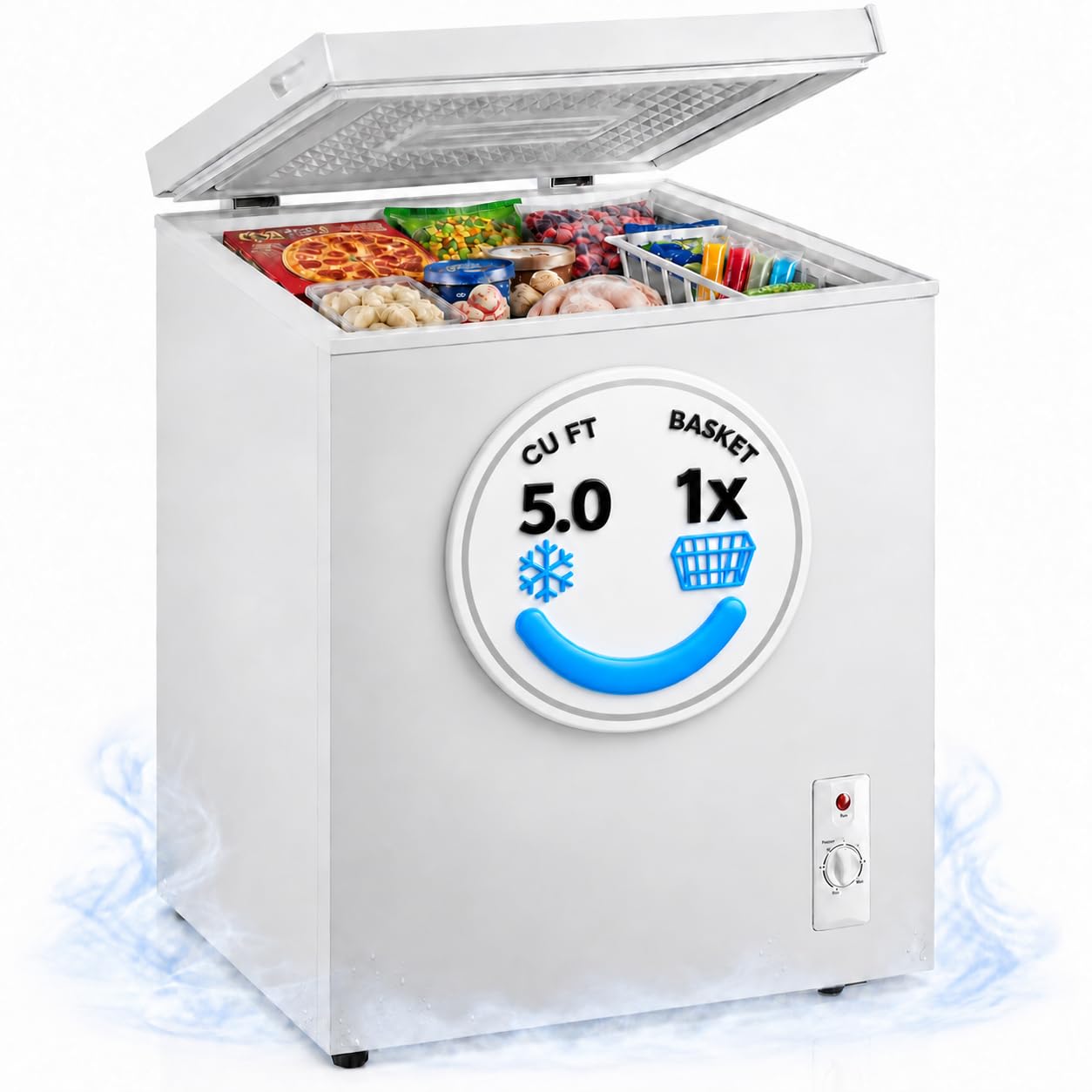

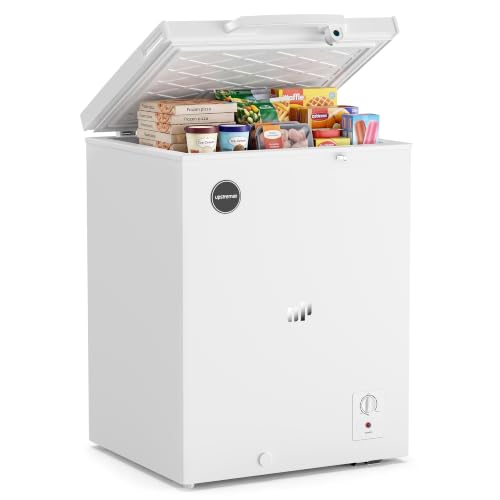
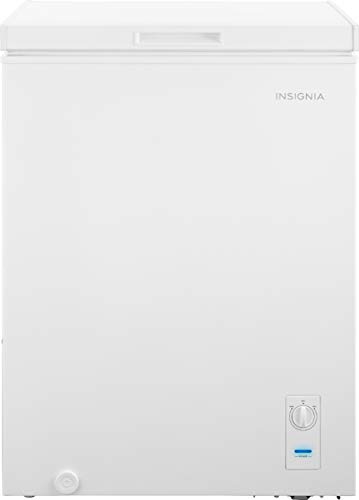
Quick Answer: The Main Types in 30 Seconds
Most models at this size fall into three groups. Simple manual defrost models cost the least and use energy well. Garage suitable models tolerate wider room temperature swings and often add a lock and a power light. Feature rich models add interior lighting, more baskets, and clearer controls. Your room, your climate, and how often you dig for food at the bottom should decide which group you favor.
Before You Buy: A Quick Checklist for Choosing a Chest Freezer
Work through this checklist before comparing prices. It rules out models that fit your home poorly. For a broader view of the category, see our guide to the best chest freezer options across all sizes.
Size: Match It to Your Space
Five cubic feet holds roughly 175 pounds of food as a loose planning guide, though bulky boxes and large roasts reduce that figure in practice. That amount suits one or two people who shop in bulk, or a family using it as overflow beside a kitchen freezer. Smaller 3.5 cubic foot models suit single shoppers, while stepping up brings more room for hunters and large families, a trade off explored in our guide to the best 7 cu ft chest freezer models.
Which Type Fits Your Routine
Chest models keep cold air inside when you lift the lid, since cold air sinks, and they usually cost less than upright models of similar capacity. Uprights offer shelves and easier sorting but can lose more cold air at each opening. Our overview of chest freezer vs upright freezer designs explains that choice in depth. Within chest models, manual defrost is the norm at this size, while frost free designs remain uncommon and cost more.
Features Worth It (and Ones to Skip)
Removable wire baskets are worth paying for because they lift small items out in one motion and stop them vanishing into the bottom layer. A lock matters if children can reach the freezer or if it sits in a shared space. A drain at the base makes defrost day far less messy, and a power indicator light warns you at a glance if the unit stops running. You can usually skip extra baskets beyond two, fancy control panels, and smart alerts at this size, since simple dials work reliably and cost less to repair.
Measurements and Compatibility With Your Setup
Measure the spot, then measure every doorway, hallway turn, and stair landing on the delivery path. Most models at this size are about 30 to 33 inches wide, 22 to 24 inches deep, and 33 to 35 inches tall, but confirm the listing for the model you choose. Leave at least 3 inches of air space around the sides and back for ventilation, and check that the lid can open fully without hitting a shelf, a pipe, or a sloped ceiling.
Certifications That Matter for a Chest Freezer
Look for a safety listing from UL or ETL, which shows the appliance met recognized electrical safety standards in North America. An ENERGY STAR label is also useful, since certified models must meet federal efficiency targets that are stricter than the basic legal minimum. Skip marketing badges that name no testing body. Keep the manual and model number after delivery, because warranty service and replacement parts both depend on that exact information.
Setup on Your Own or With Help
Most owners can set up this appliance without a professional. You level the feet, plug it into a grounded outlet, let it stand upright for a few hours after transport if it was tilted, and wait for it to reach freezing temperature before loading food. Budget for delivery help only when stairs, narrow doors, or a heavy lid make the move risky. Avoid extension cords, since makers generally require a direct outlet connection for safe and steady operation.
Realistic Budget Ranges
Basic models at this size often sell for under $200, with plain finishes, one basket, and a simple dial. Models at about $200 to $300 usually add better insulation, a lock, and a drain. Above about $300, you pay mainly for garage suitability, lighting, and longer warranties rather than extra space. Remember to budget for delivery, a surge protector if your maker allows one, and a small stock of storage bins or baskets that fit the interior width.
Three Types Compared: Choosing Without a Brand Shortlist
Since the same size label covers quite different machines, compare types first and brand names second. These three groups cover nearly every model you will see.
Simple Manual Defrost Models for Tight Budgets
These are the value choice for a basement corner, a laundry room, or a first apartment. You get a single compartment, one or two baskets, and a dial control, and you defrost by hand once or twice a year. Energy use tends to be low because there is no defrost heater cycling on and off. The main sacrifice is convenience, since frost slowly builds on the walls and reduces usable space between defrost sessions.
Garage Suitable Models for Wider Temperature Swings
A garage places demands that a kitchen never does, from summer heat to winter cold that can confuse a basic thermostat. Models built for that setting use compressors and controls rated for a broader range of room temperatures. If your unit will live in an unheated outbuilding, read our guide to the best chest freezer for garage use before you buy. Expect to pay more for this rating, and check the stated temperature range in writing rather than trusting a sales label alone.
Feature Rich Models for Busy Family Storage
Families who open the freezer daily benefit most from an interior light, several baskets, and a lock that keeps curious children out. A clear temperature display helps you spot problems early, and a fast freeze setting helps when you load a large batch of warm food after a shopping trip or a day of meal prep. These extras add cost and more parts that can fail, so choose them for daily convenience rather than for rare occasions.
How We Compare Options for This Size
Our comparison rests on maker specifications, stated capacity, energy ratings, warranty terms, and patterns in verified buyer feedback about noise, frost buildup, and lid seal quality. We weigh placement and daily ease of use most heavily, along with the likely cost of owning the unit over many years. We do not claim hands on testing where none took place, and we leave live prices to the product listings.
Is a 5 cu ft Chest Freezer the Right Size for You?
This size works best as a supporting freezer rather than the only frozen storage for a large household. Couples and small families can store bulk meat, frozen vegetables, bread, and batch cooked meals with room to spare. If you regularly buy a side of beef or host large gatherings, you will likely outgrow it and resent the digging that a deep single compartment requires.
Think about your shopping rhythm before deciding. Weekly bulk shoppers who rotate stock often will love the low running cost and modest footprint. Occasional shoppers may find a smaller unit cheaper to run. Also picture the food itself, since tall items stand poorly in a chest layout and wide flat packages stack far better.
Common Buying Mistakes to Avoid
- Measuring only the final spot and forgetting doorways, so the freezer cannot reach the room you chose for it.
- Placing the unit flush against walls, which traps heat around the coils and forces the compressor to work harder.
- Buying on price alone and skipping a drain, then facing a slow and soggy manual defrost with towels everywhere.
- Overfilling past the load line marked inside, which blocks air flow and leaves food at uneven temperatures.
- Ignoring the room temperature rating, then finding the freezer struggles through a hot summer in an uninsulated garage.
Cost of Ownership and Care
Running costs at this size are modest, often around $30 to $45 per year in electricity based on typical federal energy guide figures, though your local rate and room temperature will shift the total. Keep the lid seal clean with mild soap and water, and test it by closing the lid on a dollar bill, since a bill that slides out easily signals a weak seal. Vacuum dust from any exposed coils or the rear grille once a year to help the compressor shed heat.
Organize food in labeled bins grouped by type and date, and keep a simple list on the lid so you open the freezer less often. Rotate older items to the top basket each time you add new stock. These habits cut frost buildup and reduce wasted food.
Your Questions, Answered
How do you clean a chest freezer?
Start by unplugging the unit and moving food into coolers or insulated bags. Let frost melt on its own, or place pans of hot water inside with the lid closed to speed the process, then lift out loose ice with a plastic scraper only. Wipe the interior with warm water and baking soda, dry it fully, and restart the freezer before returning food. Our step by step guide on how to clean a chest freezer covers stain removal in more detail.
Is a chest freezer worth it?
For most households that buy food in bulk, yes, because the savings on large packs and seasonal deals can cover the modest running cost within a year or two of steady use. It also reduces food waste by giving leftovers and garden produce a proper home. It is less worthwhile if you rarely freeze food, lack a dry placement spot, or would need costly electrical work just to add an outlet for it.
How long does a chest freezer last?
Many chest freezers serve for about 10 to 20 years, with simple manual defrost designs often lasting toward the upper end because they have fewer parts to fail. Steady placement, clean seals, and reasonable loading all support a long service life. Our article on how long does a chest freezer last explains the warning signs that a unit is nearing replacement, such as constant running and uneven freezing.
What size chest freezer do I need?
A common planning rule allows about 1.5 cubic feet of freezer space per person for dedicated frozen storage, less if the unit only backs up a kitchen freezer. Count bulky habits honestly, since pizza boxes and large roasts consume space faster than flat bags of vegetables. When your estimate lands between two sizes, the larger one usually proves easier to organize, provided it fits the room and your budget.
What is the best 5 cu ft chest freezer for a small home?
The strongest choice for a small home is the model that fits your measured space with ventilation room to spare, carries a safety listing, and includes a basket and a drain. Prioritize a lid that opens fully in your room and controls you can reach without moving the unit. In short, the best 5 cu ft chest freezer is the one whose type matches your placement, whether that is a quiet kitchen corner, a basement, or a garage with wide temperature swings.
Final Thoughts
Size the space first, pick the type that matches your room and routine, and pay for baskets, a drain, and a lock only when you will truly use them. Compare your shortlist against the product table above, then check live prices and delivery terms before you order. For most couples and small families, the best 5 cu ft chest freezer adds real storage freedom for a modest purchase price and a low yearly running cost.