
Best 4 Quart Saute Pans (2026): Materials, Fit and Care
Disclosure: We may earn a commission when you buy through links on this page, at no extra cost to you. As an Amazon Associate I earn from qualifying purchases. Learn more

Choose the best 4 quart saute pan with clear advice on stainless, coated and cast iron types.
Dinner at home often means one pan doing several jobs in a row. You brown chicken, soften onions in the drippings, then simmer a sauce while pasta cooks on the next burner. A search for the best 4 quart saute pan usually starts with that problem, because this size holds a family meal without crowding your stovetop or cabinets.
This guide helps you choose by what matters in a real home: your space, how many people you feed, and what you can spend. The comparison table below sums up the main types, and the checklist that follows explains each factor.
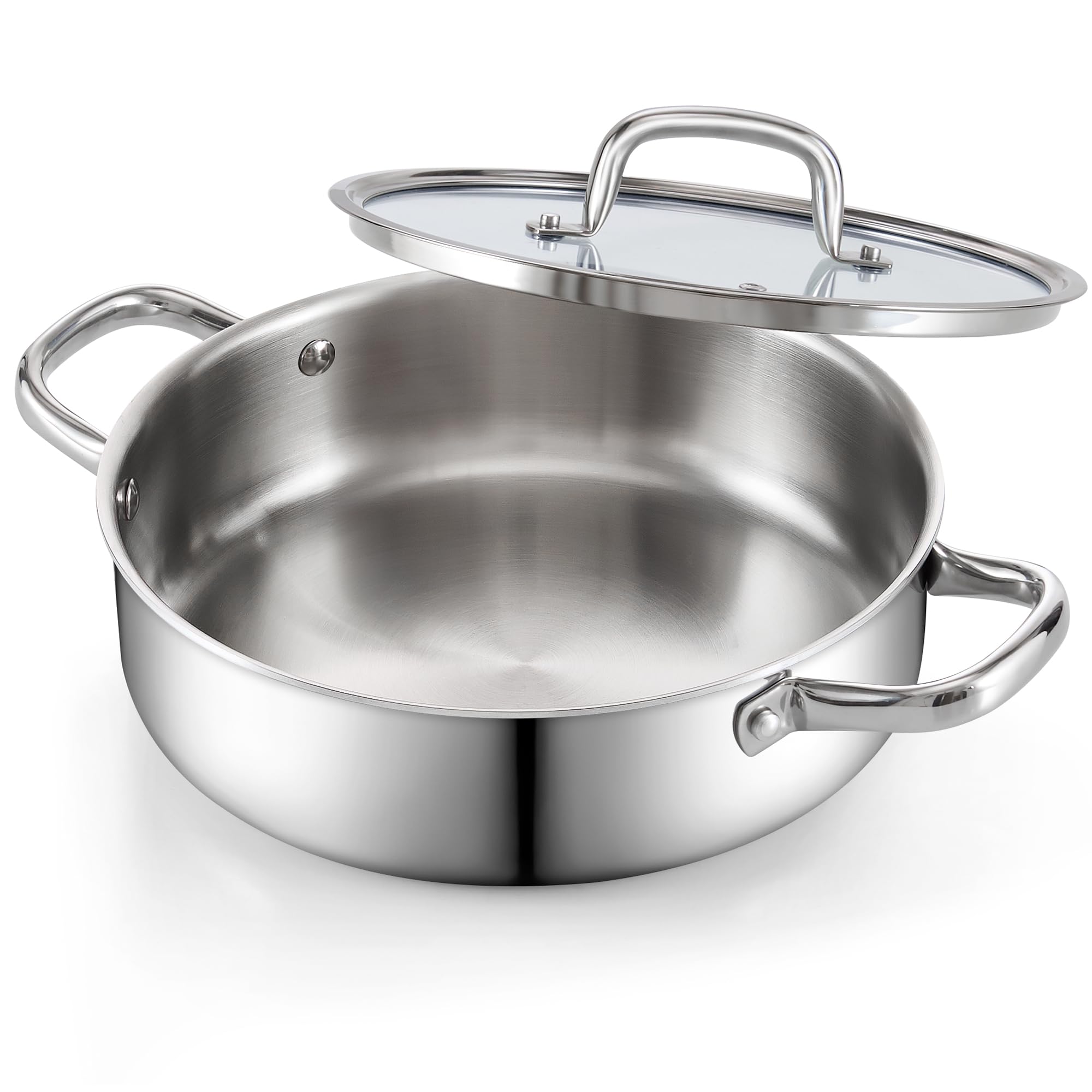
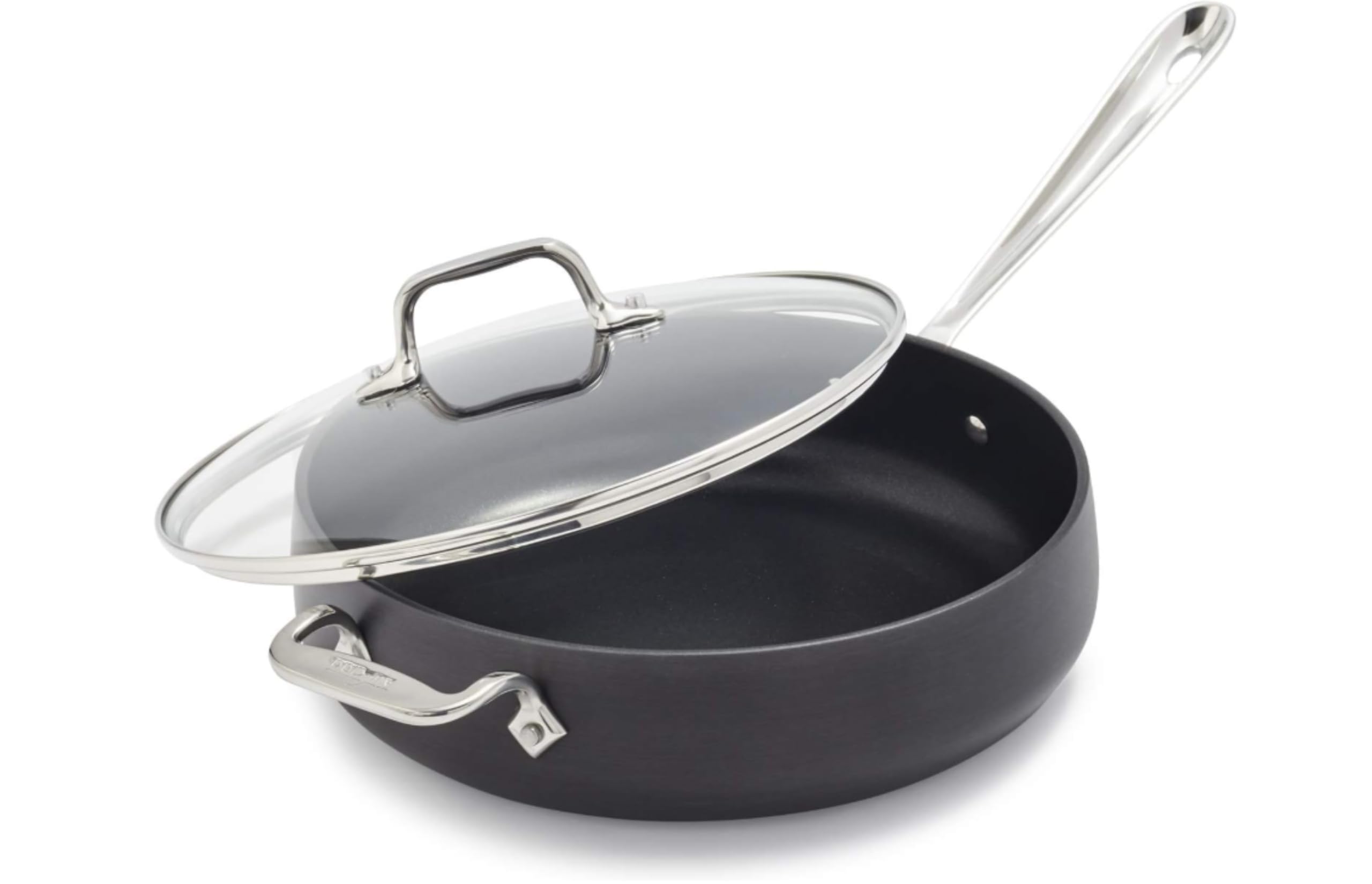
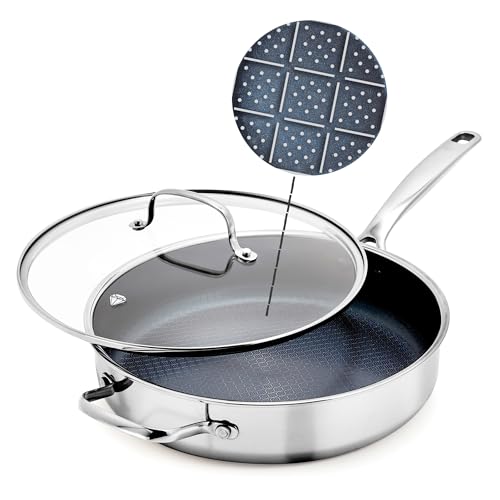

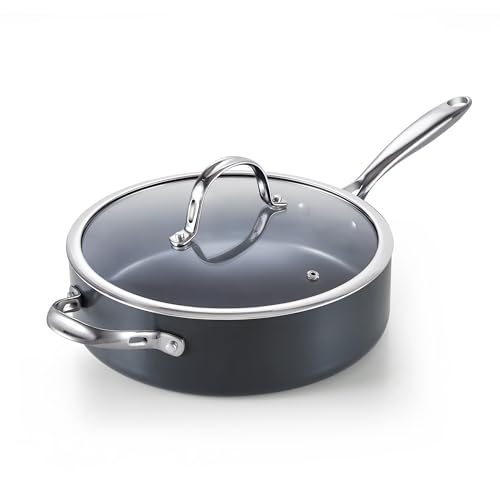


Quick Answer: A Good 4 Quart Saute Pan
For most homes, the right answer is a pan about 11 to 12 inches wide with straight sides, a fitted lid, and a base thick enough to heat evenly. Stainless clad suits cooks who sear often, coated pans suit gentle daily cooking, and enameled cast iron suits slow braises. For the broader picture first, see our guide to the best saute pan.
Before You Buy: A Quick Checklist
Size: Match It to Your Space
Capacity alone does not tell you how a pan lives in your kitchen. A 3 quart pan suits one or two people but crowds four chicken thighs, while a 5 or 6 quart pan can feel heavy and may overhang a small burner. The 4 quart size sits between those extremes, and a 3.5 quart version trims a little weight. Check the diameter against your largest burner and measure your cabinet depth, because a long handle plus a helper handle needs real storage room. Our guide on what size saute pan do i need walks through those measurements.
Which Type Fits Your Routine
Stainless steel sears well, tolerates high heat, and goes in the dishwasher, but eggs and fish need enough fat and a patient preheat. Nonstick releases delicate food with little oil and wipes clean fast, though the coating wears over time. Ceramic coated pans offer a slick surface without a traditional nonstick coating, and our guide to the best ceramic saute pan explains how that coating ages. Cast iron holds heat superbly but weighs far more, copper heats fast at a high price, and clad stainless, often sold as tri ply, balances even heating with moderate weight.
Features Worth Paying For and Ones to Skip
A tight fitting lid is worth paying for because braises, grains, and steamed vegetables all depend on trapped moisture. A helper handle opposite the main handle is also worth it, since a full pan of braised chicken can weigh 10 pounds or more and needs two hands. Skip decorative handle shapes that are hard to grip with a towel, glass lids if you tend to drop things, and bundled utensil sets you will never use. A simple, sturdy pan with those two key features beats a long feature list.
Is a Saute Pan Non Toxic?
That depends on the cooking surface, not the size. Bare stainless steel and cast iron have no coating at all, so there is nothing to wear away into food. Traditional nonstick uses a PTFE coating, which makers state is stable at normal cooking temperatures but degrades if you overheat an empty pan. Ceramic coatings are marketed as made without PFAS and suit cooks who want to avoid PTFE. Retire a coated pan once the surface is deeply scratched or peeling, and follow the maker directions for heat limits.
Induction, Gas and Glass Top Compatibility
Induction burners need a magnetic base, so check the product details for an induction ready symbol or confirm a listing claim against the maker page before you buy. A pan that works on gas may simply lack that magnetic layer. On glass top stoves, a flat and smooth base matters most, because a warped or rough bottom can rock, heat unevenly, and scratch the surface. Match the pan diameter to the burner ring printed on the cooktop so the base heats across its full width.
Oven Safe Temperature and Handles
Many recipes start on the stove and finish in the oven, so check the stated oven limit for both the pan and its lid, since glass lids often carry a lower limit than the pan itself. Stainless handles usually tolerate more heat than handles with silicone grips, which may cap the safe temperature. Broiler use is stricter still, and some coated pans are not broiler safe at all. Keep a thick towel by the stove, because a metal handle that went into the oven stays hot long after the pan comes out.
Realistic Budget Ranges
At under $50, expect a single material pan, often aluminum with a nonstick coating or basic stainless, which cooks fine but may warp or wear sooner. About $50 to $100 is where clad stainless and better ceramic coated pans appear, with thicker bases and sturdier handles. About $100 to $200 buys heavier clad construction, enameled cast iron, and longer warranties. Spending more mainly buys durability and even heating, not extra capacity, so a mid priced pan that fits your stove is often the smarter purchase.
Types Compared: Three Routes to the Same Size
Clad Stainless for Searing and Sauces
Clad stainless layers aluminum or copper between steel layers, so the base heats evenly while the surface stays tough. It builds the browned bits that turn into a rich pan sauce, handles metal utensils, and tolerates the dishwasher. The trade off is technique. Food sticks if you rush the preheat or skimp on fat, and it costs more than basic stainless. Choose this type if you cook proteins several nights a week and want one pan to keep for many years.
Coated Pans for Gentle Daily Cooking
Nonstick and ceramic coated pans shine at breakfast and at reheating, when eggs, pancakes, and leftover rice need an easy release. They also cut cleanup to a quick wipe on busy weeknights. The trade off is lifespan, because every coating is a wear surface that thins with heat, metal tools, and stacking. Choose this type if your cooking leans gentle and you accept replacing the pan every few years.
Cast Iron and Enameled Cast Iron for Slow Cooking
Cast iron holds heat longer than any other common pan material, so it excels at browning in batches and at braises that move to the oven. Enameled versions skip seasoning and handle tomato based sauces without reacting. The trade off is weight, which makes lifting a full pan hard for some cooks. If that trade off suits your cooking, our guide to the best cast iron saute pan compares the bare and enameled styles.
What to Look at When You Compare Options
Weigh five things in order. Heat distribution matters first, because a thick or clad base prevents a hot ring over the burner. Next come durability and material safety, then stovetop and oven compatibility with your exact range, then cleaning effort. Use maker specifications and patterns in verified buyer reviews, such as repeated notes about warping or loose handles, rather than any single glowing comment.
Is a 4 Quart Saute Pan the Right Size for You?
For households of three to five people, usually yes. Four quarts holds about four chicken thighs with sauce, a pound of pasta with vegetables folded in, or a batch of curry plus leftovers. Solo cooks who mostly reheat may find a smaller pan easier to wash and store. Large families who batch cook soup or stew will outgrow it and should look at 5 or 6 quart pans or a Dutch oven instead. Diameter matters as much as volume, so compare this size with our guide to the best 12 inch saute pan if burner or storage space is your real limit.
Common Buying Mistakes to Avoid
- Buying by capacity alone: a tall, narrow 4 quart pan browns poorly, because its cooking surface is too small.
- Ignoring burner fit: a base far wider than your burner wastes heat, while one far narrower leaves a hot center and pale edges.
- Forgetting the full weight: the pan plus food plus sauce can strain one wrist, so skip models without a helper handle if lifting is hard for you.
- Paying for features you skip: extra lids, inserts, and bundled tools add cost and clutter without improving dinner.
- Skipping the replacement cost: a cheap coated pan replaced every two years can cost more over a decade than one clad pan.
Cost of Ownership and Care
The purchase price is only part of what a pan costs you. Coated pans carry a built in replacement cycle, while stainless and cast iron can serve for decades with basic care. Wash coated surfaces with a soft sponge and avoid cooking sprays, which leave a residue that makes food stick. Let any pan cool before washing, because cold water on a very hot base can warp it. Store pans with a cloth between stacked surfaces to protect coatings, and check handle screws once or twice a year so a loose handle never surprises you mid lift.
Your Questions, Answered
What makes a saute pan brand reliable?
Reliability shows up in consistency more than in a name. Look for clear specifications, a warranty that covers warping and handle failure, and replacement lids that stay available over time. Brands that publish oven limits, base thickness, and care rules in plain language are easier to trust than brands that rely on slogans. A model that stays in production for years is another good sign, because parts and support do not vanish quickly.
How do you clean a saute pan after searing meat?
Let the pan cool until it is warm rather than hot, then add warm water and let the browned residue soften for about ten minutes. Most of it will lift with a sponge and dish soap. For stubborn spots on stainless, simmer water in the pan and scrape gently with a wooden spoon. Dry a cast iron pan on the stove over low heat, then add a thin film of oil before storing it.
Is a saute pan worth it if you already own a skillet?
It can be, because the straight and taller sides change what you can cook. A skillet splashes when you simmer a sauce or toss a full load of greens, while the saute pan contains the liquid and gives you a lid for braising. If your skillet already covers your meals and you rarely cook saucy dishes, you may not need both. If weeknight cooking often ends with a sauce, the saute pan earns its cabinet space.
How long does a saute pan last?
It depends on the surface more than the size. A clad stainless or cast iron pan can last decades, because the cooking surface is the metal itself and does not wear away. A nonstick or ceramic coated pan usually gives a few years of easy release before the coating thins and food starts to grip. Gentle heat, soft tools, and careful storage stretch the life of any of these pans.
What size saute pan do I need for frying chicken?
For shallow frying, surface area matters more than depth, so count the pieces first. Four bone in thighs need a wide base so the skin browns instead of steaming, and a wide 4 quart pan handles that batch well. Six or more pieces call for two batches or a larger pan. Keep the oil level well below the rim, and use the lid only as a splatter shield set slightly ajar, never sealed tight.
What is the best 4 quart saute pan for a small kitchen?
For a small kitchen, the best choice is the one that stores flat and replaces two other pans. Look for a moderate diameter that fits your largest burner, a handle that hangs on a rail if cabinet depth is tight, and a lid that also fits another pot you own. One versatile clad pan often serves a small home better than a coated pan plus a separate braising pan, because it cuts clutter and replacement cost.
Final Thoughts
Start with your stove, your storage, and the number of people at your table, then pick the material that matches how you cook. The product table above pulls those trade offs together so you can compare at a glance. Chosen well, the best 4 quart saute pan for your home becomes the pan you reach for on ordinary weeknights, not a tool that sits in the back of a cabinet.


