Best 4 Channel Mixers Made Simple: A Clear Buying Guide for 2026
Disclosure: We may earn a commission when you buy through links on this page, at no extra cost to you. As an Amazon Associate I earn from qualifying purchases. Learn more

Shopping for the best 4 channel mixers for the first time? Learn the terms, compare options, and avoid common mistakes with this easy guide.
Buying your first audio mixer can feel confusing. Listings throw around terms like gain, EQ and phantom power, and every model claims studio quality sound. This guide slows the process down and explains the best 4 channel mixers in plain language, from what the knobs actually do to which specs deserve your money.
We will start with the basics, then decode each key spec, then cover setup and common mistakes. You can scan the product table for inputs and size, and return to it once the terms make sense. By the end, you will know exactly which type fits your microphones, instruments and speakers.




4 Channel Mixers 101: The Basics
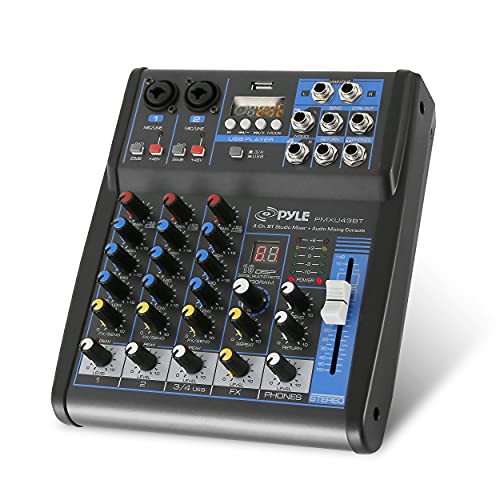
A 4 channel mixer lets you combine up to four separate sound sources and send the blend to speakers or a recorder. Each channel is a vertical strip with its own volume control, tone controls and input jack. One channel might carry your voice from a microphone, another a keyboard, another a phone playing backing tracks and the last a guitar.
The mixer does three main jobs. It raises weak signals, such as a microphone, to a usable level. It lets you balance the loudness and tone of each source against the others. And it sends one clean combined signal to your main output. Think of it as a traffic controller for sound. More channels means more sources at once, not better sound by itself, which is why a well chosen 4 channel model is enough for solo performers, small presentations, streaming and home recording.
Key Specs Explained in Plain English
Intended Use and Who It Is For
Start with your real setup, not a future dream setup. List every source you will plug in at the same time and note whether each one is a microphone, an instrument or a recorded track. A solo singer with a guitar and a backing track needs two microphone or instrument inputs plus a stereo line input. A small podcast with two hosts needs two good microphone preamps above all. If your list already fills all four channels, consider whether you truly need room to grow, because moving up in size raises cost and complexity. The product table is a good place to check input counts against your list.
Warranty and Customer Support
A one year warranty is common at lower prices, while two or three years signals more confidence from the maker. Check what support looks like before you buy. Good makers publish clear manuals, wiring diagrams and firmware updates, and they answer basic setup questions. This matters for a first mixer, because many early problems are simple cable or level mistakes that good guidance solves in minutes. Keep your receipt and register the product if asked. Also confirm that replacement power supplies are available, since a lost adapter can silence an otherwise healthy mixer.
Ease of Use and Setup
A first mixer should feel obvious. Look for clear labels, color coding that groups each channel and a layout that keeps the master volume easy to find in a hurry. Knobs with a center notch on tone controls help you return to neutral quickly. Built in effects like simple reverb can be handy for singers, but only if you can turn them on and off per channel. Bluetooth input is a nice extra for backing tracks, though a plain cable connection is more reliable in crowded rooms. Avoid models that hide basic functions inside phone apps for routine use.
Key Performance Specs
The preamp is the most important part for sound quality, because it amplifies your microphone without adding hiss. Look for a stated signal to noise performance or simply choose a maker known for quiet preamps, and check that at least two channels accept microphones with XLR plugs. Phantom power, labeled as 48V, is required for condenser microphones, so confirm it is included if you own or plan to buy that mic type. A three band EQ gives you bass, mid and treble control per channel and is more useful than a two band EQ for shaping voices. A USB output lets you record or stream to a computer without extra gear.
Size, Weight, and Fit for Your Space
Most 4 channel mixers are compact enough for a desk or a small gig bag, but dimensions vary. Measure your work surface and leave room for cables, which need a few inches of bend space behind the unit. Weight matters if you carry the mixer to rehearsals or events each week. A metal case handles transport better than a light plastic shell, though it adds pounds. Think about where the power supply sits as well. A bulky wall adapter can block nearby outlets, so a standard cord or a compact supply is a small but real advantage.
Picking the Right 4 Channel Mixers for Different Uses
Best 4 Channel Mixers for Djing
If you are shopping for best 4 channel mixers for djing in particular, your needs shift in clear ways. DJ work needs smooth crossfader control between sources, cue monitoring through headphones so you can preview the next track, and durable faders built for constant movement. Channel EQ still matters, but effects and beat sync tools may matter more than extra microphone preamps. Many general purpose live mixers lack a proper crossfader, so check that feature first. A DJ focused layout will serve a party or wedding setup far better than a recording focused one.
Rookie Mistakes to Avoid
- Buying by channel count alone, then finding only one channel accepts a microphone when you need two.
- Forgetting phantom power, then learning your condenser microphone stays silent without it.
- Turning every volume control up at once, which creates hiss and feedback instead of clear, balanced sound.
- Skipping the cables budget, because adapters, mic cables and speaker cables can add around $30 to $80 to your total.
- Ignoring headphone monitoring, which is essential for checking levels before your audience hears a problem.
Each mistake above is easy to avoid with a five minute check before you order. If you later outgrow four channels, our guide to the best 16 channel mixers shows what a larger format adds. If four channels already feels like too many, see our guide to the best 2 channel mixers for a simpler starting point.
Getting Started: Setup and First Use
Read the manual before first use, even if you just skim the diagrams for your exact connection type. Start with all volume controls down, connect your speakers last and power the mixer on before the speakers to avoid loud pops. Raise the master volume slowly, then bring up one channel at a time and test each source alone before you blend them. Clean and inspect the unit regularly, wiping dust from faders and checking cables for cracks or loose plugs.
A practical know how tip helps here. Set your channel gain so the loudest moment you expect just touches the yellow zone on the meter, never the red. That headroom keeps voices clean when excitement makes you louder. Label each channel with a small piece of tape naming its source. In a dark or busy room, that simple label prevents the classic error of raising the wrong fader at the wrong moment.
4 Channel Mixers: Your Questions Answered
How much should I spend on a 4 channel mixer?
Most first time buyers do well around $80 to $200. In that range you get quiet preamps, useful EQ and a solid case without paying for pro touring features. Spending less can work for a single microphone and simple announcements, but hiss and fragile knobs become more likely. Add cables and a carrying case to your budget from the start. A slightly higher price for a second microphone input is usually money well spent if a partner or guest may join you.
Are expensive 4 channel mixers worth it?
They are worth it when the price buys lower noise, better build quality and support you can reach quickly. They matter most for recording and for paid gigs where failure costs you goodwill. They are less worth it for rare home use, where a mid range model will sound nearly the same through modest speakers. Compare preamp noise and case material rather than counting effects. A long list of built in effects rarely justifies a large price jump on its own.
How long does a 4 channel mixer last?
A well kept mixer often lasts five to ten years, because it has few moving parts beyond knobs and faders. Dust, spills and rough transport shorten that life the most. Keep drinks away from the surface, cover the unit when it sits unused and carry it in a padded bag. Faders that crackle when moved are an early warning sign. Sometimes a careful cleaning restores them, but persistent noise after cleaning suggests service or replacement is near.
How do I maintain a 4 channel mixer?
Keep it dry, dust free and ventilated, and store cables loosely coiled rather than tightly wrapped around the unit. Move each knob and fader gently through its full range every few months if the mixer sits unused, which helps keep contacts clean. Never spray liquid cleaner directly onto the surface. Use a dry or barely damp cloth instead. If you use the mixer outdoors, let it return to room temperature before you power it on, so condensation can clear first.
What features matter most when buying 4 channel mixers?
Microphone preamp quality, the number of true microphone inputs and phantom power matter most. Those three decide whether your core sources sound clean and work at all. Next comes EQ per channel and a clear master section. USB output is a strong bonus for recording or streaming. One often missed point is the headphone output level. Test that it can drive your headphones loudly enough in a noisy room, because quiet monitoring makes level setting guesswork.
Wrapping Up
Match your input list first, demand quiet preamps and phantom power if you need it, and keep the layout simple enough to run with confidence. With those basics settled, the best 4 channel mixers for your setup stand out clearly in the product table. Start simple, learn your levels well, and upgrade only when a real limit shows up in your work. Note that a mixer here means audio gear, which is a different tool from kitchen gear covered in our guide to the best stand mixers.