Best 3D Printers for Warhammer: Budget, Midrange, and Premium Tiers for 2026
Disclosure: We may earn a commission when you buy through links on this page, at no extra cost to you. As an Amazon Associate I earn from qualifying purchases. Learn more

Compare the best 3d printers for warhammer at every price point. Learn what you get at budget, midrange, and premium levels and where spending more pays off.
Prices for hobby printers stretch from about the cost of a single boxed unit to the cost of a full army, and the data sheets do not tell you where the money actually helps. This guide maps the best 3d printers for warhammer by budget, so you can see what each tier buys you in detail, reliability, and ease.
The short version is simple. Miniatures reward fine detail, terrain rewards build volume, and your wallet rewards honesty about which of those you print most. Use the product table below to sort candidates, then use the tiers here to judge them.
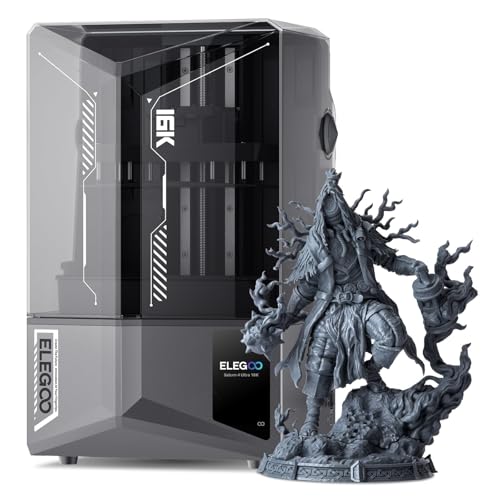
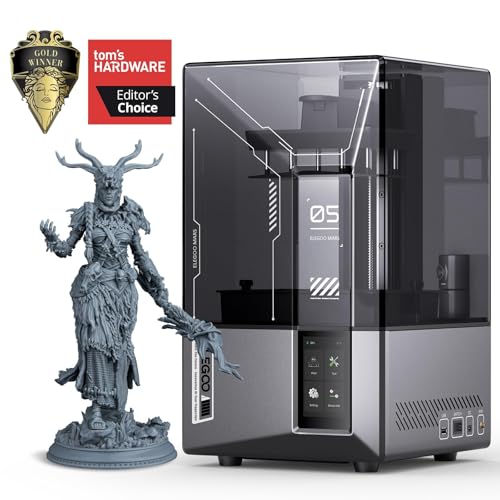


Price Tiers: What Each Level Should Deliver
The shape of a smart purchase is the same at every price: a clear job, the right printing technology for that job, and no money wasted on features your models never use. The three profiles below describe what a machine at each level should do well, and what it will honestly struggle with.
Budget Profile: Terrain and Learning
Around $200 to $300, expect a filament printer with a modest build plate and manual or guided bed leveling. This level shines at terrain, scatter pieces, movement trays, and storage boxes, where layer lines matter less and size matters more. Miniatures printed here will look soft up close, because filament nozzles cannot match resin detail. Buy at this tier if you want to learn the hobby cheaply and print large scenery, and accept slower speeds and more setup checks as the trade.
Midrange Profile: Sharp Miniatures at Home
Around $300 to $550, resin printers with a sharp screen and a build plate near 130 mm by 80 mm become realistic, alongside better filament machines with auto bed leveling. This is where infantry, heroes, and vehicle details start to look crisp after priming. You also gain faster exposure times, better light uniformity, and more reliable first layers. The limit at this tier is volume: big monsters and full terrain boards still need several plates and patience, and resin handling adds a wash and cure routine to every session.
Premium Profile: Volume, Speed, and Consistency
Above about $550, you pay for larger resin build plates, taller build height, heated or better sealed chambers on filament machines, and screens with finer pixel pitch. Armies print in fewer batches, and large centerpiece models fit in one piece. Premium machines also tend to hold calibration longer and include better air filtration. The honest trade is running cost and space: bigger plates use more resin per failure, and these machines claim a full workbench corner rather than a shelf.
What Your Money Gets You at Each Price Tier
Budget Tier: What to Expect
Budget filament machines give you a frame, a heated bed, and a nozzle that lays down PLA in 0.4 mm lines. That is enough for ruins, hills, objective markers, and carrying case inserts.
Detail on a 28 mm or 32 mm figure will read as chunky, especially on faces, weapons, and trim. Plan on test prints and small failures while you learn slicer settings. If your main goal is figures rather than scenery, a budget resin unit sometimes appears near this tier, but check screen replacement cost before you celebrate the low price.
Midrange Tier: The Sweet Spot for Most Buyers
Most hobbyists should shop here. Midrange resin printers resolve layer heights around 0.05 mm and fine screen pixels, so capes, purity seals, and weapon details survive cleanup and take paint well.
Midrange filament machines add auto bed leveling, quieter drivers, and direct drive extruders that handle flexible materials for custom trays. Spending in this band buys success rate more than raw specs, because fewer failed plates means more finished models per month. If you print both troops and terrain, this tier often funds one resin machine now and a filament machine later.
Premium Tier: When Spending More Pays Off
Premium money pays off when your printing volume is high or your models are large. A wide resin plate lets you queue a full squad plus bases in one run, which cuts an army project from weeks to days. Better light engines give even curing at the plate edges, where cheaper units sometimes leave soft detail.
On the filament side, premium buys enclosed chambers for stronger materials and reliable long prints for display boards. If you print a few models a month, this tier is hard to justify. If you print weekly, it quickly pays for itself in saved time.
Features Worth Paying For in 3D Printers for Warhammer
Printer Type: Resin or FDM
For figures, the real choice is resin, which cures liquid layer by layer for fine detail, versus FDM filament, which melts plastic cord for strength and size. Many collections end up using both. Start with the technology that matches 80 percent of your planned prints, and borrow or commission the other type until your project list proves you need it at home.
Features That Matter for Warhammer
Games Workshop scale models pack tiny detail into small footprints, so resolution and build plate size pull in opposite directions. For resin, look at pixel size near 35 to 50 microns and a plate that fits at least a full unit with its bases.
For filament terrain, a build volume near 220 mm cubed fits most ruins in one or two pieces. Also value a rigid frame and a screen or nozzle you can replace for under $60, because those are wear items. Our guide to the best 3d printers for warhammer 40k goes deeper on matching machines to that game system in particular.
Print Quality and Resolution
On a resin printer, quality comes from screen pixel size in the flat plane and layer height along the vertical axis, commonly 0.025 to 0.05 mm for miniatures. Smaller layers smooth curves on cloaks and armor but double print time, so many painters print troops at 0.05 mm and heroes at 0.03 mm. On filament machines, a 0.2 mm layer is standard and a smaller nozzle can sharpen terrain edges. Judge quality by cured sample photos, not render images, because renders never show support marks or layer lines.
Footprint and Noise
Resin printers are compact but need a working zone around them for washing and curing, so budget a bench area roughly twice the machine footprint. Filament machines are larger and louder over long prints, though silent drivers help.
Ventilation is the real space issue: resin fumes and wash liquid smells do not belong in a bedroom. A spare room, a garage bench, or an enclosure vented outside keeps the hobby pleasant. If you are new to the whole category, our guide to the best starter 3d printers covers safe first setups in more detail.
Ease of Setup and Calibration
Resin setup centers on leveling the build plate against the screen, a five minute job with a sheet of paper on most modern machines. Filament setup centers on bed leveling, where automatic systems save real frustration. Calibration prints matter more than brand promises: a small test model with flat, round, and overhang shapes will reveal exposure or temperature problems in one run. Practical know how: level and test after any move or screen change, not on a schedule, because transport and part swaps are what actually knock a printer out of tune.
Long Term Costs to Factor In
The printer is only the first purchase. Resin runs about $30 to $45 per liter, and you will also budget for wash liquid, nitrile gloves, paper towels, replacement tank film, and eventually a new screen. Filament costs about $20 per kilogram spool, plus nozzles and build plates over time.
Add electricity, which stays modest, and a wash and cure station if your resin printer lacks one. A fair rule: set aside about 30 percent of the machine price for the first year of consumables. Shoppers comparing entry costs across the whole category should also see our guide to the best inexpensive 3d printers and our broader overview of the best 3d printers before deciding.
3D Printers: Your Questions Answered
What features matter most in 3d printers for warhammer?
Resolution and build plate size matter most, in that order for miniatures and reversed for terrain. For resin, that means fine pixels and layers near 0.05 mm on a plate that fits a full squad. For filament, it means enough build volume for scenery in few pieces. A feature many buyers miss is replacement part pricing, because screens and tank film are consumables, not lifetime parts.
Is resin or filament cheaper for Warhammer?
Filament costs less per cubic centimeter and needs no wash supplies, while resin costs more per part but delivers detail filament cannot reach. Choose by model type, not by running cost alone, or you will save money printing figures you do not enjoy painting.
Which 3D printer is easiest for beginners?
The easiest first machine is the one with guided plate leveling, a clear screen menu, and strong community support for your exact games. Resin units with one bolt plate leveling and preset profiles in popular slicers suit miniature focused beginners. One tip: print the free test file the maker supplies before any army model, because it verifies exposure and leveling with a known good file.
Which consumable prices should I compare?
Compare the price of the material your machine consumes, in the largest standard size it accepts, before you judge the hardware price. Standard one liter resin bottles and one kilogram filament spools cut cost per model versus small proprietary refills.
What does cost per model mean?
Cost per model divides resin or filament price by the weight or volume a figure uses. A typical infantry model uses about 10 to 20 milliliters of resin, so at around $35 per liter the material cost is roughly 35 to 70 cents, plus supports. Slicers estimate usage before you print, which makes budgeting an army surprisingly precise.
Final Thoughts
Let your model list set the budget, not the other way around. Terrain builders get the most from a midrange filament machine, miniature painters get the most from midrange resin, and premium tiers only earn their price when you print large pieces or whole armies on a schedule. Compare your finalists in the product table above, keep safety gear and ventilation in the plan, and the best 3d printers for warhammer for your hobby bench will be an easy call. For project variety beyond one game, our guide to the best hobby 3d printers is a useful next read.