Best 3D Gaming Monitors at Every Price in 2026: What Your Money Really Gets You
Disclosure: We may earn a commission when you buy through links on this page, at no extra cost to you. As an Amazon Associate I earn from qualifying purchases. Learn more
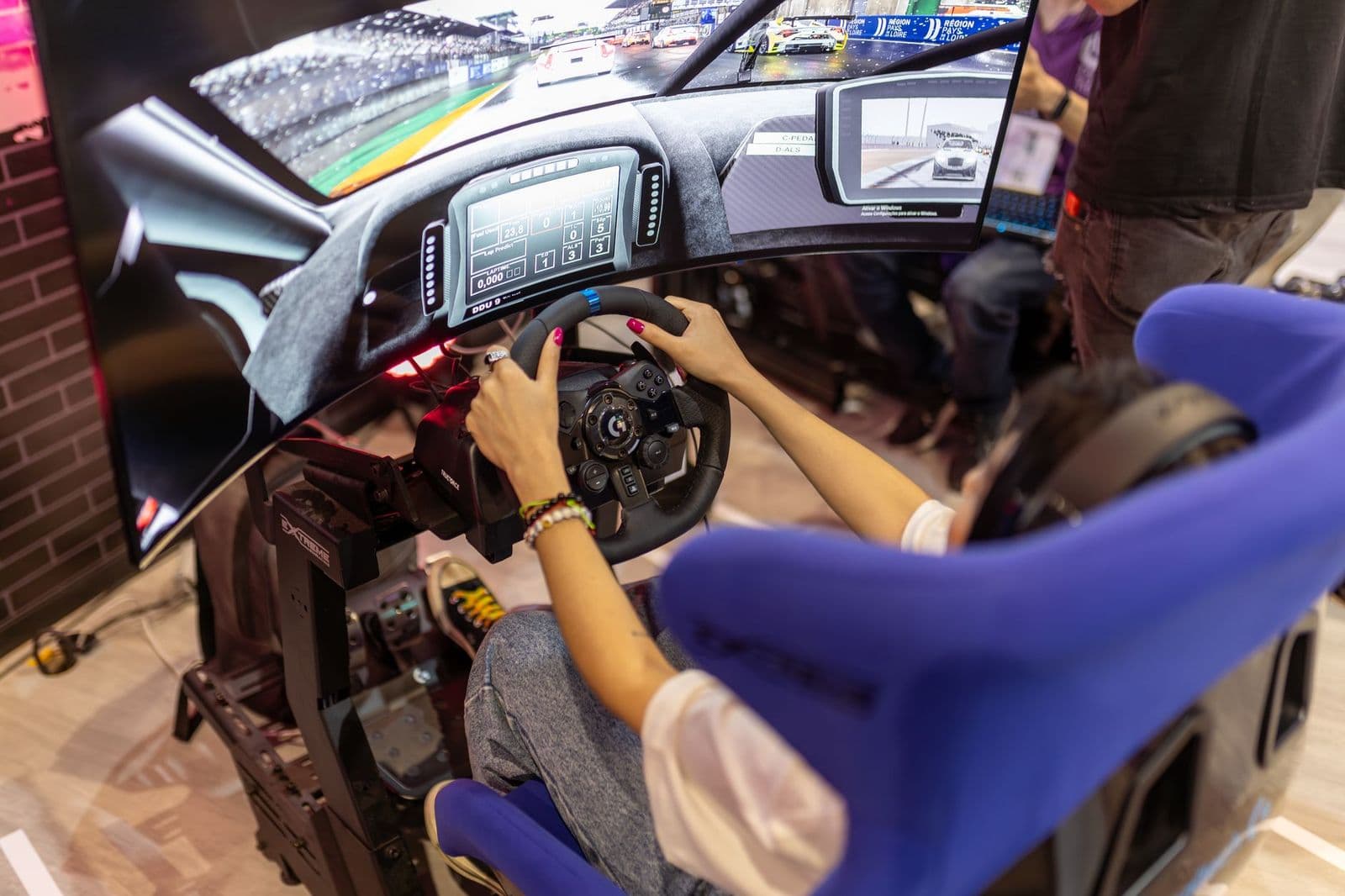
Compare the best 3d gaming monitors by budget, panel, brightness and refresh rate, and learn what each price tier adds for depth and smooth play.
Prices for 3D gaming displays stretch from modest desk screens to large premium panels, and the gap is not just size. The best 3d gaming monitors balance brightness, clean motion and a 3D method that suits your games. Use the guide below to match each model to your budget.
Start with your source and your games, because native 3D support varies a lot between titles and devices. A monitor can offer a strong depth effect and still disappoint if your console, graphics card or favorite game cannot send it the right signal.
Who Should Buy Which 3D Gaming Monitors?
Your seat, your games and your light decide more than the badge on the bezel. If depth is only a fun extra, see our guide to the best gaming monitors as well.
Sim Racers and Flight Fans Who Read Depth Cues
You judge braking points, runway height and the gap to the car ahead, and depth cues help you place each one. A screen of 27 to 32 inches at desk distance fills your view without forcing head turns. Prioritize low crosstalk, because ghost edges around dials and mirrors tire your eyes in long sessions.
Console Players Who Sit Back from the Screen
You play from a sofa or a deep chair, often with a friend beside you. A screen of 32 inches or more keeps depth readable from about six to ten feet away. Wide viewing angles matter here, because the 3D image shifts and dims when a second viewer sits off to one side.
PC Players Who Mix Fast Games with 3D Films
You switch between quick shooters in 2D and slower games or films in 3D, so the panel has to do both jobs well. Look for a high refresh rate, fast response and a 3D mode you can turn off in one menu step. Budget for spare glasses, because shared play needs one pair per viewer.
What Each Price Step Buys a 3D Player
The clearest way to sort the best 3d gaming monitors is by what each tier actually fixes. Lower tiers give you depth with limits on brightness and motion. Higher tiers mostly buy back the light the glasses take away.
Budget Tier: Working Depth with Clear Limits
Expect to pay about $250 to $450 for a 24 to 27 inch screen at 1080p, often with passive glasses that cost little to replace. Brightness in 3D mode is the main trade off, so these screens suit dim rooms. If your budget is tight in 2D as well, see our guide to the best affordable gaming monitors.
Middle Tier: Brighter Panels and Cleaner Motion
Models at about $450 to $800 usually add 1440p resolution, refresh rates of 144Hz or more and stronger backlights that hold up through tinted lenses. This is where active shutter glasses and lower crosstalk often appear, so fast scenes keep their depth instead of doubling at the edges. For most desk players, this tier fixes the weak points of the budget tier.
Premium Tier: Large Screens and the Strongest Depth
At about $800 to $1,500 and above, you pay for 4K panels, OLED contrast, large screen options of 32 inches or more and the brightness headroom 3D needs. Spending this much only pays off if your hardware can drive high resolutions at high frame rates.
Key Features to Compare
Compare these factors in order, because each one can break the 3D effect on its own. A great panel cannot rescue dim glasses, and a bright screen cannot fix the wrong format.
Panel Technology and Viewing Angle
The panel sets contrast, color and the angle at which depth holds together. IPS panels keep color and brightness steady when you lean or share the screen, which suits most buyers. VA panels give deeper blacks but can shift color at wide angles. OLED panels change pixels almost at once and show true black, though peak brightness varies by model.
The 3D Method and the Glasses It Uses
Active shutter glasses blink each lens in time with the screen, keeping full resolution for each eye at the cost of weight, batteries and price per pair. Passive polarized glasses are light and cheap, but the method shares lines between the eyes, so fine detail looks softer in 3D mode. Glasses free screens need no eyewear, yet the sweet spot is narrow and the price is high.
Brightness and HDR for 3D Mode
Every pair of 3D glasses cuts the light that reaches your eyes, so a screen that looks bright in 2D can look dull in 3D. Look for high peak brightness and treat HDR labels with care, because a basic HDR badge with low nits adds little once lenses dim the picture. Dark rooms help budget screens; bright rooms push you toward higher tiers.
Refresh Rate, Response Time and Crosstalk
Refresh rate is shared between the eyes in most 3D modes, so a 120Hz screen may show 60Hz to each eye and a 240Hz screen can show 120Hz to each eye. Slow pixel changes leave a faint copy of the last frame for the other eye, an error called crosstalk that looks like ghosting around bright objects. Fast response times reduce that ghosting, so value clean motion over a small saving.
Resolution, Screen Size and Viewing Distance
Higher resolution keeps the split 3D image sharp, and 4K helps most on screens of 32 inches or more, where each eye still gets plenty of detail. At a desk, 1440p on a 27 inch screen balances clarity and graphics load well. If sharp 4K play is your main goal, see our guide to the best 4k monitors gaming readers shortlist.
Check 3D Compatibility Before You Order
Confirm three links in the chain: the game or film offers a 3D mode, your device can output that mode, and the monitor accepts it. HDMI 2.1 ports give the bandwidth for 4K at high refresh rates, while DisplayPort suits most PC setups. Read the manual for the formats the monitor accepts, such as frame sequential or side by side input. For depth at work, see our guide to the best 3d monitors.
Mounting and long term costs belong in the same check. A VESA mount pattern of 100 by 100 mm is common on desk sized models and lets you set the screen at eye level on an arm, which keeps the 3D sweet spot steady. Budget for spare glasses at about $20 to $80 a pair and a warranty that covers the panel.
Common Mistakes to Avoid
These errors waste money on screens that never suited the room or the source.
- Buying a 3D monitor before checking game support leaves you with a depth feature you cannot switch on.
- Judging brightness in 2D only leads to a dull 3D picture once the glasses dim the screen.
- Ignoring crosstalk turns bright scenes into ghosted double images that tire your eyes.
- Forgetting extra glasses means a second player watches a blurred screen or sits out entirely.
- Sitting too far from a small screen shrinks the depth effect until it feels flat.
- Choosing 4K without the graphics power to drive it forces low frame rates and rough motion.
Care and Maintenance for 3D Gaming Monitors
Wipe the screen with a dry microfiber cloth, and dampen the cloth with plain water only if marks remain. Never spray liquid onto the panel, because moisture can creep past the edge and stain the layers that carry the 3D filter. Clean glasses lenses the same gentle way and store spare glasses in a hard case.
Charge active glasses after long sessions, because flat batteries age faster when they sit empty. Keep vents clear and the screen out of strong sun, since heat shortens the life of the backlight and panel. Check cables for a snug fit when the image drops out, and take firmware only from the maker site.
3D Gaming Monitors: Your Questions Answered
What size 3D gaming monitor suits a desk or a living room?
For a desk, a 3D gaming monitor of 27 to 32 inches suits most players. At about two to three feet away, that size fills enough of your view for depth to read well. For a living room seat six feet away or more, choose 32 inches or larger.
How long does a 3D gaming monitor usually last?
A 3D gaming monitor usually lasts about five to eight years of regular play. The panel rarely fails first; worn glasses, tired batteries and loose ports cause most early problems. You can often replace glasses and cables for years after the screen leaves the shops. Check spare parts supply before you buy a niche model from a small brand.
Is IPS or OLED better for a 3D gaming monitor?
OLED is better for dark games, while IPS is the safer all round choice for a bright room. OLED contrast keeps shadow detail apart in 3D night scenes, and its fast response limits ghosting. IPS panels often go brighter for the price and hold color when friends sit at an angle.
Does a high refresh rate matter for films on a 3D gaming monitor?
Yes, a high refresh rate helps films on a 3D gaming monitor, though in a different way than games. Film runs at a low frame rate, and a panel that repeats each frame an even number of times shows smoother pans with less judder. It will not add detail the film lacks.
Is 4K worth it on a 3D gaming monitor?
4K is worth it on a large 3D gaming monitor if your hardware can hold high frame rates at that resolution. The extra pixels keep edges clean after the image splits for each eye, so fine detail stays readable. On a 27 inch desk screen, 1440p often looks nearly as sharp and leaves your graphics card room to keep motion smooth.
Wrapping Up
Match the tier to your room first, then check the 3D method, the brightness in 3D mode and the formats your source can send. Confirm size, ports and glasses before you order.
When you judge best 3d gaming monitors by those checks instead of headline specs, the right price level becomes clear. Buy the tier that fixes your real limits, and keep a spare pair of glasses ready.